


Human Resource Implementation Plan Powerpoint Presentation Slides






Try Before you Buy Download Free Sample Product
 Impress Your
 Audience
 100%
100% Editable
 Save Hours
 of Time


Human Resource Implementation Plan PowerPoint Presentation Slides are designed to align your organization strategy with employment planning. Human resource strategy execution PowerPoint complete deck includes content ready slides such as strategic human resource plan framework, assessing the current HR capacity, forecasting HR requirements, skill gap analysis plan, organizational skills program matrix, company’s recruitment strategies, evaluating recruitment strategies, recruitment budget to name a few. With a variety of visual and images, you can create a more engaging presentation for your audience. HR departments can use it to assess the current capacity and forecasting future needs. Showcase pathways to implement HR strategy using the manpower planning process PPT visuals. This allows users to plan, strategize and analyze HR policies and procedures. Furthermore, the ready to use HR strategic plan presentation layout is completely customizable. You can add or delete the content if needed. Download workforce strategy implementation presentation design to explain HR roles, resourcing and talent planning.
People who downloaded this PowerPoint presentation also viewed the following :
Content of this Powerpoint Presentation
Slide 1: This slide introduces Human Resource Implementation Plan. State Your Company Name and begin.
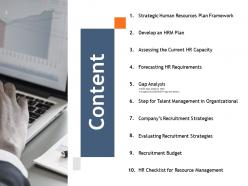
Slide 2: This slide shows the Content of the presentation, i.e., strategic HR plan framework, developing an HRM plan, assessing the current HR capacity, forecasting HR requirements, Gap analysis, step for talent management in the organization, company's recruitment strategies, evaluating recruitment strategies, recruitment budget, HR checklist for resource management.
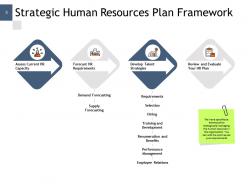
Slide 3: This slide presents Strategic Human Resources Plan Framework with categories as Develop Talent Strategies, Assess Current HR Capacity, Forecast HR Requirements, Review and Evaluate Your HR Plan.
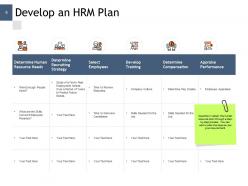
Slide 4: This slide displays how to Develop an HRM Plan in detail, the human resource plan through a step-by-step process.
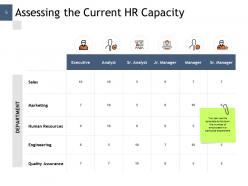
Slide 5: This slide represents Assessing the Current HR Capacity among different departments.
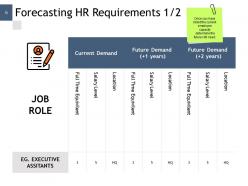
Slide 6: This slide showcases Forecasting HR Requirements with current and future demands.
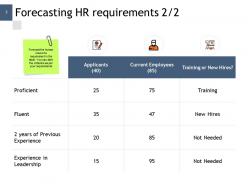
Slide 7: This is another slide for Forecasting HR Requirements.
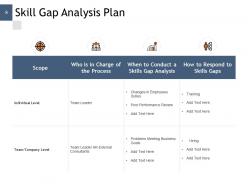
Slide 8: This slide shows Skill Gap Analysis Plan estimating the skills gap both at the Individual & team level and specifies the remedial measures to fill the gap.
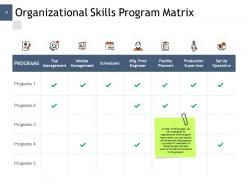
Slide 9: This slide presents Organization Skills Program Matrix, where you can specify all the relevant skill programs you intend to fill the gaps and specify the relevant audience for the program.
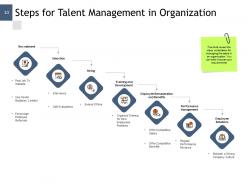
Slide 10: This slide displays Steps for Talent Management in Organization as Recruitment, Selection, Hiring, Training and Development, Employee Remuneration and Benefits, Performance Management, and Employee Relations.
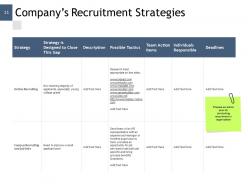
Slide 11: This slide represents Company's Recruitment Strategic to prepare an action plan for conducting recruitment in the organization.
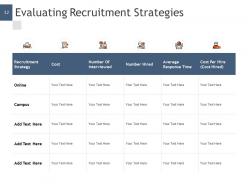
Slide 12: This slide showcases Evaluation Recruitment Strategies with categories as recruitment strategies, cost, number of interviews, number hired, average response time, and cost per hire.
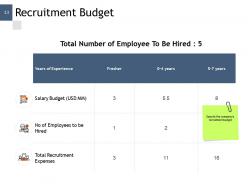
Slide 13: This slide specifies the company's Recruitment Budget.
Slide 14: This slide displays Human Resource Implementation Plan Icons.
Slide 15: This is Our Mission slide with related imagery and text.
Slide 16: This is Our Team slide with names and designation.
Slide 17: This is the About Us slide to show company specifications in detail.
Slide 18: This is a Financial slide to Show your finance-related data and statistics clearly and concisely.
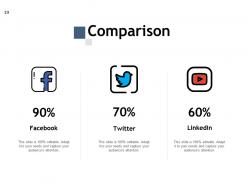
Slide 19: This is a Comparison slide to state the comparison between various commodities, entities.
Slide 20: This is Our Goal slide. Show your goals here.
Slide 21: This slide shows Mind Map for representing entities.
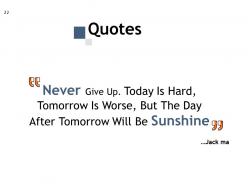
Slide 22: This is a Quotes slide to convey messages and beliefs.
Slide 23: This is Our Target slide. State your targets here.
Slide 24: This is a Timeline slide to show information related to the time period.
Slide 25: This is a Thank You slide with address, contact numbers, and email address.
Human Resource Implementation Plan Powerpoint Presentation Slides with all 25 slides:
Use our Human Resource Implementation Plan Powerpoint Presentation Slides to effectively help you save your valuable time. They are readymade to fit into any presentation structure.


FAQs for Human Resource Implementation Plan
So for your HR plan, start with timeline and milestones - who's doing what by when. Budget breakdown is obviously crucial. Training schedules and how you'll communicate changes to everyone. Build in extra time because honestly, this stuff always goes sideways. Risk planning too - what happens if key people bail or systems crash? I'd definitely run a draft by the main stakeholders first to spot any holes. Success metrics are important but don't overthink them. The real trick is making sure nobody can say "I didn't know I was supposed to do that."
Honestly, just start with an HR audit - figure out what you've got vs what you actually need. I know it sounds boring but trust me, it saves you from major headaches down the road. Survey your people about what's driving them crazy, check your current systems, and see where your HR team's skills are lacking. Also look at your employee data - so many companies have absolutely terrible records, it's wild. Once you know where you stand, build a roadmap that fixes YOUR specific problems. Don't just copy what worked at some other place.
Think of data analytics as your cheat sheet for HR decisions - way better than winging it. Track stuff like retention rates, how long hiring takes, and employee satisfaction scores right now so you'll have something to compare against later. It helps you spot which teams are about to lose people, where skill gaps are hurting you, and honestly? Which expensive programs are actually worth the money. Nobody has time for initiatives that don't work. Start with the basics and you can figure out what to tackle first and where people might push back.
Honestly, connect every HR thing you do straight to what the business actually needs - no clear connection means it's probably not worth your time. Too many HR folks (myself included sometimes) get sucked into shiny programs that sound amazing but don't actually help anything. Put your energy where the business is hurting most right now. Like if they're bleeding customers this quarter, focus on employee stuff that'll improve service quality. Check in with leadership regularly since priorities shift constantly. Track your HR numbers alongside business results so you can see what's actually working.
Honestly, the worst part is always people pushing back on changes - nobody wants stuff imposed on them without warning. Communication from the top usually sucks too, which makes everything harder. Budget issues and timeline delays? Yeah, expect those. Here's what actually works though: loop employees into planning from day one and explain the "why" behind everything. Build in extra time because things always take longer than you think. Find those naturally influential people on your teams - they're worth their weight in gold for getting others on board. Makes such a difference when change feels collaborative instead of dictated.
Honestly, tech can be a game-changer for HR stuff. Automated onboarding saves you from drowning in paperwork. Real-time dashboards show exactly where things stand without hunting through a million emails (seriously, the worst). Cloud systems mean everyone can jump in from wherever. I'd focus on maybe 2-3 solid tools that actually fix your biggest headaches - don't get sucked into every fancy new thing that pops up. Analytics help catch problems early too. The trick is being picky about what you actually need vs what looks cool in demos.
Honestly, the biggest thing is getting people involved upfront - like actually asking what they think during planning, not after you've made all the decisions. Communication makes or breaks it too. Tell them WHY you're doing this and what's in it for them personally, not just "it's good for the company" (nobody cares about that lol). Find some champions in each team who can sell it to their coworkers - peer pressure works better than top-down mandates. Training is crucial since people hate what they don't get. Oh, and try piloting with a smaller group first if you can. Early wins help everything else fall into place.
Don't save training for the end - that's where most people screw up. Figure out your skill gaps first, then build training around whatever systems you're rolling out. Honestly, I've watched so many companies wonder why nobody uses their new stuff when they barely trained anyone! Map out who needs what and when. Your managers probably need different development than regular staff. Budget for ongoing training too because people forget things (shocking, I know). Timeline it so training happens before launch dates. Oh, and make sure you can measure results - leadership loves seeing actual ROI numbers later.
So you're gonna want to measure the obvious stuff first - adoption rates, how fast people complete processes, system uptime. But honestly the soft metrics matter just as much. Employee satisfaction surveys, feedback quality, whether your daily HR stuff actually runs smoother than before. Support tickets are my favorite thing to watch because they plummet once people figure things out. Oh, and definitely check in at 30, 60, and 90 days so you can catch problems early instead of waiting months to realize something's broken.
So first thing - do cultural assessments in each region to figure out how people actually work and what they value. Different onboarding styles, feedback approaches, recognition stuff that actually makes sense locally. Your local HR teams are gonna be your best friends here since they get the nuances way better than corporate does. Honestly, trying to force the same policies everywhere is just asking for trouble. Maybe start with pilot programs in like 2-3 regions? Test what works before rolling out everywhere. Oh and definitely adapt things like flexible work arrangements based on what each culture prioritizes - some places are way more hierarchical than others.
Honestly, you can't skip stakeholder engagement - I learned this the hard way on a project once. Everyone who's getting affected needs to be in the loop early, otherwise you'll hit major resistance later. Map out who matters first (leadership, end users, whoever), then keep them updated throughout. People hate surprises, especially when it comes to changes at work. But here's the thing - they'll actually give you solid insights that save you from screwing up. Plus when people feel heard, they become your biggest supporters instead of working against you. Trust me, it's way easier than trying to fix things after they've gone sideways.
Hit people with info in different ways - some folks need the email, others want to hear it in person. Do all-hands meetings, send updates, grab coffee with key people. Brief your managers first though, otherwise they'll look clueless when their teams ask questions. Honestly? Over-communicate like crazy. People hate being left in the dark about changes that affect their actual work. Set up feedback channels too - maybe quick surveys or check-ins. That way you'll know if your message is actually getting through or if everyone's still confused.
Honestly, you NEED leadership on board or you're screwed from the start. They control the money and resources, plus they can kill roadblocks instantly when stuff goes sideways. If your leaders aren't actively selling the changes and explaining why it matters, employees will just ignore it - I've watched so many good initiatives die this way. Your boss needs to actually model the behaviors too, not just send an email saying "we're doing this now." Get them genuinely committed before launching anything. Their signature on paperwork doesn't count as real buy-in, trust me on that one.
Look, feedback from your team is everything when rolling out HR changes. People on the ground will catch stuff you totally missed - weird gaps, things that don't make sense, unintended chaos. Actually, the biggest complainers often give the best insights (go figure). You've got to set up ways for them to tell you what's broken early on. Don't just collect it though - actually do something with what they're saying. Otherwise you'll have a plan that looks pretty but crashes when it hits reality. Regular check-ins save you from way bigger headaches later.
Build your HR plan like LEGO blocks - pieces you can switch around instead of one solid brick. Check quarterly on talent pools, what competitors are doing, economic stuff. The 2020 survivors? They were already doing this smartly. Set up automatic triggers - when X happens, plan Y kicks in. Cross-functional teams help you pivot fast (communication is huge here). Honestly, start simple: find your three biggest market weak spots and prep backup plans. Don't overthink it initially - you'll adjust as you go. The flexibility matters way more than having everything perfect from day one.
-
Innovative and Colorful designs.