


Hr proposal powerpoint presentation slides





Try Before you Buy Download Free Sample Product
 Impress Your
 Audience
 100%
100% Editable
 Save Hours
 of Time


Human resource administration is what runs the organization smoothly. Recruiting potential candidates, maintaining decorum within the workplace, handling employee grievances, and the HR department handles many other things. The HR department generally works within the organization. Due to the rise in market standards and the modernized era, most of the companies have started taking the help of third-party agencies or vendors who provide exemplary HR services. The service providers reach out to the clients and showcase their advanced HR functions. The deal is risky if there is no proper written consent or agreement signed by both parties. Be careful in your upcoming deals by using our attention-grabbing HR Proposal PowerPoint Presentation Slides. Move a step ahead and make your human resource outsourcing business strong with the help of this engaging HR proposal PPT slide. Incorporate our visually-attractive human resource proposal PowerPoint template to showcase your company profiles to the clients. The proposal is topic-specific and covers all the information that you need to share with the client. You can tweak the content as per your requirements as this HR proposal PPT slide is fully editable. Take advantage of this creatively designed human resource services PowerPoint template to highlight the solutions to the client’s problems. With this, you can create an impressive proposal in less than a minute, which grabs clients’ attention in every aspect. Employ this content ready human resource proposal PPT theme to showcase the HR consultant skills descriptively and increase a chance to win a deal effortlessly. With the aid of this HR proposal PowerPoint slide, you can talk about your client testimonials. Download our easily accessible HR proposal PowerPoint presentation template to make your proposal more interesting and stylish than the rest of the competitors.
People who downloaded this PowerPoint presentation also viewed the following :
Content of this Powerpoint Presentation
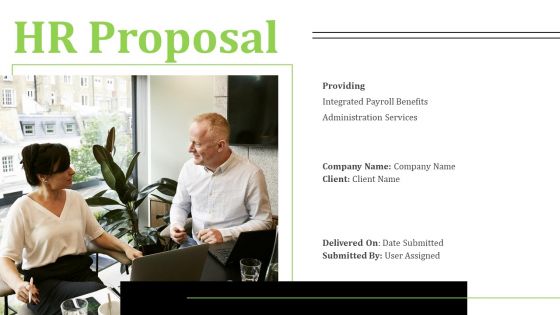
Slide 1: This slide introduces HR Proposal. State Company name, Client name and begin.
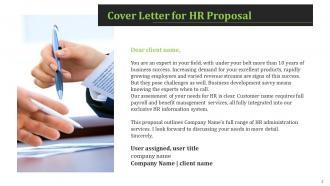
Slide 2: This slide displays Cover Letter for HR Proposal
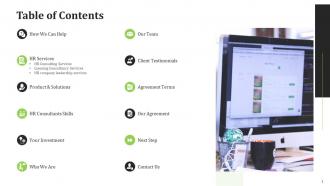
Slide 3: This slide displays Contents of the presentation.
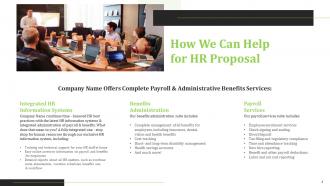
Slide 4: This slide talks about How We Can Help for HR Business Proposal.
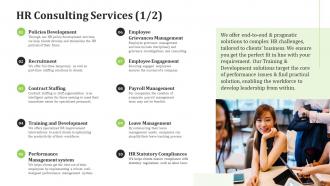
Slide 5: This slide showcases HR Business Consulting Services.
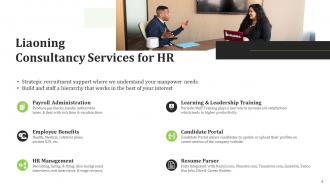
Slide 6: This slide shows Liaoning Consultancy Services.
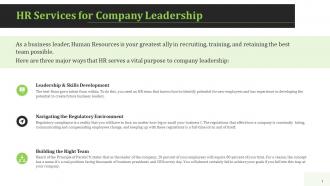
Slide 7: This slide represents HR Business Services for Company Leadership.
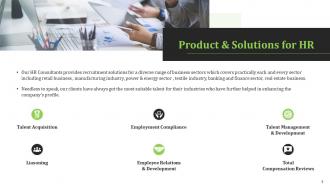
Slide 8: This slide shows Product & Solutions for HR Business. Our HR Consultants provides recruitment solutions for a diverse range of business sectors which covers practically each and every sector including retail business , manufacturing industry, power & energy sector , textile industry, banking and finance sector, real estate business.
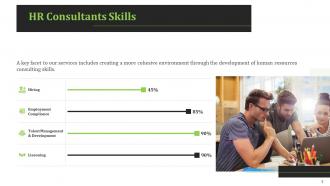
Slide 9: This slide represents Consultants Skills for HR Business.
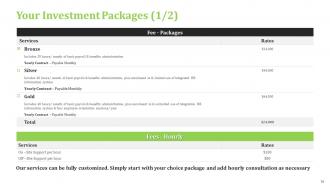
Slide 10: This slide shows Investment Packages for HR Business.
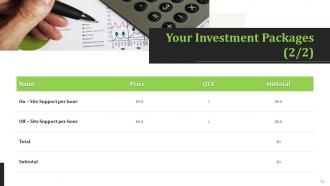
Slide 11: This slide also shows Investment Packages for HR Business.
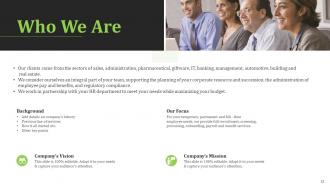
Slide 12: This slide represents Who We Are for HR Business.
Slide 13: This is Our Team slide with Names and Designations.
Slide 14: This is Our Team slide with Names and Designations.
Slide 15: This slide displays Client Testimonials for HR Business Proposal
Slide 16: This slide represents Client Testimonials for HR Business Proposal.
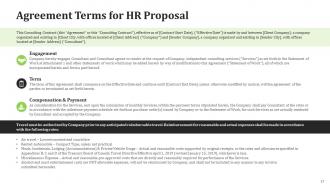
Slide 17: This slide shows Agreement Terms for HR Business Proposal
Slide 18: This slide showcases Our Agreement for HR Business Proposal
Slide 19: This slide depicts Next Steps for HR Business Proposal.
Slide 20: This is Contact Us slide with Address, Email address and Contact number.
Slide 21: This is Icons Slide for HR Business Proposal.
Slide 22: This slide is titled as Additional Slides for moving forward.
Slide 23: This is About Us slide to showcase Company specifications.
Slide 24: This is Our Mission slide with Vision, Mission and Goals.
Slide 25: This is 30 60 90 Days Plan slide.
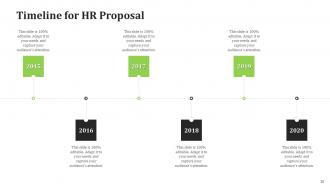
Slide 26: This slide shows Timeline process.
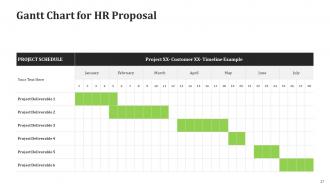
Slide 27: This slide displays Gantt Chart.
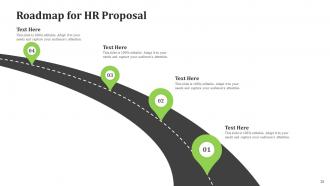
Slide 28: This slide shows Roadmap process.
Hr proposal powerpoint presentation slides with all 28 slides:
Use our HR Proposal Powerpoint Presentation Slides to effectively help you save your valuable time. They are readymade to fit into any presentation structure.
FAQs for Hr proposal
So you'll need a solid problem statement first - what exactly are you fixing? Then lay out your solution with actual steps, timeline, and budget breakdown. The executive summary is make-or-break honestly, since half these people won't read beyond page one anyway. Include your implementation phases and what could go wrong (with backup plans). Success metrics are huge too. Oh, and don't forget who this impacts and what resources you'll need. Keep it simple, back stuff up with numbers, and definitely lead with your strongest argument upfront.
Honestly, you've gotta speak their language first. Figure out what your company's actually trying to accomplish - growth, cutting costs, going digital, whatever. Then show exactly how your HR stuff helps hit those targets. Say they're all about innovation right now. Don't pitch some generic training program - frame it as building creative skills that drive breakthrough ideas. I always use their exact metrics in proposals too. Draw that clear line from "better managers" to "15% revenue boost" or whatever numbers they obsess over. Lead with business impact every time, not just the warm fuzzy HR benefits.
Pick 3-5 metrics that actually matter to your proposal - employee satisfaction, retention rates, productivity stuff, whatever fits. Don't go overboard with numbers just because they look impressive. Leadership eats up engagement metrics, so definitely include one of those. Set realistic timelines too, not some crazy ambitious schedule that'll bite you later. The whole point is proving your idea works, not just collecting data that sounds good in meetings. Oh, and make sure you can actually track these things - I've seen people propose metrics they had no way of measuring, which was awkward.
Honestly, start with the obvious people - your manager, HR folks, maybe executives if it's big enough. But don't stop there! Think about who actually gets impacted day-to-day: the employees, IT if there's systems stuff, finance for budget reasons. Legal too sometimes, which is annoying but whatever. I used to totally miss the indirect people at first - like department heads who aren't directly involved but still have opinions. Here's the thing though: figure out what each group actually cares about. Cost savings? Happy employees? Staying compliant? Once you nail that down, you can pitch to what matters to them specifically instead of some generic presentation.
Dude, you absolutely need employee feedback for any HR proposal that's gonna stick. Without it, you're just guessing at what people actually want fixed. Get their input early so you can spot the real problems and figure out if your solutions make sense. Plus, people are way more likely to support changes they helped shape - nobody wants some random policy dumped on them. Their voices make your business case stronger too. Oh, and it helps you catch potential pushback before you're already committed to a timeline that might be totally unrealistic.
Dude, seriously - throw some charts and graphs into that proposal instead of just dumping raw numbers on them. Executives eat up those interactive dashboards where they can click around and see ROI projections themselves. Maybe add a quick video if you're explaining something complicated, or better yet, get some employee testimonials on camera. Those hit different than written quotes. Oh, and use one of those collaboration platforms so people can leave comments right on the document - saves you from a million back-and-forth emails. Just pick whatever tech thing matches your audience best first, then you can always add more fancy stuff later.
Start by nailing down the exact problem you're solving and what success looks like - numbers are your best friend here. Budget breakdowns need to be realistic (don't lowball then scramble later). Timeline should actually make sense too. Get key people on board before you even submit - trust me on this one. ROI projections help but honestly, a pilot program option is gold. Executives hate risk so give them something small to test first. Skip the HR buzzword soup and write like a normal person. Cover your compliance bases obviously, but don't make that the main pitch.
Okay so for your HR proposal, definitely include the usual suspects - bias training, diverse hiring practices, mentorship programs for underrepresented folks. The metrics part is honestly kind of a pain but you need it for leadership buy-in. Think representation goals, survey scores, retention rates broken down by demographics. Start with actionable stuff like fixing job descriptions (so much biased language in those!), setting up employee resource groups, inclusive leadership training. Oh and don't forget timeline and budget estimates - executives are obsessed with seeing the roadmap and knowing costs upfront. Makes them feel in control or whatever.
Honestly, the biggest pain will probably be people who hate change - they're so used to doing things their way. Budget's always tight too, which limits what you can actually pull off. Getting leadership on board sounds easy until they see the price tag, then suddenly they're not so enthusiastic. Your tech systems probably won't integrate smoothly either (they never do). Communication between departments usually falls apart during rollouts. Oh, and compliance stuff you didn't even think about will pop up randomly. My advice? Figure out your worst potential problem first and plan around that specific mess.
Look, once a year minimum but that's honestly pretty lazy. I do quarterly check-ins for anything active - works way better. Budget changes or restructuring? Update immediately, don't wait around. The whole point is keeping it flexible, right? If metrics are telling you something's off, just fix it then and there. Calendar reminders are your friend here. Oh and whatever you do, don't let it become one of those documents that just collects digital dust. Nobody reads those anyway.
Ugh, don't be vague about what problem you're actually fixing - that's the worst. Include real numbers and deadlines too. Also, executives literally have zero patience for long proposals, so keep it tight but show you've done your homework. Focus on business impact over just what HR wants (though honestly, sometimes those overlap anyway). Always break down your budget clearly and spell out next steps. Your proposal needs to hit the basics upfront: what you're doing, why it matters, how much it'll cost, and when it happens. Otherwise you're just wasting everyone's time.
Honestly, visuals are a game-changer for HR proposals. Nobody wants to slog through walls of text about budget breakdowns - charts and infographics actually get people to pay attention. I'd focus on turning your biggest data points into graphics first, like cost savings or timeline stuff. Process flows work great as infographics too. Even just adding icons to bullet points makes everything way more readable. The whole point is making it feel less like a boring document they have to get through. Oh, and before/after comparisons are super effective if you've got survey data or anything like that. Start with your three most important numbers and visualize those.
Break down your direct costs first - salaries, benefits, training stuff, software licenses, recruiting fees. Then hit the sneaky indirect ones that everyone forgets about. Manager time for interviews, productivity dips during training, office space, equipment. Oh and separate your one-time costs from ongoing expenses because leadership will definitely ask about that. I always throw in a 10-15% buffer for random stuff that pops up. Build a simple spreadsheet with quarterly breakdowns - makes the ROI timeline super clear and honestly just looks more professional.
Honestly, just hit them with hard numbers that scream "money saved." Show concrete before/after stuff - like how much turnover actually costs vs. your solution, or how many days you'll cut from hiring time. Executives don't really care about fuzzy "employee happiness" metrics (even though we know that matters). Pick ONE killer stat they can remember and brag about later. Charts help too - they eat that visual stuff up. Oh, and definitely tie it to whatever business problem is keeping them up at night right now. Be realistic about timelines though, don't oversell when they'll see ROI.
So you're gonna want to tackle employment law stuff first - equal opportunity policies, wage laws, workplace safety. GDPR and data privacy are huge too, can't mess around with that. Background checks get weird depending on your state, honestly such a pain. Industry-specific rules obviously depend on what you do. Employee records retention is another thing to sort out, plus union stuff if that applies to you. My advice? Loop in legal early rather than scrambling to fix compliance issues later. Way easier that way.
-
Presentation Design is very nice, good work with the content as well.
-
The content is very helpful from business point of view.
-
Designs have enough space to add content.
-
Excellent products for quick understanding.