

Human Resources Introduction Powerpoint Presentation Slides




Try Before you Buy Download Free Sample Product
 Impress Your
 Audience
 100%
100% Editable
 Save Hours
 of Time


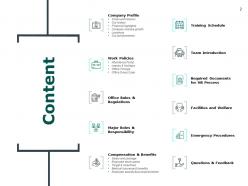
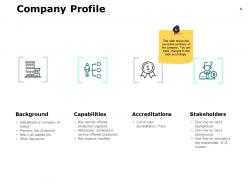
Introducing Human Resources Introduction PowerPoint Presentation Slides which helps an organization to present its work policies. With the help of the HR induction PPT template, you can highlight the profile, target, financial and revenue growth, achievements, and the location of the company. You can showcase your business-related norms such as attendance portal, leaves and holidays, office timings, office dress code, etc. by using our human resource policies presentation deck. This human resource induction PPT slide enables the organization to present its roles and responsibilities in a precise way. There are several methods present in the personnel administration PowerPoint templates like conducting training programs, team introduction, submission of documents, and numerous facilities with which you can improve the value of your organization in the market. The HR induction PPT visual deck comprises of a total of 53 slides. Therefore, download this ready-to-use new employee briefing slideshow presentation slide and make your presentation more effective.
People who downloaded this PowerPoint presentation also viewed the following :
Content of this Powerpoint Presentation
An organization runs in the long term when it has the best employees working for it. But is it easy to hire people and make them work? No, it requires a perfect plan from the human resource department (HR) to hire the best talents for the organization and train them according to the job role. Therefore, they require a tool that they can use to prepare their policies and training programs. SlideTeam is solving HR problems by developing PowerPoint templates dedicated to the human resource department.
Introduce every employee to human resource policies using our PowerPoint Templates.
These presentations feature easy-to-navigate layouts, professional designs, and built-in visual aids like charts and graphs. You can present complex information in a professional manner to attract the audience’s attention.
HR professionals can save time and effort by using these templates. But how? They don't have to prepare a presentation from the beginning. Moreover, these presentations have the capability to improve the retention of presented information.
Show the complete human resources functions with our PowerPoint Frameworks.
Each template offers various customization options, allowing HR professionals to prepare presentations to show specific content needs and align with the company’s unique brand.
Let’s begin!
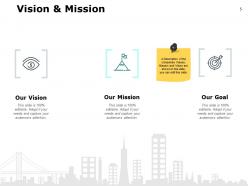
Template 1: Vision & Mission
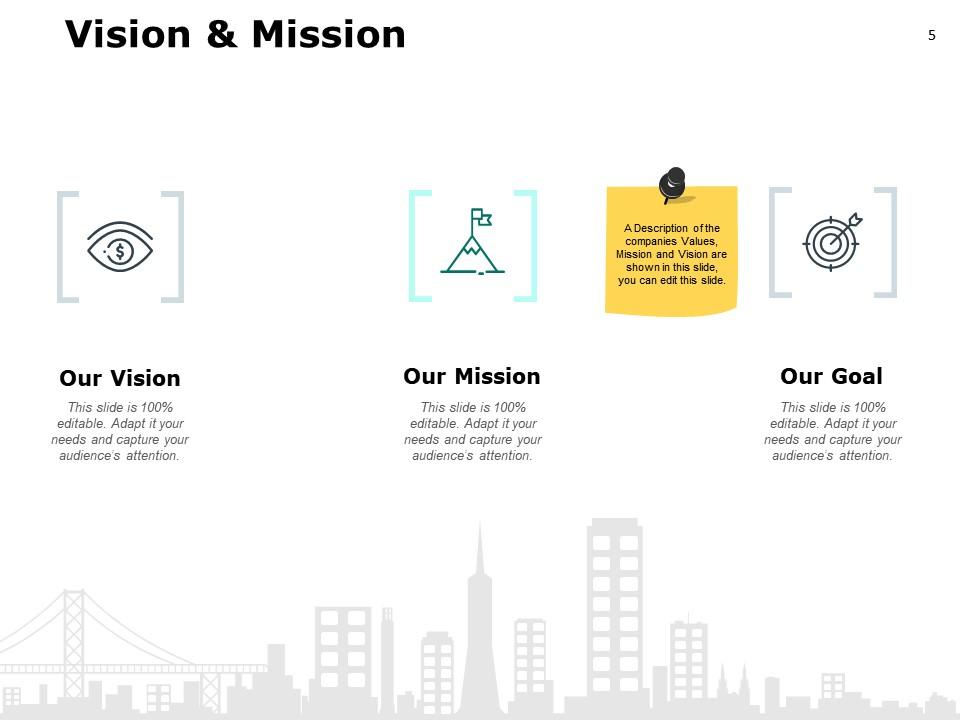
There is always a question that arises during company meetings about how the company can communicate its core values and goals to stakeholders. Explore our PowerPoint Framework to show your business vision, mission, and goals. You can display your strategic direction and inspire your audience with this easy-to-use PowerPoint Presentation.
Template 2: Attendance Portal
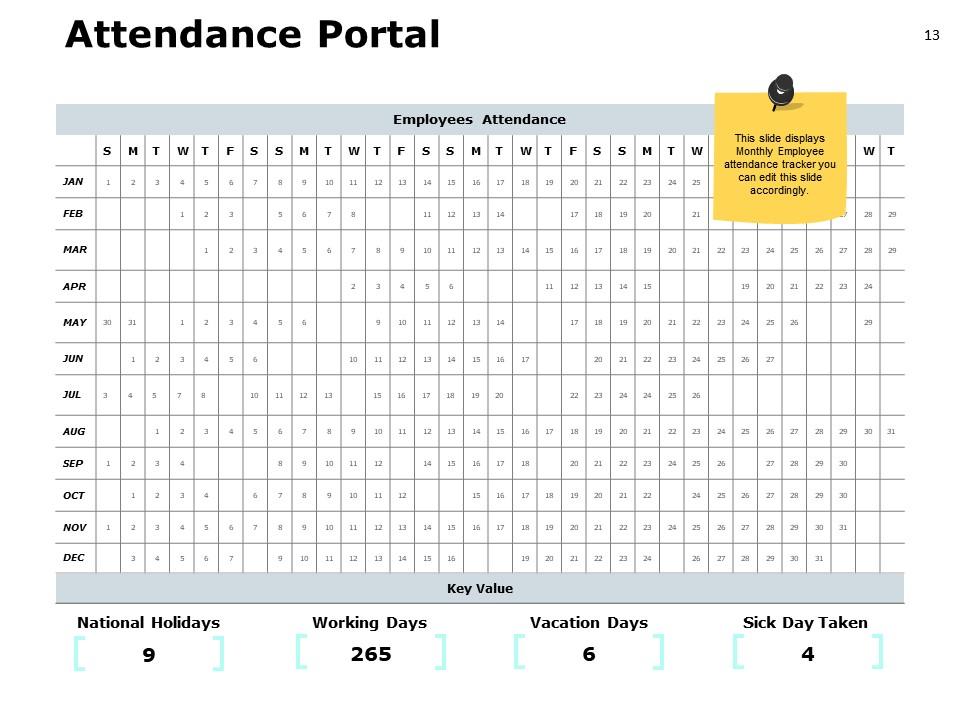
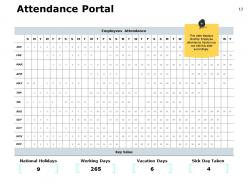
It is a difficult task for the human resource department to manage employee attendance efficiently throughout the year. Our PowerPoint Template streamlines attendance tracking and makes tasks easier for the HR department. It consists of a detailed 12-month table, breaking down each week. Furthermore, you can input data, such as national holidays, working days, vacation days, and sick days taken.
Template 3: Official Dress Code
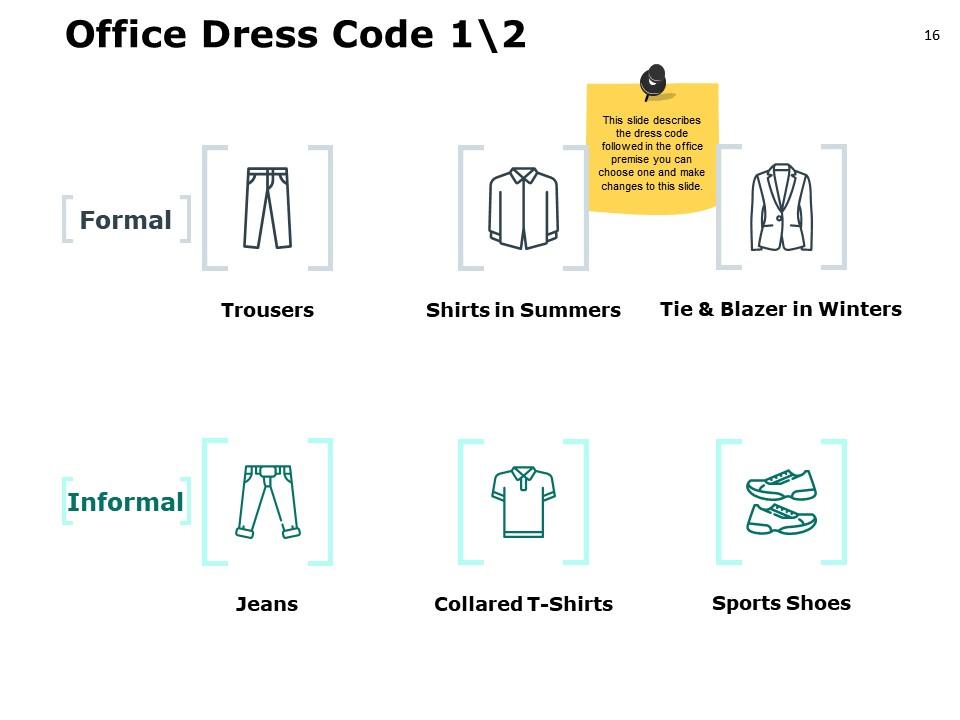
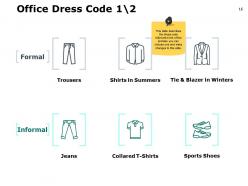
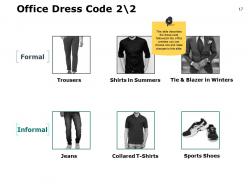
The human resource department always faces a challenge between formal and informal clothes. They need to update the clothing policies according to the company's working environment. Hence, they can use our PowerPoint Theme, which distinguishes between formal attire (trousers and shirts for summer; ties and blazers for winter) and informal wear (jeans, collared T-shirts, sports shoes), which adhere across all levels of your organization.
Template 4: Salary and Package
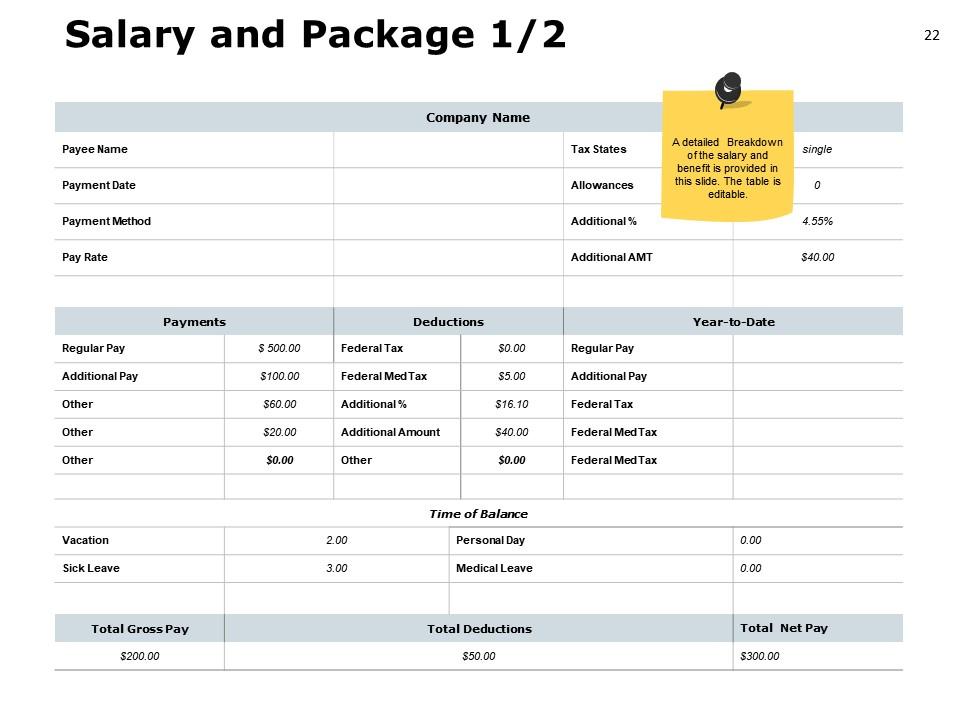
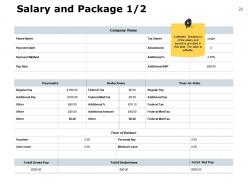
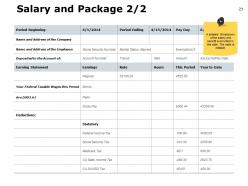
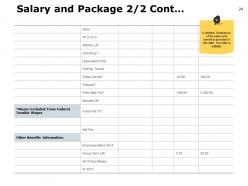
One of the biggest tasks of HR is to discuss the salary package with a candidate and, once everything goes well, issue an offer letter with a salary structure. However, before hiring a candidate, the human resource team has to present the salary package in front of the higher management. Our PowerPoint Theme provides a proper breakdown of an employee's salary and benefits. Furthermore, it shows essential information such as gross pay, net pay, deductions, and year-to-date figures. There is also the inclusion of several leave balances, such as vacation, sick, and personal days.
Template 5: Employee Stock Options
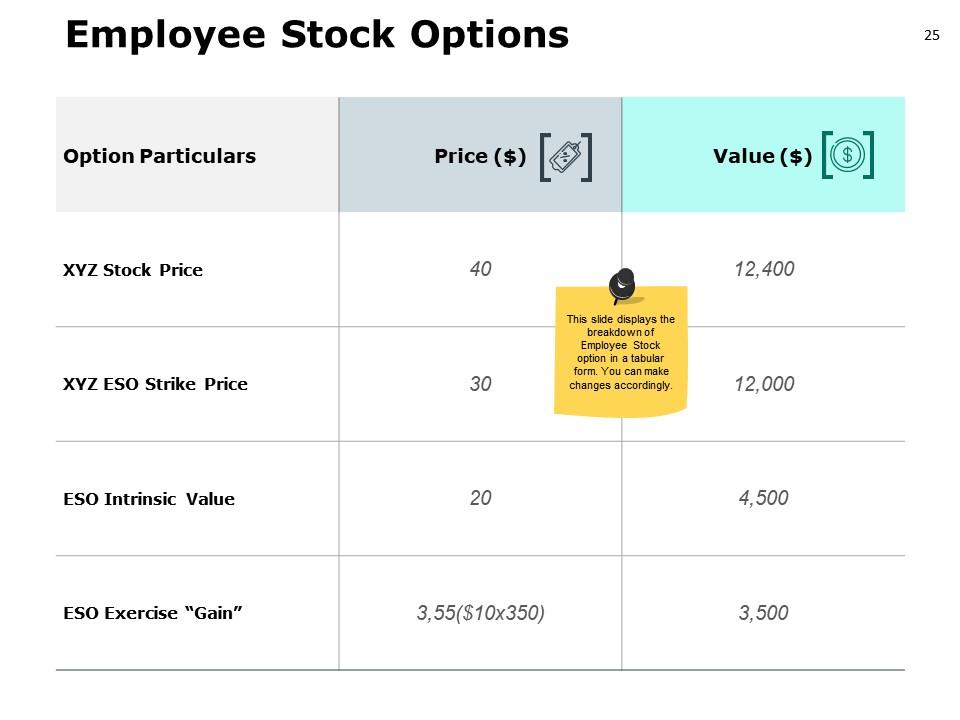
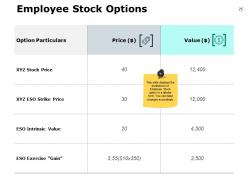
Show the complete details of employee stock options with our PowerPoint Framework. It has three key sections in a tabular format: Option Particulars, Price, and Value. You can show the complete calculation of stock options in this table. It is the best tool for HR meetings, boardroom discussions, or any scenario where you need to explain stock options.
Template 6: Medical Insurance & Benefits
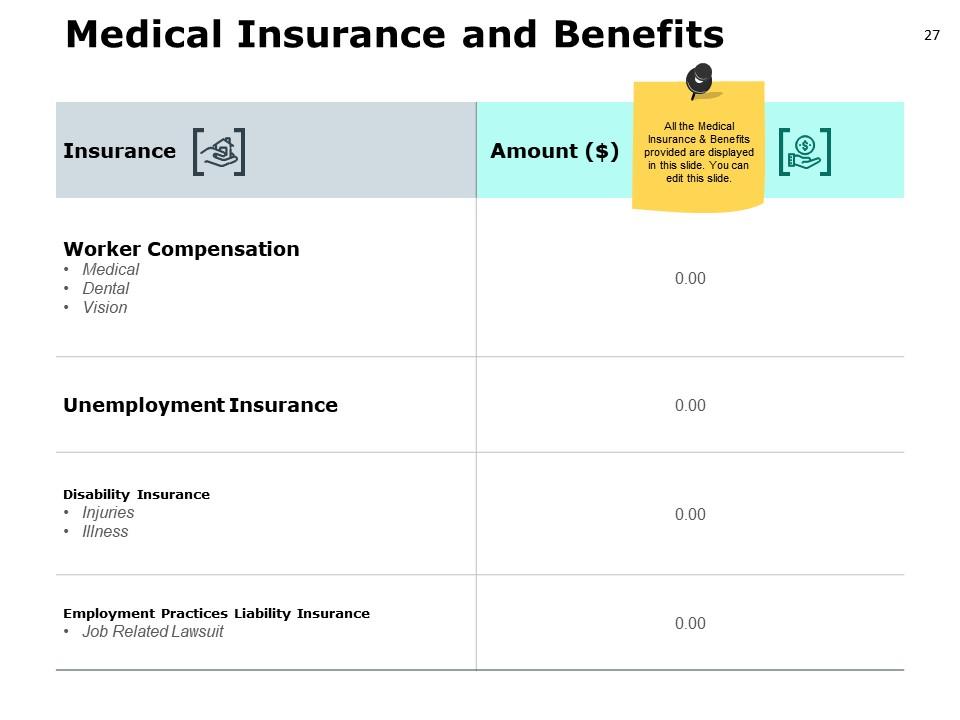
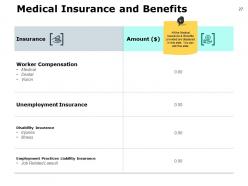
A company's HR team generally feels challenged when they have to show the medical insurance plans and benefits to the higher management. Explore our PowerPoint Theme, which includes a highly organized table with two key columns: Insurance and Amount. It covers diverse insurance attributes such as worker compensation (medical, dental, vision), unemployment insurance, and disability insurance for injuries and illnesses. Basically, it is a perfect tool for HR professionals and insurance agents.
Template 7: Training Schedule
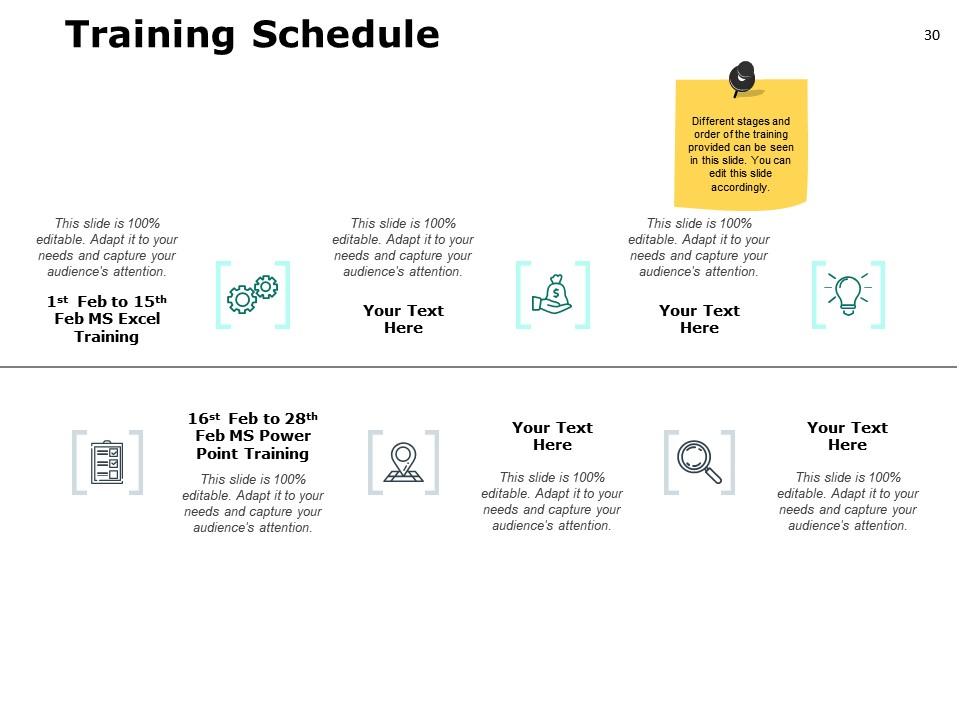
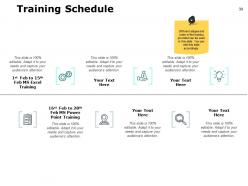
Organize and present your HR training sessions with our PowerPoint Template. The human resource department can use this presentation to streamline the development and communication of training plans among employees. You can display timelines, session details, and instructor information, which employees can understand and show their participation in training. You will witness positive results after using our PowerPoint Theme.
Template 8: Team Introduction
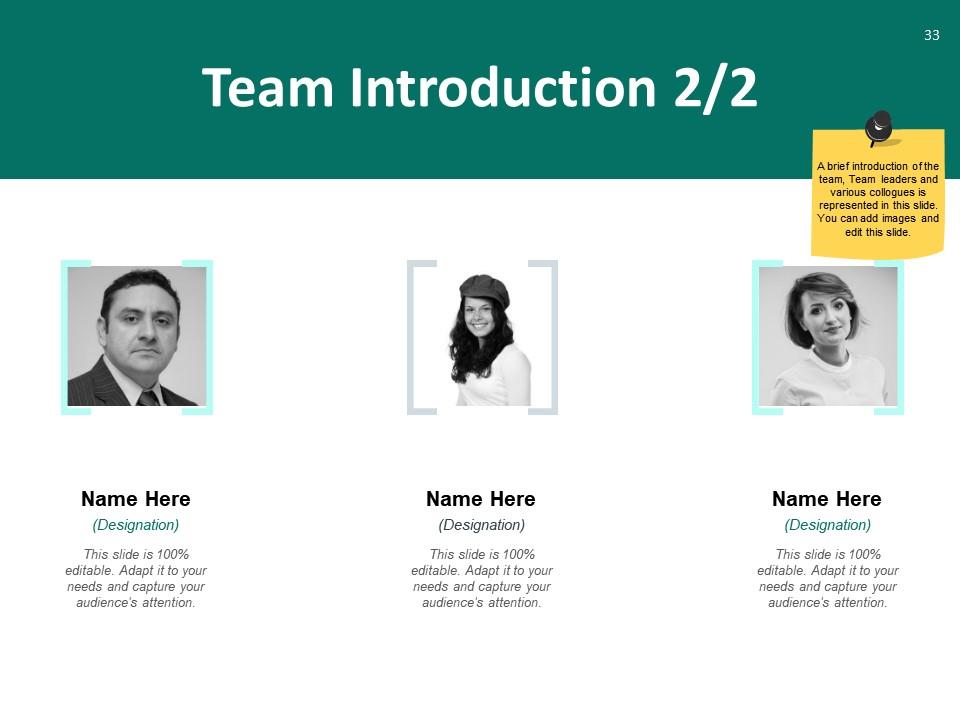
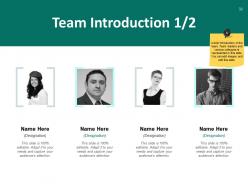
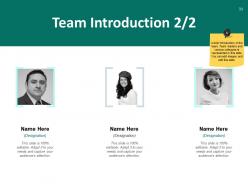
Do you require a tool to display your HR team’s expertise and organizational roles? Explore our PowerPoint Template, which presents your entire HR department in a professional manner in front of the stakeholders. You can input a team member's photo, name, and designation so that everyone can recognize and appreciate them for their hard work. Furthermore, you can use this presentation in corporate meetings, board meetings, and new employee orientations.
Template 9: Documents Required for HR Process
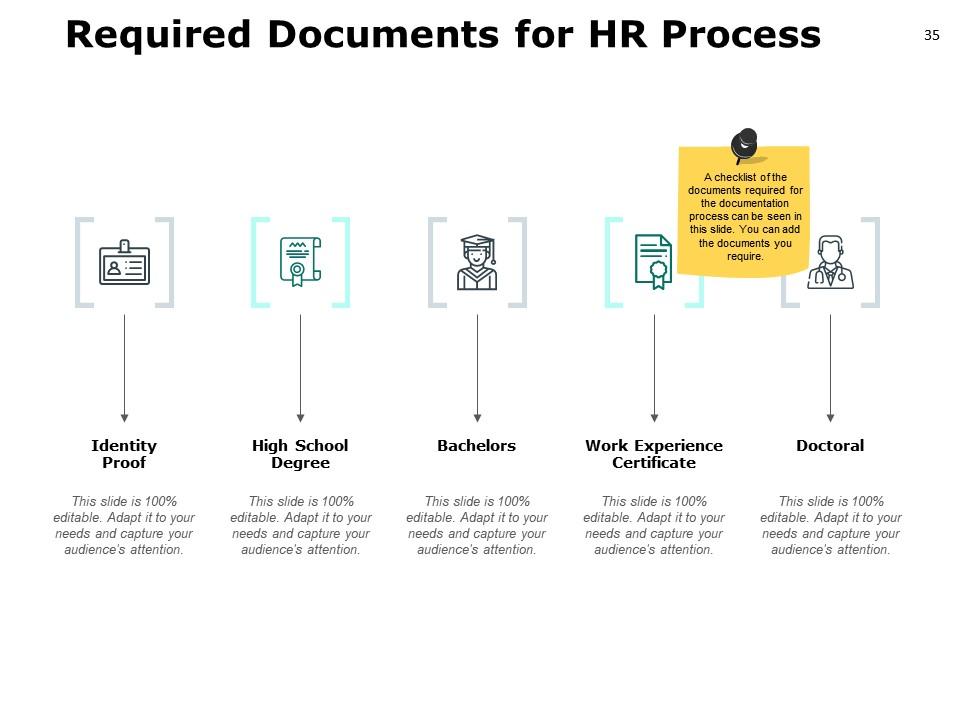
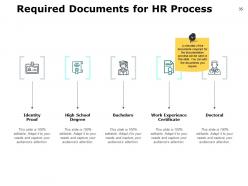
When the human resource department hires a candidate, proper documentation from the candidate is required. However, sometimes, the list of documents is long, and it is difficult to send it to the concerned party. Use our PowerPoint Theme to follow the complete documentation process. It shows all the essential documents needed, such as identity proofs, educational certificates like high school diplomas, bachelor's, and doctorate degrees, as well as work experience certifications.
Template 10: Emergency Procedures
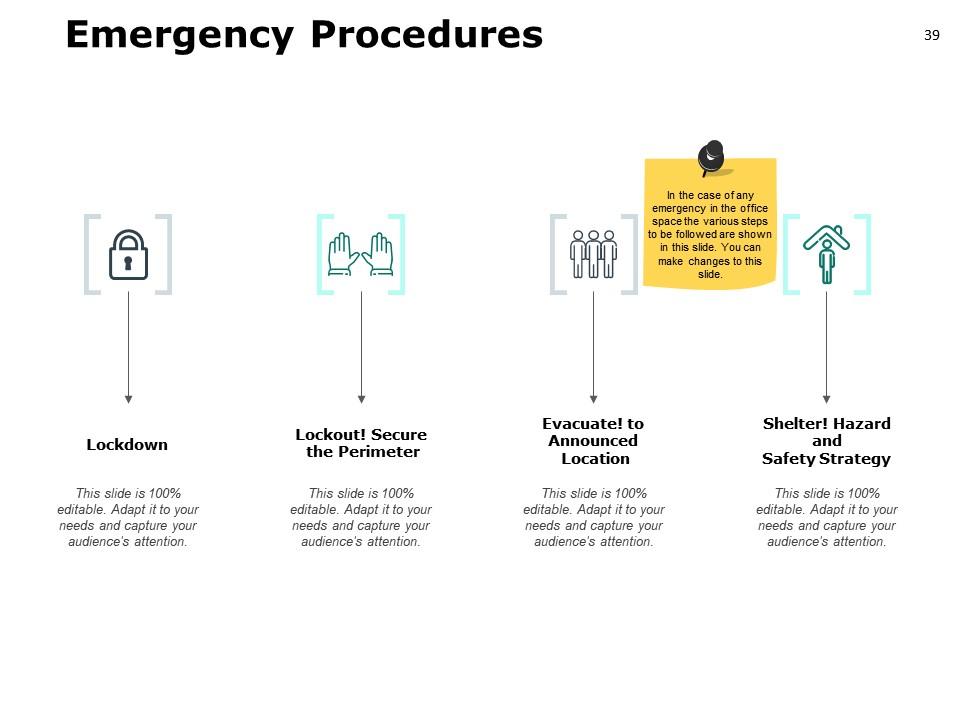
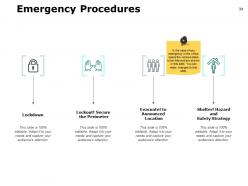
It's the duty of the human resource department to show appropriate measures that every employee can follow to ensure workplace safety. Our PowerPoint Layout provides a well-structured approach to emergency response. It covers emergency situations and helps you show the steps to follow. For example, if there is a lockdown, the company will secure the perimeter, employees have to evacuate to a safe place, and hazard strategies will be implemented.
Hire Better Talent with Our Templates
In conclusion, our PowerPoint Templates help the entire human resource department by showing the company's policies and procedures in a transparent manner. HR personnel can save time and improve information retention by leveraging these feature-rich templates.
Human Resources Introduction Powerpoint Presentation Slides with all 53 slides:
Use our Human Resources Introduction Powerpoint Presentation Slides to effectively help you save your valuable time. They are readymade to fit into any presentation structure.


FAQs for Human Resources Introduction
Honestly, it's all about balancing people skills with the tech stuff now. Communication and emotional intelligence are still super important - you're constantly dealing with drama and helping people develop. The analytics side has exploded though, so you'll need to get comfortable with data and HR platforms. Can't just be pushing paperwork anymore either. Strategic thinking is key since you're basically a business partner now, shaping culture and figuring out why people quit. I'd definitely work on your coaching abilities and maybe mess around with some HR tech tools to get ahead.
Look, it's actually pretty simple when you break it down. Your HR stuff should match what the business actually needs. Growing fast? Hire for roles that bring in money. Retention problems? Focus on culture and career development. I always tell people to track HR metrics the same way you'd track sales - time-to-hire, engagement scores, turnover rates. Then connect those back to real business outcomes like revenue and productivity. Honestly, half the battle is just sitting with leadership first to figure out their top priorities. Makes everything else way clearer.
Dude, emotional intelligence is huge in HR. You're constantly reading between the lines when people come to you with problems. Trust me, I've watched so many situations blow up because someone totally missed what was actually happening emotionally. It helps you handle difficult conversations way better and figure out the real story behind workplace drama. Plus you'll make smarter hiring choices when you can pick up on people's actual communication styles. Honestly? Start by just noticing your own reactions during meetings - that self-awareness alone will change how you handle everything else.
Look, most HR folks just dump money into Indeed without checking if it's actually working for them. Pull reports on your hiring funnel first - you'll find weird gaps you didn't even know existed. Track which job boards bring in decent hires versus the duds. Check your time-to-hire and interview-to-offer ratios too. Historical data can show you which candidates will probably accept offers. I swear, this stuff sounds boring but it'll save you so much wasted budget on platforms that don't deliver quality people.
Honestly, you've gotta bake it into how you normally do things, not treat it like some quarterly project. Post jobs in different places and cut the weird corporate jargon from job descriptions - that stuff turns people off anyway. Employee resource groups work if you actually listen to what they say. Track your retention by demographics because that's where you'll see if people are really sticking around. Make promotion criteria clear so it's not just whoever golf buddies with the boss. Some bias training helps, though I've sat through painfully boring ones. Oh, and your leadership team should actually look diverse. Hold managers accountable for team culture too.
Honestly, you gotta catch this stuff before it gets bad. Watch for the obvious signs - people calling in sick more, work quality dropping, or they just seem checked out. Most companies are terrible at this and wait until someone's already toast. Regular one-on-ones help way more than those formal review meetings. Train your managers to actually notice when someone's struggling instead of just assuming everything's fine. And yeah, normalize talking about mental health - offer those employee assistance programs, mental health days, whatever. Building support systems upfront is so much easier than trying to fix burnout after the fact.
Honestly, everything's moving away from those dreaded annual reviews now. Companies are doing continuous feedback instead, which is way better if you ask me. AI analytics are huge for getting actual insights rather than just gut feelings. Development focus has totally shifted too - it's not about rating people anymore, it's about growing them. 360-degree reviews and peer feedback are everywhere because your boss literally sees maybe a third of your work. Real-time coaching is the new thing, plus goals that actually change when they need to. Oh, and if you're shopping around for systems, find one that bundles feedback, goal tracking, and development planning together - saves so much hassle.
Oh man, communication is everything here. Start with your communication plan first - seriously, map that out before anything else. Tell people what's happening and why, even when you don't have all the details figured out yet. Honestly, people would rather hear bad news than sit in limbo wondering what's going on. Set up ways for employees to ask questions and actually answer them back. Your managers need training too since they'll be dealing with the tough conversations daily. Don't forget people need actual support to handle change - it's genuinely hard for most folks. Multiple check-ins work way better than one big announcement.
Honestly, discrimination and harassment stuff is where you'll get burned the most. Document literally everything - every conversation, every incident, all of it. I learned this the hard way watching other managers get slammed for inconsistent discipline. Even with at-will employment, you can still face wrongful termination claims if you mess up. Don't forget about overtime rules too, that's another lawsuit magnet. Oh and here's the thing - call your lawyer way before you think you need to. Better safe than sorry when someone's threatening legal action.
Honestly, going digital will save you so much headache. Start with the paperwork nightmare first - platforms like BambooHR handle all that boring form stuff automatically. No more printing mountains of documents (thank god). Video tutorials work way better than those dusty old manuals nobody reads anyway. You can set up chatbots for common questions, do virtual office tours, the whole thing. Real-time progress tracking is pretty sweet too - you'll actually know if someone's stuck. I'd focus on whatever manual process currently makes you want to scream. That's your goldmine right there.
Honestly, mix it up - don't just rely on surveys. Annual engagement surveys are good baseline stuff, but pulse surveys catch things as they happen. One-on-ones are probably your best bet though, managers hear the real complaints there. Track your turnover and absenteeism rates too, those numbers don't lie. Exit interviews are clutch for figuring out what's actually broken (people get brutally honest when they're leaving lol). Focus groups work if you want to dig into specific problems. Oh and internal promotion rates - forgot about those, but they show if people actually see a future there. Trust me, using multiple methods beats putting all your eggs in the survey basket.
Honestly, remote work is kind of a mixed bag for HR. Yeah, you get access to way more talent since location doesn't matter anymore, and most people seem happier working from home. Plus your office costs basically disappear. But managing people gets weird when everyone's scattered. Communication becomes this whole thing, and don't even get me started on trying to build actual team culture through a screen. Performance reviews feel awkward too - like, how do you really know what's going on? You'll need good tech tools obviously, but the real trick is creating those random connection moments that used to happen naturally.
So first thing - survey your team about what skills they actually want to build. Most companies skip this and it shows. Set up clear advancement paths and mentorship programs. One-on-ones are huge for understanding individual goals so you can customize development plans. Try lunch-and-learns, cross-department shadowing, maybe tuition reimbursement if budget allows. Skills gap analyses help too, though honestly they're kind of a pain to do right. Regular workshops and online courses work well. The key is tailoring everything to what people actually need vs. generic training nobody uses.
Honestly, your culture is everything when it comes to hiring and retention. Think about it - would you want to work somewhere that sucks? Neither does anyone else. Good culture pulls in people who actually fit, not just whoever's desperate for a paycheck. Plus those employees stick around way longer because they're bought into what you're doing. I've seen companies completely turn around their hiring struggles just by fixing their toxic workplace vibes first. If you're losing people left and right or nobody's applying, that's probably your real problem right there.
OK so first thing - talk to them separately. Let them vent and get the real story, not just the surface drama. People need to get their feelings out before they'll actually listen to solutions, you know? Then bring them together but don't try to fix everything yourself. Just facilitate while they hash it out. Stick to what actually happened and what needs to change going forward - nobody cares about who said what three months ago. End with concrete agreements about next steps. Oh, and definitely follow up in a week or so to make sure they're not just pretending everything's fine.
-
Top Quality presentations that are easily editable.
-
Innovative and attractive designs.
-
Amazing product with appealing content and design.