


Human Resource Orientation Powerpoint Presentation Slides





Try Before you Buy Download Free Sample Product
 Impress Your
 Audience
 100%
100% Editable
 Save Hours
 of Time


Introduce new hires to their jobs with our content ready Human Resource Orientation Powerpoint Presentation Slides. The induction presentation for new employee contains pre-made templates such as company profile, vision & mission, our history, financial highlights, company revenue growth, locations, our achievements, attendance portal, leaves & holidays, office timings, office dress code, office rules& regulations, major roles & responsibilities, salary & package, employee stock options, targets & incentives, medical insurance & benefits, employee awards, training schedule, team introduction, require documents for HR processes, facility & welfare, emergency procedures, questions & feedback etc. Give your new employees important information about their workplace, pay benefits & dress code using employee orientation PPT visuals. Furthermore, all slides given in HR introduction PPT deck are fully editable, users can change text, color, style as per their needs. Download steps of the orientation process in HRM PowerPoint slideshow to make your presentation more attractive. Croon away with our Human Resource Orientation Powerpoint Presentation Slides. Gently get your point across.
People who downloaded this PowerPoint presentation also viewed the following :
Content of this Powerpoint Presentation
Slide 1: This slide introduces Human Resource Orientation. State Your Company Name and begin.
Slide 2: This slide shows Contents of the presentation.
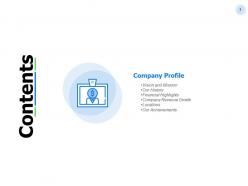
Slide 3: This slide highlights the Content Company profile.
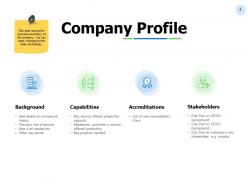
Slide 4: This slide shows the executive summary of the company. You can make changes to this slide accordingly.
Slide 5: This is Vision & Mission slide describing the companies Values, Mission and Vision.
Slide 6: This slide displays Our History with the help of a timeline.
Slide 7: This slide shows the key financial highlights of the company. You can edit the graph accordingly.
Slide 8: This slide displays the Growth attained by the company in recent years.
Slide 9: A wholistic view of the company headquarter along with various locations in US are displayed in this slide.
Slide 10: This is Our Achievements slide with related imagery and text boxes.
Slide 11: This slide highlights the Content work policies.
Slide 12: This slide displays Monthly Employee attendance portal. You can edit this slide accordingly.
Slide 13: This slide shows different types of Leaves and Holidays in the organisation.
Slide 14: This slide describes various office timings. You can make changes accordingly.
Slide 15: This slide describes the dress code followed in the office premise.
Slide 16: This is another slide showing Office Dress Code.
Slide 17: This slide highlights the Content Office rules & regulations.
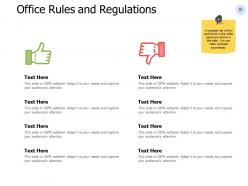
Slide 18: This slide shows Office Rules and Regulations with a complete list od Do's and don'ts.
Slide 19: This slide highlight the Content Major Roles & Responsibility.
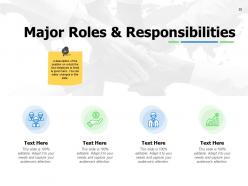
Slide 20: This slide presents Major Roles & Responsibilities with related imagery and text boxes.
Slide 21: This slide highlights the Content Compensation & Benefits.
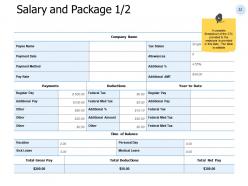
Slide 22: This slide represents Salary and Package with a detailed of the salary and other benefits offered by the firm.
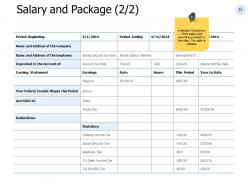
Slide 23: This is another slide describing Salary and Package.
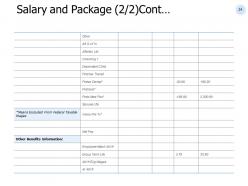
Slide 24: This is another slide continuing Salary and Package.
Slide 25: This slide displays the breakdown of Employee Stock option in a tabular form.
Slide 26: This slide displays the various Targets that are to be provided to the team and along with it various benefits to be given with them.
Slide 27: This slide shows Medical Insurance and Benefits provided by the firm.
Slide 28: This slide presents categories of Employee Awards and Accomplishments given by the firm.
Slide 29: This slide highlights the Content Training Schedule.
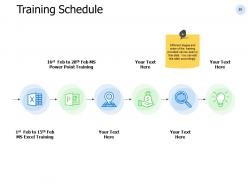
Slide 30: This slide shows Training Schedule with different stages and order of the training provided.
Slide 31: This slide highlights the Content Team Introduction.
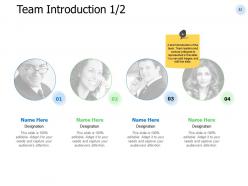
Slide 32: This slide presents Team Introduction with names and designation.
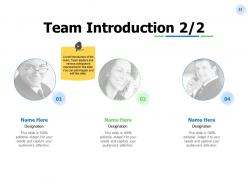
Slide 33: This is another slide on Team Introduction.
Slide 34: This slide highlights the Content Required Documents for HR Process.
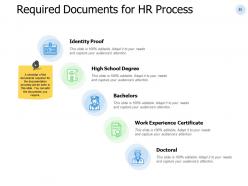
Slide 35: This slide shows the Required Documents for HR Process.
Slide 36: This slide highlights the Content Facilities and Welfare.
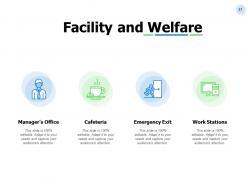
Slide 37: This slide displays Facility and Welfare with a wholistic view of the office premise and facilities like pantry work stations has been displayed here.
Slide 38: This slide highlights the Content Emergency Procedures.
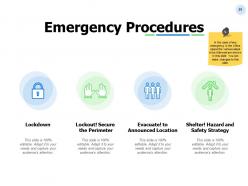
Slide 39: This slide shows Emergency Procedures describing various steps to be followed in case of an emergency.
Slide 40: This slide highlights the Content Questions & Feedback.
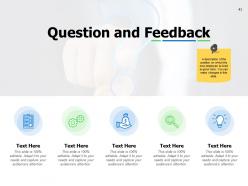
Slide 41: This slide shows a series of doubts and questions that the new employees might have regarding the workplace policies.
Slide 42: This slide reminds about a 15 minutes Coffee Break.
Slide 43: This slide is titled as Additional Slides for moving forward.
Slide 44: This is About Us slide to show company specifications etc.
Slide 45: This slide is titled as Post it. Post your important notes here.
Slide 46: This is a Puzzle slide with text boxes.
Slide 47: This is a Bulb or Idea slide to state a new idea or highlight information, specifications etc.
Slide 48: This is a Venn slide with text boxes to show information.
Slide 49: This is a Lego slide with additional text boxes.
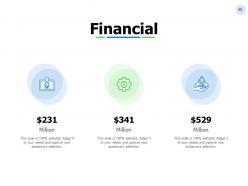
Slide 50: This is a Financial slide. Show your finance related stuff here.
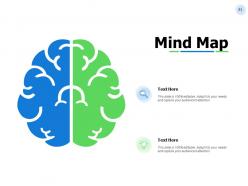
Slide 51: This slide shows Mind Map for representing entities.
Slide 52: This is a Comparison slide to state comparison between commodities, entities etc.
Slide 53: This is a Thank You slide with address, contact numbers and email address.
Human Resource Orientation Powerpoint Presentation Slides with all 53 slides:
Use our Human Resource Orientation Powerpoint Presentation Slides to effectively help you save your valuable time. They are readymade to fit into any presentation structure.
-
Human Resource Orientation
-

Contents Slide
-
Company Profile Slide
-
Company Profile
-
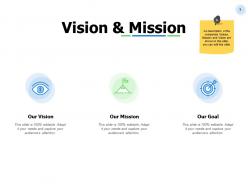
Vision Mission
-
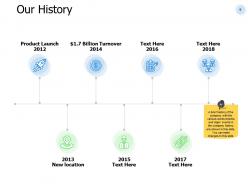
Our History
-
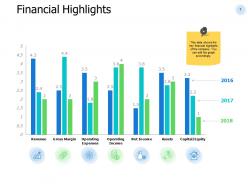
Financial Highlights
-
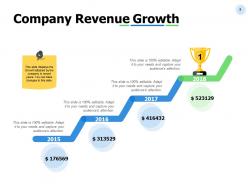
Company Revenue Growth
-
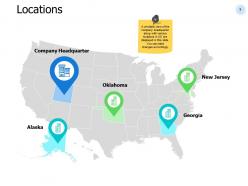
Locations
-
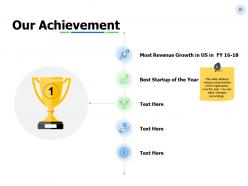
Our Achievement
-
Work Policies
-
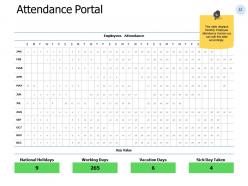
Attendance Portal
-
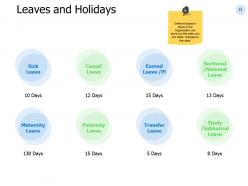
Leaves and Holidays
-
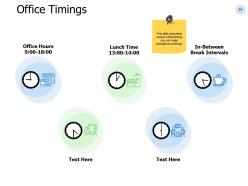
Office Timings
-
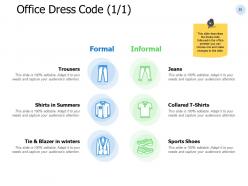
Office Dress Code 1 1
-
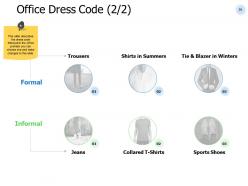
Office Dress Code 2 2
-
Office Rules Regulations
-
Office Rules and Regulations
-
Major Roles Responsibility
-
Major Roles Responsibilities
-
Compensation Benefits
-
Salary and Package 1 2
-
Salary and Package 2 2
-
Salary and Package 2 2 Cont
-
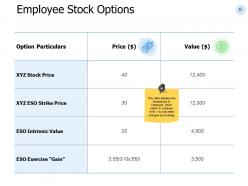
Employee Stock Options
-
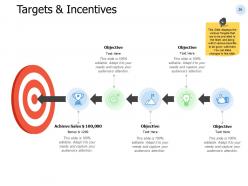
Targets Incentives
-
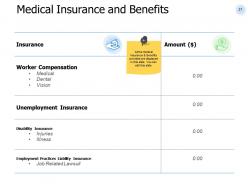
Medical Insurance and Benefits
-
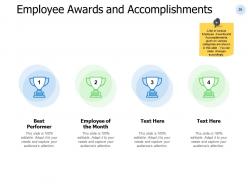
Employee Awards and Accomplishments
-
Training Schedule
-
Training Schedule
-

Team Introduction
-
Team Introduction 1 2
-
Team Introduction 2 2
-
Required Documents for HR Process
-
Required Documents for HR Process
-

Facilities and Welfare
-
Facility and Welfare
-
Emergency Procedures
-
Emergency Procedures
-
Questions Feedback
-
Question and Feedback
-
Coffee Break
-
Additional Slides
-
About Us
-
Post it
-
Puzzle
-
Bulb or Idea
-
Venn
-
Lego
-
Financial
-
Mind Map
-

Comparison
-
Thank You
FAQs for Human Resource Orientation
Honestly, most companies mess this up by cramming everything into one overwhelming day. Start with the basics - benefits, policies, all that administrative stuff they need to know. Then spend real time on culture and values (this is where places usually fail because they rush it). Make sure they actually understand their role and how it connects to the bigger picture. Oh, and definitely give them a buddy for random questions - trust me, there will be tons. Spread it out over a few weeks instead of doing a marathon session. Way more effective that way.
Honestly, good orientation is everything for keeping people around. New hires who get proper introductions to the culture and clear role expectations? They actually want to stay. I've watched so many companies mess this up - people feel totally lost their first week and bail within months. Your onboarding should hit the basics without drowning them in info. Give them the tools they need, introduce them to key people, but don't cram everything into day one. The goal is making them think "yeah, I can see myself here" pretty quickly. It's wild how much that first impression matters for retention.
Your company culture basically sets the tone for the whole onboarding thing. Like if you're big on teamwork, you'll probably do tons of group activities and introductions. More formal places focus on procedures and who reports to who. I've watched some companies nail this - their orientation actually matches what you experience day-to-day. Others? Total disconnect. Culture also decides if you're more about building relationships or just getting tasks done, how much freedom new people get, and what behaviors you reward. Oh, and make sure your orientation doesn't feel like false advertising once people start working.
Honestly, just start with digitizing all that boring paperwork stuff - let new hires knock it out beforehand through an online portal. Set up welcome videos from the team (way more personal than reading some manual). VR training is actually becoming a thing now if your company's into that. I'd throw in some automated check-ins too, maybe through an app or chatbot, just to see how people are doing those first couple weeks. The trick is making it feel human, not like they're talking to a robot all day. Focus on the repetitive tasks first - that's where you'll see the biggest difference.
Start with inclusive language - ditch assumptions about people's backgrounds or family situations. Those generic boardroom stock photos? Replace them with actual diverse faces in different roles. Before the session, check what accessibility stuff people need and have materials ready in various formats. Small group discussions work way better than just talking at everyone - introverts will actually participate. Oh, and definitely mention your company's diversity commitments and employee resource groups during orientation. Honestly, the whole point is making people feel like they belong immediately. Go through your entire process with that mindset.
Orientation is your best shot at making company values actually stick. Skip the boring PowerPoint slides though - nobody remembers those anyway. Tell real stories about employees who lived those values or faced tough choices. When introducing team members, mention how they embody different values in action. Case studies work great too - have new hires spot the values themselves. The whole point is making this stuff feel real, not like some poster hanging in the break room. If you can connect values to what they'll actually be doing day-to-day, you're golden.
Look at time-to-productivity first - how fast new people actually get up to speed. Retention rates matter too, especially at 90 days (that's when most bail if they're gonna). I'd definitely check completion rates for your modules and get feedback from managers since they're stuck dealing with confused newbies. Employee engagement surveys after orientation help a ton. Oh and don't sleep on cost-per-hire metrics. Honestly though? Pick like 3-4 that actually matter to your company instead of tracking everything. You'll just overwhelm yourself with data you won't use anyway.
So remote onboarding is just doing everything virtually - video calls, digital docs, meeting people through screens. The hardest part? You can't build real relationships or feel the company vibe. Those random conversations by the water cooler or grabbing lunch together... yeah, that's gone. New hires get burned out from back-to-back Zoom meetings while trying to learn everything. Tech problems always mess up your plans too. Plus you can't tell if someone actually gets it or they're just pretending to follow along. Oh, and definitely set up casual virtual coffee breaks and pair newbies with a buddy - that actually helps.
Honestly, the worst thing companies do is create this boring generic orientation that could work for literally anyone. New hires get overwhelmed because everything gets shoved into day one - policies, paperwork, benefits, the works. It's like drinking from a fire hose. What really bugs me though? Most places focus entirely on rules and forms instead of helping people actually connect with the team and understand the vibe. Then after that first week - radio silence. Nobody checks in anymore. Spread things out over a few months and actually tailor it to what each role needs. Way better results.
Here's what I'd do - set up feedback checkpoints at like 30 days and during exit interviews. Ask specific stuff: what confused you, what felt like a waste of time, what was missing? Most places just ask "how'd it go?" which gets you nowhere. Focus on timing issues, whether content actually mattered, how they liked the format. Then review patterns every quarter and actually change things. Oh, and test your tweaks with the next group - fresh hires remember what it's like being totally lost. They'll spot your company's weird habits that everyone else ignores. Simple loop: collect, adjust, test, repeat.
Okay so first things first - hit them with the LMS info and mentorship stuff right away. Everyone's secretly wondering if they'll actually grow there or just be stuck forever. Throw in tuition reimbursement too because that's huge. Cover the formal training like workshops and conferences, but honestly the informal stuff matters just as much - lunch-and-learns, shadowing other departments. Career pathing resources are key. Don't just mention programs though, actually introduce them to whoever runs L&D so they have a real person to bug when they're ready.
Honestly, mix up your orientation cohorts instead of keeping departments separate. Throw marketing, engineering, and sales people together from day one. I've watched this totally change company culture when leadership actually commits to it - which is the hard part, obviously. Give them real problems to solve together during training, not just boring individual role stuff. Make sure they understand how departments connect to each other. The tricky bit is keeping those relationships going afterward. Maybe try buddy pairs across teams or follow-up projects so they don't just forget each other exists once they're back at their desks.
Honestly, mentorship programs are amazing for onboarding new people. Those first weeks are brutal - so much info thrown at you. Having a mentor gives newbies someone to actually ask the real questions, like "wait, do people really use this system?" or "what's the deal with the dress code here?" It's not just practical stuff either. Mentors help with the emotional side and introduce them to people they wouldn't normally meet. Plus (and this might surprise you), both the mentor and new person end up happier at work. If you're setting this up, pair people in week one. Don't wait.
Honestly, getting leadership involved changes everything. New hires instantly get that orientation isn't just boring paperwork when they see executives actually showing up and talking about company culture. Your budget suddenly gets better too - no more death-by-PowerPoint situations. I've watched the most mundane orientations turn into something people actually remember once senior leaders started caring about them. The enthusiasm spreads fast. Start small though - find just one executive who's willing to champion your program. Trust me, it'll make your life way easier and actually fun for once.
Honestly, the biggest game-changers right now are virtual onboarding and personalized learning paths. Companies are finally ditching those brutal all-day orientation sessions for bite-sized stuff spread out over weeks. Mobile-first is huge too since nobody wants to be chained to a desktop. AI platforms are getting scary good at customizing content based on your role. But here's what's really working - peer mentoring is back in a big way. New hires would rather learn from someone who started six months ago than watch another HR video, you know? Your best bet? Extend orientation way past week one and make it actually interactive. Survey your recent hires first though - they'll tell you what was helpful versus total fluff.
-
Professional and unique presentations.
-
Top Quality presentations that are easily editable.
-
Very unique and reliable designs.