


Microsoft Company Profile Powerpoint Presentation Slides CP CD




Try Before you Buy Download Free Sample Product
 Impress Your
 Audience
 100%
100% Editable
 Save Hours
 of Time


Check out our professionally designed Microsoft Company Profile PowerPoint presentation. The Information technology services PPT covers the executive summary, company introduction, business model, global presence, historical timelines, product portfolio, affiliated companies, employee base, cultural diversity, shareholding pattern, etc. Also, this Software Template shows the Board of Directors, key stats and figures, and revenue growth from 2018 to 2022. Moreover, this Corporate overview PowerPoint outlines business finances such as gross profit, operating profit, net profit, assets and liabilities, cash flow, etc. Finally, this Company information PowerPoint presentation illustrates business performance evaluation with competitor and SWOT analyses. Download our 100 percentage editable and customizable template, also compatible with Google Slides.
People who downloaded this PowerPoint presentation also viewed the following :
Content of this Powerpoint Presentation
Slide 1: The slide introduces Microsoft Company Profile. State your company name.
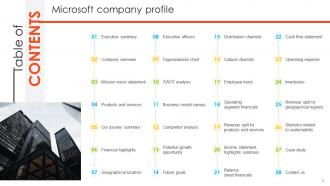
Slide 2: The slide displays Table of contents.
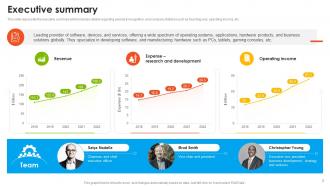
Slide 3: This slide represents the executive summary which includes details regarding awards & recognition, and company statistics.
Slide 4: This slide covers Microsoft company introduction which includes company overview (CEO, industry, founders, etc.).
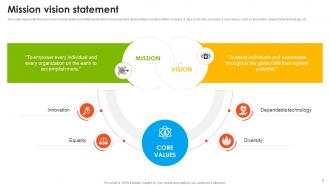
Slide 5: This slide represents the vision and mission statement of Microsoft which showcases the desired future position of the company.
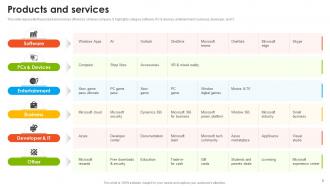
Slide 6: This slide presents the product and services offered by Unilever company.
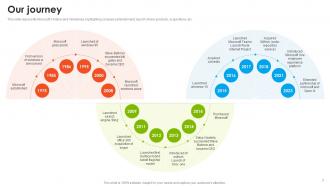
Slide 7: This slide represents Microsoft’s history and milestones, highlighting company establishment, launch of new products, acquisitions, etc.
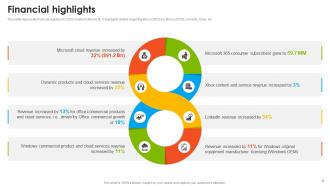
Slide 8: This slide displays financial statistics for 2022 related to Microsoft.
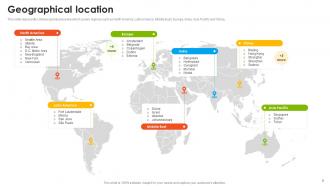
Slide 9: This slide presents Unilever global presence which covers regions.
Slide 10: This slide renders the leadership executive of Microsoft, which highlights different designations.
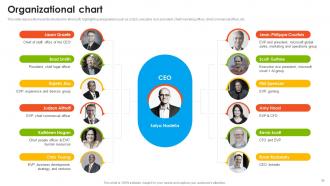
Slide 11: This slide highlights hierarchy structure for Microsoft, highlighting designations.
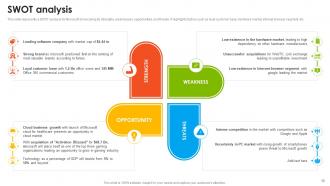
Slide 12: This slide presents a SWOT analysis for Microsoft showcasing its strengths, weaknesses, opportunities, and threats.
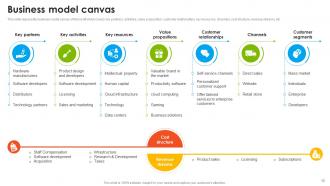
Slide 13: This slide depicts business model canvas of Microsoft which covers key partners, activities, value proposition, customer relationships, etc.
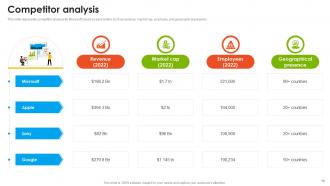
Slide 14: This slide represents competitor analysis for Microsoft based on parameters such as revenue, market cap, employee, and geographical presence.
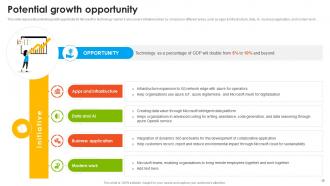
Slide 15: This slide presents potential growth opportunity for Microsoft in technology market.
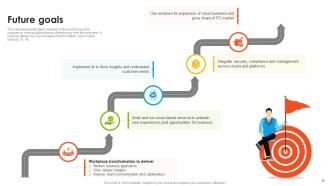
Slide 16: This slide renders future objective of Microsoft to lead the company in several distinct areas of technology over the long term.
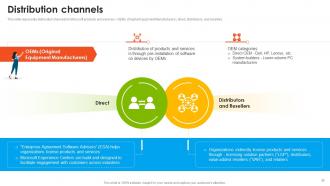
Slide 17: This slide displays distribution channels for Microsoft products and services.
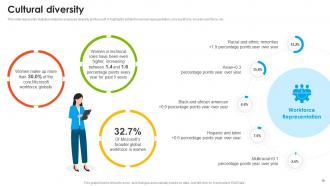
Slide 18: This slide represents statistics related to employee diversity at Microsoft.
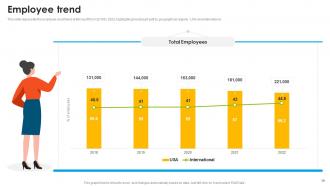
Slide 19: This slide presents the employee count trend of Microsoft from 2018 to 2022, highlighting headcount split by geographical regions.
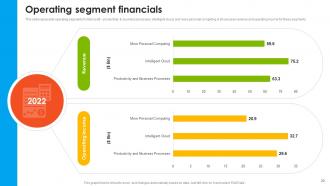
Slide 20: This slide highlights operating segments for Microsoft – productivity & business processes, intelligent cloud, and more personal computing.
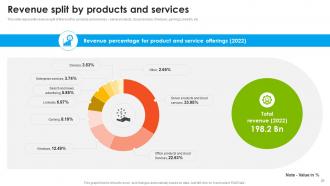
Slide 21: This slide renders revenue split of Microsoft by products and services – server products, cloud services, Windows, gaming, LinkedIn, etc.
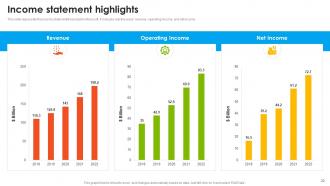
Slide 22: This slide displays the income statement financials for Microsoft.
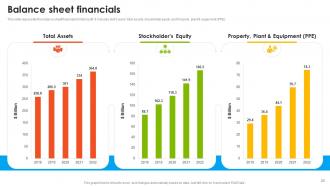
Slide 23: This slide represents the balance sheet financials for Microsoft.
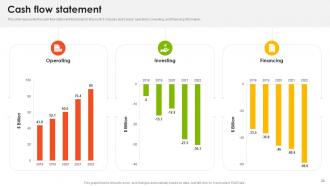
Slide 24: This slide presents the cash flow statement financials for Microsoft.
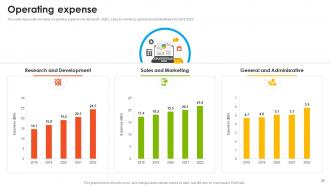
Slide 25: This slide renders elements of operating expenses for Microsoft.
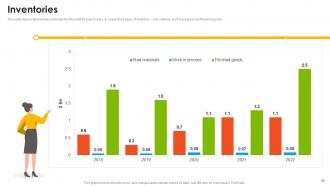
Slide 26: This slide displays inventory summary for Microsoft for past 5 years.
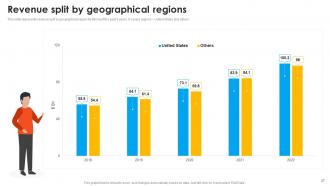
Slide 27: This slide depicts revenue spilt by geographical region for Microsoft for past 5 years.
Slide 28: This slide represents statistics associated with environmental sustainability.
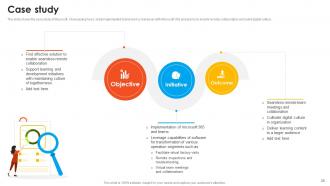
Slide 29: The slide shows the case study of Microsoft, showcasing how L’oréal implemented hybrid work a makeover with Microsoft 365 and teams.
Slide 30: This is a slide with address, contact numbers and email address.
Slide 31: This slide shows all the icons included in the presentation.
Slide 32: This slide is titled as Additional Slides for moving forward.
Slide 33: This slide depicts Venn diagram with text boxes.
Slide 34: This slide presents Roadmap with additional textboxes.
Slide 35: This is Our Target slide. State your targets here.
Slide 36: This slide shows Post It Notes. Post your important notes here.
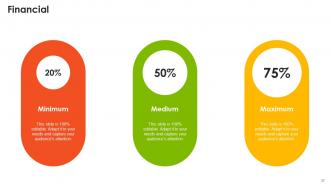
Slide 37: This is a Financial slide. Show your finance related stuff here.
Slide 38: This is an Idea Generation slide to state a new idea or highlight information, specifications etc.
Slide 39: This is a Thank You slide with address, contact numbers and email address.
Microsoft Company Profile Powerpoint Presentation Slides CP CD with all 47 slides:
Use our Microsoft Company Profile Powerpoint Presentation Slides CP CD to effectively help you save your valuable time. They are readymade to fit into any presentation structure.













FAQs for Microsoft Company Profile Powerpoint Presentation
Oh man, good question! Start with MS-DOS in '81 - that basically handed them the whole PC thing on a silver platter. Windows 95 was huge too, made computers something normal people could actually use. Then they bundled Internet Explorer and absolutely destroyed Netscape (kinda ruthless honestly). Xbox in 2001 was wild - who thought a software company could take on Sony? But it worked. Azure was smart, jumping on cloud computing around 2010. They also bought LinkedIn which was... interesting? Each one either created markets or killed the competition. Perfect examples for studying how one decision can flip entire industries.
Microsoft's done a complete 180 from those old desktop days. Windows used to be just an OS, now it's this whole connected thing with Teams built right in and cloud stuff everywhere. Office 365 replaced those plastic CD cases we used to buy - thank god, honestly. You get updates automatically now plus all the collaboration tools. They're super into subscriptions instead of one-time buys, which I get since everything stays current that way. Oh, and literally everything they're working on is cloud-focused now. Just something to think about if you're picking software for work or whatever.
Yeah, Microsoft's become one of the big three cloud players now - they're right up there with AWS and Google Cloud. Azure has been massive for them, like 30-40% growth year over year which is pretty crazy. They're not just a software company anymore. What's really clever is how they got existing customers to move their Windows stuff and Office to the cloud instead of starting from scratch. If you're already using Microsoft products (which, let's be honest, most companies are), Azure makes a lot of sense to look at alongside AWS.
So Microsoft builds security right into everything from the start instead of trying to add it later - way smarter approach honestly. They've got this whole Security Development Lifecycle thing where they do threat modeling, code reviews, all that stuff before releasing anything. Works pretty well too since you can catch problems early when they're not expensive nightmares to fix. You'll see it in Azure, Windows, Office 365 with multi-factor auth and zero-trust setups. Oh and they use AI for threat detection which is kinda cool. Just make sure to check what certifications they have for your specific industry requirements.
So Microsoft makes money from three main areas: Office 365/Teams stuff, their cloud business (Azure mainly), and then Windows/Xbox/Surface devices. Azure's honestly where the magic happens now - it's growing like crazy and basically carries the whole company. They switched from the old "buy software once" model to subscriptions, which is way smarter for steady cash flow. Oh and if you're thinking investment-wise, just watch their cloud numbers - that's literally what Wall Street cares about most. The other stuff's fine but Azure growth is what moves their stock.
So Microsoft does this "culture of learning" thing that's actually pretty smart. They give people dedicated time for hackathons and experimenting with random ideas. There's internal funding too - you can literally pitch your concept and get resources to build it. Team rotations are huge there, which honestly beats being stuck doing the same thing forever. Oh, and they throw money at training and conferences. The real trick though? You can't just tell people to be creative during their normal workday. That never works. Give them actual time and budget to mess around with stuff.
Dude, Microsoft totally flipped the script on open source. They open-sourced PowerShell, .NET Core, and VS Code - plus that $7.5 billion GitHub acquisition was pretty much them putting their money where their mouth is. Now they're actually contributing to Linux kernel stuff, which honestly still blows my mind. Azure plays nice with open-source tools now too. Oh and they're backing the Open Source Security Foundation. So yeah, if you're looking at Microsoft tools, don't assume it's all locked-down proprietary nonsense anymore.
Look at how Microsoft's "growth mindset" thing actually changed their whole game plan. They went from fighting cloud computing to crushing it with Azure - pretty wild turnaround. Their whole "learn-it-all" approach means teams aren't scared to experiment with AI stuff across everything. Plus they ditched the closed ecosystem mentality (finally!) and now Office works great even on Apple devices. When something's not working? They'll kill it fast and focus on what's actually succeeding. The shift from competing with everyone to partnering with them has been huge for their strategy.
Honestly, Microsoft's buying spree has been pretty genius. They went from just making software to owning entire ecosystems - LinkedIn for $26B, GitHub for $7.5B, plus all those gaming companies like Activision. The LinkedIn deal especially was smart since it feeds right into their Office 365 stuff. Some people thought they overpaid, but look at their stock since 2014. They're actually competing with Google and Amazon now instead of getting left behind. Oh and the gaming acquisitions? That's them going after a completely different audience, which is bold but seems to be working.
So Microsoft's going hard on this stuff - carbon negative by 2030, which is honestly pretty ambitious. They want to erase all their past emissions by 2050 too. Big money behind it - like a billion dollars for climate tech innovation. Renewable energy, better datacenters, the whole deal. Social stuff includes digital equity programs and accessibility features. Oh, and skills training. If you need actual numbers for whatever you're working on, their annual sustainability report has all the metrics laid out. Way more detailed than the PR fluff you usually see.
Microsoft's going all-in on AI lately. They've got GPT-4 baked into the whole Office suite now - Word, Excel, PowerPoint, everything has Copilot. Azure OpenAI is their big enterprise play, plus they just dropped Copilot Studio for building custom AI assistants. Honestly, their Bing Chat push feels pretty desperate to challenge Google's search game, but whatever works I guess. They're also throwing money at AI chips so they don't have to rely on NVIDIA as much. If your company's looking at AI stuff, definitely peek at Azure - they're really trying to own the enterprise space.
So Microsoft's actually doing some interesting stuff with D&I. They tie executive pay to diversity metrics, which I think is pretty smart - puts real money behind the goals. Plus they've got employee resource groups and publish these annual reports that are surprisingly honest about where they're still struggling. Their hiring practices focus on inclusion too, with unconscious bias training and all that. Oh and they set specific representation targets. If you need numbers for whatever you're working on, their diversity report online has solid data - I've used it before for benchmarking.
Microsoft's gotten really smart about partnerships lately. The OpenAI thing was brilliant - instantly put them ahead in the AI race. They've also locked down deals with Adobe and Salesforce that make it harder for companies to leave once they're in the ecosystem. Way different from the Ballmer era when they tried to do everything themselves (thank god). Short version: they don't have to build from scratch to compete with Google and AWS anymore. When you're looking at Microsoft stuff, check what integrations they offer first. That's usually what makes the difference between a smooth rollout and a total headache.
Honestly, Microsoft's gotten way better with privacy after they screwed up in the past. They only grab data that's actually needed now, which is nice. You can check your Privacy Dashboard to see what they have on you - and yeah, you can delete things too. Pretty wild how much detail they show you tbh. They build privacy protection right into their products from the ground up instead of just slapping it on later. Worth checking out if you're curious what they know about you.
Microsoft's got this crazy tight grip on businesses - once you're in their Office 365/Teams/Azure world, good luck getting out. Everything connects so smoothly it's almost unfair to competitors. Azure's actually giving Amazon a real fight in cloud stuff too. The subscription money is solid and predictable, unlike Google who's still figuring out enterprise (honestly Google Workspace feels clunky compared to Office). Oh and here's the thing - when you're looking at tech stocks, that "sticky" customer thing is gold. Way better than betting on the next shiny consumer gadget that might flop.
-
Wonderful templates design to use in business meetings.
-
Crisp and neat slides. Makes it fun and easier to curate presentations.