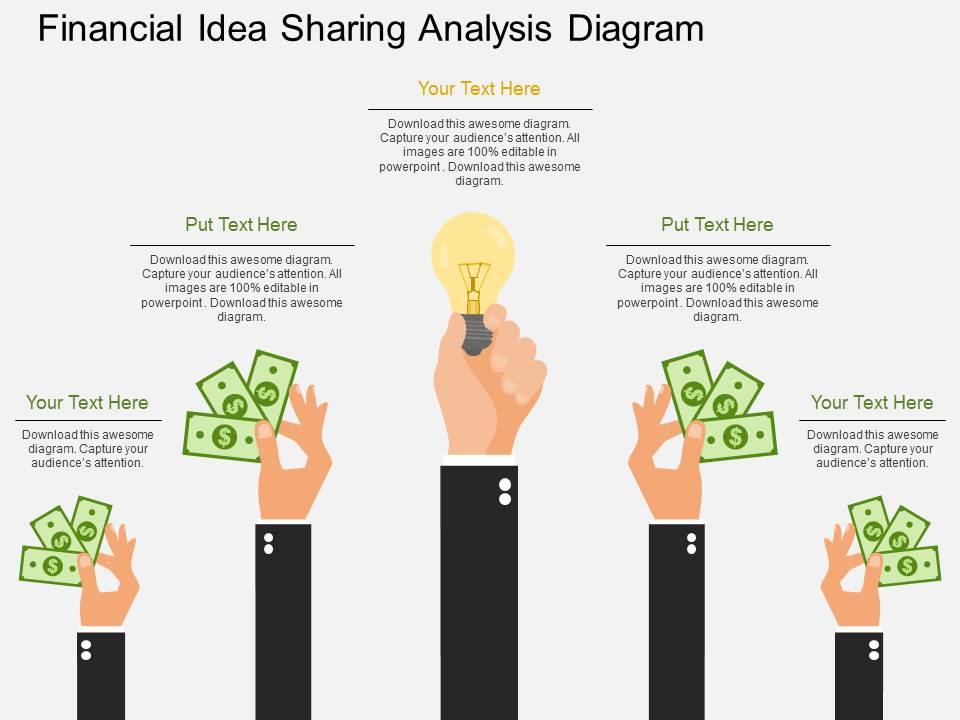
Ppt financial idea sharing analysis diagram flat powerpoint design

Rating:
80%
Ppt financial idea sharing analysis diagram flat powerpoint design
Slide 1 of 4

You must be logged in to download this presentation.

Favourites Favourites

Try Before you Buy Download Free Sample Product

Audience Impress Your
Audience
Editable 100%
Editable
Time Save Hours
of Time
The Biggest Sale is ending soon in
0
0
:
0
0
:
0
0
Rating:
80%
Presenting ppt financial idea sharing analysis diagram flat powerpoint design. Presenting ppt financial idea sharing analysis diagram flat powerpoint design. This Power Point template diagram has been crafted with graphic of dollar symbol and hands diagram. This PPT diagram contains the concept of financial idea sharing analysis. Use this PPT diagram for business and finance related presentations.

People who downloaded this PowerPoint presentation also viewed the following :

FAQs for Ppt financial idea sharing analysis diagram

So you want to break this down into four main chunks: profitability (margins, ROE, ROA), liquidity (current ratio, cash flow), debt ratios plus interest coverage, and efficiency stuff like asset turnover. Honestly, looking at just one period is pretty useless - you need trends over time. Industry benchmarks matter too since numbers mean nothing without context. Don't ignore the softer stuff either, like whether management actually knows what they're doing. Start with income statement and balance sheet, then cash flow gets interesting. Oh, and figure out your key questions first - otherwise you'll just drown in random data.

So variance analysis is just comparing what actually happened vs what you planned - super helpful for figuring out why your numbers look the way they do. Like if your labor costs keep coming in high or certain products aren't selling well, you'll catch it fast. Honestly, most people think it's common sense but then never actually do it consistently (guilty as charged sometimes). The real value is using what you learn to tweak future budgets and decide where to put your resources. I'd do monthly reviews - waiting until December to figure out you're off track is pretty useless.

Think of ratio analysis as your financial magnifying glass - it takes boring spreadsheet numbers and shows you what's really going on with a company. You'll catch problems early, see how they stack up against competitors, and spot trends that matter. Honestly, once you get the hang of it, you feel like you can see through all the accounting fluff. The main categories are profitability, liquidity, efficiency, and debt ratios. They give you the full picture of financial health. Start with those four buckets, then focus on whatever ratios make sense for your specific situation or industry.

Look, cash flow statements are way more useful than P&L sheets tbh. You might show a profit on paper but still can't cover rent because your timing's screwed up. The statement splits everything into three buckets - operating, investing, and financing activities. What you really want to see is positive cash flow from operations that's actually growing. That tells you if your business makes real money or just burns through what investors gave you. Honestly, I've seen too many "profitable" companies go under because they ignored cash flow. Operating cash flow positive = you're probably doing something right.

So horizontal analysis tracks changes over time - like comparing this year's revenue to last year's. Vertical analysis breaks down each line item as a percentage within one period. Picture it this way: horizontal shows if you're growing or declining, vertical shows your cost structure at a snapshot moment. I always run both because honestly, they tell totally different stories about what's happening in your business. Start with vertical to see where your money's actually going, then horizontal will show you the trends. Sometimes the vertical looks fine but horizontal reveals you're bleeding cash somewhere - that's the stuff you'd miss otherwise.

Okay so think of benchmarks like this - you need context to know if your numbers actually mean anything. Like, you could be crushing it with 15% growth, but if everyone else in your industry is hitting 25%, you're actually behind. Grab the key metrics for your sector first (profit margins, growth rates, whatever matters most). Then compare your company's performance against those standards. You'll spot issues or wins that weren't obvious before. Honestly, analyzing data without benchmarks is pretty pointless - it's like knowing you bench 200 pounds but having zero clue if that's impressive or sad.

Look, financial analysis basically gives you actual numbers to either confirm your hunches or totally flip your perspective. I dig into stuff like profitability ratios, cash flow, debt levels - you know, the real meat behind whether a company's actually solid. Can't tell you how many "amazing" investments I've watched crash once someone did basic ratio work. ROE, debt-to-equity, free cash flow - these show if management's creating genuine value or just surfing hype. Always compare against industry averages though, that's where things get interesting. Numbers don't lie, even when everything else does.

Excel's still your best bet - everyone uses it for financial stuff. QuickBooks and Xero handle basic accounting, but bigger companies go with SAP or Oracle (those are kind of a pain tbh). Power BI and Tableau make those slick dashboards bosses obsess over. Python's getting popular for complex modeling too. Oh, and platforms like Adaptive Insights are solid for planning. Honestly though? Start with Excel since it's everywhere, then figure out what your field actually uses. You can't go wrong there.

Your spreadsheets only show part of the story, honestly. Numbers tell you what already happened, but you're missing stuff like whether management actually knows what they're doing or if the company has any real competitive edge. I always check if they've got something protecting their business from getting steamrolled by competition. Reading those boring management discussion sections in annual reports helps a ton - same with analyst reports. Don't skip the qualitative stuff just because it's not as clean as your ratios. Both pieces matter if you want to predict what's coming next.

Dude, biggest mistake is using crappy old data or getting tunnel vision on your first idea. Cherry-picking numbers is so tempting when you're hyped about a company - I've totally done this before. Cross-reference everything because companies love hiding sketchy stuff in footnotes (seriously, read those). Industry context matters way more than people think. Don't just look at metrics that make you feel good about your thesis. Run different scenarios to stress-test your assumptions. Oh and definitely get someone else to review your work - you'll miss obvious stuff when you're too close to it.

Look, financial forecasting is basically your roadmap for smart decisions. You can run different scenarios and see how they'd mess with your numbers before you actually spend the money. Cash flows, revenue patterns, risks - you're predicting all that stuff months out instead of just winging it. Honestly, it's a game changer for timing when you enter markets or how you split up budgets. The trick is updating your forecasts regularly (I'd say quarterly but whatever works). Think of it like... idk, planning a road trip but actually checking traffic conditions instead of just hoping for the best.

Trend analysis is basically financial radar for your business. You'll catch stuff like declining profit margins or cash flow problems way before they blow up. Single snapshots don't tell you much - you need to see patterns over time. Watch for red flags like revenue consistently dropping, debt piling up, or expenses growing faster than your income. Honestly, most people just look at one month and think they're good. The whole point is spotting these trends early so you can actually do something about it instead of scrambling later when everything's falling apart.

So market volatility basically screws with everything - makes predicting stuff way harder. Asset values become unreliable when prices are bouncing around like crazy. You'll be updating your models constantly just to keep up, which honestly gets exhausting after a while. Fair value measurements? Good luck with that since market prices don't always show what something's actually worth during chaos. Financial statements get messy too, especially if you're dealing with market-sensitive assets. My take: use wider ranges in your forecasts and just be upfront with people about the uncertainty from the start.

So liquidity ratios are like your heads-up for cash flow issues - they tell you if a company can actually pay what it owes. Current ratio and quick ratio are the big ones to watch. Honestly, I prefer the quick ratio because it doesn't count inventory, which can be a pain to sell quickly. When you see ratios under 1.0 consistently? That's trouble. The company might not handle its obligations well. Oh, and definitely compare against industry averages first - some sectors just run leaner than others naturally.

So sensitivity analysis is basically stress-testing your forecasts when assumptions change. You tweak variables like sales growth or costs to see how much your results shift. Maybe a 10% revenue drop destroys everything, but cost changes? Barely matters. That tells you where to focus your energy. Honestly, it's one of those things that seems tedious until your boss starts firing "what if" questions at you during the presentation. Then you'll be glad you did the extra work upfront - gives you actual data to back up your responses instead of just winging it.

Ratings and Reviews

80% of 100
Write a review
Most Relevant Reviews
  1. 80%

    by Daren Henry

    Informative presentations that are easily editable.
  2. 80%

    by Darius Webb

    Very well designed and informative templates.

2 Item(s)

per page: