


Recruitment KPI Powerpoint Ppt Template Bundles




Try Before you Buy Download Free Sample Product
 Impress Your
 Audience
 100%
100% Editable
 Save Hours
 of Time


Our Recruitment KPI Powerpoint Ppt Template Bundles are topically designed to provide an attractive backdrop to any subject. Use them to look like a presentation pro.
People who downloaded this PowerPoint presentation also viewed the following :
Recruitment KPI Powerpoint Ppt Template Bundles with all 23 slides:
Use our Recruitment KPI Powerpoint Ppt Template Bundles to effectively help you save your valuable time. They are readymade to fit into any presentation structure.
-
Recruitment KPI
-
Employee recruitment KPI dashboard icon
-
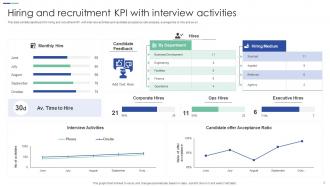
Hiring and recruitment KPI with interview activities
-
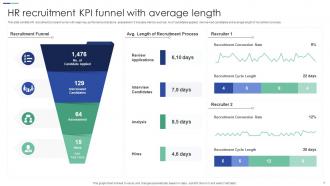
HR recruitment KPI funnel with average length
-
Human resource recruitment KPI dashboard icon
-
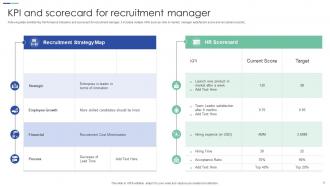
KPI and scorecard for recruitment manager
-
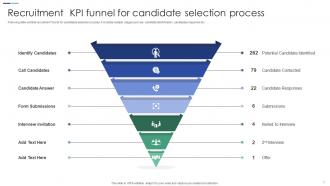
Recruitment KPI funnel for candidate selection process
-
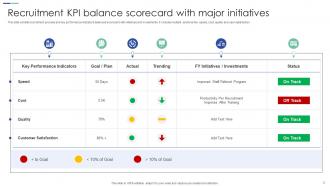
Recruitment KPI balance scorecard with major initiatives
-
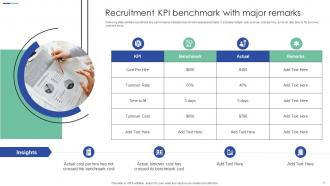
Recruitment KPI benchmark with major remarks
-
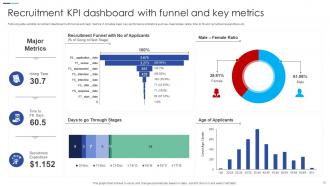
Recruitment KPI dashboard with funnel and key metrics
-
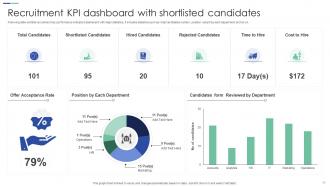
Recruitment KPI dashboard with shortlisted candidates
-
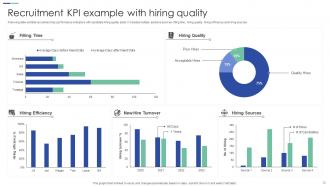
Recruitment KPI example with hiring quality
-
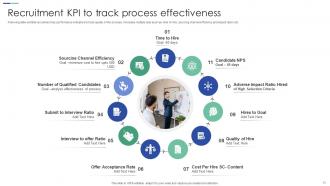
Recruitment KPI to track process effectiveness
-
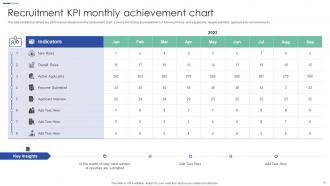
Recruitment KPI monthly achievement chart
-
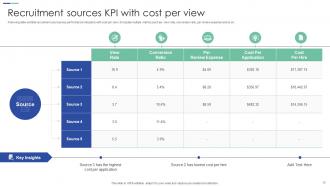
Recruitment sources KPI with cost per view
-
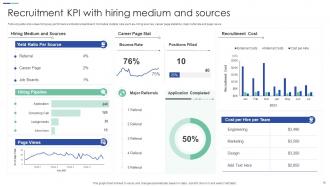
Recruitment KPI with hiring medium and sources
-
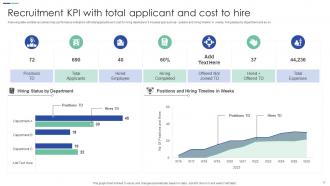
Recruitment KPI with total applicant and cost to hire
-
Recruitment KPI
-

-

-

-

-

FAQs for Recruitment KPI Powerpoint
So there's like 5 key things I'd focus on. Time-to-fill is obvious - how long from job posting to someone saying yes. Quality of hire matters too, check their performance after 90 days. Don't sleep on tracking cost-per-hire and which sources actually work (some job boards are total money pits). Offer acceptance rate tells you if people want to work there. Honestly, candidate experience scores are clutch if you can survey people after. Most places go overboard with metrics but these give you what's actually happening. Get these down first, then you can dive into the fancy stuff later.
Time-to-fill shows you exactly where your hiring gets stuck. Long average compared to industry standards? Your interview rounds are probably too slow or people aren't making decisions fast enough. Breaking it down by role and team matters way more than looking at one overall number - honestly, that's where most people mess up. You'll spot which departments always take forever (sometimes that's just reality) and whether new recruiting channels actually work faster. Oh, and seasonal patterns become super obvious when you track this stuff consistently. Focus on the specific bottlenecks instead of trying to speed up everything at once.
Yeah, candidate quality is huge - probably the KPI I'd focus on first since it affects everything downstream. Track your interview-to-offer ratios and how quickly new hires actually get productive. 90-day performance reviews tell you a lot too. Here's the thing though - "quality" means different things to different managers, which makes it messy to measure. I always start by nailing down specific criteria with each hiring manager before tracking anything. Otherwise you're just collecting random data. Also watch how many people advance through each interview round - gives you an early read on whether your sourcing is on point.
First figure out what KPIs actually matter for your industry - time-to-hire, cost-per-hire, quality of hire, that stuff. LinkedIn's Talent Insights is honestly your best resource since they update it constantly and break things down by industry and location. SHRM has decent reports too. You could also join some HR communities or casually reach out to companies in your space (non-competitors obviously). Oh, and don't get too hung up on the raw numbers - context is everything. Like, 30 days to fill a role might be amazing for senior positions but pretty awful for entry-level stuff.
Dude, candidate experience totally makes or breaks your offer acceptance rates. I've watched companies go from 70% acceptance down to like 40% just because their process sucked. Candidates hate being rushed through interviews or getting radio silence from recruiters - honestly, who can blame them? Even if someone was super interested initially, they'll bail if you treat them poorly during the process. It's wild how much this stuff matters. The companies that actually respect candidates and give decent feedback? They're hitting 70%+ acceptance rates while everyone else struggles. Worth tracking your satisfaction scores alongside acceptances - you'll see the connection pretty quick.
So I'd do post-hire surveys with your hiring managers - just a quick 1-10 scale works great. Wait like 30-60 days after someone starts, then ask about candidate quality, timeline, the whole experience. Honestly? The best metric is whether they'd work with the same recruiter again. That tells you everything. Run these quarterly so you're not constantly bugging people. Track trends instead of freaking out over one bad score. Shoot for 7+ average and actually do something with the feedback - otherwise what's the point, right?
Start with the basics - track representation at each stage of your funnel. Applications, interviews, hires, all broken down by demographics. Don't overthink it initially. Pick concrete targets like boosting underrepresented applications by 20% or hitting 50/50 gender splits in final interviews. Also check which sourcing channels actually work for diverse candidates (some are honestly way better than others). Compare time-to-hire across different groups too. The real trick? Make these numbers just as visible as your other KPIs. Otherwise they'll just sit in a spreadsheet somewhere collecting dust.
Look, you're probably wasting so much time on manual tracking right now. ATS systems will automatically grab your time-to-hire and conversion rates without you lifting a finger. Real-time dashboards beat waiting around for monthly reports that are already stale by the time you see them. Plus integration tools pull everything from job boards and social platforms into one place - no more juggling five different spreadsheets. I honestly can't believe how much time this stuff saves once you get it set up. Just audit what you're doing manually first and pick the biggest pain point to automate.
Don't treat KPIs like they're the holy truth - context matters way more than people think. Your time-to-hire went up? Maybe you're just being pickier about candidates, which isn't necessarily bad. Companies love showing off their pretty numbers while hiding the ugly ones (we've all seen this). Also, stop comparing your startup metrics to Google's - totally different worlds. I learned this the hard way at my last job. Look at several KPIs together and always ask "why" behind the numbers. Short answer: dig deeper.
Check your recruiting KPIs weekly - catches problems before they snowball. Monthly reviews are for the bigger picture stuff and process tweaks. I've watched teams wait until quarterly reviews and honestly? They miss way too much by then. Don't stress about daily numbers though, that data gets pretty messy. Time-to-fill spikes or candidate quality drops become obvious in weekly check-ins. Set up a dashboard you can glance at each week, then actually block calendar time monthly to dig into what's really happening with your hiring funnel.
Honestly, start with surveying managers 90 days after new hires start - they'll give you the real tea on whether your sourcing actually works. Track candidate feedback too, plus how satisfied hiring managers are with your process. Interview quality is massive though - are people giving actual useful feedback or just "yeah they seemed fine"? Also worth checking if your pipeline's diverse and how new people perform in their first quarter. Oh and cultural fit ratings matter more than people think. These softer metrics tell you if you're finding good people, not just warm bodies to fill roles quickly.
Figure out what your company's actually stressing about - growth, cutting costs, whatever. Map your recruiting numbers straight to that stuff. Fast scaling? Track time-to-fill and how strong your pipeline is instead of just cost-per-hire (though finance teams eat that up). Quality matters more? Look at retention and how well new hires perform. Honestly, the real trick is just talking to leadership regularly about what's bugging them. Show how your hiring fixes their problems. You've got to speak their language with metrics that actually connect to revenue - that's what gets their attention.
So recruitment dashboards basically take all that messy KPI stuff and turn it into charts you can actually read. No more digging through endless spreadsheets to find your time-to-fill numbers. Real-time graphs show you everything instantly - where things are getting stuck, how your team's doing, the whole picture. Honestly saved my butt so many times when leadership wanted updates. You can spot bottlenecks right away and share progress without building custom reports constantly. My advice? Start with maybe 3-4 metrics you genuinely care about first, then expand from there.
Think of social media engagement like a preview of how cool your company actually is. High likes and shares? That's people genuinely vibing with your brand, which usually means better applicants later. Nobody wants to work at a place with zero online presence - it just feels sketchy, you know? Track stuff like follower growth and how much people interact with your posts. Career page visits are solid too. Companies with active social accounts typically see way more quality candidates applying. It's honestly one of those things that's super easy to overlook but makes a huge difference for recruiting.
AI matching tools are honestly pretty solid for finding better candidates faster. I'd also set up some kind of referral program - maybe with prizes or whatever to get people excited about it. Look into your data to see which job boards actually work vs. just burning money. Virtual events are huge right now, and building talent communities before you need them is smart. Though that takes patience. Focus on retention and hire quality over speed - took me forever to convince my last boss of this. Pick one thing and test it for three months. You'll see patterns emerge pretty quickly.
-
I can always count on your designs for my professional needs. I believe I found a one-stop-shop for PPTs.
-
Really like the color and design of the presentation.