

Sales Strategy Powerpoint Presentation Slides






Try Before you Buy Download Free Sample Product
 Impress Your
 Audience
 100%
100% Editable
 Save Hours
 of Time


Introducing Sales Strategy PowerPoint Presentation Slides which is helpful in making effective sales presentations. With the help of this strategic sales plan PPT templates, you can improve your sales performance. There are some factors included in customer conversion strategy PowerPoint presentation slides such as identifying your customer needs, direct marketing, follow up with the consumers, describing your product, ask for their reviews, etc. You can use reports, charts, and sheets given in the sales mission statement PPT deck to present data in a visual manner. The customer acquisition PPT slideshow helps to build a customer relationship management plan in order to acquire new customers. The sales business plan PPT slides are helpful in presenting topics like setting sales targets, sales forecasting, demand management, and execution of a sales plan, etc. Therefore, download this ready-to-use sales tactics PowerPoint presentation deck and accomplish your objectives.
People who downloaded this PowerPoint presentation also viewed the following :
Content of this Powerpoint Presentation
Whether you make cutting-edge software or the best cupcakes in town, you need a streamlined plan for selling it. As great as software and cupcakes are, contrary to popular belief, products don’t sell by themselves —that’s up to your sales strategy. If you have a great product you’re passionate about, you still have to put yourself out there and get customers. A sales strategy is your game plan to beat the competition and grow your bottom line. But what is a sales strategy, and how do you create one?
A sales strategy is a business’s sales and new-customer growth plan that includes the objectives and activities that help the team close more deals. A good business strategy connects the team to the company’s mission and the products and services, and more leads and more sales grow as well.
But a sales strategy’s success is only as good as the planning and investment that goes into it.
Learn how to build an actionable sales plan here.
At its core, a sales strategy is about the what, who, and how of selling. What do you want to sell to who, and how will you close the deal? You are required to know your market, sales trends, and show your customers what you can offer . The process is made easier with a sales strategy, and you will succeed in selling your products.
There are many steps that go into creating a sales plan. Get the steps and hands-on execution stages here.
We’ve got a winning strategy ready for you, download the Sales Strategy PPT Template below. The 100% customizable nature of the template provides you with the desired flexibility to edit your presentations and strategize your sales plan. The content-ready slides give you a structure to get started.
Template 1: Marketing Channels PPT Template
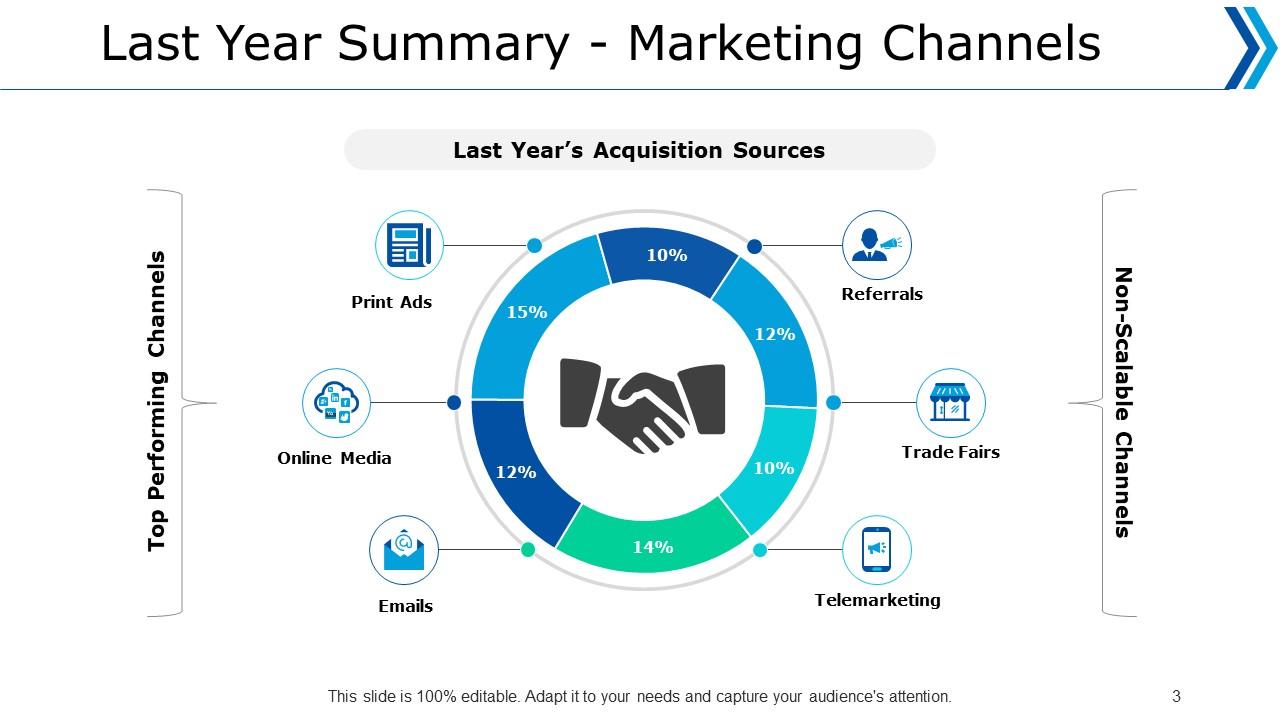
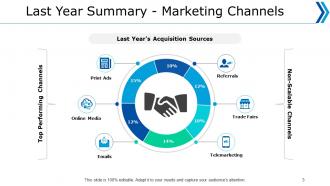
Marketing channels are processes with which businesses distribute and market their goods or services. Multi-channels increase the reach, make consumers more available, and reduce the risks of putting all eggs in one basket. Print advertising, internet media, email, referrals, trade fairs, telemarketing, and so on are all feasible avenues. This slide allows you to create a chart that shows the acquisition % for each of the channels. The design includes symbols that represent channels to help make your presentation more engaging. Classify the channels as high performers and non-scalable choices. You can arrange your marketing budget distribution for the coming term based on the results of the data analysis.
Template 2: Campaign Options PPT Template
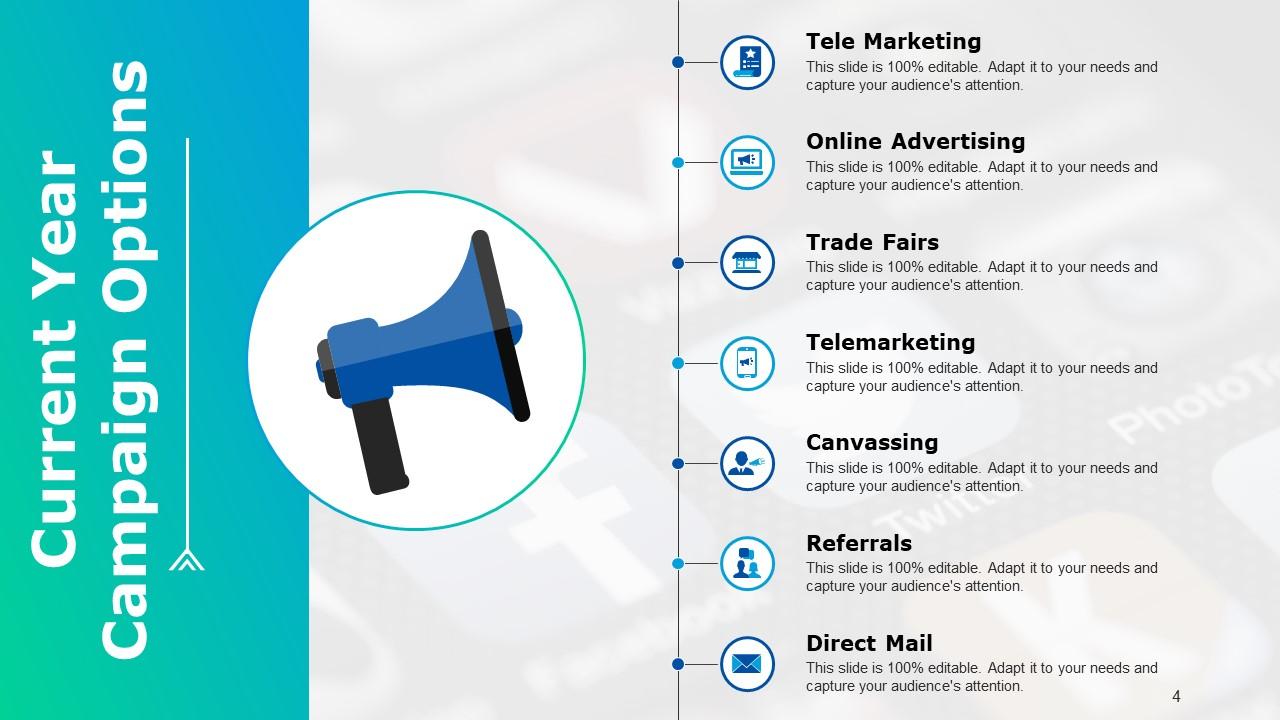
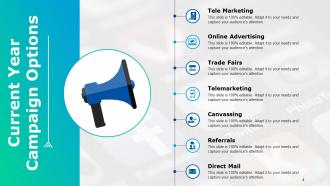
Campaigns are a must for companies wanting to promote products, services, or messages, increasing brand visibility, driving sales, and fostering customer engagement. Amongst options like telemarketing, online advertising, trade fairs, canvassing, and direct emailing you can pick the ones suitable to your organization. You can elaborate on the campaign option in the text placeholder provided under each of them.
Template 3: Campaign for Customer Acquisition PPT Template
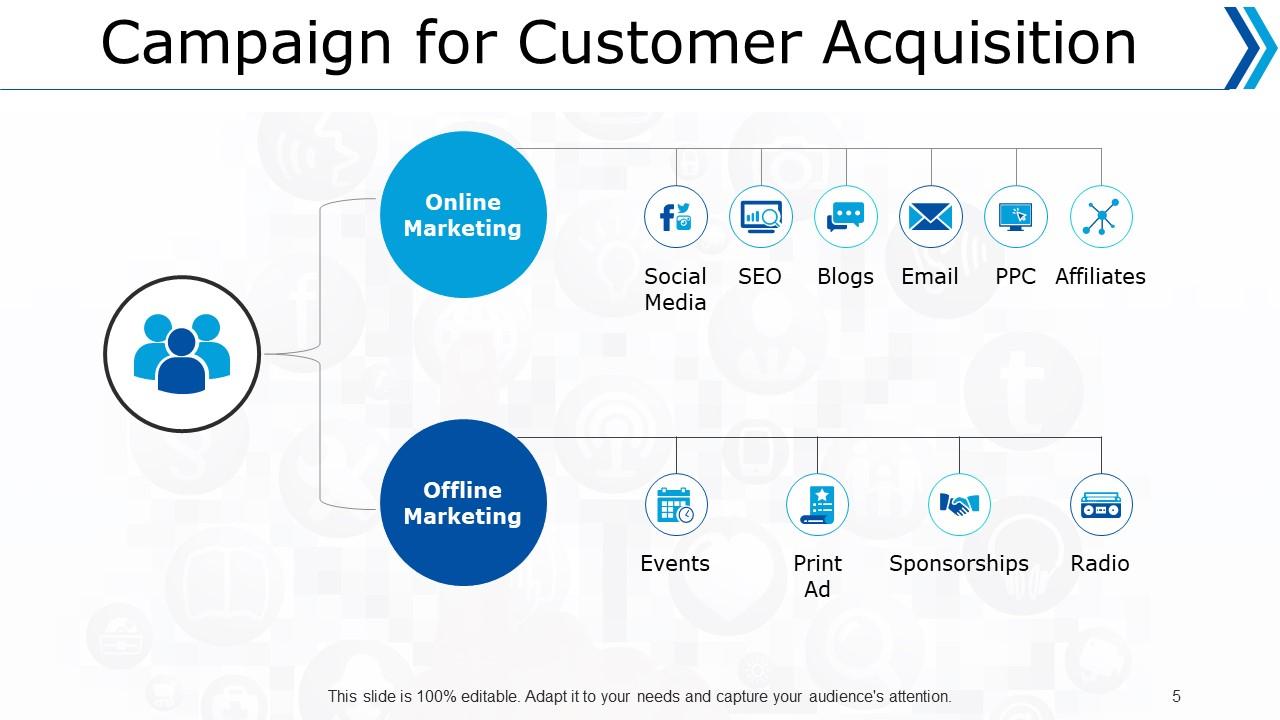
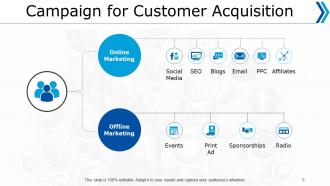
Deploy online as well as offline campaigns to increase brand awareness, acquire a larger customer base and drive sales. You can reach your target audience through online channels like social media platforms, SEO, blogs, emails, PPC, and affiliates. For offline engagement, you can organize awareness events, print ads, or radio advertisements. Present campaigning channels to employees to brainstorm and make marketing plans for the upcoming months.
Template 4: Sales Campaign Budget PPT Template
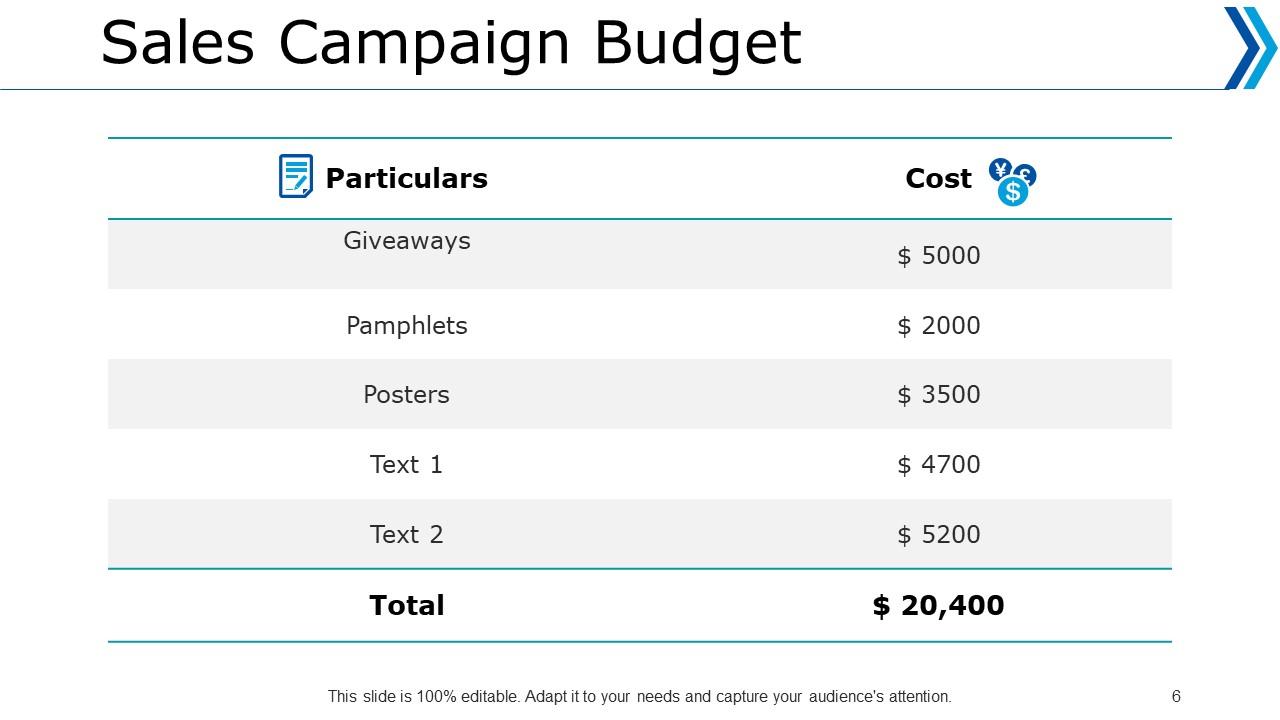
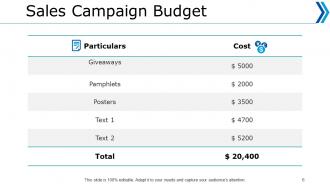
A budget for a sales campaign is essential for assigning resources, tracking return on investment, and making sure money is allocated strategically for optimum effect. Assign cash to things like in-person events, digital media advertisements, poster and booklet production, etc. with this PowerPoint template. To create budgeting plans, you may compute the ROI and keep a weekly, monthly, or annual record of the budget allocation. Using the PPT Template, you may distribute cash among a maximum of five marketing channels.
Template 5: Marketing Roadmap PPT Template
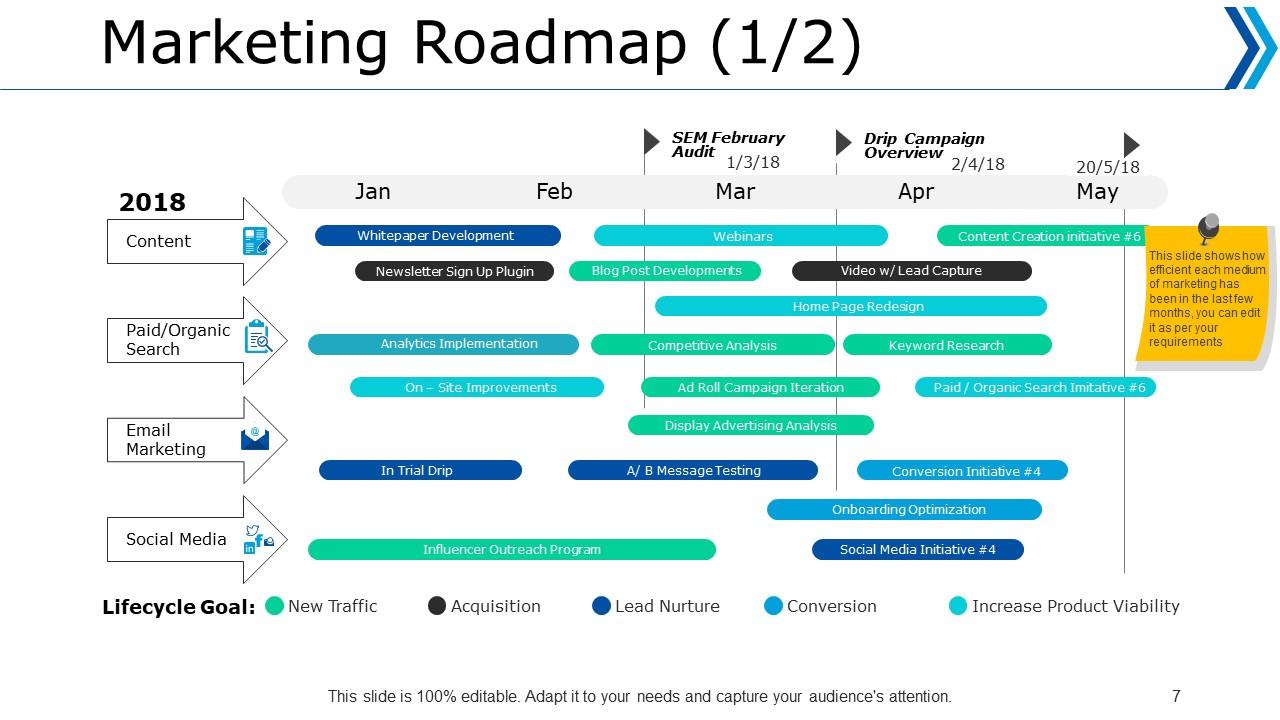
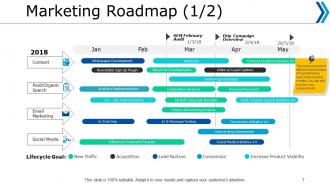
Create a six-month marketing strategy with this PowerPoint template. It is possible to plan content, e-marketing, social media and organic search. Plan and schedule tasks related to traffic generation, customer acquisition, lead nurturing and productivity with color-coded bars. Track progress, make sure strategy is being followed, and show your marketing plan to your employees with this PowerPoint template.
Template 6: Roadmap for Marketing PPT Template
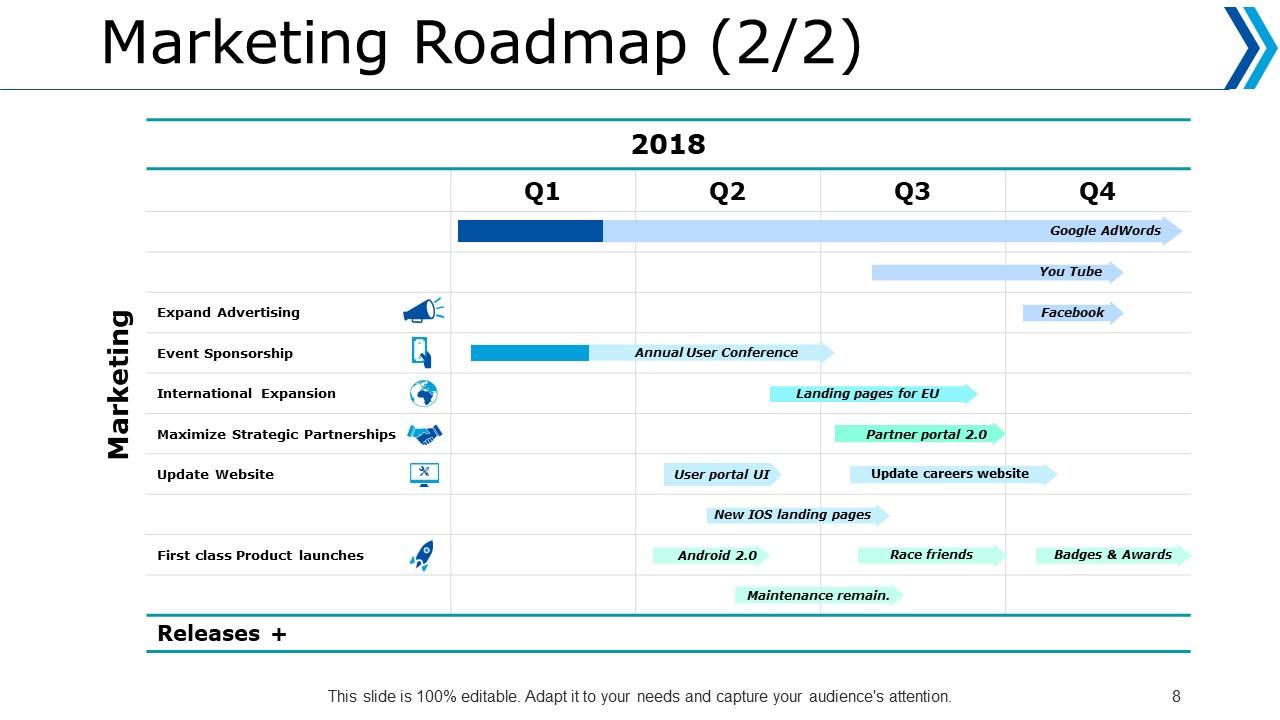
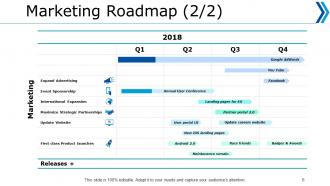
Make quarterly marketing plans using this PPT Template. Delegate time to activities related to expanding advertising, sponsorship events, reaching international audiences, maximizing strategic partnerships, and updating websites. As per the response of each of these activities, you can make and plan marketing strategies for the new quarter. Highlight a tentative time frame for each task with the provided blue and green bars.
Template 7: Marketing Growth Strategy PPT Template
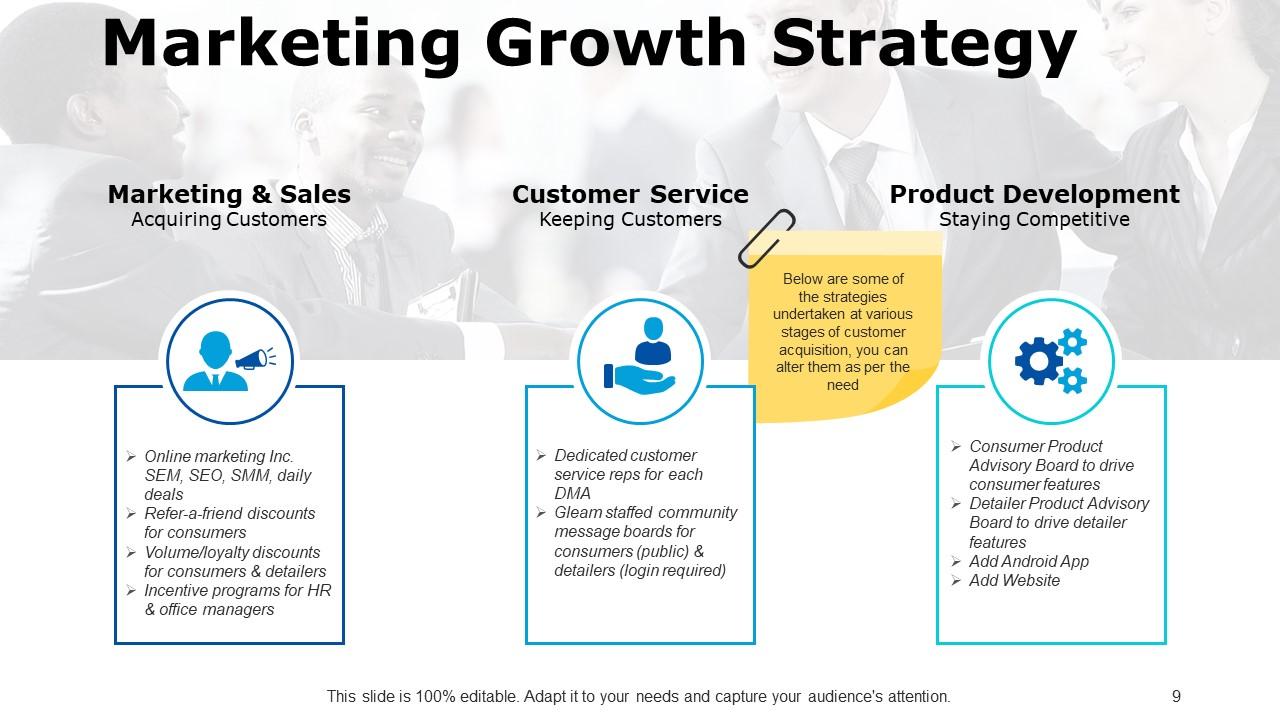
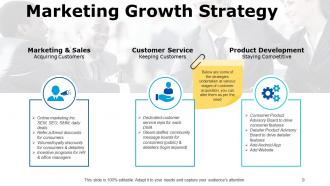
In order to ensure new clients and retain existing ones, your organization must stay competitive in the market. This PPTemplate allows your organization to do this. The text placeholder for each step includes activities and tasks. Use sales and marketing campaigns such as loyalty programmes, SEM, SEO, SMM, and referral discounts to attract new clients. Keeping current clients satisfied is also important; you may accomplish this by providing amenities such as community message boards and exclusive client representatives. The organization may also remain competitive in the market by scheduling meetings to discuss new product development and upgrades and ensuring they satisfy consumer requirements.
Template 8: Sales Promotion Calendar PPT Template
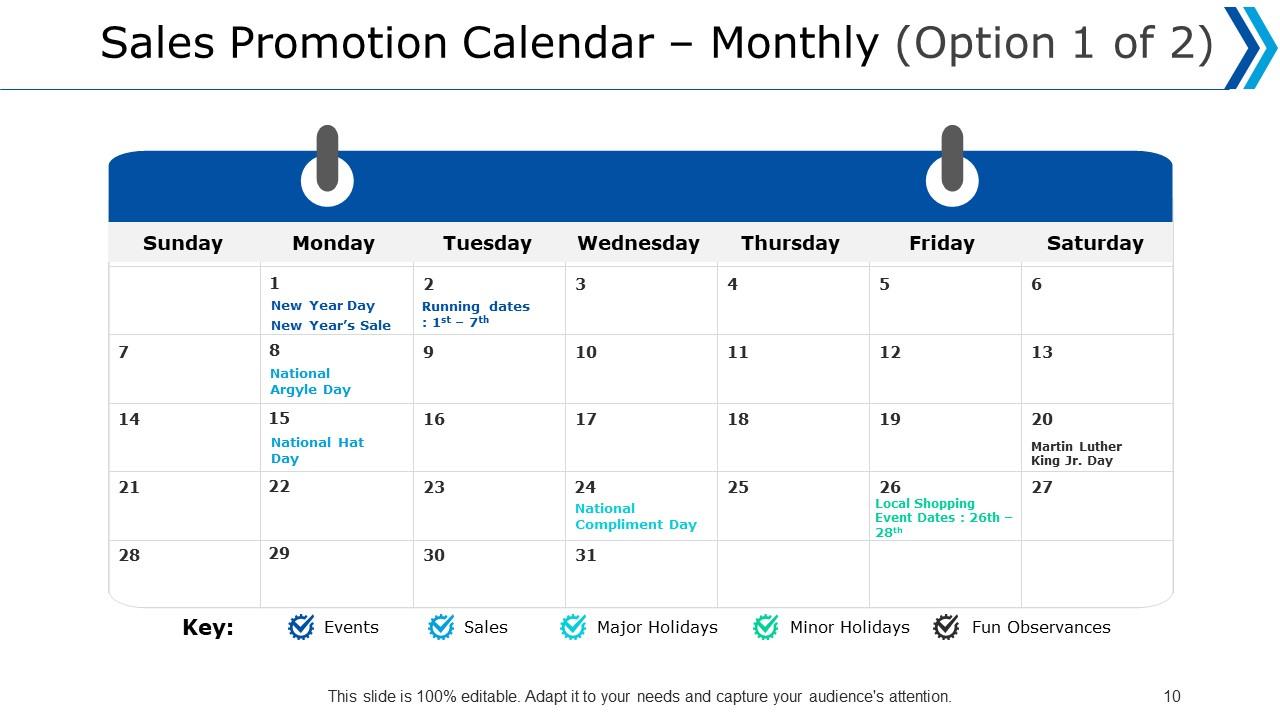
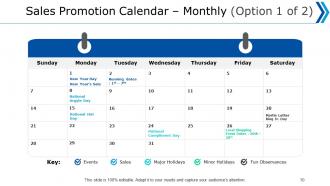
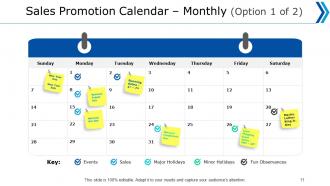
The monthly calendar layout that allows you to plug in important dates, holidays, and observances that could influence your sales strategy. Use this slide to identify upcoming sales opportunities by highlighting national holidays, minor holidays, and fun observances that you can use to create targeted promotions. Plan your marketing campaigns by scheduling them around the holidays and observances that are most relevant to your target audience. Track your sales performance by adding sales figures and recording promotions that you ran throughout the month in the calendar layout.
Template 9: Word of Mouth Promotion PPT Template
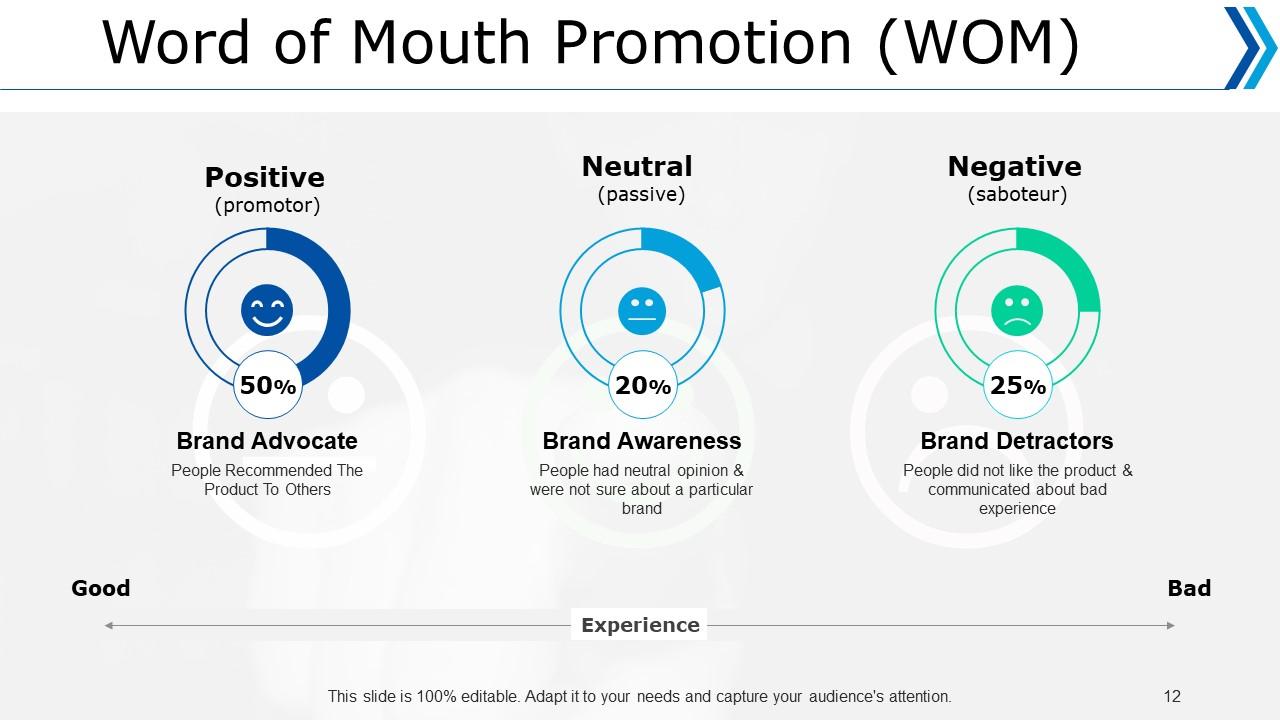
Word of Mouth Promotion ensures organic advocacy of your product/service. This kind of marketing increases credibility, reach, and cost-effectiveness but lack of control and holds potential for misinformation. The PPT Slide allows you to record the percentage of positive, neutral, and negative feedback. Through this information you can get a general idea of your brand's perceptions in the market. The clients with positive feedback will convert into promoters of your brands, and advocate your product/services. Whereas customers with a negative experience will detract potential customers. The neutral opinions help with raising brand awareness.
Template 10: Sales Performance Dashboard PPT Template
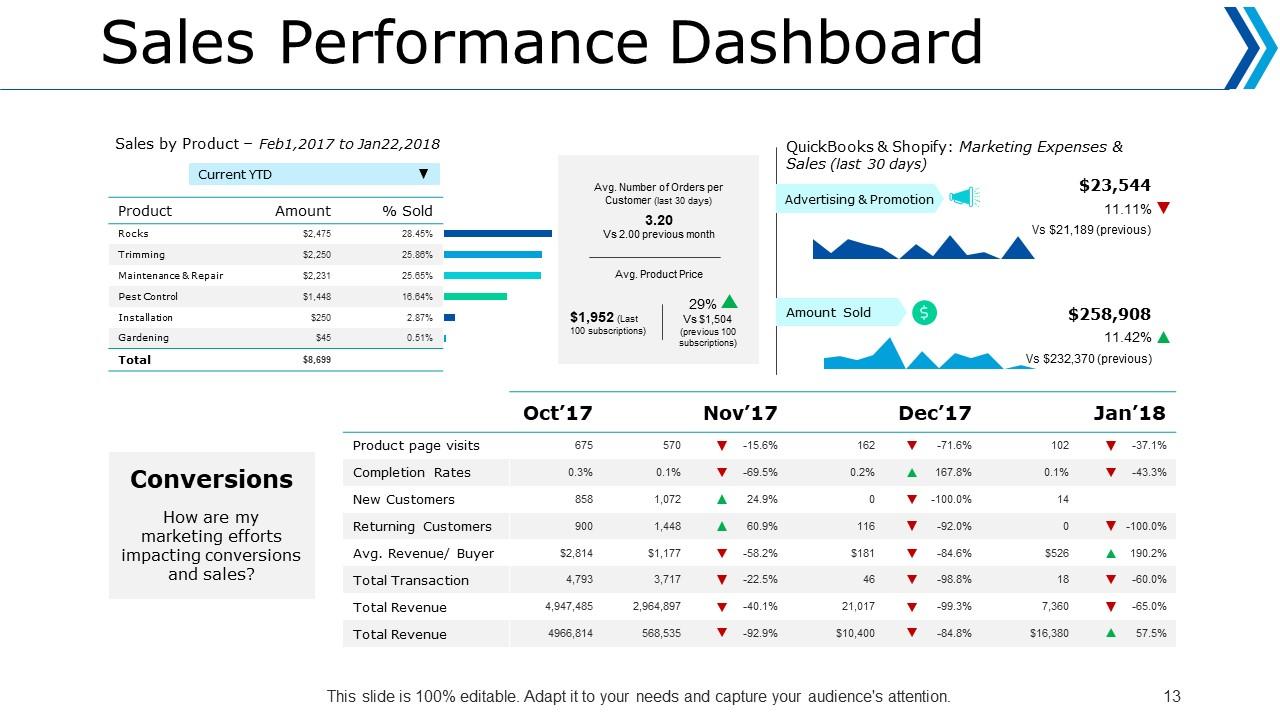
Charts and graphs that analyse sales performance over time, spot patterns, and gauge the effectiveness of marketing initiatives are all included in the template. Using the template, you may monitor product sales over a certain time frame. You are able to observe which things are selling well and poorly. You can observe the effects of your marketing on sales and conversions. You get access to data on the quantity of individuals accessing your product pages, the percentage of visitors who become customers, and the total amount of money you make from each marketing channel. Using the template, you may track patterns in your sales information over time. You may use this to determine where your sales plan needs to be modified or improved.
Shoot up your sales
An effective sales strategy will ensure everyone on the team is familiar with revenue goals, approved strategies and processes, sales messaging, and what success in their role looks like.
Give your sales team a competitive edge by equipping them with our comprehensive Sales Strategy PPT Template plan that enables them to sell successfully.
PS Just having a sales strategy is not enough. Over time, you also have to ensure that the performance of the sales strategy is evaluated. Click here to get this template on sales strategy evaluation balanced scorecard.
Sales Strategy Powerpoint Presentation Slides with all 26 slides:
Use our Sales Strategy Powerpoint Presentation Slides to effectively help you save your valuable time. They are readymade to fit into any presentation structure.
-

Sales Strategy
-
Content
-
Last Year Summary Marketing Channels
-
Current Year Campaign Options
-
Campaign for Customer Acquisition
-
Sales Campaign Budget
-
Marketing Roadmap 1 2
-
Marketing Roadmap 2 2
-
Marketing Growth Strategy
-
Sales Promotion Calendar Monthly Option 1 of 2
-
Sales Promotion Calendar Monthly Option 1 of 2
-
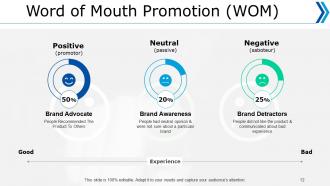
Word of Mouth Promotion WOM
-
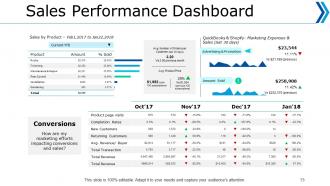
Sales Performance Dashboard
-
Sales Strategy Icons Slide
-
Additional Slides
-
Our Team
-

Our Mission
-
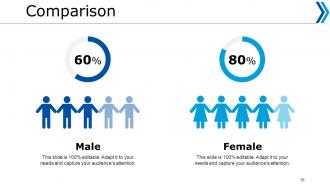
Comparison
-
About Us
-

Puzzle
-
Our Goal
-
Bulb Or Idea
-
Magnifying Glass
-
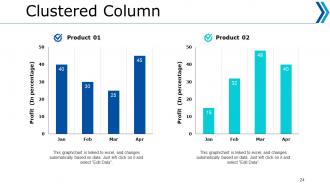
Clustered Column
-
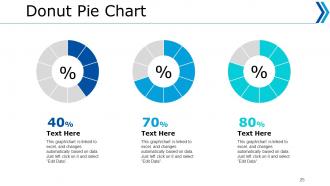
Donut Pie Chart
-
Thank You
FAQs for Sales Strategy
Honestly, you need five main things for a solid sales strategy. Know your target market inside and out - like, who exactly are you selling to? Then nail your value prop so people actually care about your product over the competition. Map out your entire sales process from first contact to closing the deal. I'd say this is where most teams mess up, they just wing it. Lead generation is obviously huge too - you need a constant pipeline. Oh and track everything - conversion rates, how long your sales cycles are, all that stuff. Maybe start by looking at what you're already doing and see what's missing?
Think of segmentation like dating - you wouldn't use the same pickup line on everyone, right? Same deal here. Break your customers into groups by company size, industry, whatever makes sense. Then actually speak to their specific problems instead of some bland generic pitch. Honestly, the difference is night and day. Your conversion rates will jump because people finally feel like you understand their world. I'd start simple - pick your top 2-3 customer types and write different value props for each. Way better than spraying and praying with the same message everywhere.
Dude, customer feedback is literally your cheat sheet for sales. I track what messaging hits, which objections pop up constantly, and where people bail in my funnel. Used to just improvise everything like an idiot. Now I actually listen and tweak my pitch accordingly - different timing, leading with features that matter. You'll want systems for capturing this stuff though. Post-call surveys work great. Win/loss interviews too, or honestly just better notes during calls. Makes such a difference once you start paying attention to what they're really saying.
Track both leading and lagging indicators for the full picture. Revenue growth and conversion rates are obvious, but also watch sales cycle length, average deal size, and customer acquisition cost. Pipeline velocity is honestly my favorite early signal when it starts improving. Activity metrics matter too - calls made, meetings booked, that kind of stuff predicts what's coming. Set up a dashboard showing current performance plus future pipeline. Maybe 5-7 core metrics you check weekly? Don't go overboard with too many or you'll get lost in the data.
Honestly, the biggest mistake I see is trying to target everyone instead of focusing on who actually needs your stuff. Teams burn themselves out chasing crazy unrealistic numbers too. Your sales and marketing people need to be on the same page - otherwise prospects get super confused with mixed messages. Don't assume you know your market either (I learned this the hard way). Things change way faster than you'd expect. And please actually look at your performance data regularly instead of just going with your gut. Oh, and really dig into what problems you're solving for customers - sounds basic but so many people skip this part.
Honestly, tech can be a game-changer for sales if you don't go overboard. CRM systems automatically track your leads, which is clutch. AI tools help you spot the hottest prospects, and automation handles those annoying follow-ups for you. Analytics dashboards are pretty sweet too - they show exactly what's working instead of you just winging it. Video calls with screen sharing blow phone calls out of the water for demos. My advice? Pick like 2-3 tools that fix your actual problems. I've seen too many people get distracted by every flashy new platform and end up worse off than before.
Honestly, pricing is make-or-break for sales. Go too high? You'll lose customers even with an incredible product. Too low and people assume you're garbage quality - consumers are weird like that. The magic happens when you hit that sweet spot where customers actually see the value and you're still making decent money. Your sales team will thank you because deals close way easier when pricing feels right. I'd definitely test different price points and see how your conversion rates react. It's kinda fascinating how much psychology plays into it.
Don't treat sales training like some separate thing you check off a list. Weave it right into your actual strategy. Focus on the real scenarios your team deals with every day - the objections they're hearing, product questions they can't answer, stuff like that. Generic training is honestly just a waste of time and money. Role-play the situations they're actually facing with your specific buyers. Keep it ongoing too, not just one big session everyone forgets about. Track what's working by seeing which training topics actually help close more deals. That's how you know what's worth your time.
Honestly, start hanging out where your prospects are already scrolling. LinkedIn's the obvious choice for B2B stuff, but Twitter and Instagram work too depending on who you're targeting. Share useful content and actually engage with their posts - not just liking everything like a robot. Research is clutch here. Finding out someone just got promoted or their company dropped a new product? That's pure gold for your outreach. Be helpful first, sales-y second. I'd say pick 20 key prospects and engage with their stuff for two weeks straight. The doors that'll open will surprise you.
Honestly, start with conversion rates at each funnel stage - that's where you'll spot the real problems. Customer acquisition cost is huge too, especially when you compare it to lifetime value. If you're spending more to get customers than they're worth, you're basically lighting money on fire. Sales cycle length matters a lot but people forget about it. Revenue per deal is obvious so I won't bore you there. Oh and track activity stuff like calls and emails, but don't obsess over those numbers - they look good on paper but don't always mean much. Pull last quarter's data first and see what jumps out.
Oh man, cultural differences totally change the game when you're selling internationally. Like, Americans want you to cut to the chase, but in Japan you're building relationships over several meetings before even mentioning your product. Germany's different too - they're super direct but want all the technical details upfront. I've watched companies crash and burn using the same pitch everywhere (honestly kind of painful to see). Your whole approach needs to shift - how you communicate, negotiate, position everything. Do yourself a favor and find local partners who actually get the cultural stuff. Research helps but nothing beats having someone who knows the unwritten rules.
Okay so first thing - get both teams focused on the same revenue goals instead of whatever random metrics they're tracking now. I'd set up weekly check-ins where they actually talk about lead quality and which campaigns are bringing in deals that close. Most places I've seen totally botch this because marketing and sales act like they're in different companies or something. Map out the whole customer journey together so marketing gets what happens after handoff, and sales understands the nurturing stuff beforehand. Oh and keep your messaging consistent throughout - sounds obvious but you'd be surprised how often it's not.
Stories are honestly game-changers for pitches. People zone out when you just list features, but show them how another customer solved their exact problem? Now they're listening. I've got client stories from years ago that still stick with me - that's how powerful this stuff is. Here's the thing: prospects trust real results way more than empty promises. When you paint that picture of success, they can actually see themselves there. Plus it keeps them engaged instead of staring at their phones. My advice? Collect 2-3 solid customer wins you can drop into different parts of your pitch. Trust me on this one.
Honestly, the numbers don't lie - and they'll probably surprise you like they did me. I was so confident about which leads were our best, then the data completely proved me wrong. It's wild how much you can miss just going off gut feelings. Track one thing that actually matters to your sales - maybe conversion rates or where deals keep dying. Do it for like a month straight. You'll start seeing patterns you never noticed before, seasonal stuff, which activities are actually worth your time. Way better than guessing what's working in your pipeline.
Oh definitely do competitive analysis - it's huge for sales. Your prospects are already comparing you to other options anyway, so you better know what you're up against. Figure out their pricing, how they position themselves, all that stuff. Otherwise you'll get blindsided in conversations and won't know how to stand out. Honestly, I think it's one of the most important parts of sales strategy. Start small though - pick your top 3-5 competitors and make some quick reference sheets for your team. Way better than going in unprepared.
-
Great, very helpful, thank you.
-
Informative presentations that are easily editable.