


Security Audit Powerpoint PPT Template Bundles




Try Before you Buy Download Free Sample Product
 Impress Your
 Audience
 100%
100% Editable
 Save Hours
 of Time


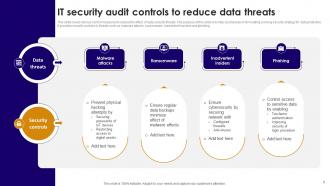
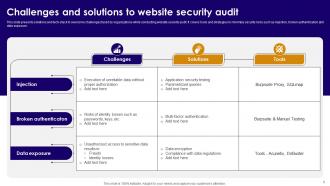
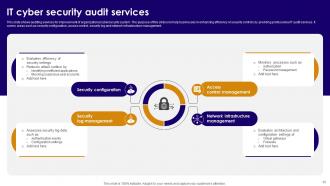
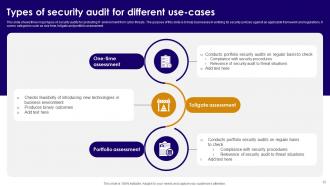
A security audit refers to a systematic examination of the information systems, policies, and practices of an organization with the goal of identifying and assessing risks, vulnerabilities, and the general efficiency of its security measures. The main objective of security audit is to assure that an organizations information assets such as data, systems and networks are sufficiently secured against unauthorized access, public disclosure and damage. Utilize our Security Audit PowerPoint presentation to enhance the security status of a company. Explore the essential elements of a comprehensive security audit, including penetration testing to find vulnerabilities and build defences. Discover the importance of routine vulnerability assessments in protecting against new threats. Identify the complex nature of data encryption, an essential security measure for private data. This presentation provides business executives, cybersecurity experts, and IT professionals the skills and tools they need to do comprehensive security audits. Strengthen defences, minimize risks, and ensure strong defence against emerging cyberthreats through a proper security audit.
People who downloaded this PowerPoint presentation also viewed the following :
Security Audit Powerpoint PPT Template Bundles with all 27 slides:
Use our Security Audit Powerpoint PPT Template Bundles to effectively help you save your valuable time. They are readymade to fit into any presentation structure.









FAQs for Security Audit Powerpoint
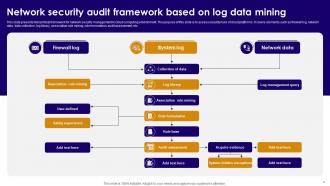
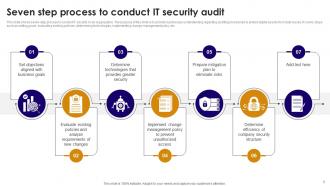
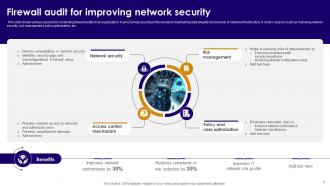
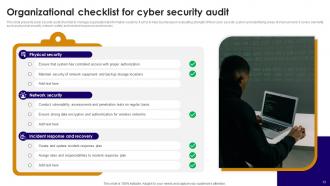
A comprehensive security audit should include network vulnerability assessments, access control reviews, data encryption evaluations, incident response testing, and compliance verification against industry standards. These components work together by identifying security gaps, validating protective measures, and ensuring regulatory adherence, with many organizations finding that regular audits significantly reduce breach risks while enhancing overall operational security posture.
Organizations should conduct comprehensive security audits annually, with quarterly reviews of critical systems, monthly vulnerability assessments, and continuous monitoring of high-risk areas like payment processing and data storage. Many financial institutions and healthcare organizations find that this layered approach enables proactive threat detection, ensures regulatory compliance, and maintains competitive advantage through robust security posture in an increasingly complex digital landscape.
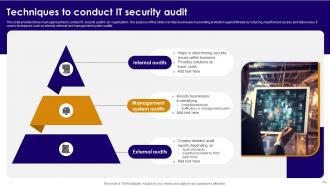
Internal security audits are conducted by an organization's own IT teams using insider knowledge and existing resources, while external audits involve independent third-party specialists who bring objective perspectives and industry benchmarks. External audits typically deliver more comprehensive threat detection and regulatory compliance validation, whereas internal audits enable continuous monitoring and faster remediation, with many organizations finding that combining both approaches ultimately strengthens their overall security posture.
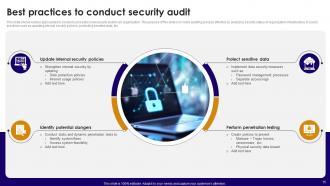
Organizations can assess security policy effectiveness through comprehensive penetration testing, compliance gap analysis, vulnerability assessments, policy adherence reviews, and incident response evaluations. These methodologies enable auditors to identify weaknesses in access controls, data protection measures, and operational procedures, with many financial institutions and healthcare organizations finding that regular assessments significantly enhance their security posture and regulatory compliance.
Employee training plays a critical role in security audit outcomes by reducing human error vulnerabilities, improving incident response capabilities, and ensuring consistent compliance with security protocols and procedures. Organizations with comprehensive training programs typically demonstrate stronger security postures during audits, with many finding that well-trained staff significantly minimize security gaps and enhance overall organizational resilience.
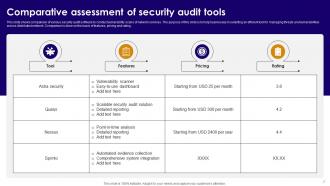
Automated tools enhance security audit processes by continuously monitoring systems, identifying vulnerabilities faster than manual methods, and generating comprehensive compliance reports with minimal human intervention. Through AI-powered scanning and real-time threat detection, organizations streamline audit workflows, reduce assessment timeframes significantly, and maintain consistent security postures across complex infrastructures, ultimately delivering cost-effective risk management.
Common vulnerabilities identified during security audits include weak password policies, unpatched software systems, inadequate access controls, unsecured network configurations, and insufficient data encryption protocols. These assessments help organizations across sectors like healthcare, financial services, and retail streamline their security posture by addressing critical gaps, enhancing compliance standards, and ultimately delivering stronger protection against cyber threats while maintaining operational efficiency.
Organizations should prioritize security audit findings by assessing risk levels, potential business impact, exploitability, and regulatory compliance requirements, while considering available resources and implementation timelines. Through strategic risk matrices, companies systematically address critical vulnerabilities first, focusing on those affecting customer data, financial systems, and operational continuity, ultimately strengthening their security posture and competitive advantage.
Essential security audit documentation includes network diagrams, asset inventories, access control policies, incident response plans, compliance frameworks, and previous audit reports. These documents enable auditors to assess current security posture, identify vulnerabilities, and evaluate policy adherence, with many organizations finding that comprehensive documentation significantly streamlines audit processes and delivers more actionable security recommendations.
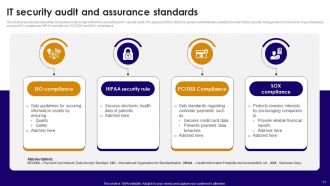
Security audits help ensure compliance with data protection regulations by identifying vulnerabilities, assessing current security controls, and validating adherence to regulatory requirements like GDPR, HIPAA, and SOX. Through systematic evaluations, organizations can address compliance gaps, implement necessary safeguards, and demonstrate due diligence to regulators, ultimately reducing legal risks and avoiding costly penalties while maintaining customer trust.
Organizations should immediately prioritize vulnerabilities by severity, implement temporary compensating controls, patch critical systems, and notify relevant stakeholders including leadership and potentially affected customers. This rapid response approach enables companies to minimize exposure windows, maintain regulatory compliance, and preserve customer trust, while establishing comprehensive remediation timelines that ultimately deliver enhanced security posture and competitive advantage.
Organizations effectively communicate audit findings through executive summaries highlighting critical risks, detailed technical reports for IT teams, risk-rated matrices showing priority levels, and structured action plans with clear timelines. These tailored communications enable stakeholders to understand their specific responsibilities while providing leadership with strategic oversight, ultimately streamlining remediation efforts and enhancing organizational security posture.
Security audits involve ethical considerations including informed consent from stakeholders, maintaining strict confidentiality of discovered vulnerabilities, ensuring minimal disruption to business operations, and responsible disclosure practices. These principles help organizations balance thorough security assessment with operational integrity, with many companies finding that transparent communication and clear audit boundaries ultimately deliver enhanced trust and more effective security improvements.
Security audit results directly influence future investments by identifying vulnerabilities, compliance gaps, regulatory requirements, and areas needing immediate attention or enhancement. These findings enable organizations to prioritize budget allocation strategically, with many companies discovering that targeted investments in areas like endpoint protection, employee training, and infrastructure upgrades deliver measurable risk reduction and stronger competitive positioning.
Emerging security audit trends include AI-powered threat detection, continuous compliance monitoring, cloud security assessments, zero-trust architecture evaluations, and automated vulnerability scanning. These technologies streamline audit processes by reducing manual effort, enhancing real-time visibility, and providing predictive insights, with many organizations finding that automated approaches deliver faster identification of risks, improved regulatory compliance, and ultimately stronger security postures in an increasingly complex digital landscape.
-
Their professional templates are very impressive, even my manager was curious about the source. I am very grateful.
-
Incredibly beautiful designs that will help you get noticed! These eye-catching templates are perfect for corporate presentations that can be altered to fit any occasion or taste.