

Software process improvement software project management dashboard




Try Before you Buy Download Free Sample Product
 Impress Your
 Audience
 100%
100% Editable
 Save Hours
 of Time


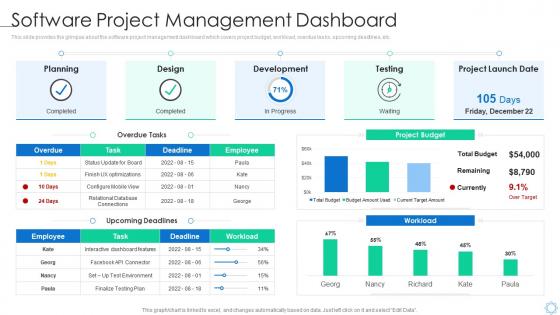
This slide provides the glimpse about the software project management dashboard which covers project budget, workload, overdue tasks, upcoming deadlines, etc.
People who downloaded this PowerPoint presentation also viewed the following :
Software process improvement software project management dashboard with all 7 slides:
Use our Software Process Improvement Software Project Management Dashboard to effectively help you save your valuable time. They are readymade to fit into any presentation structure.






FAQs for Software process improvement software
I'd focus on the basics first - how fast you're shipping stuff and whether it's actually working when customers get it. Track things like cycle time, defect rates, and deployment frequency. Customer satisfaction is honestly the only metric that really matters in the end. Oh, and don't ignore your team's happiness - burnout surveys or turnover rates tell you if your process changes are sustainable or just making everyone miserable. Pick maybe 3-4 metrics that match whatever's currently driving you crazy. No point tracking everything under the sun.
Start by actually measuring what's happening right now - defect rates, how long stuff takes, deployment frequency. Most teams are totally off about what they think versus reality, it's wild. Talk to your devs and testers about what's driving them crazy. Value stream mapping helps you see the whole mess laid out visually. Focus on quick wins first since they build momentum, but don't ignore the big structural problems. Oh, and measure everything before you change it - otherwise you're just guessing if things got better.
Honestly, Agile is perfect for this because it forces you to improve constantly. Every sprint you're doing retrospectives and getting feedback instead of waiting months to realize something's broken. The "fail fast" approach actually makes sense here - you'll spot issues way earlier. Your team and stakeholders give you real-time insights, so when a process isn't working, you can change it quickly. Oh, and if you're not doing retros yet, start there. Even 15-minute check-ins will show you bottlenecks you totally missed before.
So basically CI/CD automates your whole pipeline - catches bugs way faster and makes releases way more predictable. No more manual handoffs where stuff always seems to break. Your team gets feedback immediately instead of finding out weeks later that something's broken (which honestly happens way too often). Releases become boring instead of those nail-biting all-nighters we've all been through. I'd start with just automated testing first, then slowly add deployment stuff once you're comfortable. Trust me, once you get it working it's hard to go back to the old way.
Honestly, the biggest pain is just getting people on board. Nobody wants to hear that how they've been doing things sucks - I've watched so many good ideas die because of that attitude alone. Resource allocation becomes a nightmare too since everyone thinks process improvement is just busy work that takes away from "actual" tasks. Plus trying to measure success is super frustrating when the benefits take forever to show up. My advice? Start tiny with pilot projects and rack up some quick wins first. Once people see real value instead of just more compliance BS, they'll actually get behind it.
Training your team directly improves SPI because people actually know how to implement the new stuff you're rolling out. When someone learns Agile or proper code reviews, they're not gonna fight the changes as much. They get it. Survey your team first to see what skills they're missing - honestly, this step gets skipped way too often but it's crucial. Then connect the training to whatever improvements you're already working on. The cool thing is people usually spot process problems during training sessions. Just don't make it a one-and-done thing. Keep it ongoing.
Honestly, start simple with something like Lucidchart or Miro to map out what you're actually doing right now. Then grab a project management tool - Jira's solid, or Azure DevOps if you're already in that ecosystem. Git's obviously non-negotiable at this point, and you'll want CI/CD pipelines too. I probably should've mentioned that first actually. For tracking whether stuff's working, SonarQube's great for code quality metrics, or just build dashboards into whatever you're using. But seriously, don't go crazy - pick maybe 2-3 tools tops. I've seen teams try to implement everything and it just becomes a mess.
Honestly, you've gotta build feedback systems that people actually use instead of just collecting dust. Regular surveys, support tickets, user interviews - but here's the thing, map all that stuff straight into your dev workflow. I've watched teams pile up feedback mountains and do absolutely nothing with it. That's somehow worse than ignoring customers entirely! Get your customer-facing people talking directly to developers. Pick whatever complaint you hear most often and work backwards - figure out where your process is screwing up. Oh, and track metrics that actually connect satisfaction to what you're building.
So you've got a few ways to tackle this. CMMI or SPICE are pretty standard - they're like structured checklists for where you're at. Process audits work too, but honestly? Sometimes just mapping what you *actually* do versus what you think you're doing is huge. I've seen teams discover they had three different ways of doing the same thing. Retrospectives with your crew can be gold, or you could compare against industry benchmarks. My take - don't overcomplicate it at first. Pick something that won't make your team roll their eyes, then expand from there.
Look, process improvement only matters if it actually moves the needle on business stuff. Don't just fix things because they're broken - figure out which broken things are costing you money or slowing down releases. I've watched teams obsess over perfect processes while missing deadlines, which is honestly backwards. Ask yourself: will fixing this bottleneck help us ship faster or make customers happier? Those are the ones worth tackling first. Leadership will actually care about improvements when you can tie them to real metrics they track. Start there and you'll get way better buy-in.
Honestly, the biggest mistake is trying to overhaul everything at once - you'll burn everyone out. Leadership needs to be genuinely on board, not just giving lip service to it. Most places get obsessed with fancy tools and tons of documentation when they should focus on actually changing how people work day-to-day. Also, nobody measures where they're starting from, so how do you know if you improved anything? Oh, and people expect magic results in like two weeks, which is ridiculous. My take? Pick one messy process first. Get your developers involved in planning the fixes - they're the ones doing the work anyway. Start there and build momentum.
Honestly, you've gotta make people feel safe about suggesting changes first. Celebrate when someone speaks up with ideas - and actually use them! Nothing kills momentum like ignored feedback. Those retrospective meetings? Keep them short and focused, otherwise they turn into whining sessions (been there). Give your team some breathing room to mess around with new approaches. Seriously, the "fail fast" thing actually works when people aren't terrified of screwing up. Oh, and don't make it feel like management's latest obsession - spread ownership around so everyone's bought in.
Dude, you NEED leadership on board or you're basically screwed. I've seen so many process improvement projects die because executives just threw money at it and walked away. Get them to commit in writing - and I mean actually participate, not just show up to kickoff meetings. Teams will dump this stuff the second a real deadline hits unless leadership keeps pushing it. Oh, and you'll need their clout to force departments to actually work together instead of protecting their turf. Honestly? If they won't actively champion it, don't even bother starting.
Honestly, I'd focus on the must-haves first - like your definition of done and code reviews. Those need to be consistent everywhere. But let teams figure out their own implementation details, you know? It's kinda like... you set the guardrails but don't micromanage how they drive. Figure out what actually needs to be standardized for compliance or when teams integrate their work. Everything else? Let them adapt it to what works for their situation. Oh, and run retrospectives regularly - they'll tell you when you're being too strict or when things are getting messy.
Motorola killed it with Six Sigma, and IBM's CMM stuff helped them slash defects big time. NASA learned the hard way after some early disasters but their software process got way better. Here's the thing though - you need management actually caring, not just pretending to. Cultural shifts are slow as hell, so don't expect magic overnight. Start by measuring everything first. Then pick one thing like code reviews and actually get good at it before moving on. I've seen too many teams try to fix everything at once and just burn out their developers.
-
Great experience, I would definitely use your services further.
-
Excellent template with unique design.