

Startup Agriculture Company Business Planning Powerpoint Ppt Template Bundles BP MM





Try Before you Buy Download Free Sample Product
 Impress Your
Audience
 100%
Editable
 Save Hours
of Time


Our Startup Agriculture Company Business Planning Powerpoint Ppt Template Bundles BP MM are topically designed to provide an attractive backdrop to any subject. Use them to look like a presentation pro.
People who downloaded this PowerPoint presentation also viewed the following :
Startup Agriculture Company Business Planning Powerpoint Ppt Template Bundles BP MM with all 20 slides:
Use our Startup Agriculture Company Business Planning Powerpoint Ppt Template Bundles BP MM to effectively help you save your valuable time. They are readymade to fit into any presentation structure.










FAQs for Startup Agriculture Company Business Planning Powerpoint Ppt Template
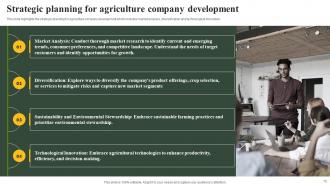
Key elements include market analysis, crop selection strategy, financial projections, operational infrastructure, and regulatory compliance planning. These components work together by identifying target markets, optimizing resource allocation, and establishing scalable farming operations, with many agricultural startups finding that comprehensive planning ultimately delivers sustainable growth and competitive positioning in an increasingly technology-driven industry.
Market research informs agricultural startup strategy by identifying crop demand trends, analyzing competitor pricing models, understanding distribution channels, and revealing consumer preferences for organic or sustainable products. Through comprehensive market analysis, agricultural startups can optimize resource allocation, target profitable market segments, and develop competitive positioning strategies, ultimately delivering enhanced operational efficiency and sustainable competitive advantage in an increasingly dynamic agricultural landscape.
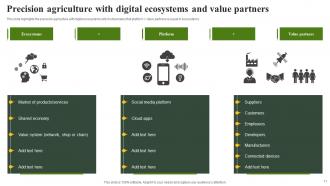
Technology revolutionizes agriculture startups by enabling precision farming, automated irrigation systems, drone monitoring, AI-powered crop analytics, and IoT sensors for real-time field data. These innovations streamline operations, reduce resource waste, and optimize yields, with many agribusiness ventures finding that strategic technology integration delivers competitive advantages, faster decision-making, and ultimately more sustainable, profitable farming operations.
Financial projections for agriculture startups should include revenue forecasts, cash flow statements, break-even analysis, capital expenditure requirements, and seasonal working capital needs. These projections help investors understand growth potential and operational viability, with many agriculture ventures finding that detailed harvest cycles, equipment financing schedules, and market price fluctuations ultimately deliver realistic funding expectations and strategic planning advantages.
Agricultural startups can identify ideal customer segments through market research, competitor analysis, demographic studies, geographic mapping, and direct farmer engagement surveys. These approaches enable targeted positioning by understanding specific crop needs, farm sizes, technological adoption rates, and budget constraints, with many successful agtech companies finding that focusing on early adopters in high-value crops delivers faster market penetration and sustainable growth.
Agricultural startups must address regulatory considerations including food safety standards, environmental compliance, pesticide and fertilizer regulations, organic certification requirements, and land use permits. These regulations vary significantly by region and crop type, with many companies finding that early compliance planning streamlines market entry, reduces operational delays, and ultimately delivers competitive advantage through faster product launches.
Sustainability practices can be integrated through regenerative farming techniques, precision agriculture technologies, water conservation systems, renewable energy adoption, and circular economy principles. These approaches enable agriculture startups to reduce operational costs, enhance soil health, minimize resource waste, and attract environmentally conscious investors, ultimately delivering competitive advantage while meeting increasingly stringent environmental regulations and consumer demands.
Agricultural startups can secure funding through venture capital focused on agtech, government grants for sustainable farming, crowdfunding platforms, angel investors with industry expertise, and strategic partnerships with established agricultural companies. These funding strategies work by demonstrating scalability, environmental impact, and market demand, with many agricultural ventures finding that combining multiple funding sources accelerates growth while reducing financial risk.
Partnerships enhance agriculture startup growth by providing access to established distribution networks, specialized expertise, and shared resources that reduce operational costs. Strategic collaborations with established agricultural companies, technology providers, and research institutions enable startups to scale faster, penetrate new markets more effectively, and leverage complementary capabilities, ultimately delivering accelerated growth and competitive positioning in an increasingly consolidated industry.
Startup agriculture companies commonly face capital constraints, market access difficulties, regulatory compliance complexities, supply chain disruptions, and technology adoption barriers. These challenges can be mitigated through strategic partnerships with established distributors, securing diverse funding sources including agricultural grants, implementing phased technology integration, and developing robust contingency planning, ultimately enabling scalable operations and sustainable competitive advantage in an increasingly demanding agricultural landscape.
A robust supply chain plan is essential for agriculture startups, addressing procurement, distribution, storage, quality control, and logistics challenges. This strategic foundation enables startups to minimize waste, ensure consistent product delivery, and build reliable partnerships with suppliers and distributors, ultimately delivering competitive pricing and market responsiveness in an increasingly complex agricultural landscape.
**INPUT**: What marketing strategies are most effective for promoting products from a new agricultural company? **OUTPUT**: Effective marketing strategies for new agricultural companies include direct-to-consumer sales, farmers' market participation, digital content marketing, partnership development with local restaurants, and community-supported agriculture programs. These approaches streamline customer acquisition by building trust through transparency, showcasing product quality through direct engagement, and leveraging local networks, with many agricultural startups finding that combining digital presence with face-to-face community connections ultimately delivers stronger brand loyalty and sustainable revenue growth. [Word count: 60 words]
Agricultural startups can leverage digital marketing through social media engagement, content marketing, email campaigns, SEO optimization, and targeted online advertising to reach customers directly. These strategies enable farmers and agtech companies to build brand awareness, educate consumers about sustainable practices, and reduce distribution costs, ultimately delivering competitive advantage in an increasingly digital marketplace.
Agriculture startup success metrics include revenue growth, customer acquisition costs, profit margins per crop cycle, market penetration rates, and operational efficiency indicators. These measurements enable founders to track financial performance, optimize resource allocation, and demonstrate scalability to investors, with many agricultural ventures finding that combining traditional farming metrics with modern business analytics ultimately delivers competitive advantage and sustainable growth.
Innovation and research drive agricultural startup competitive advantage by developing precision farming technologies, sustainable crop solutions, data-driven yield optimization systems, and automated resource management tools. Through strategic R&D investments, startups can revolutionize traditional farming practices with IoT sensors, AI-powered analytics, and biotechnology applications, ultimately delivering enhanced productivity, reduced operational costs, and superior market positioning in an increasingly technology-driven agricultural landscape.
-
Delighted to see unique and eye-catching PowerPoint designs that are so easy to customize.
-
The slides are remarkable with creative designs and interesting information. I am pleased to see how functional and adaptive the design is. Would highly recommend this purchase!