


Threat management for organization critical incident reporting dashboard





Try Before you Buy Download Free Sample Product
 Impress Your
Audience
 100%
Editable
 Save Hours
of Time


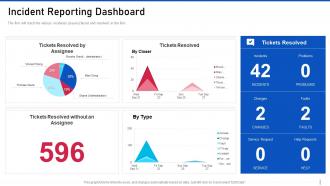
The firm will track the various incidents issues faced and resolved in the firm.
People who downloaded this PowerPoint presentation also viewed the following :
Threat management for organization critical incident reporting dashboard with all 7 slides:
Use our Threat Management For Organization Critical Incident Reporting Dashboard to effectively help you save your valuable time. They are readymade to fit into any presentation structure.






FAQs for Threat management for organization critical
You need four main things: threat detection, assessment, response planning, and ongoing monitoring. Automated tools catch stuff in real-time, but you still need humans to figure out what actually matters - otherwise you're drowning in useless alerts. Prioritize threats by how much damage they could do and how likely they are. Response procedures should be crystal clear and practiced regularly through tabletop exercises (those are surprisingly helpful btw). Monitoring keeps you on top of new threats as they pop up. I'd start by checking what you already have against these four areas to spot the biggest holes.
You'll want multiple monitoring layers to catch threats early. Threat intelligence feeds and automated scanning tools are your best bet - they flag weird patterns in network traffic, user behavior, and system logs. Vulnerability assessments every so often too, because honestly most breaches happen through known holes that just didn't get patched fast enough. Make reporting easy for employees so they'll actually use it without jumping through hoops. The real trick is connecting data from different sources instead of looking at stuff in isolation. Oh, and do weekly security team briefings to spot emerging patterns and tweak your approach.
Look, risk assessment is basically how you figure out which threats are actually worth worrying about. It's the backbone of any decent threat management approach. You identify your weak spots, estimate what could go wrong, then prioritize accordingly. Without it, you're just randomly fixing stuff as it breaks - which is exhausting and ineffective. Smart resource allocation comes from knowing what matters most. I'd start by listing your most critical assets first, then work backwards to map out realistic attack scenarios. Way better than trying to protect everything at once.
So threat intel is basically like having cheat codes for incident response. Your team gets context about who's hitting you and their usual playbook instead of fumbling around in the dark. You can spot their patterns faster, predict what they'll probably do next, and focus on the stuff that actually matters. Plus you get better at figuring out who's behind attacks - which honestly feels pretty satisfying when you nail it. The real trick is hooking those intel feeds straight into your SIEM so analysts don't have to go hunting for context during investigations. Makes everything way smoother.
The biggest problem? Companies treat this stuff like a one-time checkbox thing. They'll do a threat assessment during planning, then completely forget about it - which honestly makes sense when everyone's swamped. Threats change constantly though. You also see people missing key stakeholders (different departments spot different risks), obsessing over obvious threats while subtle ones slip by, or creating these massive processes nobody bothers following. Oh and quarterly reviews are clutch - way better than the annual thing most places do. Get folks from different teams involved since they'll catch stuff you'd never think of.
Look, training your people is literally everything when it comes to threat management. Your team becomes your best defense when they can actually spot phishing attempts or weird behavior - instead of being the ones who accidentally click on malicious links (we've all been there). I can't tell you how many security disasters I've seen that someone could've caught early if they'd just known what to watch for. Quick responses happen when people know what they're doing. Get regular security training going and make sure everyone knows exactly who to call when something feels sketchy.
SIEM/SOAR plus EDR is your best bet right now. Splunk or QRadar handle the log analysis stuff really well. Then add CrowdStrike or SentinelOne for endpoint coverage. AI threat intel feeds are honestly pretty amazing - they'll catch things before they become problems. Darktrace is solid for network monitoring too, especially when attackers try moving around inside your network. Just make sure everything actually integrates properly or you'll drown in alerts. Oh, and definitely audit your visibility gaps first before buying anything new.
Don't treat security like some separate department that just says "no" to everything. Risk-assess your main operations first, then bake controls right into how people already work. Most companies go way overboard here and create these elaborate policies nobody actually follows - total waste. Automate the boring security stuff so your team isn't constantly getting pinged about routine checks. Clear escalation paths are huge when actual threats pop up. Security should feel invisible to users when it's working right. Oh, and definitely do regular check-ins between security and ops teams to stay realistic about what the business actually needs.
Track both leading and lagging stuff to get the whole picture. MTTD and MTTR are your bread and butter metrics, plus how many threats you blocked vs what got through. False positive rates matter too - nobody wants to chase ghosts all day. Response accuracy and business impact (downtime, data breaches) should be on your radar. Oh, and definitely monitor analyst workload because alert fatigue will kill your team's effectiveness. Honestly, I'd start with just 3-4 metrics that match your biggest risks. You can always add more as things mature.
Working with outside partners is honestly a game-changer for threat detection. You get access to way more intelligence than flying solo - other companies, security vendors, even government agencies share what they're seeing. Think of it like early warning systems. If something nasty hits them first, you'll know to watch for it. When an actual incident goes down, you're not frantically googling for help either. You already have those relationships built. Industry threat-sharing groups are probably the easiest place to start, depending on your sector.
Oh man, there's a lot to unpack here. Privacy invasion is huge - you're basically watching people and judging their behavior. Algorithms can be super biased too, often flagging certain groups way more than others. Then there's the whole misuse thing where data gets used for stuff it wasn't meant for. People should know they're being monitored, obviously. Honestly, the transparency piece gets overlooked a lot. Set clear policies on how long you keep data, check regularly for bias, and don't roll out anything without proper oversight first.
So finance and healthcare handle threats totally differently based on what they're protecting. Finance has PCI-DSS compliance and moves super fast - they're all about fraud detection and automated responses since transactions happen instantly. Healthcare? Way more cautious because patient safety is literally life or death. They focus heavily on encrypting data and controlling access since patient records are crazy valuable to hackers. HIPAA makes them paranoid too, honestly. Start with figuring out your industry's compliance rules first - that basically determines your whole strategy from there.
Man, emerging tech is wild right now - AI and machine learning are absolute lifesavers for spotting patterns and automating responses. We can actually keep up with all the crazy volume now. But plot twist: attackers are using the exact same tools against us. So yeah, we're getting better defenses but also dealing with attack methods that literally didn't exist last year. It's like this weird arms race where both sides keep leveling up. Stay curious about new defensive tools, but don't get too comfortable - the bad guys are innovating just as fast as we are.
Honestly, start with background checks and regular access reviews - can't believe how many places just... don't. Give people the minimum access they need for their actual job, nothing extra. Monitor weird stuff like random file downloads or late-night data transfers that seem off. Training helps too, but only if it's not boring corporate nonsense. The culture thing is huge though - people need to feel safe calling out sketchy behavior without getting thrown under the bus. Oh, and do an access audit like this week. Seriously, you'll probably find users who left years ago still have admin rights.
Honestly, just nail the basics first - good passwords and keep your software updated. Train your people too because they'll click on literally anything sketchy. Most data breaches? Someone fell for a phishing email, I swear. Get automated backups running and write up some kind of incident plan now, not when you're panicking later. Cyber insurance is probably worth it if you've got customer info floating around. The whole thing costs way more to fix after something goes wrong. Being paranoid upfront saves you from being that company on the news later.
-
Innovative and Colorful designs.
-
Informative presentations that are easily editable.