

Tracking User Stories Across Agile Project Development Dashboard Agile Playbook





Try Before you Buy Download Free Sample Product
 Impress Your
Audience
 100%
Editable
 Save Hours
of Time


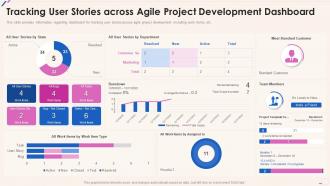
This slide provides information regarding dashboard for tracking user stories across agile project development including work items, etc.
People who downloaded this PowerPoint presentation also viewed the following :
Tracking User Stories Across Agile Project Development Dashboard Agile Playbook with all 7 slides:
Use our Tracking User Stories Across Agile Project Development Dashboard Agile Playbook to effectively help you save your valuable time. They are readymade to fit into any presentation structure.






FAQs for Tracking User Stories Across Agile Project Development
Honestly, just focus on three main things: how many stories you're actually finishing per sprint, how long each one takes from start to finish, and your defect rate. Also watch for stories that keep getting split up or changed halfway through - that's usually a dead giveaway they weren't thought through properly. The acceptance criteria thing is huge too since it shows if everyone actually knew what "done" looked like. I'd probably start with these next sprint and see what patterns come up. Oh, and cycle time data can be weirdly addictive once you start tracking it.
Don't just check in at the start - you need regular touchpoints throughout the whole process. Sprint planning and demos are perfect for quick reviews. Honestly, I've watched so many teams work in silos then act shocked when stakeholders hate what they built! Your acceptance criteria should actually match what people care about (obvious but somehow missed all the time). Ask questions when things seem unclear. Oh and treat stakeholders like partners who help refine stories, not just people dumping requirements on you. Simple feedback loop works wonders if you'll actually use it consistently.
Honestly, just go with Jira if you can handle the learning curve - it's what most teams end up using anyway. Does sprints, backlogs, all that good stuff. Azure DevOps is decent too, especially if you're already using Microsoft stuff. Trello's way simpler though. My old team loved it because the kanban boards are super visual and nobody needed training. Really depends on your team size. The main thing is getting everyone to actually stick with whatever you pick. We switched tools like three times before landing on something that worked. Pick one, commit to it for at least a few sprints.
Features are like the big picture stuff - "Payment Processing" or whatever major capability you need. User stories get way more granular: "As a customer, I want to save my credit card info so I don't have to type it again." Much more specific. Honestly, features are great for talking to your boss or planning your roadmap. But your dev team? They need those detailed user stories to actually build something. I'd map out your main features first, then break each one down into individual stories. Makes the whole thing way less overwhelming.
Think of acceptance criteria as your "we're actually done" checklist. You know those projects where the dev says it's finished but then the client's like "uh, that's not what I wanted at all"? Yeah, these prevent that nightmare. They're basically checkboxes that show real progress and keep random new requirements from creeping in later. Sprint reviews become way less painful too - honestly, half the drama disappears when everyone agrees on what "done" means beforehand. Just write them before you start coding, not when you're scrambling at the end!
Honestly, just make a simple scoring system - like 1-5 for business value (revenue stuff, strategic goals) and 1-5 for how badly users actually need it. Multiply or add them together, whatever works. The math isn't really the point, consistency is. Get both product and dev people in on scoring so you're not just making shit up. Then tackle the highest scores first and work your way down. Pretty straightforward once you get into the rhythm of it.
Ugh, the worst thing teams do is write these massive stories that drag on forever. Break them down so they're done in like 1-3 days tops. Also, vague acceptance criteria will kill you - write super clear "done" definitions that anyone can check off. Don't get me started on story point debates though. I've literally watched teams spend 30 minutes arguing whether something's a 5 or 8 when they could've just started working on it. Focus on what you're actually shipping instead of perfect estimates. Oh, and before each sprint starts, double-check that your stories are actually ready to go.
Honestly, visual boards are a game changer for tracking user stories. Kanban boards work great - just set up "To Do," "In Progress," and "Done" columns to start. Story maps and burndown charts help too. The best part? Everyone can spot bottlenecks instantly instead of digging through endless spreadsheets or playing the "what's happening with that login thing?" game. Color coding by priority saves time. I usually tell teams to start basic then add whatever columns they actually need. Makes life so much easier when the whole team can see what's stuck or moving along.
Set up weekly story refinement sessions with your whole team - we do ours every Tuesday and it's been a game changer. Go through the backlog together, nail down acceptance criteria, and catch any weird dependencies early. Sprint retrospectives are perfect for this stuff too since you're already talking about what went sideways with recent stories. Oh, and definitely do story walkthroughs before sprint planning starts. Product owner can answer all those random questions that always come up. Don't treat it like a one-and-done thing though - it's gotta be ongoing or you'll just end up with the same messy stories again.
User feedback is basically your reality check for prioritizing stories. People will tell you straight up what's broken or confusing, so you can bump up the important stuff and ditch features nobody actually wants. I've seen teams waste weeks on stories that seemed crucial but users couldn't care less about. You'll spot acceptance criteria that's totally off too - like when you think users want A but they're actually doing B. Short feedback loops are key. Make it part of your sprint reviews and just keep tweaking stories based on what you hear.
Track stuff that actually matters to your goals - engagement rates, how many people use new features, conversion bumps, that kind of thing. Set baselines first though (I always forgot this and kicked myself later). Numbers are great but don't ignore user feedback - surveys, quick interviews, whatever works. Honestly, a simple dashboard showing metrics next to story completion is clutch. You'll spot dead-weight features fast and can pivot your backlog. Way better than just crossing stories off lists without knowing if they're helping.
Pick one tool - Jira, Azure DevOps, whatever - and make everyone actually update it. Your standups need to focus on real blockers, not just "I worked on the login feature." Those meetings are painful enough already without making them useless. Visual boards help tons for tracking story flow. Oh, and write down your acceptance criteria super clearly since you can't just tap someone on the shoulder anymore. Set up notifications so people know when stuff moves. Try to overlap your planning meetings when possible - async planning is honestly a nightmare. That's pretty much it.
So Scrum tracks stories in those sprint cycles - backlog to sprint planning, then across your board until you're done in 2-4 weeks. Kanban's totally different though. Stories just flow through workflow stages continuously without sprint boundaries. Work-in-progress limits are the big thing there. Sprint checkpoints in Scrum can be really helpful for teams that need structure. But honestly? I've worked with teams who mix both approaches and it's not as crazy as it sounds. Just go with whatever feels natural for how your team actually ships stuff. Don't overthink it too much.
Personas are like your reality check when writing user stories. Instead of just building random features, you're actually thinking about real people. I've watched so many teams go completely sideways without this - they end up with fancy stuff nobody wants. Write stories from the persona's viewpoint, not yours. "Would Jessica the working parent actually care about this?" That question saves you tons of time. You can group stories by persona too, which shows you if you're ignoring certain users. Honestly, it's the difference between building what users need vs. what sounds cool to developers.
Honestly, tracking user stories is a lifesaver for keeping everyone aligned. Your whole team can see what's happening and who's doing what - no more confusion about whether design or dev was supposed to handle something. Plus you'll spot dependencies way earlier, like when backend needs to wrap up before frontend can even start. The best part? Everyone stays focused on actual user value instead of getting lost in technical weirdness. Just make sure people actually update their story status regularly (I know, easier said than done). Otherwise you're tracking nothing but fantasy progress.
-
Great experience, I would definitely use your services further.
-
Commendable slides with attractive designs. Extremely pleased with the fact that they are easy to modify. Great work!