


Web design and development proposal template powerpoint presentation slides




Try Before you Buy Download Free Sample Product
 Impress Your
 Audience
 100%
100% Editable
 Save Hours
 of Time


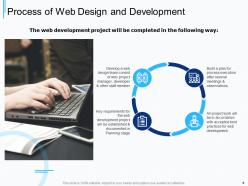
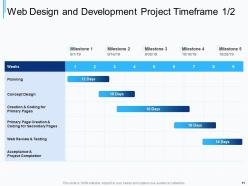
The worldwide web is unquestionably the most impactful commercial medium in this day and age. Not just eCommerce firms, but other companies are also at the mercy of the Internet for better business prospects. Considering the recent influx of website service providers, maintaining a market share is inundating. If you are struggling to find customers for your web development services, you are knocking at the right door. Check out SlideTeam’s latest offering Web Design And Development Proposal Template PowerPoint Presentation Slides. This impressive virtual tool is designed to increase lead generation and conversion. The cover letter featured in this web development PowerPoint proposal slideshow is developed as per the industry specifics. Our business proposal PPT templates acquaint your clientele with the project by offering a brief outline, along with the motives. Elaborate on the scope of your web design services like WordPress integration, research, development, user testing, and so on. You will find our web development ppt slide deck replete with state-of-the-art graphics. For instance, the cyclic diagram featured in our PPT helps you in representing the web development process. Similarly, a timeline diagram assists you in walking your clients through the project timeline. Outline the important milestones and developments chronologically. Elucidate on the project deliverables like a fully-functional website based on your client’s needs. Our PPT business proposal for website services includes a tabular format to compile project estimates. Elaborate on the budget by dividing the cost for each deliverable. Acquaint potential clients with your organization. This slideshow helps you in consolidating a crisp company intro. Familiarize customers with your company’s background, vision, focus, and mission. Represent the tools and technologies that your firm utilizes through our fully custom presentation. Add a human touch to your proposal by introducing your web development and designing teams. You can include a professional image and the role of your project team members. The client testimonials and a case study featured here help you in building credibility. So, hit the download icon and start personalizing.
People who downloaded this PowerPoint presentation also viewed the following :
Content of this Powerpoint Presentation
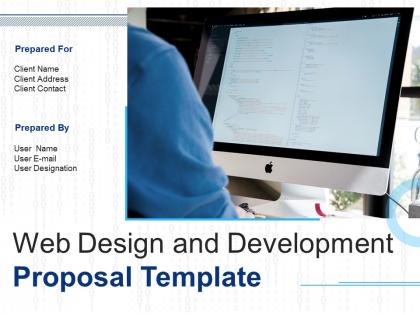
Slide 1: This slide introduces Web Design and Development Proposal Template. State Client details, User details and begin.
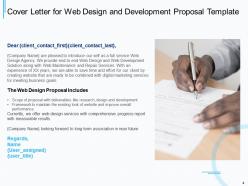
Slide 2: This slide displays Cover Letter for Web Design and Development Proposal Template
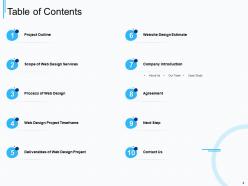
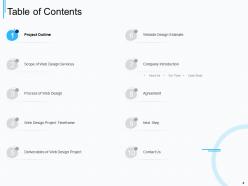
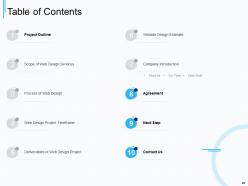
Slide 3: This slide shows Table of Contents of the presentation.
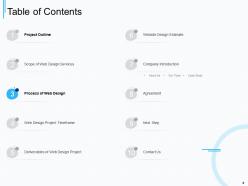
Slide 4: This slide depicts Table of Contents.
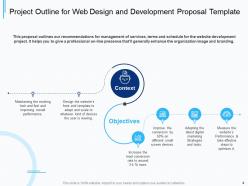
Slide 5: This slide describes Project Outline for Web Design and development Proposal Template.
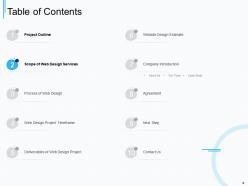
Slide 6: This slide showcases Table of Contents
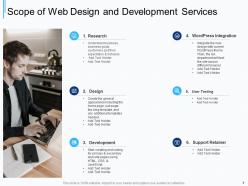
Slide 7: This slide depicts Scope of Web Design and development.
Slide 8: This slide depicts Table of Contents.
Slide 9: This slide presents Process of Web Design Services Proposal
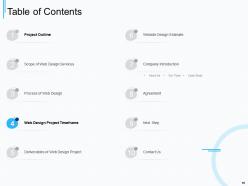
Slide 10: This slide displays Table of Contents of the presentation.
Slide 11: This slide showcases Web Design Services.
Slide 12: This slide showcases Web Design Services Proposal.
Slide 13: This slide displays Table of Contents.
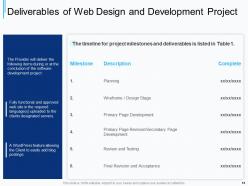
Slide 14: This slide showcases Deliverables of Web Design and development Project. The timeline for project milestones and deliverables is listed in Table 1.
Slide 15: This slide displays Table of Contents of the presentation.
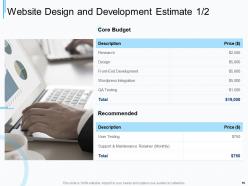
Slide 16: This slide showcases Web Design and development Estimate.
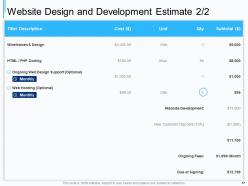
Slide 17: This slide showcases Web Design and development Estimate.
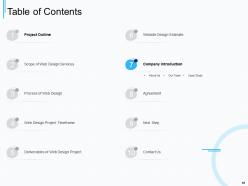
Slide 18: This slide displays Table of Contents of the presentation.
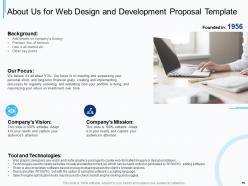
Slide 19: This is About Us slide to showcase Company specifications.
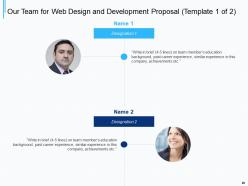
Slide 20: This is Our Team slide with Names and Designations.
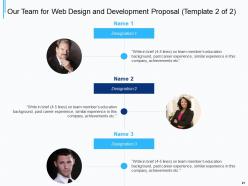
Slide 21: This is Our Team slide. for Web Design and development Proposal. Write in brief (4-5 lines) on team member’s education background, past career experience, similar experience in this company, achievements etc.
Slide 22: This slide displays Client Testimonials for Web Design Services Proposal Template
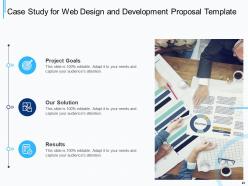
Slide 23: This slide showcases Case Study with- Project Goals, Our Solution, Results.
Slide 24: This slide depicts Table of Contents.
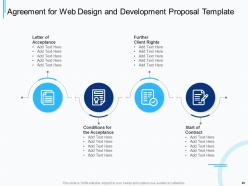
Slide 25: This slide presents Agreement for Web Design Services Proposal Template.
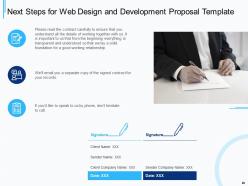
Slide 26: This slide showcases Next Steps for Web Design Services Proposal Template.
Slide 27: This is Contact Us slide with Address, Email address and Contact number.
Slide 28: This is Icons Slide for Web Design and development Proposal Template.
Slide 29: This slide is titled as Additional Slides for moving forward.
Slide 30: This is Our Mission slide with Mission, Vision and Goal.
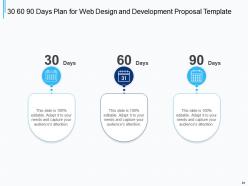
Slide 31: This is 30 60 90 Days Plan slide.
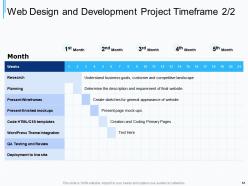
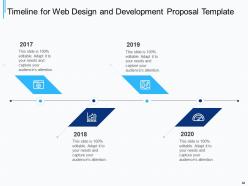
Slide 32: This slide shows Timeline process.
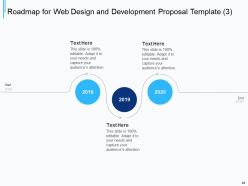
Slide 33: This slide shows Roadmap process.
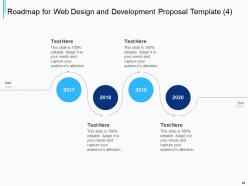
Slide 34: This slide depicts 4 step Roadmap process.
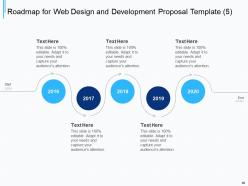
Slide 35: This slide shows 5 step Roadmap process.
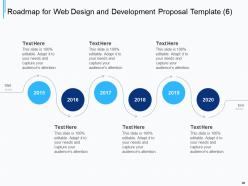
Slide 36: This slide also depicts 6 step Roadmap process.
Slide 37: This slide shows 7 step Roadmap.
Web design and development proposal template powerpoint presentation slides with all 37 slides:
Give your audience a fulfilling experience. They will find our Web Design And Development Proposal Template Powerpoint Presentation Slides elevating.

FAQs for Web design and development proposal template
A web design proposal template should include project scope and objectives, timeline and milestones, design specifications and wireframes, content strategy, technical requirements, and detailed pricing structure. These components work together by establishing clear expectations, streamlining client communications, and defining deliverables, with many agencies finding that comprehensive templates ultimately enhance project efficiency and client satisfaction.
A web design proposal template effectively showcases portfolios by incorporating visual case studies with before-and-after comparisons, client testimonials with quantifiable results, and detailed project breakdowns highlighting specific challenges solved. Through strategic presentation of previous work across diverse industries like e-commerce, healthcare, and professional services, designers demonstrate versatility and expertise, ultimately building client confidence while positioning themselves as experienced partners capable of delivering measurable business outcomes.
**INPUT**: What strategies can be used to tailor a web design proposal template for different client industries? **OUTPUT**: Tailoring web design proposal templates involves customizing visual elements, terminology, case studies, compliance requirements, and pricing structures for specific industries. Healthcare clients need HIPAA considerations while e-commerce requires payment integration focus, with many agencies finding that industry-specific portfolios, relevant testimonials, and sector-appropriate design examples significantly enhance proposal acceptance rates and client confidence.
Demonstrating client understanding requires thorough research into their industry challenges, competitive landscape, target audience demographics, and specific business objectives, followed by directly addressing these insights throughout your proposal. Reference their current website limitations, competitor analysis findings, and user experience pain points, while proposing tailored solutions that align with their brand voice and conversion goals, ultimately showing strategic partnership rather than generic service delivery.
Pricing serves as a critical decision-making factor in web design proposals, requiring transparent presentation through itemized breakdowns, project phases, and payment schedules that align with client budgets and expectations. Effective pricing strategies include tiered options, clear scope definitions, and value justifications that demonstrate ROI, with many agencies finding that structured pricing presentations streamline negotiations and enhance client confidence in project investments.
Visuals in web design proposals enhance client engagement by making complex concepts tangible, demonstrating design thinking through mockups and wireframes, and creating emotional connections that text alone cannot achieve. Through interactive prototypes, visual mood boards, and before-and-after comparisons, clients can envision their brand transformation more clearly, ultimately leading to faster approvals and stronger project buy-in.
Common pitfalls include vague project scopes, unrealistic timelines, unclear pricing structures, insufficient client research, and missing technical specifications. These oversights often lead to scope creep, budget overruns, and client dissatisfaction, with many agencies finding that detailed proposals with specific deliverables, realistic milestones, and transparent communication ultimately enhance client relationships and project success rates.
Project timelines should be structured with clear phases including discovery and planning, design mockups, development and coding, testing and revisions, and launch preparation. These phases enable clients to understand project progression while allowing for feedback integration, with many web design agencies finding that detailed milestone breakdowns enhance client communication, reduce scope creep, and ultimately deliver projects more efficiently.
Before creating a web design proposal, conduct user experience research, competitor analysis, target audience demographics, technical requirements assessment, and brand positioning studies. This comprehensive research enables designers to deliver tailored solutions that enhance user engagement, streamline navigation, and optimize conversion rates, with many agencies finding that thorough upfront research ultimately delivers stronger client satisfaction and competitive advantage.
A web design proposal template addresses client objections by incorporating comprehensive project timelines, detailed cost breakdowns, portfolio examples, and clear revision policies that preemptively answer common concerns about budget, timeline, and quality. Through strategic sections covering maintenance plans, communication protocols, and success metrics, agencies can build client confidence while demonstrating professionalism, ultimately streamlining the approval process and reducing negotiation cycles.
Effective executive summaries include understanding client business objectives, highlighting key design strategies, outlining project scope and timeline, demonstrating ROI potential, and showcasing relevant portfolio examples. These elements work together by establishing credibility, addressing specific pain points, and presenting strategic solutions, with many agencies finding that well-crafted summaries significantly improve proposal acceptance rates and client engagement.
Testimonials and case studies should be strategically placed after problem identification and solution presentation, serving as credibility anchors that validate your expertise. Position client success stories near relevant service sections, include quantifiable results in your portfolio section, and feature brief testimonials in sidebar callouts throughout the proposal, with many agencies finding that this strategic placement builds trust while demonstrating proven outcomes and competitive advantage.
Professional web design proposal tools include Adobe InDesign, Canva, Proposify, PandaDoc, and specialized platforms like Bidsketch and Qwilr. These technologies streamline proposal creation by offering customizable templates, client collaboration features, and automated workflows, with many design agencies finding that integrated platforms significantly reduce preparation time while enhancing presentation quality and client engagement rates.
Designers can make proposals stand out by showcasing unique value propositions, demonstrating deep understanding of client challenges, presenting innovative solutions with visual mockups, and highlighting measurable outcomes from previous projects. Through strategic differentiation, personalized approaches, and compelling case studies, designers ultimately deliver competitive advantage while building trust, with many clients finding that comprehensive, visually-rich proposals significantly influence their decision-making process.
Key metrics should include conversion rates, page load speeds, bounce rates, user engagement time, mobile responsiveness scores, and SEO performance indicators. These measurements enable businesses to track tangible outcomes like increased sales, improved customer experiences, and enhanced search visibility, with many organizations finding that comprehensive analytics ultimately deliver measurable ROI and competitive advantage.
No Reviews