

What is affinity bias edu ppt





Try Before you Buy Download Free Sample Product
 Impress Your
Audience
 100%
Editable
 Save Hours
of Time


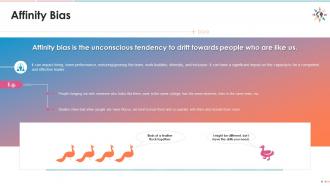
This slide covers definition of affinity bias and the reasons how it affects the hiring process.
People who downloaded this PowerPoint presentation also viewed the following :
What is affinity bias edu ppt with all 16 slides:
Use our What Is Affinity Bias Edu Ppt to effectively help you save your valuable time. They are readymade to fit into any presentation structure.










FAQs for What is affinity
Oh that's when you're drawn to people who seem like you - same background, interests, way of talking, whatever. Happens all the time without realizing it. Like in meetings you'll agree more with the guy who went to your college. Or hiring someone because they "get" your references. Honestly it's pretty natural but creates these bubble situations where everyone thinks alike. The real challenge is spotting yourself doing it. Next time you instantly click with someone, just check - am I missing out on hearing from people who'd totally disagree with me? Different perspectives are usually worth it.
Yeah, affinity bias is basically when you naturally click with people who remind you of yourself - similar backgrounds, interests, how they communicate, whatever. It creates these weird invisible groups where info flows super easily between the "similar" people while others get shut out of key conversations. You'll unconsciously trust ideas more from teammates you vibe with, or assume they understand something without explaining it properly. Honestly, it's such a creativity killer because different perspectives just get ignored. My advice? Switch up who you grab lunch with or brainstorm with - like, actively reach out to people you don't normally work with. Sounds simple but it actually works.
Oh man, affinity bias is when you automatically like candidates who remind you of yourself. I totally do this - saw someone went to my college once and was immediately more interested in them, which is ridiculous when you think about it. You end up hiring people from similar backgrounds instead of getting diverse perspectives that actually help your team grow. The fix? Use the same interview questions for everyone, bring in different people to interview candidates, and focus on actual skills rather than whether you'd grab beers with them.
Honestly, start with anonymous surveys about hiring and promotion patterns - people will actually tell you what they see when there's no names attached. Then dig into your workforce data. Who's getting promoted? Are you hiring the same types of people over and over? Meeting dynamics are huge too - track who's actually speaking up versus who stays quiet. I'd also do 360-degree feedback since that catches favoritism people might not mention otherwise. The trick is mixing what people *think* is happening with the actual numbers. Oh, and definitely baseline everything first so you can see if things improve later.
Honestly, start with your hiring panels - get different people making decisions, not the same faces every time. Structured interviews are a game changer too. Same questions for everyone, scoring rubrics written beforehand so you're not just winging it based on vibes. I used to hate how rigid it felt, but it actually works. Try blind resume reviews when you can swing it. Set some real diversity targets for your candidate pools - like actual numbers, not just "we'll try harder." The whole point is making this stuff automatic so you don't have to constantly police your own brain. Pick one thing and start tomorrow.
Okay so affinity bias is when you naturally lean toward people who remind you of yourself - same background, went to similar schools, whatever. The problem? You end up taking their ideas more seriously while brushing off equally good suggestions from others. It's honestly such a human thing to do, but it totally screws with team decisions. Everyone starts thinking alike and you miss out on different perspectives. Oh, and quieter people get steamrolled even when they have great points. Best fix I've found is literally asking those quiet folks directly what they think, or having someone purposely argue the opposite side.
Yeah, affinity bias is sneaky - you end up playing favorites with clients who remind you of yourself. Like giving better service to someone from your hometown or responding super fast to people who went to your college. I totally do this with other coffee obsessives, which is probably bad lol. The thing is, it creates unequal experiences. Your other valuable customers notice when they're getting the cold shoulder just because they don't share your interests or background. Best fix? Set standard response times for everyone and check your client interactions regularly to catch yourself doing it.
Oh totally, this messes up product development big time. When everyone on your team is basically the same type of person, you end up building stuff that only appeals to... well, people like you. Classic echo chamber situation. Your marketing becomes super narrow too - like you're only talking to one slice of potential customers while ignoring everyone else. Honestly, I've seen companies lose out on huge opportunities because of this. The fix? Get people who think differently than your team involved early in the design process. It's not rocket science, but most teams don't actually do it.
Look, your brain basically uses cultural shortcuts to find "your people" - folks who talk like you, share similar values, that whole thing. Makes sense evolutionarily but screws you over professionally. When someone matches your background, they just *feel* right, even if they're not the best choice. I've definitely caught myself doing this. The tricky part is noticing when you're playing it safe with familiar picks instead of considering someone who might actually bring fresh ideas. Different perspectives are usually what teams need most, even though our brains resist the unfamiliar stuff.
Oh man, once you notice this stuff you can't unsee it. Hiring managers always seem to pick people from their old college. Teams end up being carbon copies because "culture fit" really just means "reminds me of myself." I've totally done this too - there's something about meeting someone who gets your references or talks like you do. Mentorship is probably the worst for it though. Executives sponsor the mini-me versions instead of actually diverse talent. Now I try to pause when I click with someone instantly and think... wait, is this about their skills or just because they feel familiar?
So basically these programs force you to notice when you're subconsciously drawn to people like yourself. You know that feeling when you instantly click with someone in an interview? Yeah, the training teaches you to pause and ask - is this person actually amazing, or do we just have the same alma mater? It's honestly pretty wild how much our brains do this automatically. They give you actual tools to fight it though - structured questions, mixed hiring panels, that kind of thing. I'd start by just catching yourself when you feel that instant "I like them" vibe and dig into why.
Start with employee surveys - people will tell you straight up if they think hiring favors certain cliques. I'd also dig into your actual numbers: who's getting promoted, what teams look like demographically, that kind of thing. Textio's pretty solid for catching sketchy language in job posts (though honestly, sometimes you can spot it just by reading). Focus groups work too if surveys feel too formal. Oh, and structured interviews help cut down on the "gut feeling" decisions that usually aren't great. A basic inclusion survey will probably show you patterns faster than you'd expect.
Okay so affinity bias is when you're drawn to people like you - same background, similar vibes, whatever. Confirmation bias? That's totally different - you're just hunting for info that backs up what you already think, doesn't matter who says it. Then there's groupthink where everyone gets too comfortable and stops pushing back on ideas (honestly the worst). With affinity bias though, you might blow off solid ideas just because they come from someone who feels "different." I'd say next time you're sitting in a meeting, pay attention to whose suggestions you immediately like versus the ones you kinda zone out on.
Look, ignoring affinity bias turns your workplace into this weird echo chamber where everyone's basically the same person. Innovation tanks because you're missing different perspectives. People who don't fit the typical mold get burned out constantly having to prove themselves - it's honestly brutal to watch. Employee engagement drops, especially for underrepresented folks, and good talent just leaves. You end up with groupthink running everything, missing way better solutions. My advice? Start with your hiring panels and mix up who's interviewing. It's not a magic fix but it breaks the cycle pretty effectively.
Honestly, it's pretty simple - when your team is diverse, you can't just hire mini-versions of yourself anymore. Different backgrounds force you out of that "oh they remind me of me" trap we all fall into. You'll start noticing skills you wouldn't have valued before. Like, someone might solve problems in a completely different way that's actually brilliant. Having varied voices in hiring meetings is huge too - they'll spot your blind spots and push for candidates you might've written off. Just make sure people actually feel comfortable speaking up (that part's trickier than it sounds).
-
Very unique, user-friendly presentation interface.
-
Commendable slides with attractive designs. Extremely pleased with the fact that they are easy to modify. Great work!