


0514 the larynx medical images for powerpoint




Try Before you Buy Download Free Sample Product
 Impress Your
 Audience
 100%
100% Editable
 Save Hours
 of Time


Call our 0514 The larynx Medical Images For PowerPoint up for duty. They will respond at the instant.
People who downloaded this PowerPoint presentation also viewed the following :
0514 the larynx medical images for powerpoint with all 9 slides:
Under pressure at work? Take the edge off by having us handle the design of your next big presentation with our 0514 The larynx Medical Images For PowerPoint.


FAQs for 0514 the larynx medical
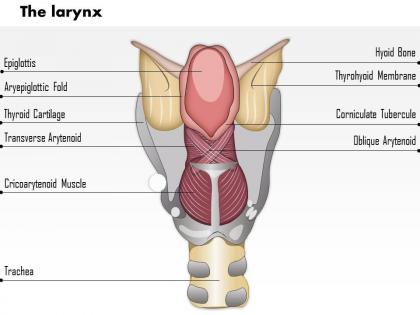
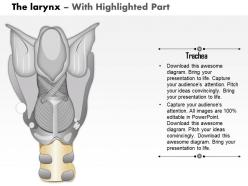
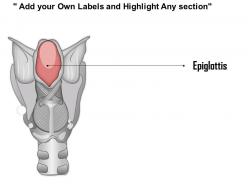
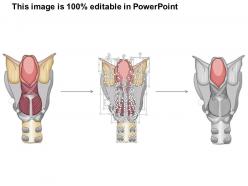
The larynx comprises the thyroid, cricoid, and arytenoid cartilages, along with vocal folds, epiglottis, and intrinsic muscles that control tension and positioning. During speech production, airflow from the lungs causes vocal fold vibration while cartilages and muscles adjust pitch and volume, with the epiglottis directing airflow for articulation, ultimately enabling complex vocal communication through coordinated anatomical movements.
The larynx serves as a crucial respiratory gateway by regulating airflow during breathing and acting as a protective barrier through the epiglottis, which prevents food and liquids from entering the trachea. This dual-function mechanism enables efficient oxygen exchange while minimizing aspiration risks, with healthcare professionals finding that understanding laryngeal anatomy enhances patient care in respiratory therapy, anesthesiology, and emergency medicine, ultimately delivering safer airway management and improved respiratory outcomes.
Common laryngeal disorders include laryngitis, vocal cord nodules, polyps, paralysis, and laryngeal cancer, with gastroesophageal reflux disease also significantly impacting vocal cord function. Healthcare providers diagnose these conditions through laryngoscopy, voice analysis, imaging studies, and biopsy procedures when necessary, enabling precise treatment planning and improved patient outcomes across otolaryngology practices.
Vocal cords work by vibrating as air from the lungs passes through them, with their tension, length, and positioning controlled by intricate laryngeal muscles that adjust pitch and volume. These mechanisms enable precise sound modulation through coordinated muscle contractions, airflow regulation, and resonance chamber adjustments, ultimately delivering the complex vocal capabilities essential for communication, professional speaking, and vocal performance across diverse applications.
During puberty, the larynx undergoes significant growth, with the thyroid cartilage enlarging and vocal cords lengthening and thickening, particularly in males where testosterone drives more dramatic changes. This transformation results in voice deepening, the development of the prominent Adam's apple, and temporary voice instability, with males experiencing voice drops of approximately one octave compared to females' more subtle changes.
Smoking damages the larynx by causing chronic inflammation, tissue irritation, and cellular changes that impair vocal cord function and increase cancer risk. Through prolonged exposure to toxins, smokers experience voice hoarseness, reduced vocal flexibility, and compromised breathing passages, with many healthcare professionals finding that cessation significantly improves laryngeal health and voice quality.
Laryngeal cancer specifically affects the voice box, while other throat cancers target the pharynx, tonsils, or surrounding tissues, with laryngeal cancer typically presenting with persistent hoarseness and breathing difficulties. Treatment options include surgical removal, radiation therapy, chemotherapy, and voice preservation techniques, with many healthcare institutions finding that early detection and combined treatment approaches deliver better patient outcomes and improved survival rates.
Laryngeal paralysis occurs when nerve damage affects the muscles controlling vocal cord movement, often due to surgical trauma, viral infections, neurological disorders, or idiopathic causes. This condition significantly impacts voice quality through hoarseness, breathiness, and reduced vocal strength, while simultaneously compromising breathing efficiency, especially during physical exertion, with many patients finding that early intervention through voice therapy or surgical procedures helps restore both communication abilities and respiratory function.
The larynx plays a crucial protective role during swallowing by elevating and closing to prevent aspiration, while the epiglottis folds down to seal the airway entrance. This coordinated interaction with the hyoid bone, pharyngeal muscles, and esophageal sphincter enables safe food passage, with healthcare professionals and speech therapists finding that understanding these mechanisms enhances treatment outcomes for swallowing disorders.
Vocal training and therapy improve laryngeal function by teaching proper breathing techniques, optimizing vocal cord coordination, and developing healthy resonance patterns. Through specialized exercises and professional guidance, singers and speakers achieve enhanced vocal stamina, reduced strain, and improved pitch control, while minimizing the risk of vocal injuries, ultimately delivering sustained performance quality and career longevity.
Laryngeal trauma implications include airway obstruction, voice changes, swallowing difficulties, respiratory distress, and potential long-term vocal impairment. Management involves immediate airway assessment, emergency intubation or tracheostomy when necessary, anti-inflammatory medications, voice rest, and surgical repair for severe cases, with healthcare facilities increasingly finding that early intervention and multidisciplinary care ultimately deliver better outcomes and faster recovery.
Technological advancements in laryngeal surgery include robotic-assisted procedures, laser microsurgery, 3D imaging systems, voice prosthetics, and AI-powered diagnostic tools. These technologies enhance surgical precision, reduce recovery times, and improve voice restoration outcomes, with many ENT departments and speech therapy centers finding that patients achieve significantly better vocal function and quality of life post-treatment.
The larynx varies significantly across species, with birds using a syrinx for complex vocalizations, mammals employing different cartilage structures for territorial calls, and marine animals like whales utilizing specialized adaptations for underwater communication. These evolutionary variations enhance our understanding of human vocal anatomy by revealing how cartilage positioning, muscle coordination, and airflow control optimize speech production, ultimately delivering insights that improve voice therapy techniques and surgical approaches.
Hormones significantly influence larynx development and function through testosterone deepening vocal cords during puberty, estrogen affecting vocal fold hydration and thickness, and growth hormone regulating overall laryngeal structure formation. These hormonal changes enable voice pitch modulation, vocal cord elasticity maintenance, and structural adaptations, with many voice professionals finding that hormonal fluctuations directly impact vocal quality and performance capabilities.
Environmental factors significantly impact laryngeal health through air pollution, allergens, smoke exposure, chemical irritants, and dry air conditions. Poor air quality triggers inflammation, swelling, and irritation of vocal cord tissues, while allergens cause mucus production and throat constriction, with many singers, teachers, and public speakers finding that filtered air systems and humidity control ultimately protect voice quality and reduce chronic laryngeal conditions.
-
Professional and unique presentations.
-
It saves your time and decrease your efforts in half.