


0614 anterior pituitary hormones medical images for powerpoint




Try Before you Buy Download Free Sample Product
 Impress Your
 Audience
 100%
100% Editable
 Save Hours
 of Time


Our 0614 Anterior Pituitary Hormones Medical Images For PowerPoint are like an oasis in a desert. Quench the thirst and hunger of your audience.
People who downloaded this PowerPoint presentation also viewed the following :
0614 anterior pituitary hormones medical images for powerpoint with all 9 slides:
Create fulfillment with our 0614 Anterior Pituitary Hormones Medical Images For PowerPoint. Cater to their each and every desire.





FAQs for 0614 anterior pituitary hormones medical
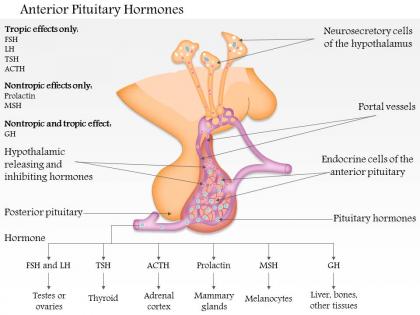
So there are six main ones you gotta know from the anterior pituitary: GH, prolactin, ACTH, TSH, FSH, and LH. Growth hormone's pretty self-explanatory - handles growth and metabolism stuff. Prolactin does milk production. ACTH kicks your adrenal glands into gear for cortisol release, which is huge for stress. Then TSH runs thyroid function. FSH and LH are the reproductive ones - they're basically a team, tbh. Oh, and most of these get bossed around by the hypothalamus sitting right above. For pathology, just focus on what happens when each one goes too high or too low.
So your anterior pituitary is basically running the whole growth show. It pumps out growth hormone that hits your bones and muscles directly, plus TSH which tells your thyroid to crank up metabolism and brain development stuff. Then during puberty - honestly the most chaotic time hormonally - gonadotropins jump in to handle sexual maturation. The cool thing is these all work in feedback loops together. If your growth plates aren't fused yet, you can actually boost the effects by sleeping well since GH spikes during deep sleep. Nutrition matters too obviously.
So GH is like your body's ultimate multitasker - builds muscle while torching fat at the same time. Pretty neat trick, right? It switches your metabolism away from burning glucose and more toward fat burning instead. Your liver also cranks out more glucose when levels drop, thanks to GH signaling. Here's the kinda crazy part: GH spikes naturally during sleep and fasting periods. That's why I always tell people their weight issues might actually stem from crappy sleep messing with their hormones. When you're dealing with metabolic patients, definitely check GH alongside the usual insulin and thyroid tests.
So basically, it comes down to reproductive hormones being totally different - women get those LH and FSH spikes during their cycle while guys stay pretty steady. Growth hormone is actually higher in women (thanks, estrogen!), and prolactin runs higher too even when they're not pregnant. The stress hormones like cortisol and TSH are mostly similar, though women might spike cortisol more under stress. Here's the thing that trips people up - you've gotta know where a woman is in her cycle when reading labs. Those hormone swings can make normal values look way off if you don't account for timing.
So basically your hypothalamus runs the show by sending hormones through this portal system to your anterior pituitary. It releases stuff like GHRH and TRH to turn things on, or somatostatin and dopamine to shut them down. The cool part? There's feedback loops everywhere - cortisol gets too high and it tells the whole system to chill out. I always think of it like a thermostat, honestly. When you're dealing with endocrine problems, the issue could be anywhere in that chain - hypothalamus, pituitary, or the target organ itself.
So basically your anterior pituitary is like the control center for everything. FSH kicks off the whole cycle by getting your follicles going and ramping up estrogen production. Around day 14 - boom! - you get this huge LH surge that makes you ovulate. Honestly, it's wild how dramatic that spike looks on charts. After that, LH keeps your corpus luteum working so it can pump out progesterone. No pregnancy? Everything crashes and your period starts. The timing has to be super precise though - your pituitary sends these hormone pulses and your ovaries just follow along.
Ok so basically your hypothalamus is like the boss of your anterior pituitary. It sends these releasing hormones through this portal system - when it detects something's wrong (low thyroid, stress, whatever), it shoots out specific signals like TRH or CRH. Then your anterior pituitary gets the message and releases its own hormones - TSH, ACTH, growth hormone, all that stuff. Think of it like a chain reaction: hypothalamus talks to pituitary, pituitary talks to target organs. It's actually pretty elegant when you think about it. If you're trying to figure out hormone problems, that's your roadmap right there.
Your pituitary releases TSH, which is like the on/off switch for your thyroid. TSH hits those thyroid receptors and boom - out comes T3 and T4 to run your metabolism. Pretty cool how it works as a feedback loop too. Low thyroid hormones? Your pituitary cranks up more TSH. Too much thyroid hormone floating around? It dials back the TSH. Here's the thing though - always check TSH levels first when someone's having thyroid issues. It'll tell you right away if the problem's with the thyroid gland itself or if something's wonky upstream with the pituitary.
Anterior pituitary problems are actually pretty easy to catch once you know the patterns. Too much hormone gives you the dramatic stuff - acromegaly from excess GH, Cushing's from ACTH overload, or those prolactinomas that cause random breast milk production. Not enough hormone? You'll see growth issues in kids, secondary hypothyroidism, adrenal problems. What's wild is how these present in these really obvious symptom clusters. I mean, once you've seen acromegaly hands, you can't unsee them. Just run hormone panels systematically when patients come in with these classic combinations.
So basically when you're stressed, your hypothalamus dumps out CRH. This hits your pituitary, which then releases ACTH - that's the hormone that screams at your adrenals to make cortisol. It's this whole cascade thing where each step makes the signal stronger. Pretty clever actually. Once you've got enough cortisol floating around, it loops back and tells both the hypothalamus and pituitary to chill out. Otherwise we'd just be stressed 24/7 which would suck. The HPA axis is gonna be on every single endo exam, trust me on that one.
So for anterior pituitary testing, blood draws are pretty straightforward for most hormones - TSH, ACTH, FSH, LH, prolactin. Growth hormone's trickier though since it spikes randomly all day, so single tests are basically pointless. You'll need stimulation tests like insulin tolerance or GHRH-arginine for GH. Dynamic testing works well for deficiencies too - CRH stim for ACTH, TRH for TSH and prolactin. I'd honestly just start with baseline levels first, then do the fancy stimulation stuff if something looks off.
So basically the anterior pituitary releases hormones that bind to receptors on target organs - like TSH hitting the thyroid, ACTH going to your adrenals, FSH/LH targeting gonads. Growth hormone's the overachiever hitting everything. They trigger signaling cascades, usually cAMP or IP3/DAG pathways. The smart part? Most create negative feedback loops back to keep things balanced. It's like your body's thermostat. When you're looking at hormone disorders (which honestly can get confusing), just trace the pathway: hypothalamus → anterior pituitary → target organ. That'll help you figure out where everything went sideways.
So pituitary tumors are weird - some pump out way too many hormones while others just squash your normal stuff. The overproducers are honestly easier to catch because you get wild symptoms like giant hands from too much growth hormone or that Cushing's puffy face look. But the non-functioning ones? They're sneaky as hell. Just slowly crush your pituitary and you end up exhausted, no sex drive, always cold. Most people think they're just getting older or stressed. If something feels off hormonally, push for blood work and maybe an MRI - don't let docs brush it off.
Ugh, pituitary stuff is such a pain to diagnose! Growth hormone issues will tank your energy and mess up your metabolism. ACTH problems? You're looking at either crushing fatigue or being wired all the time. When TSH goes haywire, the thyroid follows - so weight's all over the place, moods are crazy, can't regulate temperature. Prolactin's weird though, like suddenly producing milk when you're definitely not pregnant. Honestly, symptoms overlap so much it's annoying. Multiple unexplained problems in a patient? Just order the full pituitary panel and save yourself the headache.
Precision medicine is huge right now for pituitary stuff - they're matching treatments to your exact genetics and hormone levels. AI's getting scary good at predicting who'll actually respond to therapies, especially for growth hormone issues and prolactinomas. Gene therapy trials look promising but honestly we're still years out. The coolest part? New hormone replacements that last way longer - think weekly shots instead of daily. Oh, and if you're working with these patients, those new IGF-1 biomarkers are totally changing how we track if treatments are working.
-
Awesomely designed templates, Easy to understand.
-
Best Representation of topics, really appreciable.