


0614 capillaries medical images for powerpoint




Try Before you Buy Download Free Sample Product
 Impress Your
 Audience
 100%
100% Editable
 Save Hours
 of Time


Our 0614 Capillaries Medical Images For PowerPoint aid collaboration. Bring together the best in all.
People who downloaded this PowerPoint presentation also viewed the following :
0614 capillaries medical images for powerpoint with all 9 slides:
Under pressure to meet that next deadline? Agile 0614 Capillaries Medical Images For PowerPoint design can have you ready in seconds.



FAQs for 0614 capillaries medical
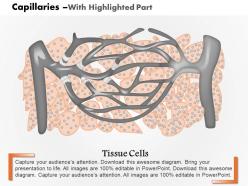
Capillaries feature single-cell endothelial walls, extensive surface area through dense networks, and minimal diffusion distances of just 0.5 micrometers between blood and tissues. These structural adaptations streamline oxygen and carbon dioxide exchange by maximizing contact surface, reducing transport barriers, and ensuring rapid molecular movement, ultimately delivering efficient respiratory function across all organ systems.
Capillary permeability and diameter vary significantly across tissues based on their specific functional requirements, with brain capillaries featuring tight junctions for selective filtering, while liver and kidney capillaries maintain larger pores for enhanced molecular exchange. These structural adaptations enable optimal nutrient delivery, waste removal, and specialized functions across different organ systems, ultimately supporting tissue-specific metabolic demands and maintaining physiological efficiency throughout the body.
Capillaries regulate blood pressure through precapillary sphincters that control flow distribution, autoregulation mechanisms responding to tissue demands, and their vast collective surface area that reduces systemic pressure. These microscopic vessels enable precise blood flow adjustments by constricting or dilating based on metabolic needs, oxygen levels, and local chemical signals, ultimately delivering optimal tissue perfusion while maintaining cardiovascular stability.
Capillary dysfunction contributes to diabetes and hypertension by impairing blood flow regulation, nutrient delivery, and waste removal at the cellular level. In diabetes, damaged capillaries lead to poor wound healing, retinopathy, and nephropathy, while in hypertension, compromised capillary networks reduce tissue oxygenation and increase vascular resistance, ultimately accelerating cardiovascular complications.
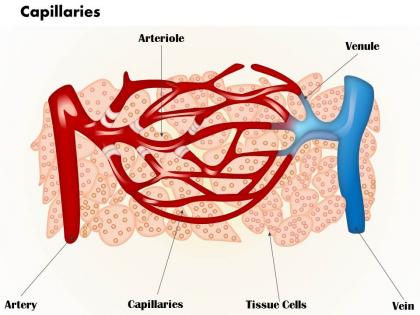
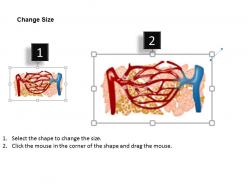
The capillary bed serves as the critical exchange interface where oxygen, nutrients, and waste products transfer between blood and tissues through thin capillary walls. This extensive network enables cellular metabolism by delivering essential substances while removing carbon dioxide and metabolic waste, ultimately maintaining tissue health and supporting organ function across all body systems.
Capillaries facilitate nutrient uptake through their thin, semi-permeable walls that enable direct exchange between blood and surrounding tissues via diffusion, osmosis, and filtration. These microscopic vessels create extensive networks throughout organs like muscles, brain tissue, and digestive systems, where oxygen and glucose pass from blood to cells while waste products move in reverse, ultimately ensuring efficient cellular metabolism and tissue health.
Capillary sphincter control involves local metabolic factors like oxygen levels, carbon dioxide concentration, and pH changes, along with neural regulation through sympathetic nervous system signals. These mechanisms enable tissues to dynamically adjust blood flow based on metabolic demands, with active muscles and organs receiving enhanced circulation while resting areas maintain reduced flow, ultimately delivering efficient oxygen distribution and optimal tissue perfusion.
Capillaries aid thermoregulation through vasodilation and vasoconstriction, controlling blood flow near the skin surface to release or conserve heat. These microscopic vessels enable precise temperature control by adjusting circulation patterns, increasing surface heat loss during warm conditions and redirecting blood to core organs during cold exposure, ultimately maintaining optimal body temperature through strategic vascular responses.
Lung capillaries feature extremely thin walls and extensive surface area for efficient gas exchange, while intestinal capillaries have specialized structures called lacteals for fat absorption and dense networks surrounding villi for nutrient uptake. These structural adaptations enable organs to optimize their primary functions, with pulmonary capillaries facilitating oxygen transfer and intestinal capillaries streamlining nutrient absorption, ultimately delivering enhanced physiological efficiency.
Continuous capillaries feature tight endothelial junctions for selective permeability, fenestrated capillaries contain pores enabling rapid filtration, and sinusoidal capillaries have large gaps allowing unrestricted molecular passage. These specialized structures streamline organ-specific functions by facilitating controlled exchange in brain tissue, enhancing filtration efficiency in kidneys, and enabling comprehensive metabolic processing in liver systems, ultimately delivering optimized physiological performance.
Capillary density directly correlates with metabolic demands, with highly active organs like the heart, brain, and kidneys containing significantly more capillaries per tissue volume than less metabolically active tissues. This relationship ensures adequate oxygen and nutrient delivery, with cardiac muscle showing approximately 3,000-4,000 capillaries per square millimeter compared to skeletal muscle's 300-600, ultimately optimizing cellular function and organ performance.
Aging significantly impacts capillary function through reduced density, decreased elasticity, and impaired oxygen transport, leading to slower wound healing and compromised tissue nutrition. These changes particularly affect cardiovascular health, brain function, and muscle performance, with many healthcare providers finding that early intervention through exercise and nutrition helps maintain capillary integrity and overall circulatory efficiency.
During inflammation, capillaries enhance immune response by increasing permeability to allow white blood cells and immune proteins to enter affected tissues, dilating to boost blood flow, and expressing adhesion molecules that help immune cells attach and migrate. This vascular response enables rapid immune cell recruitment, efficient delivery of inflammatory mediators, and accelerated tissue repair, ultimately delivering targeted immune protection.
Techniques for studying capillary permeability include fluorescent tracer injection, electron microscopy, intravital microscopy, permeability assays, and molecular imaging methods. These approaches enable researchers to analyze vessel integrity, transport mechanisms, and barrier function across different tissue types, with pharmaceutical companies and medical research institutions finding that these methods streamline drug development and enhance understanding of vascular diseases.
Abnormal capillary formation enables tumor growth by creating irregular blood vessels that supply nutrients while failing to deliver effective treatments, allowing cancer cells to proliferate unchecked. These malformed capillaries also provide pathways for metastasis, with many oncology researchers finding that tumors exploit weakened vessel walls and poor circulation to spread throughout the body, ultimately compromising treatment effectiveness.
-
Use of icon with content is very relateable, informative and appealing.
-
The content is very helpful from business point of view.