


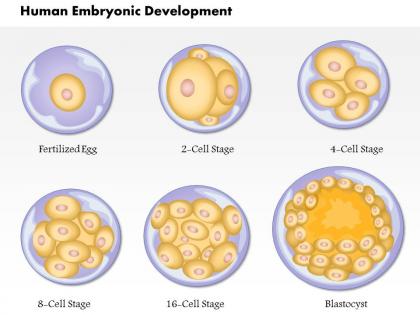
0814 human embryonic development medical images for powerpoint




Try Before you Buy Download Free Sample Product
 Impress Your
 Audience
 100%
100% Editable
 Save Hours
 of Time


Gain approvals with our 0814 Human Embryonic Development Medical Images For Powerpoint. Convince them to have full faith in you.
People who downloaded this PowerPoint presentation also viewed the following :
0814 human embryonic development medical images for powerpoint with all 10 slides:
Get in harmony with our 0814 Human Embryonic Development Medical Images For Powerpoint. You will come up with coherent thoughts.

FAQs for 0814 human embryonic development medical
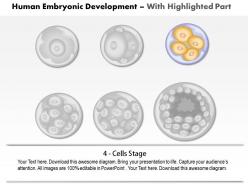
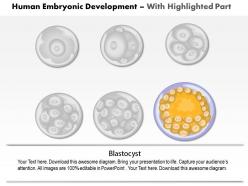
So you've got four main stages in those first 8 weeks - fertilization, cleavage, gastrulation, and organogenesis. Cleavage is just crazy rapid cell division right after the zygote forms. Then around week 3, gastrulation happens and honestly that's where things get wild - you're forming the three primary tissue layers that become everything. After that comes organogenesis where all the major organs start developing. Week 8 marks the end of the embryonic period, then it switches to fetal. Pro tip though - don't just memorize the stages. The molecular signals that trigger each transition are what really matter if you want to understand why it all happens in this exact order.
So basically when sperm hits the egg, it triggers this crazy calcium wave that wakes everything up. The calcium surge blocks other sperm from getting in (smart design, right?) and kickstarts all these enzymes. Your egg finishes meiosis, makes its female pronucleus, then starts dividing about 24 hours later. Honestly, it's wild how one tiny sperm can flip the whole switch from dormant to active. For studying this stuff, definitely focus on calcium - it's literally running the whole show here. Makes sense why they call it the master regulator!
So stem cells are like cellular blank slates that can turn into any type of cell your body needs - that's called being pluripotent. During those first few weeks of development, they're dividing like crazy and forming three main layers: ectoderm, mesoderm, and endoderm. Those layers eventually become all your organs and stuff. What's really cool is how they manage to keep making copies of themselves while also specializing at the same time. Oh, and if you're doing research on this - honestly, the signaling pathways that control differentiation are where things get interesting. That's where you'll actually understand what's happening.
Okay so genetics are basically the master blueprint for how embryos develop. Your genes control when and where proteins get made, which pushes cells to become different tissues. Regulatory gene networks switch on and off in these super precise sequences - honestly it's wild how coordinated everything is. Hox genes are huge for body plan stuff, and transcription factors guide whether cells become heart, brain, liver, whatever. Oh and if you're diving deep into this, definitely check out fate mapping studies. They're really good at showing how these genetic programs actually play out in space and time during development.
So gastrulation is basically when three huge things happen at once - you get those three germ layers forming (ectoderm, mesoderm, endoderm), cells are migrating like crazy through the primitive streak, and the whole body plan starts taking shape. Honestly it's wild how organized it all is. Cells go from this flat disc to a layered structure that'll become your organs. The neural plate kicks in around then too. Oh and pro tip - if you're cramming for a test, really nail down the cell signaling stuff. That's what screws most people over.
So basically, embryos are crazy vulnerable to whatever mom gets exposed to. The first 8 weeks are the worst timing since that's when organs develop. Alcohol and smoking are obvious no-gos, but people don't always realize medications and even high fevers can cause problems too. Honestly, the stress thing is real - maternal stress levels actually affect development. Nutrition matters a ton as well. Toxins and temperature stuff can be issues but that's less common unless someone has a really unusual situation. Bottom line: first trimester protection is everything when you're talking to patients about this.
So there's a few main approaches researchers use. IVF studies with donated embryos (only up to 14 days though), plus stem cell cultures to mimic different developmental stages. Organoids are where it gets really interesting - they're basically mini organs grown from stem cells. CRISPR gene editing helps track cell changes, along with live imaging and single-cell RNA sequencing. Honestly the organoid stuff is blowing up right now, so I'd definitely start there if you're diving into this field. The papers coming out are wild.
So basically the whole thing comes down to when embryos actually matter morally, you know? Most places follow this 14-day rule - research is fine until the primitive streak shows up around day 14. Before that point, they can't feel pain or think. There's drama about consent from donors too, plus whether it's sketchy to make embryos just for research (leftover IVF ones seem less controversial somehow). Religious folks obviously have strong opinions. Oh and definitely run things by your ethics board first - they'll have the real specifics you need.
So those first 8 weeks are absolutely crucial - that's when most birth defects happen. Picture building a house but the foundation gets screwed up, you know? Cell division errors, infections, toxins, even missing vitamins can mess with how genes work and tissues form. Folic acid deficiency alone causes spina bifida. Week 4-5 is especially rough for heart problems. My sister's OB was super strict about prenatal vitamins for this exact reason. Most of this stuff is totally preventable with good care though. The timing really makes all the difference.
Ok so the placenta is literally like a trading post between you and your baby. Oxygen and nutrients go from your blood to the baby, then waste like CO2 comes back to you. It's wild how smoothly this works! Plus it pumps out hormones - hCG, progesterone - that keep everything running. When it doesn't work right, you get scary stuff like growth problems or preeclampsia. Honestly I'd just think of it as this amazing exchange system rather than trying to memorize every single hormone name.
Think of it like cells have their own GPS system - signaling molecules create these concentration gradients that tell them exactly where they are and what they should become. Wnt, BMP, FGF... these pathways are doing all the heavy lifting. Honestly, the precision is kind of insane when you think about it. They coordinate everything from body axis formation to specific organ patterns by flipping genes on and off at just the right times and places. Oh, and if you're studying this stuff, definitely look into Hedgehog and Notch pathways - they're perfect examples of how local signals create really complex developmental outcomes.
So the coolest stuff happening right now is single-cell sequencing - you can literally watch DNA methylation and histone changes in individual cells as embryos develop. Wild, right? Scientists figured out how chromatin remodeling complexes control which cells become what, and honestly the precision is crazy. There's also new work on transcription factors that set up different cell lineages. Oh, and definitely look into chromatin accessibility mapping during gastrulation if you're getting into this field. The recent papers are pretty solid.
So basically, embryonic development is like nature's instruction manual for building organs and tissues. When scientists study how cells naturally transform during development, they can copy those same signals in the lab. Pretty clever, right? You take stem cells and expose them to the same growth factors and environments that happen during normal development. This works for growing heart muscle, brain tissue, whatever you need. The tricky part is figuring out the exact timing and combinations - development is super precise. But honestly, evolution already did the hard work of figuring out what works best.
Dude, maternal health during those first 8 weeks is SO crucial. What she eats, drinks, even her stress levels - it all directly affects how that embryo develops. Bad nutrition can cause neural tube defects, smoking cuts off oxygen, infections mess things up big time. Honestly, it's crazy how connected everything is. And here's the thing - her health before she even gets pregnant matters just as much. I learned this the hard way in my OB rotation. Bottom line: getting mom healthy beforehand isn't just a nice idea, it's literally essential for preventing birth defects and proper organ formation.
Dude, embryos are crazy when you think about it. Human ones literally have gill slits and tails early on, just like fish do. The limb buds look basically identical to other mammals too - a 6-week human embryo is almost impossible to tell apart from a pig or chicken at that stage. Kind of freaky honestly. Later the species-specific stuff kicks in and we start looking more human. If you're studying this for class or whatever, definitely focus on pharyngeal arches and limb development. That's where you'll see the evolutionary patterns most clearly. Shows how we're all connected.
-
Excellent Designs.
-
Understandable and informative presentation.