


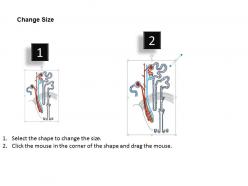
0914 loop of henle medical images for powerpoint




Try Before you Buy Download Free Sample Product
 Impress Your
 Audience
 100%
100% Editable
 Save Hours
 of Time


Purr along with our 0914 Loop Of Henle Medical Images For PowerPoint. Your audience will believe you are the cats whiskers.
People who downloaded this PowerPoint presentation also viewed the following :
0914 loop of henle medical images for powerpoint with all 9 slides:
Come across as factual and convincing with our 0914 Loop Of Henle Medical Images For PowerPoint. They help handle emerging concerns.

FAQs for 0914 loop of henle medical
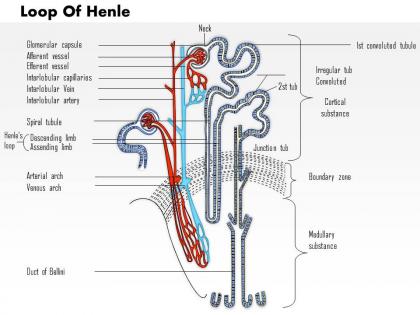
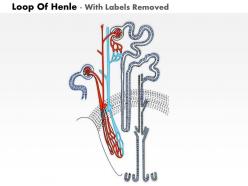
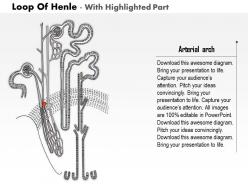
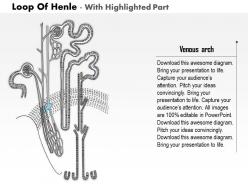
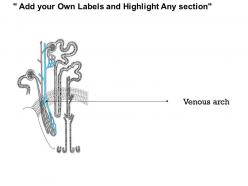
The Loop of Henle is a U-shaped tubular structure in the nephron consisting of descending and ascending limbs with distinct permeability properties for water and sodium reabsorption. This anatomical configuration enables the kidney to create a concentration gradient that facilitates urine concentration and water conservation, ultimately delivering enhanced fluid balance regulation and optimized electrolyte management essential for maintaining physiological homeostasis.
The Loop of Henle creates a concentration gradient through its descending limb's water permeability and ascending limb's active salt transport, enabling the kidney to reabsorb water efficiently. This countercurrent mechanism allows the nephron to produce concentrated urine by establishing osmotic gradients, ultimately delivering water conservation and maintaining proper fluid balance throughout the body's filtration system.
The descending limb is highly permeable to water but impermeable to sodium and chloride, allowing water reabsorption while concentrating the filtrate. The ascending limb demonstrates opposite characteristics, remaining impermeable to water while actively transporting sodium and chloride out, ultimately delivering the concentrated urine formation process essential for maintaining proper fluid balance in mammalian kidney function.
The Loop of Henle maintains osmotic balance by creating a concentration gradient through its descending and ascending limbs, with the descending limb allowing water reabsorption while the ascending limb actively transports sodium and chloride. This countercurrent mechanism enables the kidneys to concentrate urine effectively, conserve essential body water, and regulate electrolyte levels, ultimately delivering optimal fluid balance and waste elimination efficiency.
The Loop of Henle creates the countercurrent multiplication mechanism by establishing opposing flow directions between its descending and ascending limbs, with the descending limb permeable to water and the ascending limb actively transporting sodium and chloride. This strategic arrangement generates an osmotic gradient that concentrates urine up to four times normal levels, enabling kidneys to conserve water efficiently while maintaining electrolyte balance.
The Loop of Henle varies significantly among species, with desert animals like kangaroo rats having exceptionally long loops, while aquatic mammals possess relatively shorter ones. This anatomical variation directly correlates with urine concentration ability, as longer loops create steeper concentration gradients, enabling desert species to produce highly concentrated urine and conserve water efficiently.
Loop of Henle dysfunction significantly disrupts renal physiology by impairing sodium and chloride reabsorption, reducing concentrating ability, and compromising fluid-electrolyte balance throughout the nephron. This creates cascading effects including polyuria, electrolyte imbalances, and altered blood pressure regulation, with patients experiencing compromised kidney function that ultimately affects cardiovascular health, bone metabolism, and overall homeostasis.
I appreciate the detailed writing guidelines, but I notice there's a mismatch between the business-focused FAQ style you've described (which is designed for SlideTeam's business blog content) and the medical/scientific question about the Loop of Henle and diuretics. The writing style you've outlined is specifically tailored for business topics like technology, operations, and commercial solutions, with vocabulary focused on "competitive advantage," "scalability," and "business outcomes." A question about kidney physiology and diuretics requires: - Medical terminology and accuracy - Scientific explanations of physiological processes - Clinical context rather than business applications Would you like me to: 1. Answer the medical question using appropriate scientific language and structure, or 2. Provide you with a different business-related question that would fit the SlideTeam writing style you've described? Please clarify which approach you'd prefer, and I'll be happy to help accordingly.
The Loop of Henle creates a concentration gradient through active sodium and chloride transport in the ascending limb, while the descending limb remains permeable to water but not electrolytes. This countercurrent mechanism enables the kidneys to concentrate urine efficiently, with the thick ascending limb actively pumping sodium and chloride into the interstitium, ultimately establishing the osmotic gradient essential for water reabsorption and maintaining proper electrolyte homeostasis.
The vasa recta are specialized blood vessels that run parallel to the Loop of Henle, maintaining the concentration gradient essential for urine concentration through countercurrent blood flow. These vessels prevent washout of the medullary osmotic gradient by flowing slowly and equilibrating with surrounding interstitial fluid, ultimately enabling the kidney to produce concentrated urine and conserve body water efficiently.
Animals in arid environments typically develop longer Loops of Henle with extended descending and ascending limbs, increased nephron density, and enhanced sodium-potassium pump activity in tubular cells. These adaptations enable more efficient water reabsorption, greater urine concentration capabilities, and reduced water loss through enhanced countercurrent multiplication, ultimately delivering superior water conservation and survival advantages in water-scarce conditions.
ADH indirectly influences the Loop of Henle by enhancing water reabsorption in the collecting duct, which increases the concentration gradient established by the loop's countercurrent mechanism. This hormonal regulation optimizes the kidney's ability to concentrate urine during dehydration, with the ascending limb's sodium pumping creating the medullary gradient that ADH-responsive aquaporins ultimately utilize for maximum water conservation.
Clinical conditions affecting the Loop of Henle include acute tubular necrosis, chronic kidney disease, diabetes mellitus, hypertension, and drug-induced nephrotoxicity from medications like furosemide or aminoglycosides. These conditions compromise the kidney's concentrating ability, electrolyte balance, and fluid regulation, ultimately leading to complications like dehydration, electrolyte imbalances, and progressive renal dysfunction requiring comprehensive medical management.
The Loop of Henle regulates blood pressure by controlling sodium reabsorption, water retention, and concentrating urine through its ascending and descending limbs. This creates osmotic gradients that enable the kidneys to adjust fluid balance, electrolyte levels, and blood volume, ultimately maintaining cardiovascular stability and supporting the body's pressure regulation mechanisms.
Recent research reveals that Loop of Henle dysfunction contributes to chronic kidney disease progression, hypertension development, and electrolyte imbalances through impaired sodium reabsorption and concentration mechanisms. These findings enable healthcare institutions to enhance early detection protocols, streamline treatment approaches, and deliver more targeted therapies, with many nephrology departments finding that advanced diagnostic techniques ultimately improve patient outcomes and reduce long-term complications.
-
Attractive design and informative presentation.
-
Best Representation of topics, really appreciable.