


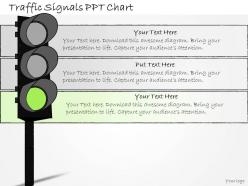
1113 business ppt diagram traffic signals ppt chart powerpoint template
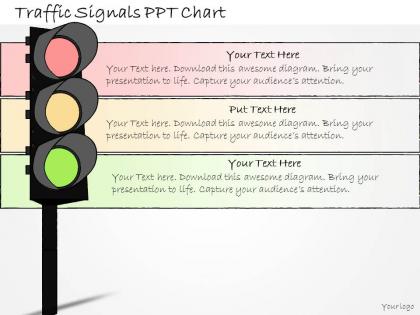




Try Before you Buy Download Free Sample Product
 Impress Your
 Audience
 100%
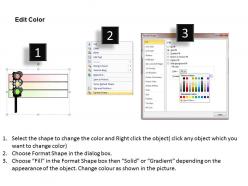
100% Editable
 Save Hours
 of Time


You're a busy presentation person. Relax and let our 1113 Business Ppt Diagram Traffic Signals PPT Chart Powerpoint Template do the hard work of making your presentations shine.
People who downloaded this PowerPoint presentation also viewed the following :
1113 business ppt diagram traffic signals ppt chart powerpoint template with all 8 slides:
Solve the puzzle with our 1113 Business Ppt Diagram Traffic Signals PPT Chart Powerpoint Template. They will bring all the pieces together.


FAQs for 1113 business ppt diagram traffic signals ppt
Traffic signals serve multiple primary functions including traffic flow regulation, pedestrian safety management, intersection conflict reduction, emergency vehicle prioritization, and coordinated network optimization. These systems enhance urban mobility by minimizing congestion at key intersections, reducing accident rates through controlled right-of-way allocation, and enabling smoother traffic progression, ultimately delivering improved safety outcomes and more efficient transportation networks.
Traffic signals significantly enhance pedestrian safety by providing designated crossing phases, clear right-of-way periods, and coordinated vehicle stopping intervals. Through dedicated walk signals and countdown timers, busy intersections enable safer pedestrian movement, reduce vehicle-pedestrian conflicts, and minimize accident risks, with urban planning departments increasingly finding that well-timed signal systems deliver measurable safety improvements and enhanced walkability.
Modern traffic signal systems integrate AI-powered adaptive control, IoT sensors, computer vision cameras, vehicle-to-infrastructure communication, and real-time data analytics platforms. These technologies enhance urban mobility by automatically adjusting signal timing based on traffic patterns, detecting pedestrians and cyclists, and coordinating with connected vehicles, ultimately delivering reduced congestion and improved safety.
Adaptive traffic signals adjust to real-time conditions through sensors, cameras, artificial intelligence, and predictive analytics that monitor vehicle flow, pedestrian movement, and congestion patterns. These systems automatically optimize signal timing by extending green lights during heavy traffic, reducing wait times at intersections, and coordinating with neighboring signals, ultimately delivering smoother traffic flow and reduced emissions.
Traffic signal timings play a crucial role in reducing congestion by optimizing traffic flow patterns, minimizing vehicle wait times, coordinating green light sequences across intersections, and balancing competing directional demands. Through adaptive timing systems, cities can reduce travel delays by 10-40%, enhance fuel efficiency, and improve overall urban mobility, with many metropolitan areas finding that synchronized signals significantly streamline commuter experiences.
Traffic signals can be optimized for emergency vehicles through preemption systems, adaptive signal control, GPS-based detection, wireless communication networks, and priority corridors that automatically adjust timing sequences. These technologies streamline emergency response by reducing intersection delays, creating green-light pathways, and enabling real-time traffic coordination, ultimately delivering faster emergency services and improved public safety outcomes.
Synchronized traffic signals deliver significant environmental benefits by reducing vehicle idling time, minimizing fuel consumption, and decreasing harmful emissions through optimized traffic flow patterns. These intelligent systems enable cities to cut carbon footprints by up to 20%, while urban areas increasingly find that coordinated signal timing enhances air quality and supports sustainability goals.
Traffic signals accommodate cyclists and non-motorized vehicles through dedicated signal phases, bike-specific detection sensors, push buttons at crosswalks, and extended crossing times for slower speeds. Many cities increasingly integrate separate cycling signal heads, priority timing for bike lanes, and coordinated green waves along cycling corridors, ultimately enhancing safety while encouraging sustainable transportation adoption.
Cultural differences influence traffic signal design through varying color interpretations, pedestrian behavior patterns, reading directions, and safety expectations across regions. Many countries adapt signal timing, symbols, and placement accordingly, with densely populated Asian cities often featuring longer pedestrian phases and audible signals, while European systems emphasize cycling integration, ultimately delivering culturally appropriate traffic management and enhanced road safety.
Retrofitting older traffic signal systems presents challenges including outdated wiring infrastructure, compatibility issues with modern sensors, limited processing capabilities, integration difficulties with smart city networks, and substantial upfront investment costs. While these upgrades require significant planning and resources, many municipalities find that modernized systems ultimately deliver improved traffic flow, reduced energy consumption, and enhanced data collection capabilities for strategic urban planning.
Urban traffic signals typically feature complex multi-phase timing, pedestrian crossing signals, coordinated networks for traffic flow optimization, and advanced detection systems for high-volume intersections. Rural signals often use simpler two-phase timing with longer cycles, basic vehicle detection, and standalone operation, with many transportation departments finding that this approach balances safety with cost-effectiveness in lower-traffic environments.
Traffic signal colors carry universal significance, with red indicating stop, yellow signaling caution, and green meaning proceed, creating standardized communication that enhances safety and traffic flow. These color choices enable consistent driver behavior across different regions and countries, while supporting efficient traffic management systems that reduce accidents, minimize congestion, and ultimately deliver safer roadways with improved transportation efficiency.
Community input significantly enhances traffic signal effectiveness by identifying peak congestion periods, pedestrian crossing patterns, accident hotspots, and local traffic flow dynamics that automated systems might miss. Through public meetings, surveys, and digital platforms, transportation departments gather resident insights about school zones, business districts, and residential areas, enabling more strategic signal timing and placement that ultimately delivers smoother traffic flow and improved safety outcomes.
Legal regulations governing traffic signal installation and maintenance include federal MUTCD standards, state transportation codes, local municipal ordinances, ADA compliance requirements, and environmental impact assessments. These comprehensive frameworks ensure consistent safety standards, proper timing sequences, and accessibility features, with many jurisdictions finding that standardized protocols streamline maintenance schedules while reducing liability risks.
Traffic signals have evolved from basic timed systems to intelligent, adaptive networks that respond to real-time traffic conditions, pedestrian movement, and emergency vehicle priorities through IoT sensors and AI algorithms. These smart systems enable cities to reduce congestion by up to 30%, minimize wait times, and optimize traffic flow across entire metropolitan areas, with many municipalities finding that connected signals significantly enhance urban mobility and air quality.
-
Great designs, Easily Editable.
-
Good research work and creative work done on every template.