


3 Column List Empowerment Environment Responsibility Illustrating Corporate Product





Try Before you Buy Download Free Sample Product
 Impress Your
 Audience
 100%
100% Editable
 Save Hours
 of Time


Our 3 Column List Empowerment Environment Responsibility Illustrating Corporate Product are topically designed to provide an attractive backdrop to any subject. Use them to look like a presentation pro.
People who downloaded this PowerPoint presentation also viewed the following :
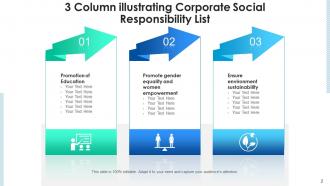
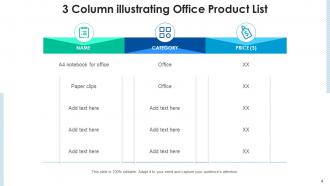
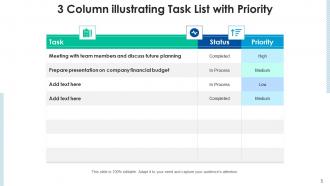
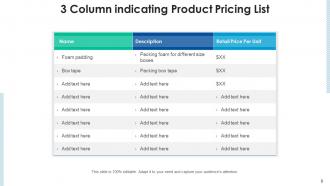
3 Column List Empowerment Environment Responsibility Illustrating Corporate Product with all 12 slides:
Use our 3 Column List Empowerment Environment Responsibility Illustrating Corporate Product to effectively help you save your valuable time. They are readymade to fit into any presentation structure.





FAQs for 3 Column List Empowerment Environment Responsibility
Key components of empowerment in professional settings include autonomy in decision-making, access to resources and information, skill development opportunities, clear accountability frameworks, and meaningful recognition systems. These elements work together by fostering employee ownership, enhancing problem-solving capabilities, and building confidence, with many organizations finding that empowered teams deliver faster innovation, improved customer experiences, and sustainable competitive advantage.
Effective communication enhances employee empowerment by providing clear expectations, transparent feedback, and open dialogue channels that enable informed decision-making and autonomous action. When leaders communicate goals, resources, and authority levels clearly, employees gain confidence to take initiative, solve problems independently, and contribute strategically, ultimately delivering improved performance and job satisfaction across organizations.
Empowerment significantly enhances team collaboration by fostering open communication, shared decision-making, increased accountability, and mutual trust among members. When team members feel empowered to contribute ideas and take ownership, they collaborate more effectively on innovative solutions, with many organizations finding that empowered teams deliver faster problem-solving and breakthrough creative outcomes.
Leadership plays a crucial role in fostering empowerment by establishing clear expectations, providing necessary resources, delegating meaningful decision-making authority, and creating psychological safety for risk-taking. Effective leaders enable team autonomy while maintaining strategic alignment, with many organizations finding that empowering leadership styles result in increased innovation, faster problem-solving, and ultimately higher employee engagement and retention rates.
Organizations measure empowerment initiative impact through employee engagement scores, productivity metrics, retention rates, decision-making speed, and innovation indicators like new ideas generated. These comprehensive assessments enable companies across sectors, from manufacturing to financial services, to track improvements in operational efficiency, customer satisfaction, and competitive advantage, ultimately delivering measurable ROI and enhanced organizational performance.
Employee empowerment strategies include delegating decision-making authority, providing comprehensive skills training, establishing clear communication channels, offering professional development opportunities, and implementing transparent feedback systems. These approaches enhance workplace engagement by building trust, increasing autonomy, and fostering innovation, with many organizations finding that empowered employees deliver improved productivity, customer service, and ultimately drive competitive advantage.
Empowerment enhances employee retention and job satisfaction by increasing autonomy, fostering professional growth, building trust through meaningful decision-making authority, and creating stronger emotional investment in organizational outcomes. Organizations implementing empowerment strategies experience reduced turnover rates, improved workplace morale, and higher engagement levels, with many companies finding that empowered employees demonstrate increased loyalty and performance.
Potential challenges include lack of proper training, unclear boundaries, resistance to change, inconsistent decision-making, and accountability concerns. However, organizations can address these through comprehensive skill development programs, clear role definitions, gradual implementation phases, and robust support systems, with many companies finding that structured empowerment initiatives ultimately enhance productivity, employee satisfaction, and competitive advantage.
Technology facilitates empowerment in remote work settings by providing collaborative platforms, cloud-based access to resources, and communication tools that enable autonomous decision-making. Through project management software, video conferencing, and digital workflows, remote employees gain greater control over their schedules, work processes, and professional development, ultimately delivering increased productivity and job satisfaction.
Empowerment and innovation share a symbiotic relationship, where empowered employees feel confident to propose creative solutions, challenge existing processes, and take calculated risks without fear of repercussions. Organizations fostering empowerment cultures, particularly in tech companies and research institutions, experience higher innovation rates, faster product development cycles, and more breakthrough solutions, ultimately delivering competitive advantage and sustainable growth.
Managers can balance delegation with empowerment by assigning meaningful projects with clear outcomes while providing autonomy in execution methods, offering guidance without micromanaging, and establishing regular check-ins for support rather than oversight. This approach enables employees to develop decision-making skills and ownership, while ensuring accountability and strategic alignment, ultimately delivering enhanced performance and employee engagement across teams.
Companies like Google, Southwest Airlines, Zappos, and Patagonia demonstrate successful empowerment through employee autonomy, decentralized decision-making, transparent communication, and trust-based leadership structures. These organizations streamline operations by enabling frontline staff to solve customer issues immediately, reducing bureaucratic delays, and fostering innovation, ultimately delivering higher employee satisfaction, improved customer experiences, and sustained competitive advantage in their respective markets.
Cultural differences significantly influence empowerment through varying leadership styles, communication patterns, decision-making processes, and hierarchical expectations across organizations. While Western cultures often emphasize individual autonomy and direct feedback, many Asian and traditional cultures prioritize collective harmony and structured authority, requiring tailored empowerment approaches that respect cultural values while ultimately delivering enhanced engagement and organizational effectiveness.
Training programs that build empowerment culture include leadership development workshops, decision-making frameworks, communication skills training, conflict resolution courses, and mentoring programs. These initiatives enhance team autonomy by developing critical thinking abilities, improving collaborative communication, and building confidence in independent problem-solving, with many organizations finding that empowered teams deliver faster innovation and higher engagement levels.
Empowerment accelerates decision-making by distributing authority closer to operational levels, reducing bureaucratic bottlenecks, and enabling faster responses to market changes. Through decentralized decision-making structures, organizations streamline processes, enhance employee engagement, and improve customer responsiveness, with many companies finding that empowered teams deliver more innovative solutions and competitive advantages.
-
Great product with effective design. Helped a lot in our corporate presentations. Easy to edit and stunning visuals.
-
Nice and innovative design.
-
Very unique and reliable designs.
-
Really like the color and design of the presentation.
-
Unique research projects to present in meeting.
-
Easily Understandable slides.
-
Easy to edit slides with easy to understand instructions.
-
I discovered this website through a google search, the services matched my needs perfectly and the pricing was very reasonable. I was thrilled with the product and the customer service. I will definitely use their slides again for my presentations and recommend them to other colleagues.