


30 60 90 Day Sales Plan Revenue Generation Business Process Modeling Graphics Illustration




Try Before you Buy Download Free Sample Product
 Impress Your
 Audience
 100%
100% Editable
 Save Hours
 of Time


Our 30 60 90 Day Sales Plan Revenue Generation Business Process Modeling Graphics Illustration are topically designed to provide an attractive backdrop to any subject. Use them to look like a presentation pro.
People who downloaded this PowerPoint presentation also viewed the following :
30 60 90 Day Sales Plan Revenue Generation Business Process Modeling Graphics Illustration with all 13 slides:
Use our 30 60 90 Day Sales Plan Revenue Generation Business Process Modeling Graphics Illustration to effectively help you save your valuable time. They are readymade to fit into any presentation structure.

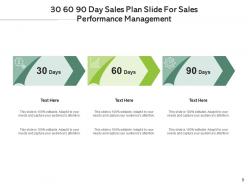
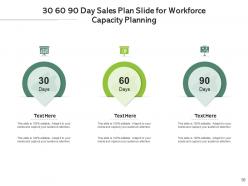
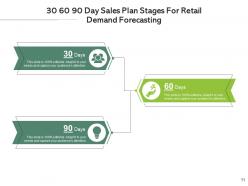
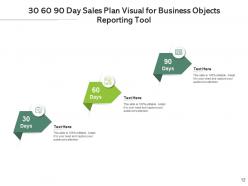

FAQs for 30 60 90 Day Sales Plan Revenue Generation Business Process
Key components of an effective sales plan include target market analysis, revenue goals, sales strategies, resource allocation, competitive positioning, and performance metrics. These elements work together by defining clear objectives, identifying ideal customers, establishing actionable tactics, and creating accountability measures, with many organizations finding that comprehensive planning ultimately delivers predictable revenue growth and stronger market positioning.
Market research informs sales strategy by identifying target customer segments, analyzing competitor positioning, revealing pricing opportunities, and uncovering market trends that drive purchasing decisions. Through comprehensive market analysis, businesses can tailor their sales approaches, optimize resource allocation, and develop messaging that resonates with specific audiences, ultimately delivering higher conversion rates and competitive advantage.
Sales forecasts serve as the foundational framework for sales planning, enabling organizations to set realistic targets, allocate resources strategically, and anticipate market demands with greater accuracy. These predictive insights help businesses optimize inventory management, staffing levels, and budget allocation, while providing clear performance benchmarks that drive accountability and inform strategic decision-making across departments.
Sales targets should be set based on historical performance data, market conditions, individual team member capabilities, and overall business objectives, while considering seasonal trends and competitive landscape factors. Effective target-setting involves analyzing past conversion rates, average deal sizes, and sales cycle lengths, with many organizations finding that combining stretch goals with achievable milestones ultimately delivers improved performance and sustained team motivation.
Key sales metrics include conversion rates, average deal size, sales cycle length, customer acquisition cost, and revenue growth rate. These indicators streamline performance evaluation by revealing pipeline efficiency, identifying bottlenecks, and measuring ROI, with many organizations finding that tracking these metrics enables faster course corrections and ultimately delivers improved forecasting accuracy and competitive advantage.
Align your sales plan with business objectives by mapping revenue targets to strategic goals, ensuring product priorities match market positioning, and establishing metrics that reflect broader company outcomes. Through integrated planning processes, sales teams can focus efforts on high-value opportunities, customer segments, and market expansion strategies, ultimately delivering sustainable growth while supporting organizational priorities.
Strategies to adapt sales plans include market segmentation analysis, pricing adjustments, channel diversification, customer behavior tracking, and competitive positioning reviews. These approaches enable organizations to pivot quickly during economic shifts, seasonal fluctuations, or industry disruptions, with many companies finding that flexible sales frameworks ultimately deliver sustained revenue growth and stronger market resilience.
Incorporate customer feedback into sales planning through surveys, post-purchase interviews, social media monitoring, CRM data analysis, and focus groups. These insights enable sales teams to refine messaging, adjust pricing strategies, and identify new opportunities, with many organizations finding that customer-driven planning increases conversion rates and strengthens long-term relationships.
Common pitfalls include unrealistic revenue targets, inadequate market research, insufficient competitor analysis, poor resource allocation, and lack of measurable metrics. These oversights undermine sales effectiveness by creating unattainable expectations, misaligned strategies, and ineffective team performance, with many organizations finding that balanced planning with regular review cycles ultimately delivers sustainable growth and competitive advantage.
Technology enhances sales plan effectiveness by automating lead tracking, providing real-time analytics, enabling customer relationship management, and facilitating targeted communication strategies. Through CRM systems and AI-powered insights, sales teams streamline prospecting, personalize outreach, and optimize conversion rates, with many organizations finding that integrated sales technologies ultimately deliver faster deal closures and significantly improved revenue outcomes.
Defining target customer personas enables sales teams to tailor messaging, prioritize high-value prospects, and allocate resources strategically across different market segments. These detailed customer profiles streamline lead qualification, enhance conversion rates, and improve sales forecasting accuracy, with many organizations finding that persona-driven approaches deliver significantly higher close rates and shorter sales cycles.
Sales plans should be reviewed quarterly for strategic adjustments and monthly for tactical refinements, with ongoing weekly monitoring of key performance indicators. This cadence enables organizations to respond to market shifts, competitive pressures, and seasonal variations, while many companies finding that regular quarterly reviews with monthly check-ins ultimately deliver improved forecast accuracy and sustained revenue growth.
Segmenting sales plans by regions or demographics enables targeted marketing strategies, localized product offerings, optimized resource allocation, improved customer understanding, and enhanced competitive positioning. This strategic approach allows organizations to tailor messaging and solutions to specific market needs, with many retail and financial services companies finding significantly higher conversion rates and customer satisfaction through demographic-focused campaigns.
Cross-departmental alignment during sales planning requires establishing shared objectives, regular communication touchpoints, and collaborative review sessions involving marketing, operations, finance, and customer success teams. By implementing joint planning workshops, unified metrics dashboards, and quarterly alignment meetings, organizations streamline coordination, minimize conflicting priorities, and ultimately deliver more cohesive customer experiences while maximizing revenue opportunities.
Sales planning tools include CRM platforms, forecasting software, pipeline management systems, sales analytics dashboards, and customizable templates for territory mapping and quota setting. These technologies streamline plan development by automating data collection, standardizing processes, and providing real-time insights, with many sales organizations finding that integrated platforms reduce planning time while enhancing accuracy and strategic alignment.
-
Illustrative design with editable content. Exceptional value for money. Highly pleased with the product.
-
Visually stunning presentation, love the content.
-
Colors used are bright and distinctive.
-
Wonderful templates design to use in business meetings.
-
Very well designed and informative templates.
-
Commendable slides with attractive designs. Extremely pleased with the fact that they are easy to modify. Great work!
-
Top Quality presentations that are easily editable.
-
Great experience, I would definitely use your services further.
-
Innovative and attractive designs.