


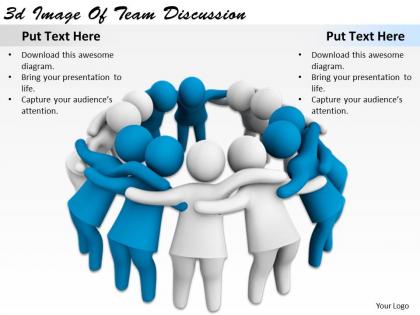
3d image of team discussion ppt graphics icons powerpoint




Try Before you Buy Download Free Sample Product
 Impress Your
 Audience
 100%
100% Editable
 Save Hours
 of Time


Design can make or break your presentation. Make it with one of our compelling 3d Image Of Team Discussion Ppt Graphics Icons Powerpoint.
People who downloaded this PowerPoint presentation also viewed the following :
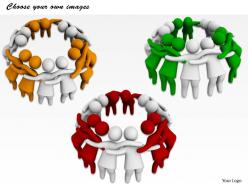
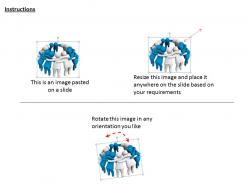
3d image of team discussion ppt graphics icons powerpoint with all 4 slides:
You have seen some of the best places to work. Capture their ethos on our 3d Image Of Team Discussion Ppt Graphics Icons Powerpoint.

FAQs for 3d image of team discussion ppt
**INPUT**: What are the key benefits of using 3D team discussion icons in presentations? **OUTPUT**: 3D team discussion icons enhance presentations by improving visual engagement, simplifying complex collaboration concepts, creating memorable content, and maintaining audience attention throughout delivery. These visual elements streamline communication in corporate training, project management presentations, and strategic planning sessions, with many organizations finding that three-dimensional graphics ultimately deliver stronger audience retention and more effective knowledge transfer than traditional flat designs.
3D icons enhance audience engagement during team discussions by creating visual depth, improving information retention, and making complex concepts more accessible through dimensional representation. These dynamic visual elements help meeting facilitators in corporate training, project management sessions, and strategic planning workshops capture attention more effectively, streamline communication flow, and ultimately deliver more memorable presentations that drive participant interaction and collaboration.
**INPUT**: What types of 3D icons are most effective for conveying teamwork themes? **OUTPUT**: Effective 3D teamwork icons include interconnected human figures, circular discussion arrangements, puzzle pieces fitting together, handshake symbolism, and collaborative workspace representations. These visual elements streamline communication by instantly conveying unity, shared purpose, and collective problem-solving, with many organizations finding that dimensional icons enhance audience engagement and reinforce collaborative messaging across presentations.
3D icons differ from 2D icons by offering enhanced depth, realistic shadows, and dimensional perspective that creates stronger visual hierarchy and user engagement. These dimensional elements enable more intuitive recognition, improved brand memorability, and enhanced user experiences across digital platforms, with many organizations finding that 3D icons significantly increase click-through rates and overall interface effectiveness.
**INPUT**: What software tools are commonly used to create custom 3D team discussion icons? **OUTPUT**: Common 3D icon creation tools include Blender, Cinema 4D, Maya, 3ds Max, and Adobe Dimension, along with user-friendly options like Figma's 3D features and Canva's design suite. These platforms enable organizations to streamline visual communication by creating consistent, professional iconography that enhances presentations, documentation, and digital interfaces, with many companies finding that custom 3D elements significantly improve audience engagement and brand recognition.
Color schemes in 3D team discussion icons significantly influence audience perception by creating visual hierarchy, conveying emotional context, and enhancing information retention through psychological associations. Strategic color combinations streamline comprehension by distinguishing roles, emphasizing key messages, and maintaining engagement, with many presenters finding that cohesive palettes ultimately deliver clearer communication and stronger audience connection.
**INPUT**: What are the best practices for integrating 3D icons into presentation slides? **OUTPUT**: Best practices include maintaining consistent visual style, ensuring proper sizing for readability, using strategic placement to guide audience attention, and balancing 3D elements with whitespace for clarity. These approaches enhance presentation effectiveness by creating visual hierarchy, improving information retention, and delivering more engaging audience experiences, with many organizations finding that thoughtful 3D integration significantly elevates their professional communication impact.
Cultural differences significantly influence 3D icon interpretation through varying color associations, gesture meanings, spatial orientations, and symbolic representations across global teams. While red signifies prosperity in Chinese culture but danger in Western contexts, hand gestures and directional arrows carry different connotations, with many international organizations finding that culturally-neutral designs and comprehensive icon legends ultimately enhance cross-cultural communication and team collaboration.
Common mistakes include using overly complex icons that distract from content, inconsistent styling across presentations, poor color contrast reducing visibility, and overloading slides with too many 3D elements simultaneously. These design missteps can overwhelm audiences and diminish message clarity, with many organizations finding that strategic restraint and consistent application ultimately enhance comprehension and maintain professional credibility.
Layering and perspective in 3D icons represent hierarchical team structures by positioning leadership figures at elevated levels, using depth to show reporting relationships, and implementing visual scaling to indicate authority levels. Through strategic placement and dimensional design, organizations can create intuitive visual representations of management layers, team dependencies, and organizational flow, with many corporate presentations finding that these perspective-based approaches enhance audience understanding while delivering clearer communication of complex structural dynamics.
3D team discussion icons facilitate better virtual communication by providing visual context cues, emotional expression indicators, status updates, and engagement signals that traditional flat interfaces cannot deliver. These enhanced visual elements help remote participants quickly identify speaker intentions, team dynamics, and meeting flow, while reducing misunderstandings common in virtual environments, ultimately creating more productive collaborative experiences.
3D team discussion icons enhance branding and marketing presentations by creating visual consistency, improving audience engagement, and reinforcing collaborative messaging across materials. These icons help organizations streamline their presentation aesthetics while demonstrating teamwork values, with many marketing teams finding that three-dimensional visuals increase retention rates and create more memorable brand experiences, ultimately delivering stronger audience connections and competitive differentiation.
Animated 3D icons enhance message delivery by creating visual hierarchy, improving cognitive processing, and increasing engagement through dynamic movement. These interactive elements help audiences retain information more effectively by combining visual and kinetic learning pathways, with presentations using animated icons showing significantly higher recall rates and audience attention spans compared to static alternatives.
Current 3D icon design trends for business presentations include minimalist geometric shapes, gradient overlays, soft shadows, isometric perspectives, and interactive hover effects. These design elements enhance visual storytelling by creating depth and engagement, improving audience retention, and delivering more memorable presentations, with many organizations finding that modern 3D icons significantly elevate their professional brand perception and competitive positioning.
Team member feedback enhances 3D icon effectiveness by identifying clarity issues, cultural interpretations, visual preferences, and contextual relevance across different discussion scenarios. Through iterative feedback cycles, organizations can refine icon designs, ensure universal understanding, and optimize visual communication, with many teams finding that collaborative input creates more intuitive interfaces, ultimately delivering clearer discussions and improved engagement.
-
Really like the color and design of the presentation.
-
Appreciate the research and its presentable format.