

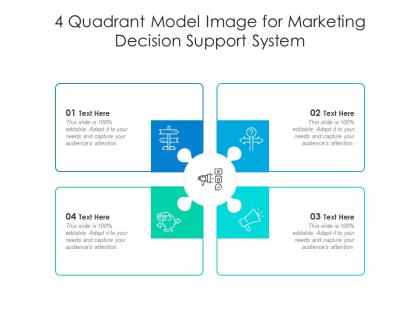
4 quadrant model image for marketing decision support system infographic template




Try Before you Buy Download Free Sample Product
 Impress Your
 Audience
 100%
100% Editable
 Save Hours
 of Time


Our 4 Quadrant Model Image For Marketing Decision Support System Infographic Template are topically designed to provide an attractive backdrop to any subject. Use them to look like a presentation pro.
People who downloaded this PowerPoint presentation also viewed the following :
4 quadrant model image for marketing decision support system infographic template with all 2 slides:
Use our 4 Quadrant Model Image For Marketing Decision Support System Infographic Template to effectively help you save your valuable time. They are readymade to fit into any presentation structure.

FAQs for 4 quadrant model image for marketing decision support
You'll need three main things: data warehousing, analytics tools, and dashboards your marketing team won't hate using. Pull all your customer data, sales metrics, and campaign stuff into one place - makes life way easier. Predictive analytics are huge for testing "what-if" scenarios before you blow your budget on something dumb. But here's the thing - I've seen teams spend thousands on fancy systems that just collect dust because they're too complicated. Map out what decisions your marketers actually make daily, then build around that. Short sentences work. Trust me on the user-friendly dashboards part.
So MDSS is pretty cool - it stops you from guessing what marketing stuff actually works. You get real data on customers, market trends, all that. Way better than flying blind, honestly. It's like having someone who's obsessed with spreadsheets doing the heavy lifting for you 24/7. The best part? You can spot opportunities faster and figure out where to spend your budget. Less time collecting random data, more time actually doing something with it. Oh, and start with whatever decisions you're making constantly - that's where you'll see the biggest difference right away.
Look, data analytics is what makes your MDSS worth having in the first place. All that customer data you're collecting? Useless without analytics to find the patterns and predict what'll happen next. The system does the heavy lifting - spots trends, segments audiences, runs predictive models. Way better than doing it manually (trust me on that one). It goes from basic stats to complex modeling, depending on what you need. Honestly, I'd figure out which analytics features solve your biggest marketing headaches first, then build from there.
So basically you gotta match it to what your business actually does day-to-day. Retail? Focus on inventory stuff and seasonal patterns. B2B software needs those longer sales cycles tracked properly - way different beast. Healthcare has all that compliance reporting nonsense that honestly sounds like a headache. My advice? List out the top 5 questions your marketing team asks every week first. Then build everything around those specific decisions. Don't overthink it - just map out what data you actually need for the choices you're making. Way easier to work backwards from real problems than trying to configure some generic setup that doesn't fit.
Honestly? Data cleanup is gonna be your biggest headache - everything's probably spread across like 5 different systems right now. Getting people to actually USE the thing once it's built is almost harder though. Everyone's obsessed with their Excel sheets and hates learning new stuff. Plus the decent software costs a fortune, and good luck finding someone who can actually make sense of all the analytics afterwards. Oh and stakeholders will question everything if you don't get them on board early. Start with something small first - way easier to prove it works that way.
Dude, real-time data integration basically makes your MDSS way more useful. You're not stuck waiting for monthly reports anymore – you can see what's happening right now. Campaign tanking? You'll know immediately instead of finding out weeks later. Same goes for spotting opportunities while they're actually worth something. The tricky part is getting all your data sources to sync up properly. Otherwise you just end up with a mess of conflicting numbers, which honestly might be worse than having no data at all. But when it works? Total game changer for making quick decisions.
There's actually a bunch of ways to work ML into your MDSS. Customer segmentation through clustering is probably your best starting point - quick wins and decent ROI. From there, you can add predictive models for demand forecasting and recommendation engines for personalized suggestions. Classification works great for lead scoring too. Oh, and NLP is solid for analyzing social sentiment and customer feedback (though that might be overkill initially). Real-time analytics can handle dynamic pricing automatically. Honestly, I'd just focus on segmentation first since it's pretty straightforward to implement and you'll see results fast.
Honestly, just track three main things with your MDSS. Decision accuracy matters most - are the recommendations actually working? Time-to-insight is huge too because late data is useless data, you know? Then watch user adoption rates. I've seen brilliant systems fail because the team just wouldn't touch them. Also keep an eye on data quality scores and ROI from decisions the system influenced. Oh, and definitely set your baselines now - checking quarterly will show you real trends instead of just random noise.
Think of an MDSS as your personal data detective. It grabs stuff from sales records, customer surveys, social media - basically anywhere useful info lives. You'll spot buying patterns and catch trends way before competitors notice anything's changed. The dashboards actually make sense too (thank god, no more drowning in spreadsheets). When products start taking off or customer opinions shift, it flags you immediately. Oh, and don't try connecting everything at once - that's a nightmare. Start with your 3 biggest data sources, then add more later.
So visualization tools basically take all that messy marketing data and turn it into charts and graphs you can actually understand. Way better than drowning in spreadsheets - honestly, who even has the patience for that anymore? You'll spot trends super quickly, and explaining stuff to your boss becomes so much easier when you've got a clean bar chart showing how campaigns performed. The interactive features are pretty sweet too - you can click around and dig into different time periods or customer segments. My advice? Start simple with basic charts first, then get fancy once everyone's used to the system.
Dude, collaboration literally makes or breaks MDSS systems. Without it, you're screwed. Different departments need to actually share their data - sales brings customer feedback, finance has budget info, operations knows capacity limits. That cross-pollination gives you way better insights than working in silos. The tricky part? Getting everyone to buy in. You'll probably need some formal protocols for data sharing, maybe even mixed teams from different departments. Otherwise people just hoard their info and the whole thing falls apart. Trust me, I've seen it happen - the silo mentality kills these projects faster than anything else.
So basically an MDSS looks at your past campaign data to show what's actually making money vs what's not. You can run different scenarios too - like what happens if I move budget from Facebook ads to Google? Super helpful for avoiding those "this feels right" budget calls that usually backfire. It'll flag where you're wasting money and spot places that could use more investment. Honestly, I'd start by just analyzing last quarter's spending. You'll probably find some surprises about what's been working and what hasn't.
MDSS is getting crazy smart with AI integration - machine learning will handle pattern recognition automatically. Real-time data from IoT devices and social feeds gives instant customer insights. Privacy laws are honestly a nightmare to deal with right now, but platforms are rolling out better consent tools and data masking. Your marketing team won't need IT anymore with self-service analytics becoming standard. Voice commands and AR dashboards make everything more intuitive too. I'd start checking out AI-powered platforms soon - this shift is happening fast and you don't want to get left behind.
Oh dude, training is HUGE - like it literally makes or breaks everything. I've watched incredible systems crash and burn just because nobody knew what they were doing. Your team needs solid onboarding that goes beyond just "click here, press that." Show them how the data actually helps with real decisions they make every day. Budget for ongoing support too since questions pop up months later when they hit weird edge cases. Honestly? Plan the whole training thing before you even buy the system. Trust me on this one.
Amazon's recommendation engine is crazy successful - it pulls in about 35% of their sales just from analyzing what customers do in real-time. Netflix does something similar for picking shows and personalizing content. Coca-Cola uses their system to figure out pricing across different markets, and P&G optimizes where they spend marketing dollars. Even Warby Parker (which honestly I didn't expect) uses this stuff for inventory decisions. The thing is, none of these companies tried to build everything at once. They all started super focused on one problem, then expanded. That's probably the smartest approach if you're just getting started.
-
Excellent design and quick turnaround.
-
Excellent Designs.
-
Very unique and reliable designs.
-
Nice and innovative design.
-
Unique design & color.
-
Out of the box and creative design.