


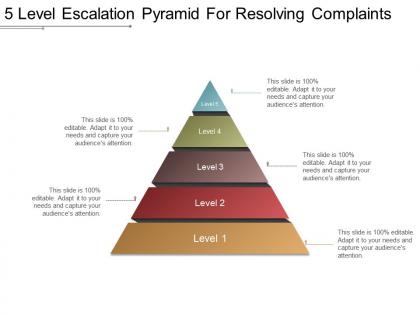
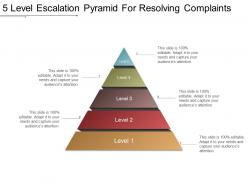
5 level escalation pyramid for resolving complaints powerpoint shapes




Try Before you Buy Download Free Sample Product
 Impress Your
 Audience
 100%
100% Editable
 Save Hours
 of Time


Get the grins back on their faces with our 5 Level Escalation Pyramid For Resolving Complaints Powerpoint Shapes. Erase any frowns that emerge.
People who downloaded this PowerPoint presentation also viewed the following :
5 level escalation pyramid for resolving complaints powerpoint shapes with all 5 slides:
Enable folks to display a bit of joie-de-vivre with our 5 Level Escalation Pyramid For Resolving Complaints Powerpoint Shapes. Involve them in carefree celebration.


FAQs for 5 level escalation pyramid for resolving
So there are three main tiers in the escalation pyramid. Bottom level is your frontline support folks. Middle tier has the specialized teams. Top level? That's where senior leadership and the real experts hang out. Think of it like a filter - most stuff gets handled at level one, some bubbles up to two, and only the really gnarly problems make it all the way up. Here's the thing though: you've gotta have super clear rules about when to escalate. Otherwise people just sit there wondering if they should pass it up or keep wrestling with it themselves. Trust me, nobody wants issues stuck in that weird middle ground where nothing happens.
So the escalation pyramid basically gives you a roadmap for handling conflicts without losing your mind. Start with direct communication between whoever's having the issue. If that doesn't work, bring in your team lead, then manager, then higher-ups - each level has more power to actually fix things. Honestly, most people skip straight to complaining to their boss which just creates drama. The whole point is working your way up step by step. You'd be surprised how many problems get solved at the lower levels if you're not impatient about it.
Escalation pyramids are clutch for messy situations - customer complaints, team drama, operational fires. Set up clear ownership first: basic stuff stays with frontline people, managers jump in for medium issues, executives only touch major disasters or VIP accounts. Honestly saved my butt so many times when everyone's freaking out and blame's flying everywhere. You need specific triggers for each level though - like dollar amounts or complaint types - plus actual deadlines people will stick to. Don't wait until you're drowning to build this thing.
Escalation pyramids work really well in tons of places - call centers, hospitals, IT departments, you name it. Call centers are probably the most obvious example. Tier 1 handles the easy stuff, then weird problems get kicked up to specialists who actually know what they're doing. Hospitals do something similar with nurses escalating to doctors when things get serious. Project teams love them too since nobody has to guess who deals with problems when everything's falling apart (which honestly happens more than it should). The trick is figuring out your escalation triggers ahead of time so everyone knows when to punt something upward.
So the escalation pyramid basically does conflict resolution backwards from what most people think. You start super light - just talk to the person directly first. Most workplaces jump straight to HR or your boss, which honestly just makes everything worse and more awkward. With the pyramid, you only move up each level if the previous one didn't work. Maybe grab a coworker to help mediate next. It's way less scary than formal procedures right off the bat. Plus you're not burning bridges over stuff that could've been solved with a simple conversation. Next time drama starts, think through those pyramid steps first - you'll probably save yourself a headache.
Dude, escalation pyramids totally fall apart without solid communication. Every level needs to know exactly when to bump things up and what details to include - can't have stuff getting lost or teams stepping on each other. Most failures? Bad handoffs between tiers, honestly. Your team should have standard templates and know who their contacts are at each level. Document everything too. I've seen way too many issues die in the void because someone didn't know the non-negotiable info to pass along. It's really the backbone of the whole system working smoothly.
Start with role-playing - seriously, people get way too into the fake customer drama and it's hilarious but effective. Give them clear rules about when to escalate (like specific timeframes or how bad things are). They need to know what info to pass up and how to sound urgent without freaking out. Flowcharts help tons for reference later. Practice different scenarios so they get the documentation part down. Oh, and don't punish them for escalating too much - better safe than sorry, right? Mock situations really do work best for this stuff.
Honestly, the worst mistake is making escalation rules too strict - stressed people will just find ways around them. Also, you can't have unclear ownership because nobody wants an angry customer getting bounced between departments like a ping pong ball. Keep escalation criteria simple too. If your team needs some complicated flowchart, you've already lost. Oh, and here's what most people miss - actually teach your staff how to calm situations down first before they escalate everything. I'd start basic with clear triggers and owners, then adjust based on real situations. Way better than overthinking it from the start.
Oh totally, it works really well remotely! You just gotta switch up how you communicate. Quick stuff goes through Slack, complex problems need video calls, and formal stuff gets documented in email. Honestly, being clear about response times is huge since you can't just walk over anymore. Set up which platform your team should use for different escalation levels - and maybe throw it all in a shared doc everyone can reference. The tricky part is managing expectations around when people are actually available, but once you nail that down you're golden.
Check your escalation rates first - what percentage actually gets bumped up? Then track resolution times at each level and customer satisfaction. Bounce back rates are huge though - that's when issues get escalated but kicked back down because they weren't ready. Such a waste of time. Also watch if you're hitting SLA targets and whether certain problems always skip levels. Most stuff should get solved at the bottom tiers while keeping people happy. Honestly just pick 2-3 of these and track monthly, don't overcomplicate it.
So basically, escalation pyramids cut through all that "who do I ask?" confusion that kills productivity. Routine stuff gets handled at the bottom levels, while bigger decisions work their way up the chain. What I love about it is nobody's left wondering if they should bother their boss or not. Your team moves faster because everyone knows their lane and exactly when to kick things upstairs. Oh, and definitely set clear triggers for when to escalate - saves so much back-and-forth guessing. It's one of those simple systems that actually works.
Look, nobody wants to deal with confrontation, right? That's why starting gentle works so well - you're not backing people into a corner from the get-go. They can say yes without losing face. Plus there's this weird psychology thing where people hate losing stuff more than they like gaining it. So when you gradually turn up the heat, they start realizing they might lose your respect or whatever if they keep being stubborn. I used to jump straight to "do this or else" but honestly? The slow build-up gets way better results. Next time just start soft and work your way up.
Start by showing them it's okay - escalate stuff yourself and don't act all weird about it. When someone on your team does escalate, celebrate it instead of making them feel dumb. I swear, so many managers say they want this but then get annoyed when it actually happens! Give them clear rules about when to escalate what. Short meetings work great for walking through real examples together. Oh, and respond fast when they do escalate to you - otherwise the whole thing falls apart. They'll stop doing it if you're slow or unhelpful about it.
So there's actually some solid tech that'll make your escalation pyramid way smoother. Ticketing systems like Jira automatically route stuff based on how urgent it is. AI tools are pretty clutch for handling basic questions - honestly saves your team from answering "how do I reset my password" for the millionth time. Slack integrates with most systems so the right person gets pinged immediately when something needs escalating. Analytics dashboards show you patterns in what keeps breaking. I'd start by figuring out where your biggest headache is right now, then grab whichever tool fixes that first.
Honestly, escalation pyramids are lifesavers for training. They literally show your team the exact steps to take when shit hits the fan - no more newbies freaking out and bothering executives over tiny problems. I've seen it happen way too many times! Make one that's specific to how your team actually works, then stick it somewhere everyone can see it. The visual aspect really helps people remember better than just explaining it verbally. Your team will get way more confident handling stuff on their own first, and you'll stop getting those ridiculous escalations that could've been solved in five minutes.
-
Designs have enough space to add content.
-
Colors used are bright and distinctive.