


5 Pillars Of A Good Customer Service Team Edu Ppt




Try Before you Buy Download Free Sample Product
 Impress Your
 Audience
 100%
100% Editable
 Save Hours
 of Time


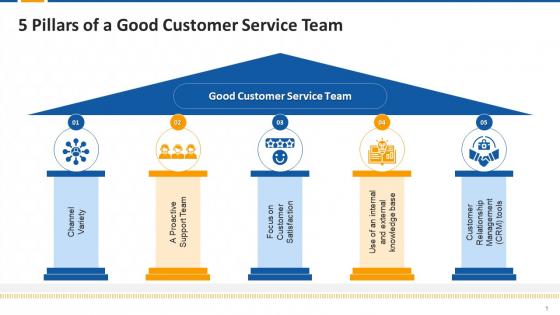
This slide covers five pillars of the customer service team channel variety, proactive customer service team, focus on customer satisfaction, usage of an internal and external knowledge base, and customer relationship management CRM tools.
People who downloaded this PowerPoint presentation also viewed the following :
5 Pillars Of A Good Customer Service Team Edu Ppt with all 17 slides:
Use our 5 Pillars Of A Good Customer Service Team Edu Ppt to effectively help you save your valuable time. They are readymade to fit into any presentation structure.










FAQs for 5 Pillars Of A Good Customer Service
Speed is everything - people want instant replies on chat and social. Use their names and bring up past purchases to make it personal. Generic responses are so obvious and annoying! Your team needs to deliver the same quality whether someone emails, calls, or hits you up on social media. Oh and make your FAQ section actually searchable so people can help themselves. I'd focus more on training your team to genuinely care and solve problems instead of just reading scripts. That empathy thing really makes a difference - you can tell when someone actually wants to help vs. just going through the motions.
Honestly, chatbots are pretty solid for 24/7 support - customers don't have to wait around forever. I'd definitely look into CRM systems to track customer history and maybe AI that predicts what people need. Live chat is huge too, way better than those awful phone queues. Self-service portals work great because people actually prefer finding answers themselves (weird but true). Social media monitoring catches complaints before they blow up. Oh, and automated ticketing so stuff doesn't get lost. Don't go crazy though - pick like 2-3 tools that actually work with how you already do things. Start with whatever's driving your team nuts right now.
Honestly, empathy is everything in customer service. Like, it completely changes the whole interaction from just fixing something to actually connecting with people. Listen to what they're really saying - not just the problem, but the frustration underneath. I've watched seriously pissed off customers do a complete 180 once they realize you actually get it. You don't need to agree with them about everything, but just acknowledging how they feel? That builds trust immediately. Oh, and reflect their emotions back before you start problem-solving - works way better than jumping straight into fixes.
Make feedback super easy to give - post-interaction surveys work great, plus follow-up emails and keeping an eye on social media. Ask specific stuff instead of generic "how'd we do?" questions (those are basically useless). Here's the thing though - actually look at the responses for patterns. I see so many people collect feedback then never touch it again. Share what you find with your team monthly and create real action items from complaints. Track if your fixes actually help. Honestly, just pick one method this week and commit to reviewing it regularly.
Ugh, the worst thing you can do is make customers repeat their story to like three different people - drives me insane when that happens to me. Don't take their anger personally either, they're mad at the situation, not you specifically. Never promise stuff you can't actually do because that'll come back to bite you later. Also, if you put someone on hold for ages without checking in, they'll be ready to murder someone when you get back. Try not to sound like a robot reading from a script. Some people think they need to rush calls, but honestly? Taking time to actually fix their problem saves everyone headaches down the road.
So I'd hit three main things: active listening, empathy, and problem-solving practice. Role-playing with difficult customer scenarios works really well - plus they're actually kind of fun to watch. Use real situations from your business, not just made-up examples. Pair new people with your best customer service folks for shadowing. Regular coaching beats one-time training sessions every time since these skills take practice to stick. Oh, and set up feedback loops so you can see what's actually working. My old manager used to say customer service training never really ends, and honestly? She was right.
Focus on response times first - how fast your team gets back to people and actually solves their problems. CSAT scores and Net Promoter Score will tell you if customers are happy or pissed off afterward. Track first-call resolution too because nobody wants to repeat their whole story three times (been there, super annoying). Some companies obsess over call volume but honestly? Quality beats quantity every time. Oh, and don't get too fancy with tracking everything under the sun right away. These basics will give you a solid read on what's actually working.
So you need everyone trained the same way across all channels - phone, email, chat, whatever. Same knowledge base, same templates, same escalation stuff. I've watched companies completely mess this up where their email team has no clue what the phone team promised a customer. It's a nightmare. Your phone people should understand social media basics too and vice versa. Get a good CRM system so when someone switches from chat to calling, their whole history is right there. Honestly, just start by looking at what you've got now and figure out where the biggest disconnects are happening.
Honestly, customer service makes or breaks everything. People bounce fast when they feel ignored or get crappy help - and yeah, they'll definitely blast you on social media about it. But nail the service part? Those customers become your biggest fans. They'll come back and actually tell their friends to check you out. The whole thing is about making people feel like they matter, not just another transaction. Quick problem-solving is huge too. Oh, and consistency matters - you can't be amazing one day then terrible the next. That emotional connection stuff is real.
Honestly, just let them vent first - don't jump in trying to fix everything right away. They need to feel heard, you know? Say stuff like "I totally get why you're frustrated" and repeat their main issue back so they know you're actually listening. Once they calm down a bit, focus on what you CAN do instead of listing what you can't. Keep your voice steady and don't get defensive (easier said than done though). Most people just want someone to own the problem. Oh, and try matching how they communicate - if they're being super direct, be direct back.
Honestly, it's pretty simple - people buy more when they feel like you actually get them. Remember their name, what they bought before, stuff like that. Makes recommendations feel helpful instead of annoying. I read somewhere that happy customers spend like 67% more over time, which is crazy but makes sense. Start with basic stuff: use their name in emails, mention their last purchase, suggest things that actually match what they've bought before. Way better than those generic "you might also like" things that have nothing to do with what you want. Trust me, it works.
Okay so first thing - respond publicly but keep it short and sweet, then move the real convo to DMs. Something like "Hey! DMing you now to help sort this out." You gotta be fast though, people get pissy if you take forever on social. Oh and resist the urge to delete negative stuff unless it's actually nasty - I've seen that blow up in companies' faces so many times. Set up some kind of alert system too. People complain about brands without tagging them all the time. Start simple - just search your company name once a day until you figure out something better.
Honestly, you've gotta bake it into everything, not just slap up some motivational poster. Hire people who actually give a damn about helping customers - I know it sounds basic, but so many companies mess this up. Share real customer stories in your team meetings. Celebrate when someone rocks it. Your managers need to model this stuff too or it's pointless. Oh, and set up ways to actually hear what customers are saying, then do something about it. The empathy training helps, but it only works if leadership isn't being fake about it.
Honestly, the biggest thing right now is AI chatbots that don't suck anymore. Omnichannel support is finally getting decent too - like actually connecting your phone call to the chat you started earlier. Companies are also being way more proactive, reaching out before you even realize there's a problem. Self-service is everywhere because people just want to fix stuff themselves with good FAQs and videos. And yeah, personalization isn't optional anymore - they better remember what you bought last time. I'd say look at what channels you're using now, find the worst pain points, then focus on whatever your customers actually prefer. Don't try to fix everything at once though.
So you'll want phone, email, chat, social media - basically give people options to reach you however they're comfortable. Make your website work with screen readers and use good contrast for people with vision issues. Your team should learn about different communication styles and accessibility basics. Language barriers are huge too, so translation tools or multilingual support really helps. Some customers need extra time to explain things or just prefer writing over talking on the phone. Honestly, it's all about flexibility - let people contact you the way that actually works for them instead of forcing one method.
-
Templates are beautiful and easy to use. An amateur can also create a presentation using these slides. It is amazing.
-
Good research work and creative work done on every template.