


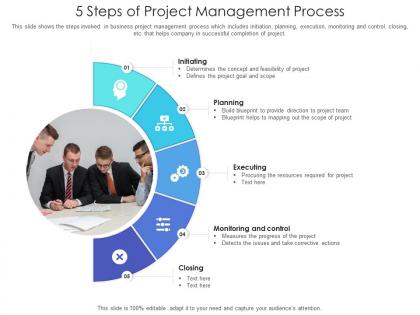
5 steps of project management process




Try Before you Buy Download Free Sample Product
 Impress Your
 Audience
 100%
100% Editable
 Save Hours
 of Time


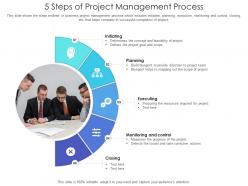
This slide shows the steps involved in business project management process which includes initiation, planning, execution, monitoring and control, closing, etc. that helps company in successful completion of project.
People who downloaded this PowerPoint presentation also viewed the following :
5 steps of project management process with all 2 slides:
Use our 5 Steps Of Project Management Process to effectively help you save your valuable time. They are readymade to fit into any presentation structure.
FAQs for 5 steps of
So there's five main phases you'll deal with. First is initiation - basically defining what you're doing and getting the green light. Planning comes next where you map out timelines, resources, all that stuff. Then execution happens, which is obviously where you spend most of your time doing the actual work. While that's going on, you're constantly monitoring how things are tracking against your original plan and tweaking as needed. Finally there's closing - wrapping everything up, getting approvals, doing a retrospective. Oh and seriously, don't let stakeholders pressure you into skipping proper planning. I know they always want to jump straight into building stuff, but trust me on this one.
Okay so first thing - get crystal clear on what you're actually trying to accomplish and make sure everyone's on the same page about it. Write up a project charter with your goals, what you're delivering, timeline, budget, all that stuff. Here's what saved my butt multiple times: literally list what's IN scope and what's OUT of scope. Sounds boring but trust me on this one. Get stakeholders to actually sign off before you start anything. Then do a kickoff meeting so everyone knows their role. Don't rush this part even though you'll want to - if you skip defining clear boundaries upfront, you'll spend the whole project fighting scope creep.
Honestly, I'd start with a basic risk register - just list out what could go wrong, how likely it is, and how bad it'd be. SWOT analysis is pretty useful too for spotting internal vs external threats. Definitely get your team involved in brainstorming sessions though. People always think of stuff you won't, plus they appreciate being asked. Risk matrices help you visualize everything once you've got it mapped out. There's fancier stuff like fault tree analysis if your project's really complex, but I say keep it simple at first. You can always add more layers later if you need them.
Break down everything into smaller tasks first - way easier to estimate realistically that way. Don't go with best-case timing either, that's how you end up screwed lol. Figure out which stuff can happen at the same time vs what has to wait for other pieces to finish. I always throw in extra buffer time now because there's literally always something that goes wrong or takes longer than expected. Oh and don't forget about people's vacations and holidays when you're planning! If you've got data from past projects, use that. Honestly just add like 25% extra time to whatever you first think.
Honestly? This stuff makes or breaks projects. First thing - figure out who actually matters and who'll be affected by what you're doing. Then don't leave them in the dark. I can't tell you how many times I've watched projects completely implode because some executive or key person felt blindsided. Map everyone out early and figure out how each group wants to hear from you. Some people want weekly emails, others prefer quick calls. The key is actually listening when they bring up concerns - even if it seems minor at the time. Trust me, those "small" issues have a way of becoming massive problems later.
Dude, get project management software - it'll save your sanity. Instead of hunting through a million emails and random Google docs, everything lives in one spot. Your team can see who's doing what, share files, and actually talk about specific tasks without stuff getting buried. Remote work becomes way less chaotic when everyone can check progress themselves. I'm telling you, those "uh, what's the status on X?" meetings basically disappear. Asana's pretty solid to start with, or Trello if you want something super simple. Honestly wished I'd figured this out years ago - would've saved me so many headaches.
Honestly, I'd start by figuring out who's actually good at what - don't just assume. Map your skills first, then match people to tasks based on what they can handle AND when they're free. Your top performers will burn out if you keep piling everything on them (trust me on this one). Always add buffer time because stuff inevitably takes way longer than you think. Check in weekly on how everyone's doing workload-wise. That way you can catch problems before they explode. Oh, and actually talk to your team about their bandwidth - they'll tell you if they're drowning. Set up some basic tracking system now while you've got time.
Honestly, you gotta track the boring stuff first - budget, timeline, scope. Are you bleeding money or staying on track? Quality metrics like defect rates matter too, obviously. But here's what everyone forgets: actually ask your stakeholders if they're happy. Seriously, so many PMs skip this part. Team velocity and burndown charts will tell you if your crew is burning out. Oh, and don't just measure during the project - check ROI afterward to see if you actually moved the needle. My advice? Build a simple dashboard from day one so you're not frantically collecting data later when everyone's asking questions.
Set super clear boundaries from day one and actually stick to them. Get everything in writing - project scope, stakeholder approvals, the works. Create a formal process for any changes because I swear, those "tiny additions" are project killers. Communicate constantly with your team about what's included vs. what isn't. Oh, and always show how new requests affect timeline and budget - people hate surprises there. Being firm but nice when saying no is an art form, but you'll get the hang of it. Route everything through proper channels.
Honestly, communication can totally make or break a team. I've seen it happen - when everyone's on the same page with regular updates, things just click. Trust builds up naturally too. But man, when communication sucks? You get people missing deadlines, confusion everywhere, and teammates accidentally working against each other. Super frustrating. Regular check-ins help a ton, and being upfront about roadblocks keeps everyone moving together. Oh, and creating that safe space where people actually speak up about problems early? Game changer. Nobody wants issues sitting there getting worse.
Honestly, start with regular check-ins - daily standups work great if your team's into that, or just weekly meetings to catch up on what's stuck. Get everyone on Slack or something similar for quick questions. Project management tools like Trello help too, though I swear half my teams ignore them anyway. The biggest thing? Make sure people actually communicate instead of working in silos. Set clear roles from the start so nobody's stepping on toes. Shared docs are clutch for real-time collaboration. Don't go overboard with tools though - pick what fits your vibe and stick with it.
Dude, agile basically chops your project into these mini 2-4 week chunks called sprints. When stakeholders inevitably flip-flop on what they want (and trust me, they will), you can actually pivot without wanting to scream. You're getting constant feedback instead of planning everything upfront then praying it works. Those daily check-ins help catch problems before they explode into disasters. Way better than waterfall where you're stuck until the bitter end. Oh, and you can react to market shifts super fast too. Honestly? Just try shorter review cycles first - like baby steps into agile. Makes a world of difference.
Honestly, I've found that just listening - like actually listening - makes a huge difference. Don't wait for conflicts to blow up either, jump on them early. Try to find something everyone agrees on, some shared goal they can focus on instead of whatever's pissing them off. Address the actual problem, not people's personalities (easier said than done sometimes). Create space where people feel safe speaking up - otherwise they'll just stew in silence until everything explodes. If you're too involved, bring someone neutral in. The worst conflicts I've seen happened because someone felt completely ignored.
Dude, scope creep will absolutely destroy you - stakeholders always want "one tiny addition" until suddenly you're six months behind. Communication breakdowns are brutal too. Weekly check-ins aren't glamorous but they'll save your ass when things start going sideways. Oh, and trust your gut! I can't tell you how many PMs I've watched ignore obvious red flags because they hoped problems would magically fix themselves. Spoiler: they don't. Set up a solid change request process early and actually use it, even when people whine about bureaucracy.
Honestly, just throw together a quick doc during project wrap-up with what went right, what sucked, and actual fixes for next time. I used to think this was total busywork - turns out it's gold. Toss them somewhere everyone can find and search through later. None of that vague "better communication" crap though, be specific. Oh and actually look at old lessons when you kick off new projects, otherwise what's the point? Takes like 10 minutes but saves you from repeating the same mistakes over and over.
-
Best way of representation of the topic.
-
I discovered this website through a google search, the services matched my needs perfectly and the pricing was very reasonable. I was thrilled with the product and the customer service. I will definitely use their slides again for my presentations and recommend them to other colleagues.