


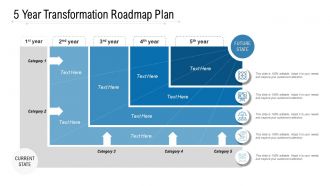
5 year transformation roadmap plan






Try Before you Buy Download Free Sample Product
 Impress Your
 Audience
 100%
100% Editable
 Save Hours
 of Time


Get the inactive to join in the action with our 5 Year Transformation Roadmap Plan. Instigate them to do their bit.
People who downloaded this PowerPoint presentation also viewed the following :
5 year transformation roadmap plan with all 5 slides:
Brilliant ideas get automatically generated on account of our 5 Year Transformation Roadmap Plan. It is an inspiring influence.

FAQs for 5 year
Okay so five main things you need. First, nail down your vision - like what are you actually trying to do here and why? Map out where you're at right now too. Milestones and timelines are huge (fair warning though, everything takes way longer than you think). Communication is honestly the make-or-break part - if people don't get what's happening, you're screwed. Build in some risk planning and change management stuff. Oh and make it visual! Break it into chunks people can actually wrap their heads around. Start simple with just a one-pager first.
Okay, so first things first - you've got to get brutally honest about where you actually stand right now. Map out how work really flows through your company, not the fantasy version on paper. Trust me, I've watched companies skip this and it bites them hard later. Check your tech stack and data quality too. But here's the thing - talk to people at every level because employees will catch stuff leadership completely misses. Your processes, technology, people skills... audit it all. You need that baseline to measure against, otherwise you're just building on quicksand and hoping for the best.
Honestly, stakeholders can make or break your whole roadmap. Get them involved early so you actually know what success looks like and can set realistic timelines. They'll spot pain points you missed too. During execution, these are the people who'll help you push through resistance - trust me, you'll need them when things get messy. Figure out who has real influence versus who just gets impacted by changes. Then talk to each group differently. I'd start with your most critical people first. Don't build the thing in isolation and then try selling it after. Schedule those conversations now.
Before you do anything else, literally write down how each change connects to your actual business goals. I learned this the hard way after watching teams chase cool new processes that went nowhere. Pick your top 3-5 strategic priorities first. Then be brutal - if a transformation project doesn't clearly support at least one of those priorities, either fix it or scrap it entirely. Honestly, most companies skip this step and wonder why nothing sticks. Make a simple visual that shows these connections so your whole team gets it.
Track both leading and lagging stuff - that's the key. Leading metrics show early signs: engagement scores, training completions, how fast people adopt new processes. Lagging ones are your actual results like revenue, customer happiness, efficiency gains. But honestly? Most teams get obsessed with metrics that look impressive but don't actually matter. I'd stick to 3-5 that directly connect to what you're trying to achieve. Simple dashboard, monthly check-ins with stakeholders - that's it. You can always pivot quickly if something's not working.
Quarterly is the bare minimum, but monthly works way better if you can pull it off. Market shifts or budget changes? Update immediately - don't wait for your next scheduled review. Honestly, roadmaps that sit untouched for months are basically worthless. Block out time on everyone's calendar for these reviews with your core team. Trust me, you don't want to be scrambling when your boss suddenly needs an update next week. Start quarterly if that's all you can manage, then ramp up once it becomes routine. The key is just not letting things get stale.
Honestly, the biggest mistake is leadership not being on the same page from the start. Companies try changing everything overnight too - that never works. Your timeline? Double it, because executives always want magic to happen yesterday but transformation takes forever. Communication is huge. I mean HUGE. You'll think you're beating a dead horse with updates, but trust me, you're probably still not talking enough. Don't expect people to transform stuff in their free time either - that's just setting everyone up to fail. Give them actual dedicated hours for this. Resistance will be way worse than you think, so celebrate the small stuff when you can.
Don't treat tech like some afterthought - it should actually speed up your whole transformation. Map out where your current systems are falling short vs where you want to be. Then go after tools that cut out manual work and give you better data visibility. Honestly, I've watched so many teams chase whatever flashy new software catches their eye. Big mistake. Instead, find stuff that plays nice with what you already have and fixes the daily headaches your people deal with. Oh, and phase things in gradually alongside your other changes. Nobody wants a tech dump all at once. Start with maybe 2-3 pilots that'll make the biggest difference.
Honestly? Get people involved from the start - don't just spring changes on them later. Ask what they think could work better and actually listen to their ideas. Be upfront about why you're doing this whole transformation thing and what's in it for them personally. I've watched so many plans crash because leadership kept everything secret. You need some quick wins early on so people see real results, then make a big deal about celebrating those wins. Oh, and find those people everyone naturally listens to - you know the ones - get them excited first and they'll do half your work convincing others.
So basically, healthcare moves at a snail's pace because of all the compliance stuff and patient safety - you can't exactly push a buggy medical device and hope for the best, right? Tech companies just throw things at the wall and see what sticks. Healthcare roadmaps need like 3+ years for validation alone, plus mountains of paperwork. Meanwhile tech teams pivot every other Tuesday if something isn't working. Oh, and the priorities are totally different too - healthcare cares about clinical results and getting regulatory thumbs up, while tech just wants users and market share. My advice? Don't use some cookie-cutter approach. Match your timeline to whatever industry chaos you're actually dealing with.
Honestly, it's all about the story you tell. Show people the gap between now and what's possible - that journey hits different than just listing benefits. Too many roadmaps crash because executives get obsessed with "digital transformation" nonsense instead of real examples. Connect changes to their actual day-to-day stuff, you know? Run sessions where they can actually speak up and ask questions. Oh, and communicate constantly with the same message everywhere. People hate feeling left out of big changes, so keep them in the loop from day one.
Don't treat risk assessment like some separate thing you do later - weave it right into your roadmap from day one. During planning, flag the obvious stuff: budget issues, tech dependencies, people who'll push back. Assign someone to own each risk and tie mitigation steps to your actual milestones. Honestly, I've watched so many projects crash because teams only talked about risks in boring weekly meetings instead of actively tracking them. Build in regular checkpoints to see how reality matches your plan. Trust me - catching problems early beats scrambling when everything's on fire.
Look at Netflix ditching DVDs for streaming, or how Microsoft went all-in on cloud stuff. Both took like 3-5 years with clear milestones. The brutal part? You're stuck running your old business while frantically building the new one - it's genuinely exhausting but you can't just flip a switch. They talked constantly about why the change mattered and made sure to celebrate every small win. What really impressed me was how they actually killed off profitable old products when the moment was right. I'd start by getting brutally honest about where you are now, then figure out where you want to land in 3 years and work backwards from there.
Honestly, you've gotta work both angles at once. Pick quick wins that actually connect to your bigger picture - like fixing one customer pain point while you're building out the whole CX overhaul. I learned the hard way not to chase random easy stuff that just pulls you off track. Each small win should teach you something useful about the main transformation. Short bursts work better than I expected. Start with whatever gives you the best learning AND gets stakeholders excited about the bigger changes coming.
Honestly, just start with whatever your team already uses - way easier than learning something new. Lucidchart and Visio are solid for timeline roadmaps with different swim lanes. I'm obsessed with Miro lately for collaborative stuff, though it can get messy fast. Roadmunk or ProductPlan have actual roadmap templates built in, which is nice. Already using Jira or Monday.com? They've got timeline views that work fine too. You can always upgrade later if you need fancier features, but don't overthink it at the start.
No Reviews