

5G Impact On The Environment Over 4G Powerpoint Presentation Slides





Try Before you Buy Download Free Sample Product
 Impress Your
 Audience
 100%
100% Editable
 Save Hours
 of Time


This PowerPoint presentation gives a brief idea about the Comparison between 4G and 5G technology, including the evolution of 5G and the difference between 1G, 2G, 3G, 4G, and 5G. In this 5G Impact on the Environment over 4G PowerPoint Presentation, we have covered the difference between 4G and 5G based on features and technology, including latency, download speed, base station, OFDM coding, and cell density. In addition, this PPT contains the features of 5G over 4G that comprises more speed and capacity, connects more users and devices, acts as different networks, traffic system transformation, gaming, and relationship with the agriculture industry. Also, the 5G Impact on the Environment over 4G PPT presentation includes the technologies used in the 5G communication system, the difference between OFDM and CDMA technical specifications, positive and negative impact of 5G on the Environment, such as more energy consumption and emissions, radiations, life cycle impact, and E-waste. Furthermore, this template caters to a timeline, a roadmap to implement 5G technology, and a performance tracking dashboard for 5G. Download our 100 percent editable and customizable template, which is also compatible with Google Slides.
People who downloaded this PowerPoint presentation also viewed the following :
Content of this Powerpoint Presentation
Slide 1: This slide introduces 5G Impact on the Environment over 4G. State your company name and begin.
Slide 2: This slide states Agenda of the presentation.
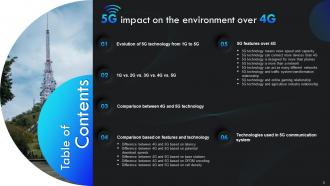
Slide 3: This slide shows Table of Content for the presentation.
Slide 4: This is another slide continuing Table of Content for the presentation.
Slide 5: This slide highlights title for topics that are to be covered next in the template.
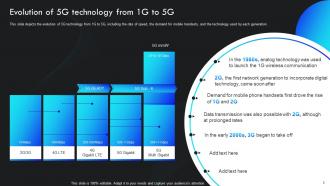
Slide 6: This slide displays Evolution of 5G technology from 1G to 5G.
Slide 7: This slide highlights title for topics that are to be covered next in the template.
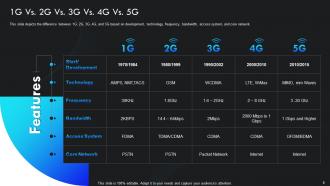
Slide 8: This slide represents difference between 1G, 2G, 3G, 4G, and 5G.
Slide 9: This slide highlights title for topics that are to be covered next in the template.
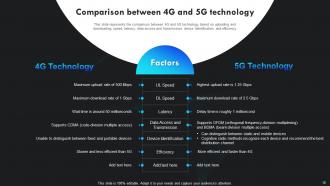
Slide 10: This slide showcases Comparison between 4G and 5G technology.
Slide 11: This slide highlights title for topics that are to be covered next in the template.
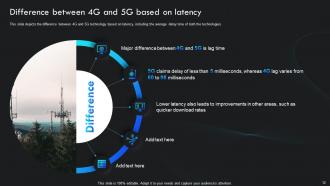
Slide 12: This slide shows Difference between 4G and 5G based on latency.
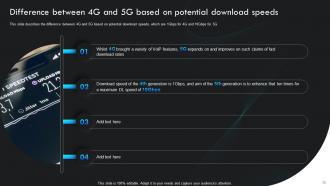
Slide 13: This slide presents Difference between 4G and 5G based on potential download speeds.
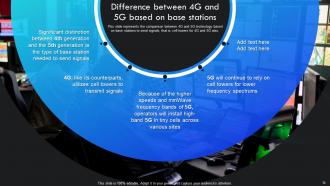
Slide 14: This slide presents Difference between 4G and 5G based on base stations.
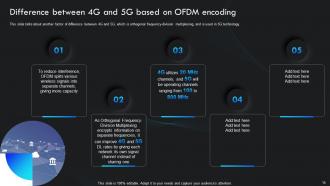
Slide 15: This slide displays Difference between 4G and 5G based on OFDM encoding.
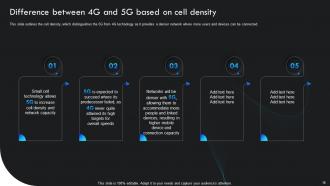
Slide 16: This slide represents Difference between 4G and 5G based on cell density.
Slide 17: This slide highlights title for topics that are to be covered next in the template.
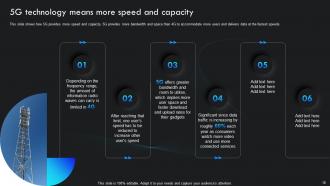
Slide 18: This slide showcases 5G technology means more speed and capacity.
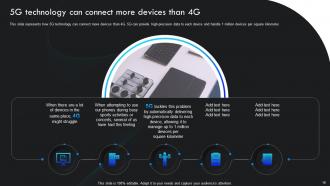
Slide 19: This slide shows 5G technology can connect more devices than 4G.
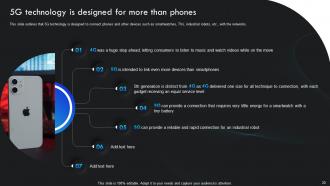
Slide 20: This slide outlines that 5G technology is designed to connect phones and other devices.
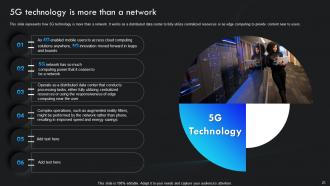
Slide 21: This slide represents how 5G technology is more than a network.
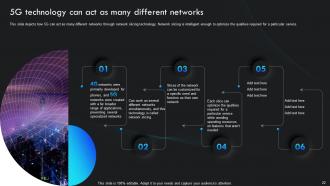
Slide 22: This slide depicts how 5G can act as many different networks.
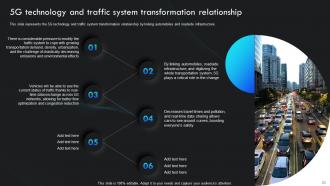
Slide 23: This slide showcases 5G technology and traffic system transformation relationship.
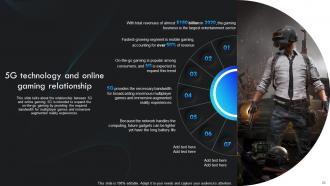
Slide 24: This slide shows 5G technology and online gaming relationship.
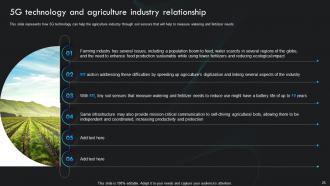
Slide 25: This slide presents 5G technology and agriculture industry relationship.
Slide 26: This slide highlights title for topics that are to be covered next in the template.
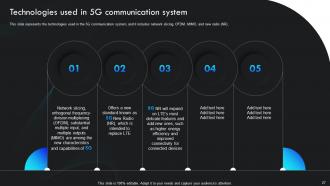
Slide 27: This slide displays Technologies used in 5G communication system.
Slide 28: This slide highlights title for topics that are to be covered next in the template.
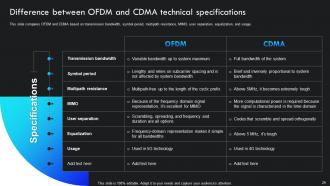
Slide 29: This slide represents Difference between OFDM and CDMA technical specifications.
Slide 30: This slide highlights title for topics that are to be covered next in the template.
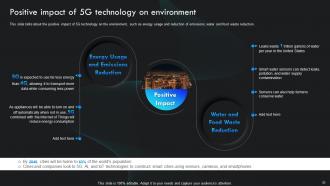
Slide 31: This slide showcases Positive impact of 5G technology on environment.
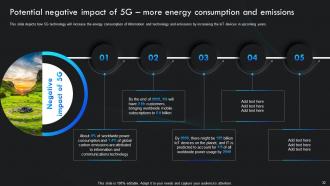
Slide 32: This slide depicts how 5G technology will increase the energy consumption.
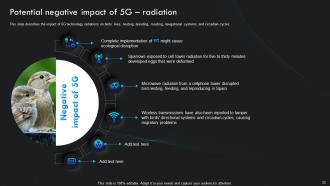
Slide 33: This slide describes the impact of 5G technology radiations on birds’ lives, nesting, breeding, etc.
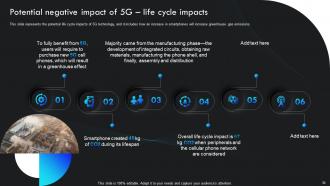
Slide 34: This slide represents the potential life cycle impacts of 5G technology.
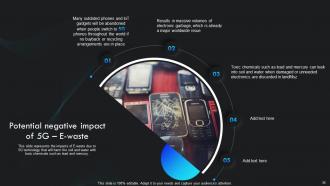
Slide 35: This slide showcases impacts of E-waste due to 5G technology.
Slide 36: This slide highlights title for topics that are to be covered next in the template.
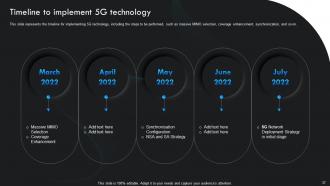
Slide 37: This slide shows Timeline to implement 5G technology.
Slide 38: This slide highlights title for topics that are to be covered next in the template.
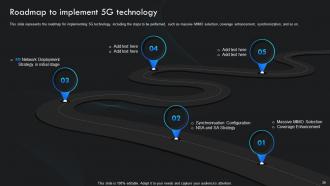
Slide 39: This slide presents Roadmap to implement 5G technology.
Slide 40: This slide highlights title for topics that are to be covered next in the template.
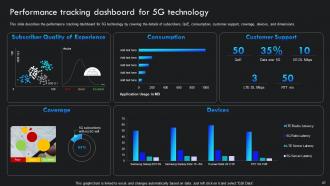
Slide 41: This slide displays Performance tracking dashboard for 5G technology.
Slide 42: This slide contains all the icons used in this presentation.
Slide 43: This slide is titled as Additional Slides for moving forward.
Slide 44: This is Our Mission slide with related imagery and text.
Slide 45: This is Our Team slide with names and designation.
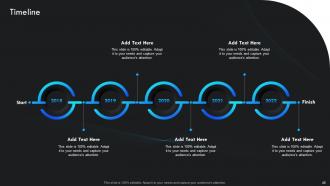
Slide 46: This is a Timeline slide. Show data related to time intervals here.
Slide 47: This slide contains Puzzle with related icons and text.
Slide 48: This is Our Target slide. State your targets here.
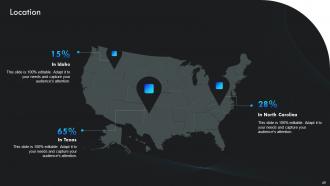
Slide 49: This is a Location slide with maps to show data related with different locations.
Slide 50: This slide depicts Venn diagram with text boxes.
Slide 51: This is a Thank You slide with address, contact numbers and email address.
5G Impact On The Environment Over 4G Powerpoint Presentation Slides with all 56 slides:
Use our 5G Impact On The Environment Over 4G Powerpoint Presentation Slides to effectively help you save your valuable time. They are readymade to fit into any presentation structure.












FAQs for 5G Impact On The Environment Over 4G
So basically the big issues are energy use and all the electronic waste. Those small cell towers everywhere? They're power hungry as hell. Then there's people constantly upgrading their phones to get 5G - honestly the FOMO is real with this tech. All that manufacturing and tossing old devices creates a huge carbon mess. Some folks stress about radiation but that's more of a health thing than environmental. If you're looking into this stuff, definitely check which companies are actually trying to be sustainable instead of just talking about it.
Yeah so 5G base stations actually eat up way more power than 4G - like 3-4 times more because of all the fancy processing stuff. But here's the thing: they're ridiculously better at moving data around, so you get more bang for your buck energy-wise per bit. Telecom companies are definitely feeling it in their electric bills right now though. The cool part is how 5G unlocks smart grids and IoT stuff that cuts energy use in other areas. Honestly, I think the real game-changer will be seeing which carriers go hard on renewable energy integration.
Yeah, it's actually pretty rough on the environment. Manufacturing all those tiny cells and base stations is super carbon-intensive, plus 5G uses way more energy than 4G when it's running. Rare earth mining for the semiconductors is nasty stuff too. Then you've got massive infrastructure rollouts happening everywhere, which means years of higher energy consumption ahead. The disposal side is honestly still a mess since we're barely into this tech cycle. I'd say push for renewable-powered networks and buy from companies that actually have decent recycling programs - though that's easier said than done.
Look, the research is all over the place right now. Some studies show birds and bees might get confused with navigation, but nothing's really proven yet. What's weird is that 5G actually doesn't travel as far as 4G and penetrates less stuff - so maybe that's actually better? Hard to say. The real problem is probably just that we're putting up towers everywhere now. You could dig into what environmental reviews they did before installing 5G in your area - see if they're even tracking wildlife impacts. Most places don't bother, which is honestly kind of annoying.
So telecom companies are trying to make 5G greener with better equipment and renewable energy. They're using smarter cooling systems and AI to optimize networks. Plus those smaller cell sites need way less power than the big towers. Infrastructure sharing is huge too - honestly surprised it took them this long to figure that out. Here's the thing though: 5G sites do use more energy overall, but they're actually super efficient per bit of data. When you're looking at vendors, just ask them straight up about their energy metrics and sustainability stuff. Don't let them dance around it.
So 5G means way more small cell towers and fiber cables everywhere - cities need much denser networks now. Initially it's rough on the environment with all that new infrastructure and energy use. But here's the thing - it actually enables some cool stuff like smarter traffic systems and energy grids that could offset the impact. Remote work gets better too, which means less commuting (though honestly, jury's still out on whether people will actually drive less). Your city's approach matters a lot. They need to plan smart and push for renewable energy to power all this new tech, otherwise it's just more waste.
Dude, 5G is what actually makes smart cities possible. Without it, you can't get that crazy-fast connection between traffic lights and self-driving cars, or have trash cans automatically ping when they're full. The latency is so low that everything talks to each other instantly - energy grids adjust themselves, traffic flows better, way less waste overall. It's kinda mind-blowing how much data flows through these systems. Oh, and if you're planning any smart city stuff, build around 5G from day one. Don't try to retrofit it later.
So basically 5G's ultra-low latency lets you monitor and control renewable energy in real-time - think solar panels adjusting automatically, wind turbines optimizing themselves, battery storage responding instantly. The network processes tons of sensor data to predict energy demand and adjust distribution on the fly. It's honestly pretty impressive tech, like having a tireless energy manager running everything 24/7. You get way less waste, better load balancing, and renewables integrate smoothly with existing grids. I'd start by figuring out which parts of your setup would benefit most from real-time optimization.
Honestly, 5G is pretty game-changing for farming and the environment. Farmers can get instant data from soil sensors and drones, so they know exactly where to put water and fertilizer instead of just dumping it everywhere. No more waste or chemical runoff into rivers. The crazy fast connection speeds let autonomous tractors make instant decisions too - like skipping healthy patches that don't need treatment. Way better than the old "spray everything and hope for the best" approach. Carbon footprint drops since you're not overdoing it on resources. Check if there are any ag-tech demos near you, it's wild to see in person.
So the biggest thing is habitat fragmentation - they're clearing land for new towers plus all the access roads and stuff. Birds get messed up from collisions and the lights (though tbh that's been happening with cell towers forever). The electromagnetic radiation thing is still being researched, but so far it doesn't look terrible at current power levels. What bugs me more is how they keep expanding into areas that were untouched before. My advice? Fight for putting 5G equipment on towers that already exist instead of building new ones everywhere.
So 5G is kinda a double-edged sword for climate stuff. Smart grids and IoT systems can seriously cut energy waste - like optimizing traffic or building heating. Plus remote work becomes way smoother, which obviously helps. The network itself uses less energy per data bit than 4G, so that's cool. But here's the thing - it also makes it stupid easy to consume even more data. I mean, we're already glued to our phones 24/7. The real question is whether we'll actually use it for sustainability projects or just binge more Netflix in 4K.
So basically regulators are cracking down hard on energy stuff for telecom companies. The FCC and European ones want carbon footprint reports now, plus specific energy targets for 5G rollouts. They're pushing renewable energy for cell towers too - which honestly is overdue since those things eat electricity like crazy. Oh, and there's gonna be more rules about recycling old equipment when networks get upgraded. Equipment recycling is such a pain but whatever. If you're doing any 5G work, build those compliance costs into your budget from day one or you'll get burned later.
So there's some pretty cool stuff happening with green 5G tech. AI is now tweaking power consumption automatically based on how much traffic there is. Base stations can actually go into sleep mode when nobody's really using them - which honestly makes total sense but took forever to figure out. The antenna designs are way smarter too, they focus signals better so you're not wasting energy everywhere. Oh and there's this massive MIMO thing that uses multiple antennas more efficiently. Some companies are even building renewable energy right into the cell towers. When you're looking at vendors, definitely grill them about their energy plans - it's becoming huge.
Yeah, public opinion is definitely holding up 5G rollout. Communities keep blocking tower installations over radiation fears and energy concerns. Some worries are legit, but honestly? A lot comes from social media panic. The weird part is 5G actually uses less energy than 4G once it's running properly. But perception beats reality every time in this game. If you're dealing with 5G projects, you'll need real community outreach. Share actual environmental data, not technical jargon that makes people's eyes glaze over. Numbers people can actually understand.
Honestly, we're still figuring this whole thing out. 5G needs way more cell towers since the signals don't travel far, so that's more energy use and habitat mess during setup. There's some research about birds and insects being affected, but it's all over the place - nothing definitive yet. The faster speeds might balance out some environmental costs, but who knows? I think we're gonna be waiting years for real answers on this one. If you're doing sustainability stuff, definitely worth tracking the research as it comes out.
-
The templates are handy and I can personalize them as per my needs. Glad to be your subscriber!
-
Every time I ask for something out-of-the-box from them and they never fail in delivering that. No words for their excellence!