


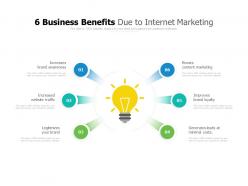
6 business benefits due to internet marketing





Try Before you Buy Download Free Sample Product
 Impress Your
 Audience
 100%
100% Editable
 Save Hours
 of Time


Acquire a distinct air of exclusivity with our 6 Business Benefits Due To Internet Marketing. Be able to join the elite club.
People who downloaded this PowerPoint presentation also viewed the following :
6 business benefits due to internet marketing with all 5 slides:
Folks feel intensely grateful due to our 6 Business Benefits Due To Internet Marketing. They appreciate your gift of good advice.
FAQs for 6 business benefits due
Dude, social media marketing is honestly a game changer for reach and targeting. You can hit massive audiences but also get super granular with who sees your stuff. What I love most? The analytics are instant - you'll know right away if something's bombing or crushing it. Plus it's crazy cheap compared to old school advertising. The real-time engagement thing is huge too, like you're actually talking WITH people instead of AT them. My advice - pick whatever platform your people actually use (don't spread yourself thin) and just focus on being helpful first, pushy second.
Honestly, email marketing is clutch because you're hitting people directly in their inbox. I'd start with automated stuff - welcome emails and those abandoned cart reminders work crazy well. You can get super targeted too, like sending comeback offers to people who haven't bought anything in months. Regular newsletters keep you top of mind without being pushy. The ROI is insane compared to chasing new customers all the time. Oh, and personalization based on what they've bought before? That's where the magic happens. Way more effective than I expected when I first started doing it.
Okay so SEO is basically how you get found when people google stuff you sell. Your website needs to show up high in search results, otherwise customers just scroll right past you to your competitors. It's like - you want the busy street corner, not some random back alley location, you know? Research what people actually type when they're looking for your thing (this part's honestly kind of tedious but whatever). Then work those keywords into your content naturally. More people find you = more sales, and you're not paying for ads. Pretty simple concept but takes some work to nail down.
Honestly, analytics just shows you what's actually working vs what you *think* is working. Track which channels get the best conversions and where people bail out of your funnel. I got weirdly obsessed with this stuff once I started - there's something satisfying about the numbers, you know? Cut the dead weight campaigns and double down on what's crushing it. You'll start seeing patterns that help predict your next moves too. Just set up proper tracking first and let the data tell you what to do next.
Dude, video really does work better than just posting text or photos. The stats are crazy - people remember like 95% of what they watch but only 10% of what they read. Plus search engines eat that stuff up, so you'll rank better. I've seen conversion rates jump because customers can actually watch your product do its thing instead of just imagining it. Honestly, the trust factor alone is worth it. Don't stress about fancy equipment either - your phone works fine. Even those boring screen recordings can pull decent results if you're selling software or whatever.
Honestly, targeted ads work so much better because you're actually reaching people who give a damn about your product. Why waste money shouting at everyone when you can focus on folks who've already shown interest through their browsing habits, purchases, or demographics? It's night and day compared to those spray-and-pray campaigns that burn through budget. When someone sees your ad and they're genuinely interested, they'll click. Simple as that. I'd start by digging into your customer data first - find out who's converting best, then build campaigns around those people.
Honestly, influencer marketing is pretty solid for getting your name out there. You'll see way better engagement - like 3x what you'd get with regular ads. People actually trust recommendations from creators they follow vs corporate stuff, which makes total sense if you think about it. Brand recall can jump around 70% from just one good partnership, which is crazy. The loyalty angle works because followers start connecting your brand with someone they already vibe with. Just don't get caught up in follower counts though - find someone whose audience actually matches who you're trying to reach.
Honestly, you don't need to be bigger - just smarter about it. Start local first, like targeting "best pizza in [your city]" instead of going head-to-head with Domino's everywhere. Social media's gonna be your secret weapon since it's cheap and you can actually show some personality (corporate chains are terrible at this). Google My Business is clutch, plus Facebook ads where you can get super specific with targeting. Oh, and don't sleep on email marketing. Here's the thing though - you've got a huge advantage because you can be way more personal. Reply to comments fast, remember your regulars' orders, actually give a damn when something goes wrong.
Ugh, attribution is such a pain. Customers bounce around between channels before buying, so good luck figuring out what actually worked. Then there's that annoying delay between seeing an ad and converting - makes tracking a nightmare. Don't even get me started on iOS basically breaking cookie tracking (thanks Apple). Oh, and people research online then buy in-store, which throws everything off. Honestly, just start with solid UTM tracking and use first-party data plus some attribution tools. It won't be perfect but you'll get way better insights than flying blind.
Dude, mobile marketing is so much more personal than regular ads. People check their phones like 150+ times a day, so you're hitting them where they actually are. Short attention spans though - we're talking 3 seconds max before they scroll away. The cool part? You can use location data and what apps they're using to target at the perfect moment. Way better than some random billboard hoping the right person drives by. You can actually talk back and forth through push notifications and texts too. Just make sure everything works when you're scrolling with your thumb - test it on your actual phone first.
Honestly, you gotta dig deep into who your audience actually is - what problems are they dealing with? Create stuff that helps them instead of just pushing your products all the time. Pick a posting schedule you can realistically handle because consistency matters way more than going all out for two weeks then disappearing. Videos, blogs, infographics - whatever clicks with your people. I learned this the hard way, but track real metrics, not just likes and followers. Those vanity numbers don't pay the bills. Be helpful first, salesy second. Oh, and set up a content calendar this week and batch create like a month's worth of posts. You'll thank me later.
UGC works because people actually trust other customers way more than your marketing team. Think about it - would you rather see a polished ad or hear from someone who actually bought the thing? Real reviews and photos feel genuine, which is huge since everyone's so tired of brands trying to sell them stuff. Honestly, I've probably bought half my stuff based on random customer photos that looked way more realistic than the professional ones. The trick is getting people to share their experiences in the first place, then putting that content front and center on your website.
Honestly, you should jump on short-form video if you haven't already - TikTok and Reels are still crushing it. AI personalization is getting pretty wild too, and interactive stuff like polls actually gets people engaged instead of just scrolling past. Oh, and micro-influencers are way better than the mega ones now since their followers actually give a damn. Voice search is blowing up because apparently we all just talk to our phones now lol. Third-party cookies are dying so you'll need to focus on collecting your own data. Pick maybe two of these depending on where your people actually spend time online.
Oh yeah, remarketing is clutch for this! Basically you install tracking pixels on your site to follow visitors around the internet - sounds sketchy but it works. When someone bounces without buying, your ads can pop up later on Google or Facebook. I'd start simple, maybe just target homepage visitors first. The trick is good timing and giving them something juicy like a discount. People usually need to see your stuff multiple times anyway before they'll actually buy. Track which messages work best and you'll be golden.
So basically you've got three main things to worry about. GDPR and CCPA mean you need proper consent before grabbing people's data, plus you can't ignore opt-out requests. The FTC is super strict about disclosing sponsored content - those
No Reviews