


6 steps contract negotiation design powerpoint ideas




Try Before you Buy Download Free Sample Product
 Impress Your
 Audience
 100%
100% Editable
 Save Hours
 of Time


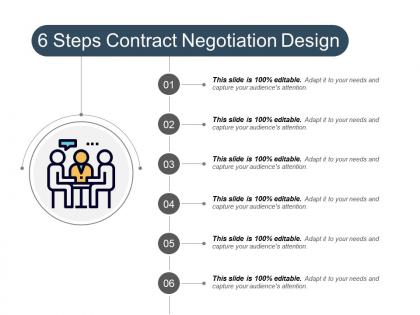
Showcase the importance of contract negotiations using our template 6 Steps Contract Negotiation Design PowerPoint Ideas. Follow these 6 steps to consistently reap healthier profits in your next negotiation. The template shows a group of professionals sitting around a round table debating and negotiating. You can add or delete the text boxes to make this PPT diagram a perfect match for your presentation content. The template can help you frame a methodology which can help you negotiate the deals or the contract management to your advantage.The PPT presentation can be used by professionals across all fields or domains. It can be a basis of presentation for merger and acquisition deals, sales closing deals, important business deals etc. So, use our creative PowerPoint presentation on contract negotiation to close important deals and gain business deal at the same time. Ensure a golden jubilee with our 6 Steps Contract Negotiation Design Powerpoint Ideas. Continue to improve along the journey.
People who downloaded this PowerPoint presentation also viewed the following :
6 steps contract negotiation design powerpoint ideas with all 5 slides:
Create a buzz about the assignment with our 6 Steps Contract Negotiation Design Powerpoint Ideas. Induct folks into the job.

FAQs for 6 steps contract negotiation
Okay, so before you go into that contract negotiation, figure out what you absolutely need versus what would just be nice to have. Don't give away everything important when things get tense. Research what they usually offer and what's normal in the market - you don't want to go in totally blind. Know your backup plan if this whole thing falls apart (that's honestly your strongest card). Also identify the real deal-breakers ahead of time and think through some workarounds. Trust me, write this stuff down beforehand so you're not making dumb emotional choices in the moment.
Dude, this totally changed how I approach negotiations. Instead of just taking what people say they want at face value, dig into the "why" behind it. Ask stuff like "what's really driving this?" Most of the time you'll find ways to give them something they care about that doesn't actually cost you much. Works the other way too. It's wild how often both sides can win when you think of it as problem-solving instead of a fight. Plus people trust you more when they feel heard. I used to just argue back and forth like an idiot.
Figure out what they actually need vs just want - huge difference there. I've found my best deals happened when I stopped the whole "us vs them" mindset. Sounds cheesy but whatever. Ask tons of questions about their priorities and what's holding them back. You'll find trade-offs where something cheap for you is gold to them, and the other way around. Get creative with timing stuff, payment schedules, hitting certain milestones - there's usually a way to structure things so everyone wins. Focus on creating value instead of just fighting over the same pie. Way more productive approach.
Dude, body language is huge in negotiations - honestly more important than people think. Slouching or dodging eye contact? You've already lost before discussing money. Sit up straight, make steady eye contact, lean in a bit. Shows you're confident and serious about your terms. Watch their signals too. Arms crossed usually means they're not feeling your offer. Fidgeting? They might be ready to bounce. I learned this the hard way last year - thought I was being all smooth with my words while basically shrinking into my chair. Your posture talks before you do.
Dude, you HAVE to get this right or you'll tank the whole thing. Germans want every detail nailed down first, but other cultures? They need to trust you before talking business. Figure out if they're direct communicators or more formal - what sounds efficient to us can come off super rude to them. Also their decision-making might take forever compared to what you're used to. I'd honestly research their customs beforehand and maybe bring someone who knows their culture if it's a big deal. The hierarchy stuff matters too - don't accidentally disrespect their chain of command.
Honestly, the biggest thing is staying cool when things get heated - I know it sounds obvious but people forget this constantly. Instead of arguing over the specific terms, try figuring out what each person actually needs underneath it all. Like, what's really driving their position? When I see negotiations go sideways, it's usually because someone got pissed and stopped listening. Take a breather if you need to. Show them you get their concerns (even if you don't agree). Then brainstorm weird solutions that might work for everyone. Oh and write down whatever you agree on - trust me on this one.
Dude, don't rush through the terms - I know it's boring but you'll regret skipping stuff. Price isn't everything either; those liability and IP clauses can destroy you later. Get EVERYTHING written down, no handshake deals. Honestly, vague deadlines are the worst - I've watched so many people get screwed by that. Never negotiate when you're pissed off or in a time crunch, you'll cave on things that matter. Oh, and take breaks during long sessions. Your brain gets fried. Ask questions about confusing parts instead of just signing to finish.
Honestly, tech makes negotiations way less of a headache. DocuSign and PandaDoc let everyone see changes as they happen - no more digging through twenty email versions trying to figure out what's new. Some AI tools will actually scan contracts and catch sketchy language before you sign something stupid. Video calls work great too when you can't meet up. Oh, and I learned this the hard way - don't pick fancy tools that don't play nice with whatever you're already using. You'll just create more work for yourself.
Your BATNA is basically your backup plan - what you'll do if the whole thing falls apart. Having one makes you way more confident because you're not desperate. I've watched people get screwed over so many times just because they thought it was this deal or nothing. Know your alternatives first, then you can actually push back on crappy offers. Short sentences work here. When you understand what else is out there, you won't settle for garbage terms out of fear. It's honestly like having an insurance policy that lets you negotiate properly.
Got a counteroffer? Don't jump on it right away - that's where people usually screw themselves over. Take time to go through it point by point against what you originally wanted. Figure out what matters most to you. Honestly, most counteroffers aren't meant to be final anyway. You can totally come back with your own counter-counteroffer if you need to. Just explain why you're asking for what you're asking for. Keep things friendly though, not like you're going to war. Oh and definitely get everything in writing so nobody "forgets" what you agreed on later.
Look for real connections first - shared industry headaches, mutual contacts, maybe you're both from the same random town. Ask open questions about what they actually care about, not just contract stuff. I've found that being upfront about their limitations shows you're thinking win-win instead of just steamrolling them. Don't skip the small talk either, even when it feels awkward. Share something you're struggling with too - vulnerability builds trust way faster than pretending everything's perfect on your end. Just be genuine about it though. People can spot fake rapport immediately and it'll backfire hard.
Honestly, most people skip this part but you gotta track how things actually turned out. Start with the obvious stuff - did you get your target price, timeline, whatever was non-negotiable? Then look at the relationship side of things. Before each negotiation, I make a quick list of must-haves vs nice-to-haves, then score myself after. The real test though? See if they actually follow through on what was agreed. That's where you learn if you're getting better at this whole thing or just spinning your wheels.
Okay so you definitely want to write stuff down during negotiations - I learned this the hard way once. People's memories get super weird when money's involved, and suddenly nobody remembers what was actually agreed on. Keep a running doc or email chain after each meeting with the main points. It helps you see patterns too, like if you're giving up way more than them. Plus honestly? Having everything written down just makes you look more professional. Trust me, three weeks later when they're like "we never discussed that," you'll be so glad you documented everything.
Honestly, just watch their body language and vibe - if they're getting frustrated, call it out instead of bulldozing through. I totally bombed a negotiation last year doing exactly that lol. When things get heated, take a breath and ask questions about what's really bugging them, not just what they're saying on the surface. Match their communication style too - builds trust way faster than you'd think. The whole point is finding something that works for both of you rather than trying to "win." Short sentences work. But mixing in longer ones keeps it natural and actually readable.
Look, you definitely need limitation of liability and indemnification clauses - trust me on this one. Force majeure too, because weird stuff happens. Termination provisions are huge, plus clear scope definitions so clients don't keep adding random tasks. Oh, and dispute resolution stuff so you're not stuck in court forever. Insurance requirements matter, especially for risky projects. Data protection clauses are annoying but necessary since everyone's paranoid about privacy now. Confidentiality goes without saying. Start with these basics and tweak based on what you're actually doing.
-
Editable templates with innovative design and color combination.
-
Awesomely designed templates, Easy to understand.