

7ps marketing mix powerpoint template slide




Try Before you Buy Download Free Sample Product
 Impress Your
 Audience
 100%
100% Editable
 Save Hours
 of Time


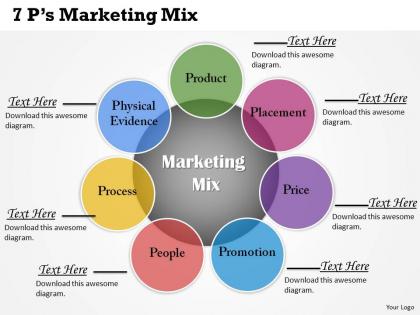
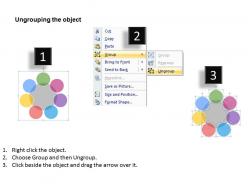
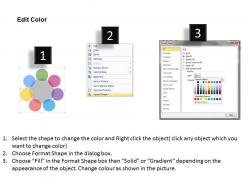
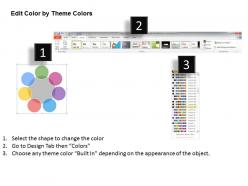
All those who are looking forward to business startups or are about to resume their study on marketing, should be thorough with the 7Ps marketing mix PowerPoint template slide. However, amongst the varied PPT presentation layout options available online, researchers get confused .Therefore; we have come up with this PowerPoint show on marketing management or theories which do justification to its users in tutoring them about the foundation concept of marketing. Two distinct PPT slide graphics; one in circular motion and the other in form of arrows have been provided to highlight each of the tactical marketing tools. These PowerPoint slide ideas bring into limelight the set of marketing practices which a merchant undertakes to promote and sell his product. As per the need of an hour these PPT diagrams can be downloaded for presentation on 4Ps, 7Ps or even 8Ps of marketing mix. So just, click on the download link of our presentation PowerPoint templates, customize them and rule your audience with your intellect on marketing framework and plan. Introduce them to the best business practices. Enhance global intelligence with our 7PS Marketing Mix Powerpoint Template Slide.
People who downloaded this PowerPoint presentation also viewed the following :
7ps marketing mix powerpoint template slide with all 6 slides:
Our 7PS Marketing Mix Powerpoint Template Slide can be of great help. Just try them out and you will be thrilled.
FAQs for 7ps marketing mix
Honestly, the 7Ps are a game-changer because they cover way more ground than the old 4Ps model. You get product, price, place, promotion PLUS people, process, and physical evidence. That last part is clutch for service businesses - like, who cares about your great service if your website looks like it's from 2005? The framework basically forces you to think about every single touchpoint your customers have. I'd start by just going through each P and seeing where you're weak. You'll probably find some obvious gaps you never noticed before. Way better than just winging it with marketing campaigns.
So you know the classic 4Ps - Product, Price, Place, Promotion? The 7Ps just tack on three more: People, Process, and Physical Evidence. Basically, someone realized the original four were kinda limiting for service businesses. Like, how do you market a restaurant using just product and price? People covers your staff interactions, Process is how smoothly everything runs, and Physical Evidence is the tangible stuff customers actually see. I mean, it makes sense - services are way more complex than just selling widgets. Definitely worth using if you're planning anything that involves customer experience. The extra thinking time pays off.
Yeah, for sure! Getting all 7Ps working together makes such a difference. Like when your pricing actually reflects your product quality, and your staff delivers service that matches what your marketing promises - customers pick up on that consistency right away. Everything just flows better, you know? Trust builds naturally because there aren't weird disconnects throwing people off during their experience with you. I'd say start by looking at where your 7Ps might be contradicting each other. That's usually what creates those annoying friction points that drive customers crazy.
Okay so first thing - figure out what you're really selling beyond just the actual product. Like the whole experience customers get, quality, how it fixes their problems, all that stuff. Honestly, checking out your competitors helps too since you can get stuck in your own head about this. Then see how everything connects - does your pricing match the value you're giving? Right channels for selling? Your marketing actually talking about what matters to customers? The hard part is being real with yourself about where you think you're killing it vs what customers actually care about. Sometimes there's a pretty big gap there.
Look, there's a bunch of ways to adjust your pricing depending on what's happening. You can match competitors or go lower to stay competitive. Dynamic pricing works great too - like how Uber jacks up prices during rush hour (honestly kind of genius). If customers think your product's worth more, charge more with value-based pricing. Start super low to grab market share fast, then bump prices up later. Or go the opposite route and price high to look premium. The key thing is watching what competitors do and actually listening to customer feedback so you know when to tweak things.
So promotion is basically how you tell people where your brand fits in the market, right? Like, you could have the most amazing product ever, but if your ads don't clearly say "hey, we're the luxury option" or "we're super affordable," customers just won't get it. Your promotional stuff - the messaging, where you advertise, even the tone - all needs to match whatever position you're going for. I always think it's weird when brands mess this up because it seems so obvious. But yeah, definitely check if your current promotions actually support where you want to be positioned. Otherwise you're just confusing people.
Okay so first figure out where your customers are already hanging out and shopping. Map out everything - stores, online, social media, wherever. Don't try to drag them to some random new place, that's just exhausting for everyone. Pick a few channels that actually make sense together instead of throwing stuff at the wall. Start small with one or two, see what gives you decent returns without being a total nightmare to manage. I swear half the businesses I know spread themselves way too thin at first. Scale up the ones that work, ditch what doesn't. Pretty straightforward but you'd be surprised how many people overthink it.
Honestly, your team IS your customer service - they're literally what makes or breaks the whole thing. I mean, you could have an amazing product, but one cranky employee? Game over. The way your people act, how well they're trained, whether they actually care - that's what customers remember. Even online businesses need this because someone's still writing those chat responses, right? Short version: hire good people, train them properly, and keep them happy. Sounds obvious but so many companies mess this up. Happy workers = happy customers, and unhappy ones... well, you know how that goes.
Start by mapping your whole customer journey - initial contact through post-purchase stuff. Hunt down bottlenecks and time-wasters (there's always way more than you expect, honestly). Automate the repetitive tasks that nobody wants to do anyway. Cut out unnecessary approval layers - they just slow everything down. Standardize how teams handle handoffs between departments. Oh, and measure everything you can think of. Cycle times, error rates, customer satisfaction scores. Pick your biggest pain point first and redesign that process completely. Don't try to fix everything at once or you'll go crazy.
Apple's the obvious one - they nail everything from premium pricing to those sleek stores. Starbucks crushed the "place" element by creating that whole third-space vibe, plus their barista training is solid. Amazon? One-click ordering changed everything for the process side. Disney's just insane at the full mix, especially the parks and how they train cast members (honestly their employee training is probably overkill but it works). The key thing is these companies designed every single touchpoint intentionally. They're not just selling products - every interaction reinforces what their brand's about.
Physical evidence is basically all the tangible stuff that makes customers think "wow, these guys have their act together" or "yikes, maybe not." Your website, packaging, office space, even how your employees dress - it all sends signals about quality. Apple stores are genius at this, right? Everything's so clean and minimal that you automatically expect premium service. Meanwhile, a messy storefront makes people wonder if you're reliable. Business cards, restrooms, signage... honestly, customers notice way more than you'd think. The trick is making sure everything matches the vibe you're going for instead of sending mixed messages.
Okay so the 7Ps thing - you've gotta make sure they all work together or your campaign falls apart. Product benefits first, obviously. Then price it right for your positioning (luxury = higher prices, value = competitive). Your staff? Train them well because they're basically walking billboards. Distribution should be super easy for customers. The promotional stuff is the flashy part everyone focuses on. But here's what trips people up - the boring stuff matters too. Make buying simple, no weird hoops to jump through. Even your packaging sends a message. Most brands get maybe half of these right and wonder why things feel off. Just map each one against your main message and see what's missing.
Dude, honestly? Your audience is everything when it comes to the 4 Ps. Like, selling to Gen Z versus boomers means totally different product features, pricing, where you sell it, how you promote it - the whole thing changes. Your app better look slick for younger people, but older folks might want actual brochures they can hold. Make your buying process match how they want to shop too. Oh, and your staff needs to vibe with whoever's walking through the door. I always tell people to figure out who you're talking to first, then build everything else around that. Makes it way less overwhelming.
Honestly, the whole 7Ps thing is a nightmare because everything's connected. Change your price? Now your promotion budget's screwed and you might have to use cheaper materials. Most people completely ignore physical evidence and processes anyway (which is dumb but whatever). Your team needs retraining every time you pivot, and good luck finding the right distribution channels while keeping your brand consistent everywhere. It's basically juggling while blindfolded. My advice? Pick 2-3 of the Ps that actually matter for what you're trying to do, then figure out the rest from there.
So basically, digital marketing lets you tweak the 7Ps in ways you never could before. Product customization happens instantly now. Pricing algorithms adjust automatically based on what people want. Your "place" becomes apps and social media instead of storefronts - which honestly saves a ton of overhead costs. Promotion gets ridiculously targeted (sometimes it's kinda creepy how much they know about you). The process shifts to focusing on user journeys online rather than chatting face-to-face. People now includes chatbots and online communities. Physical evidence? That's your website design, reviews, all those digital touchpoints. Just map out your current 7Ps first, then figure out what you can make more interactive or data-driven for online channels.
-
The Designed Graphic are very professional and classic.
-
Great designs, Easily Editable.