

ABC Model Of Mental Health Crisis Intervention





Try Before you Buy Download Free Sample Product
 Impress Your
Audience
 100%
Editable
 Save Hours
of Time


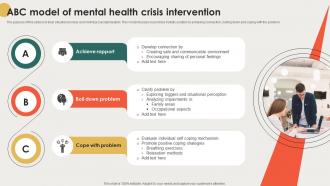
The purpose of this slide is to treat situational crises and minimize suicidal ideation. This model focuses on provides holistic solution by achieving connection, boiling down and coping with the problem.
People who downloaded this PowerPoint presentation also viewed the following :
ABC Model Of Mental Health Crisis Intervention with all 9 slides:
Use our ABC Model Of Mental Health Crisis Intervention to effectively help you save your valuable time. They are readymade to fit into any presentation structure.








FAQs for ABC Model Of Mental
So the ABC Model breaks down behavior into three parts: Antecedent (what triggers it), Behavior (what you actually do), and Consequence (what happens after). Pretty straightforward stuff. Here's the cool part though - consequences don't just wrap things up, they actually shape whether you'll do that same thing again next time. It's like cause and effect but way more cyclical than most people realize. Honestly, I didn't get it until I started tracking my own habits. Try picking something you did recently and work backwards through the ABC chain. You'll probably spot patterns you never noticed before - kinda eye-opening actually.
The ABC Model is perfect for those annoying workplace behaviors that just keep happening. You know - safety violations, customer service disasters, team drama that won't quit. Honestly, most managers focus only on the behavior itself, which is why nothing changes. This approach makes you dig into what's triggering it (Antecedents) and what's actually rewarding the person for doing it (Consequences). Try mapping out just one problem behavior first. I bet you'll catch patterns you totally missed before - like maybe that "difficult" employee is actually responding to something specific in their environment.
The ABC Model is seriously helpful for team drama. When conflicts pop up, walk everyone through what actually happened (Activating event), what they assumed about it (Beliefs), and how they reacted (Consequences). It's wild how often people jump straight from "Sarah didn't respond to my email" to "she hates my ideas" without checking if maybe she was just swamped. I'd bring it up in your next retro - sounds nerdy but it actually works. Have people break down a recent miscommunication using those three steps. You'll be surprised how much clearer things get when folks separate facts from their interpretations.
Oh man, everyone thinks you just flip your thoughts and boom - problem solved. That's not how it works though! The beliefs part isn't just what you consciously think either. Your gut reactions and subconscious stuff matter way more than people realize. Plus it's not this neat A-B-C chain - everything feeds back into everything else constantly. I learned this the hard way when I first tried using it. Track all three pieces at once instead of obsessing over just changing your thoughts. Way more effective that way.
So basically the ABC Model breaks down behavior into three chunks: what set someone off (Antecedent), what they actually did (Behavior), and what happened next (Consequence). It's super helpful for figuring out your team's quirks - like maybe John always shuts down during morning meetings but he's great one-on-one. Or Lisa needs written instructions instead of verbal ones. I've found it works way better than just guessing why people act certain ways. Start tracking one person's patterns and you'll probably have some "oh that makes sense" moments pretty quick.
Oh totally! It's super effective in classrooms. I start by having kids just spot their triggers first - like what sets them off during tests or group work. Then we work on the thought piece, which honestly is the hardest part for them to grasp. The behavior/feelings connection usually clicks pretty fast though. ABC worksheets are great for this stuff. When classroom drama happens, I'll literally walk through it with them - "what happened, what went through your head, how'd you react?" Takes practice but they get it. Test anxiety is where you'll see the biggest wins. Don't try teaching all three parts at once or you'll lose them.
Dude, you HAVE to track whether your consequences are actually working - otherwise you're just guessing. Sometimes what you think is motivating totally backfires, which is honestly pretty frustrating when you realize it later. The whole point is seeing if behaviors go up, down, or stay flat after you change the consequences. I learned this the hard way - spent like two months thinking I was being helpful when I was actually making things worse. Start measuring right away when you try any ABC stuff. Without that feedback loop, you'll waste tons of time reinforcing random behaviors that don't even matter.
Okay so the ABC Model is super helpful when your team's arguing in circles. First, figure out what actually happened (the Activating event) - just the facts, no spin. Then look at your Beliefs about it - like what assumptions you're making. Finally, check the Consequences - how you're feeling and reacting. Honestly? Most fights aren't even about the real situation. People get mad at their own interpretations instead of dealing with what went down. Next time things get heated, try asking "wait, what are the actual facts here?" versus "what story are we creating about this?" Sounds weird but it works. Cuts through the BS pretty fast and gets everyone back on track.
So with remote work, you really gotta lean into the consequences part since you're not seeing stuff happen in real time. I'd document way more than usual - like actually write down what people are doing because those random observations just don't exist anymore. Also, be super explicit about expectations upfront. Those quick "hey, what did you mean by..." conversations in the hallway? Yeah, they're gone. Remote makes everything feel disconnected anyway, which honestly makes the ABC thing even more useful. You need some kind of system to track what's actually working. Set up regular check-ins to look at patterns and tweak based on what you're reinforcing.
Cultural stuff totally changes how people see situations and what they believe about them. A small failure might be no big deal in one culture but completely devastating in another - the emotional reaction is worlds apart. When you're working with clients, you've got to figure out their cultural perspective first. Are they from a collectivist background? How do they view authority or family expectations? Even their concept of success matters. I always found it wild how the same exact event can mean something completely different to different people. Ask open questions about their background and what these situations actually mean to them, because your interpretation probably doesn't match theirs at all.
Honestly, just pick 2-3 things to track or you'll drown in spreadsheets. I'd start with behavior change rates - like, are people actually doing things differently after you try the ABC stuff? Customer satisfaction is pretty telling too. How fast are belief shifts happening? That's key. Also check if changes stick around after a few months - some teams look great initially then backslide hard. Oh, and response time when triggering events happen shows if people are catching patterns early. Compare your before/after data over maybe 3-6 months. Don't go shorter or you won't see real patterns.
Yeah totally! CBT pairs super well with the ABC model - you use A-B-C to spot the thought patterns first, then jump into CBT techniques to challenge those beliefs. I'm always combining it with SMART goals too when I'm coaching people on performance stuff. Works like a charm. Oh and conflict resolution! You can walk people through examining their beliefs about whatever situation they're dealing with. ABC basically becomes your go-to diagnostic tool, then you pick whatever intervention method makes sense for the beliefs you've found. The combo approach just hits different than using one framework alone.
Check out IBM's case - they used ABC modeling for procurement and slashed costs by 30%. That's huge. Johnson & Johnson did something similar across their pharma divisions to figure out real drug development costs. Chrysler's another good one from back when they were having serious issues. They used ABC to see which product lines actually made money vs just looked good on paper. Harvard Business Review has solid case studies on all these if you want the nitty-gritty details. Those'll show you exactly how they pulled it off step by step.
Honestly, tech makes ABC implementation way less painful. Software can automatically grab your activity costs and track resource usage - no more sitting there with spreadsheets for hours (seriously, who has time for that?). Cloud platforms are pretty solid for team collaboration too. You'll get dashboards that actually make sense of your cost data instead of staring at confusing numbers. Better data means smarter pricing choices, obviously. I'd start small though - maybe try some Excel add-ins first before jumping into the fancy dedicated ABC software. Test it out, see what works.
Honestly, the trickiest part is figuring out what you're actually thinking versus those automatic thoughts that just pop up - those are way sneakier than you'd expect. Most people want to blame the situation directly for how they feel, but that's not really how it works. I'd start with small stuff first, like being annoyed at slow wifi or whatever, instead of jumping into major life drama. Write out those A-B-C scenarios even when you're not stressed so it becomes habit. The real game-changer is catching yourself in the moment and asking "wait, what story am I telling myself here?" Once that clicks, everything else falls into place.
-
The customer care of SlideTeam is very responsive. I was having a payment issue and they fixed it for me in no time.
-
The quality of PowerPoint templates I found here is unique and unbeatable. Keep up the good work and continue providing us with the best slides!