


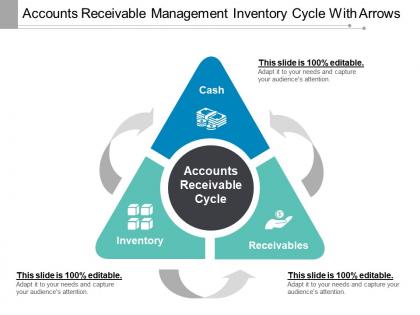
Accounts receivable management inventory cycle with arrows




Try Before you Buy Download Free Sample Product
 Impress Your
 Audience
 100%
100% Editable
 Save Hours
 of Time


Let your brilliance emanate from our Accounts Receivable Management Inventory Cycle With Arrows. Your excellence will be emitted clearly.
People who downloaded this PowerPoint presentation also viewed the following :
Accounts receivable management inventory cycle with arrows with all 5 slides:
Help take your presentations to the next level. Our thousands of Accounts Receivable Management Inventory Cycle With Arrows are ready to help give your projects a hook.




FAQs for Accounts receivable management inventory
Key components include establishing clear credit policies, implementing systematic invoicing procedures, maintaining accurate aging reports, developing consistent collection protocols, and leveraging automation tools for tracking and follow-up. These elements work together to streamline cash flow management, reduce bad debt exposure, and accelerate payment cycles, with many organizations finding that strategic automation ultimately delivers faster collections and enhanced financial transparency.
Automation tools enhance accounts receivable efficiency by streamlining invoice generation, automating payment reminders, and accelerating collections through digital workflows. These technologies enable finance teams to reduce manual data entry, minimize processing errors, and improve cash flow visibility, with many organizations finding that automated AR processes deliver faster payment cycles and significantly lower administrative costs.
Effective accounts receivable management significantly improves cash flow by accelerating payment collection, reducing outstanding invoice periods, and minimizing bad debt write-offs. Through automated invoicing systems and strategic payment terms, businesses streamline revenue conversion, enhance working capital availability, and maintain steady operational funding, with many organizations finding that optimized AR processes deliver 15-30% faster cash conversion cycles.
Businesses can identify accounts receivable issues through regular aging reports, payment pattern analysis, customer credit assessments, and cash flow monitoring. Many organizations streamline these processes by implementing automated invoicing systems, establishing clear payment terms, and conducting periodic process audits, ultimately reducing collection times and improving working capital management across operations.
Best practices for setting customer credit limits include analyzing credit histories, financial statements, payment patterns, industry benchmarks, and establishing clear approval workflows. These approaches streamline risk management by incorporating automated credit scoring, regular limit reviews, and tiered authorization levels, with many financial institutions and B2B companies finding that dynamic limit adjustments ultimately enhance cash flow while minimizing bad debt exposure.
Aging reports enable businesses to prioritize collection efforts by categorizing outstanding invoices into time periods, identifying overdue accounts, and tracking payment patterns across customer segments. These reports streamline collections by highlighting high-risk accounts, enabling targeted follow-up strategies, and improving cash flow forecasting, with many organizations finding that systematic aging analysis reduces collection times and enhances overall receivables management efficiency.
Customer relationship management enhances accounts receivable by maintaining open communication channels, establishing clear payment terms, and building trust through consistent follow-up processes. Strong CRM practices enable companies to resolve disputes faster, negotiate flexible payment arrangements, and retain valuable clients while minimizing collection costs, with many businesses finding that personalized communication significantly improves payment timelines.
Early payment discounts incentivize timely payments by offering percentage reductions on invoice amounts, typically 2-5% for payments within specific timeframes, creating immediate financial benefits that outweigh delayed payment advantages. This strategy accelerates cash flow, reduces collection costs, and strengthens customer relationships, with many businesses finding that even modest discounts significantly improve payment cycles and working capital management.
Companies should track days sales outstanding (DSO), accounts receivable turnover ratio, aging reports, collection effectiveness index, and bad debt percentage to assess receivable health. These metrics enable organizations to identify cash flow bottlenecks, optimize collection processes, and reduce financial risk, with many businesses finding that regular monitoring ultimately delivers improved liquidity and stronger customer relationships.
Businesses can balance credit risk and sales growth by implementing tiered credit policies, conducting thorough customer assessments, setting appropriate credit limits, and utilizing automated monitoring systems. Through strategic credit scoring and payment term negotiations, companies in retail, manufacturing, and services minimize bad debt exposure while maximizing revenue opportunities, ultimately delivering sustainable growth and improved cash flow management.
Common pitfalls in accounts receivable management include inadequate credit screening, inconsistent follow-up procedures, poor documentation practices, lack of clear payment terms, and insufficient automation systems. These challenges significantly impact cash flow and operational efficiency, with many companies finding that implementing structured collection processes, automated invoicing systems, and regular aging report reviews ultimately delivers faster payment cycles and improved financial stability.
Companies can effectively communicate payment terms through clear invoicing, upfront contract discussions, automated payment reminders, and customer onboarding processes that outline expectations. These communication strategies streamline accounts receivable by reducing confusion, accelerating payment cycles, and maintaining positive customer relationships, with many businesses finding that transparent payment communication significantly improves cash flow and reduces collection disputes.
Strategies for slow-paying customers include implementing early payment discounts, establishing clear payment terms, sending automated reminders, offering flexible payment plans, and conducting credit assessments before extending terms. These approaches streamline collections by maintaining customer relationships while minimizing cash flow disruptions, with many businesses finding that proactive communication and incentive structures ultimately reduce payment delays and enhance operational efficiency.
Industry-specific knowledge enhances accounts receivable decision-making by understanding unique payment cycles, regulatory requirements, and customer behaviors within each sector. Financial services, healthcare, and manufacturing companies leverage this expertise to set appropriate credit terms, anticipate seasonal fluctuations, and implement targeted collection strategies, ultimately reducing bad debt while maintaining strong customer relationships and improving cash flow predictability.
Accounts receivable management tools include automated invoicing systems, payment processing platforms, credit management software, collections automation tools, and integrated ERP solutions. These technologies streamline cash flow by reducing manual processes, accelerating payment cycles, and providing real-time visibility into outstanding receivables, with many organizations finding that automation delivers faster collections and improved customer relationships.
-
Understandable and informative presentation.
-
Qualitative and comprehensive slides.