


Acquisition Due Diligence Checklist Five Years Financial Projections




Try Before you Buy Download Free Sample Product
 Impress Your
 Audience
 100%
100% Editable
 Save Hours
 of Time


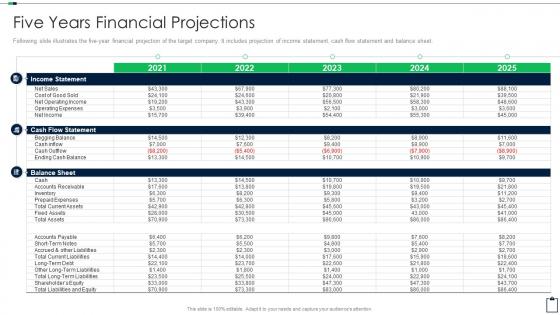
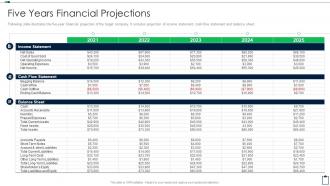
Following slide illustrates the five-year financial projection of the target company. It includes projection of income statement, cash flow statement and balance sheet.
People who downloaded this PowerPoint presentation also viewed the following :
Acquisition Due Diligence Checklist Five Years Financial Projections with all 6 slides:
Use our Acquisition Due Diligence Checklist Five Years Financial Projections to effectively help you save your valuable time. They are readymade to fit into any presentation structure.





FAQs for Acquisition Due Diligence Checklist Five
Look, you're basically trying to make sure you're not buying a dumpster fire. Due diligence helps you verify their financials are real, spot legal issues, and check if the whole thing actually makes sense strategically. It's like inspecting a house before buying - you don't want to discover the foundation is cracked after you've moved in, right? The process also helps nail down fair pricing and figure out how you'll integrate everything later. Honestly, I've seen too many deals go sideways because people rushed this part. Way cheaper to catch problems now than fix them post-closing when you're stuck with whatever mess you bought.
Pull their financials from the last 3-5 years - income statements, balance sheets, cash flow stuff. Revenue growth should be steady, debt manageable. Honestly, cash flow matters way more than profit sometimes, so watch that closely. Check their accounts receivable aging too - tells you if customers are actually paying. Inventory turnover's another big one. Oh, and watch for any sneaky off-balance-sheet liabilities they might be hiding. Their accounting methods need to match yours or comparisons get weird (depreciation can be all over the place). Have your finance people run some scenarios once you dig through everything.
Start with the heavy hitters - corporate structure, big contracts, any lawsuits brewing, and IP stuff. Employment agreements are massive too, especially if there's union drama. Contract review is honestly the worst part - you're looking at hundreds of documents that'll make your eyes bleed. Tax issues and environmental problems can torpedo everything overnight, so hit those early. Oh, and regulatory compliance obviously. My advice? Get your legal team looped in immediately and build a solid checklist. Don't try to wing this part.
Dude, cultural fit is absolutely critical during due diligence. I've watched deals that were financial goldmines completely implode because nobody bothered checking if the cultures would actually work together. Pretty painful to witness, honestly. Check their turnover rates and employee engagement numbers first. Then talk to people at different levels - not just the C-suite but regular employees too. You'll get way better intel on how they really operate day-to-day. Their communication style and work values need to mesh with yours, or you're setting yourself up for a nightmare integration even if everything else looks perfect.
Tech due diligence can make or break your deal, honestly. Map out both companies' systems first thing - get IT involved early so they can catch problems before you're stuck with them. Check their software licenses, data setup, and security (cyber stuff gets messy fast). I've watched acquisitions turn into nightmares when people find out the platforms don't talk to each other. Integration costs add up quick too. Does their tech actually support why you're buying them in the first place? Sometimes companies look great on paper but their systems are held together with digital duct tape.
Start with market share data from IBD or Gartner reports, plus customer surveys for brand perception stuff. Competitive benchmarking is critical - pricing, features, customer satisfaction vs competitors. Win/loss data from their sales team is gold since they know why deals actually fail. Porter's Five Forces maps competitive intensity pretty well. Patent landscapes matter too, obviously. Here's something that really works: try interviewing former employees of competitors if possible. They'll give you the real story on market dynamics that you won't find in any report. Also check regulatory barriers - sometimes that's what makes or breaks these situations.
Look at three big areas: legal, financial, and operational stuff. Pending lawsuits and regulatory problems can totally kill deals, so dig into those first. Financial liabilities seem obvious but watch for hidden items - off-balance-sheet debt, warranties, contingent obligations. Then there's operational headaches like environmental issues or employment disputes. Your legal team earns their fee here, trust me. Oh, and definitely push for rep and warranty insurance. It covers your ass if surprises pop up after closing. My buddy learned this the hard way on his last acquisition.
You'll definitely want a virtual data room - Intralinks or Merrill DataSite are solid choices for document control. For tracking everything, Asana or Monday.com work well since you'll have multiple workstreams running. CapIQ and PitchBook are lifesavers for the valuation stuff. Excel templates for due diligence checklists are boring but they actually save you hours. Don't overthink that part. Slack keeps communication smooth when you're dealing with advisors and internal people. Oh, and set up your data room structure early - like, way earlier than you think. Get everyone trained on whatever tools you pick before things get crazy.
Set up a virtual data room with tight access controls - only let specific people see what they need to see. NDAs are obvious but watermark everything too. Disable downloads and printing if you can. Time limits are huge - don't give buyers forever to dig through your stuff. I've seen smart deals where they created separate rooms for different buyer groups. Track who's accessing what and when. Oh, and start with your boring documents first. Save the really sensitive financials until you trust the buyer more. Makes total sense when you think about it.
Honestly, most people rush it and don't dig deep enough into the financials. "Adjusted EBITDA" is basically a red flag - I've seen it hide so many issues. Management presentations? Always way too optimistic. You really need to talk directly to customers, key employees, suppliers - not just skim contracts. Oh, and everyone underestimates integration costs. Cultural fit problems can totally kill deals later. My take: give yourself extra time upfront and actually use a checklist. When things get crazy, you'll skip important stuff otherwise.
Look, whatever you find in due diligence becomes your game plan for integration. Their IT systems running on duct tape? You'll need way more time and money than expected. Cultural clashes or sketchy liabilities hiding in the weeds? Better know about those now than when you're knee-deep in integration hell. Honestly, I've seen deals where they rushed through DD just to close, then spent months fixing stuff they could've spotted early. Don't just check boxes - use those findings to build a real plan that accounts for the messy reality you uncovered.
Look at EBITDA multiples and revenue growth first - those numbers don't lie. Cash flow patterns over 3-5 years will show you the real picture. Customer concentration is massive though, like if 80% of revenue comes from one client, that's terrifying. Check gross margins and customer acquisition costs too. For subscription businesses, churn rates are everything. Balance sheet wise, debt-to-equity and working capital tell you if they're actually healthy. Honestly, just build a comparison chart with similar companies in that space. It's the fastest way to spot when someone's being realistic vs completely delusional about their valuation.
Honestly, stakeholder communication can totally make or break your deal. I'd set up regular check-ins with investors, board members, and key employees right away. Don't forget major customers too - they get weird if they sense something's up. Be transparent about your timeline but keep specifics vague until you're ready to share more. Mixed messages are the worst, so pick one person to handle all communication. I've literally watched deals implode because someone panicked a key stakeholder halfway through. Oh, and don't underestimate how quickly rumors spread - people talk.
So many regulatory hoops to jump through - antitrust laws, foreign investment rules, securities stuff, plus whatever's specific to their industry (banking, telecom, etc). Each country has different approval processes that never sync up timeline-wise, which is honestly the worst part. Data privacy laws like GDPR will pop up too, maybe export controls. Oh and national security reviews if they're in sensitive areas. Start mapping this regulatory mess early and bake those approval times into your schedule. I've seen too many deals die because people underestimated how long regulators take.
So first thing - set up a proper data room with folders by function (financial, legal, ops, whatever). Use templates for everything and rate the risks consistently. Trust me, I've watched deals blow up because people just threw documents everywhere with zero organization. Get your team on the same page with naming conventions and timestamps. The exec summary dashboard is honestly clutch though - leadership needs those red flags served up clean when they're making fast calls. Oh and don't let anyone email random Word docs around, that's how things get messy real quick.
-
Editable, diversified, compatible with MS PPT and Google Slides, and on top of that finest graphics!! I mean in the words of the famous Ross Geller, “What more do you want!”
-
“Ample and amazing variety of templates available, really helpful for making professional PPT for day to day workings.”