


Addressing various scrum ceremonies agile in bid projects development it




Try Before you Buy Download Free Sample Product
 Impress Your
 Audience
 100%
100% Editable
 Save Hours
 of Time


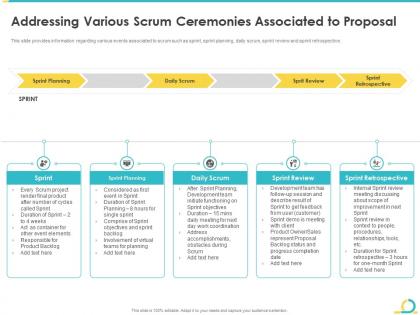
This slide provides information regarding various events associated to scrum such as sprint, sprint planning, daily scrum, sprint review and sprint retrospective.
People who downloaded this PowerPoint presentation also viewed the following :
Addressing various scrum ceremonies agile in bid projects development it with all 2 slides:
Use our Addressing Various Scrum Ceremonies Agile In Bid Projects Development IT to effectively help you save your valuable time. They are readymade to fit into any presentation structure.
FAQs for Addressing various scrum ceremonies agile in bid
Sprint Planning aims to define deliverable bid components, estimate effort for proposal sections, and establish sprint goals aligned with submission deadlines. Daily Standups track progress on RFP requirements, identify blockers in stakeholder approvals, and ensure cross-functional coordination between technical writers, subject matter experts, and pricing analysts, while Sprint Reviews and Retrospectives optimize bid quality and streamline future proposal processes.
Daily stand-up meetings enhance bid collaboration by focusing on progress updates, immediate blockers, and priority alignment across proposal sections. These brief, time-boxed sessions enable teams to coordinate content development, resolve dependencies between writers and subject matter experts, and maintain momentum toward submission deadlines, with many organizations finding that consistent stand-ups significantly improve proposal quality and team accountability.
Sprint planning ceremonies establish clear objectives, task assignments, and delivery timelines that directly connect team efforts to specific bid requirements and proposal deadlines. Through collaborative capacity planning and priority setting, teams align development work with bid milestones, ensuring deliverables meet client specifications while maintaining quality standards, ultimately enabling organizations to submit competitive proposals on schedule.
Backlogs in bid projects are prioritized through value-based ranking, stakeholder input assessment, deadline proximity analysis, dependency mapping, and risk evaluation to ensure sprint focus aligns with proposal objectives. Through strategic prioritization frameworks, bid teams streamline resource allocation, accelerate critical deliverable completion, and enhance proposal quality, while maintaining competitive positioning, ultimately delivering comprehensive responses that maximize win probability and stakeholder value.
Sprint reviews for bid presentations benefit from structured feedback sessions using targeted questioning, real-time polling, stakeholder breakout groups, and competitive analysis discussions. These strategies enable teams to gather specific insights on proposal strengths, messaging clarity, and client alignment, while facilitating rapid iterations and enhanced bid competitiveness before final submissions.
The retrospective ceremony enables teams to systematically analyze what worked well, what didn't, and actionable improvements for upcoming bid cycles, fostering a culture of continuous learning and optimization. Through structured reflection, bid teams identify process inefficiencies, communication gaps, and resource allocation issues, ultimately enhancing proposal quality, reducing development timelines, and increasing win rates across future opportunities.
Common challenges in bid project Scrum ceremonies include tight proposal deadlines conflicting with sprint cycles, difficulty estimating complex technical requirements, and coordinating multiple stakeholders with competing priorities. Teams overcome these obstacles by adopting shorter sprint durations, implementing daily stakeholder check-ins, and using specialized estimation techniques for proposal components, ultimately delivering more competitive bids while maintaining team velocity and client responsiveness.
Scrum ceremonies can be tailored by adjusting sprint lengths to match bid deadlines, incorporating stakeholder reviews into demos, and customizing daily standups to focus on proposal sections and dependencies. These adaptations enable bid teams to maintain agile flexibility while addressing compliance requirements, client feedback cycles, and cross-functional collaboration needs, ultimately delivering more competitive proposals through enhanced transparency and iterative refinement.
Timeboxing in Scrum ceremonies accelerates decision-making by creating structured urgency, forcing teams to prioritize critical bid components, eliminate analysis paralysis, and maintain focus on deliverable outcomes. In high-stakes bid scenarios, this disciplined approach enables teams to rapidly evaluate proposals, allocate resources strategically, and pivot quickly based on client feedback, ultimately delivering more competitive responses while minimizing costly delays.
**INPUT**: What metrics can be derived from Scrum ceremonies to measure the success and efficiency of a bid project team? **OUTPUT**: Scrum ceremonies generate velocity metrics, burndown charts, sprint completion rates, retrospective action items, and stakeholder feedback scores that measure team performance. These metrics enable bid teams to track proposal development progress, identify bottlenecks in compliance reviews, and optimize resource allocation, with many organizations finding that ceremony-driven insights ultimately deliver faster bid responses and higher win rates.
Remote teams can effectively conduct Scrum ceremonies through video conferencing tools, collaborative digital whiteboards, and structured time-boxing that ensures focused participation across distributed locations. These approaches streamline communication by establishing clear agendas, rotating facilitation responsibilities, and implementing interactive breakout sessions, with many technology and consulting organizations finding that hybrid formats ultimately deliver enhanced flexibility and broader stakeholder involvement.
Sprint review techniques for bid projects include live product demonstrations, stakeholder feedback sessions, risk mitigation presentations, competitive advantage showcases, and ROI impact analysis. These approaches enable teams to demonstrate tangible progress, address client concerns proactively, and showcase strategic value propositions, while building client confidence and trust, ultimately positioning the bid competitively in an increasingly demanding procurement landscape.
Scrum ceremonies help manage bid project timeline risks by providing structured checkpoints for early identification, continuous monitoring, and rapid response to potential delays or scope changes. Through daily standups, sprint reviews, and retrospectives, teams can quickly surface timeline threats, reallocate resources, and adjust deliverables, while sprint planning enables proactive risk assessment, ultimately delivering more predictable bid schedules and competitive proposal timelines.
Stakeholder involvement in Scrum ceremonies ensures bid requirements are clearly understood, priorities align with client expectations, and project deliverables meet strategic objectives throughout development cycles. Through active participation in sprint reviews, planning sessions, and retrospectives, stakeholders provide critical feedback, validate assumptions, and guide iterative improvements, ultimately enabling faster bid development, reduced revision cycles, and higher proposal win rates.
Scrum Masters facilitate productive ceremonies by establishing clear objectives, maintaining strict timeboxes, ensuring active stakeholder participation, and focusing discussions on bid-specific deliverables and deadlines. Through structured facilitation techniques, they streamline sprint planning around proposal milestones, enhance daily standups with progress tracking, and conduct retrospectives that address bid team dynamics, ultimately delivering faster proposal development and higher win rates.
-
I discovered this website through a google search, the services matched my needs perfectly and the pricing was very reasonable. I was thrilled with the product and the customer service. I will definitely use their slides again for my presentations and recommend them to other colleagues.
-
Presentation Design is very nice, good work with the content as well.