


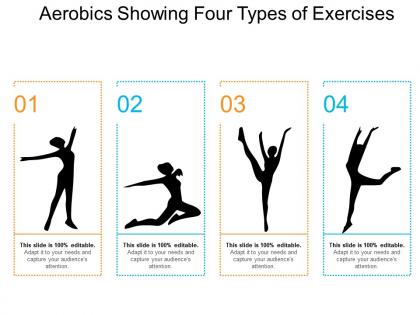
Aerobics showing four types of exercises




Try Before you Buy Download Free Sample Product
 Impress Your
 Audience
 100%
100% Editable
 Save Hours
 of Time


Convince folks that they will feel empowered with our Aerobics Showing Four Types Of Exercises. Encourage them to gain expertise.
People who downloaded this PowerPoint presentation also viewed the following :
Aerobics showing four types of exercises with all 5 slides:
Convince them they deserve you with our Aerobics Showing Four Types Of Exercises. They will believe you are the best choice.

FAQs for Aerobics showing four
Aerobics exercises deliver cardiovascular strengthening, weight management, enhanced endurance, improved mental health, and stronger immune function through regular weekly practice. These activities streamline fitness goals by increasing heart efficiency, accelerating metabolism, and reducing stress hormones, with many individuals finding that consistent aerobic routines ultimately enhance energy levels and overall quality of life.
Running typically burns the most calories at 600-800 per hour, followed by swimming at 400-700, and cycling at 400-600, depending on intensity and body weight. These variations occur because running engages more muscle groups and requires greater energy expenditure, while swimming provides full-body resistance training, and cycling offers sustainable cardiovascular benefits with lower joint impact.
Effective beginner-friendly aerobics exercises include jumping jacks, marching in place, step-ups using stairs, high knees, and modified burpees using body weight resistance. These movements enhance cardiovascular fitness, improve coordination, and boost energy levels while requiring minimal space, with many fitness enthusiasts finding that consistent home routines deliver significant health improvements and cost savings.
Aerobics for seniors and limited mobility individuals can be adapted through chair-based exercises, low-impact movements, resistance bands, water aerobics, and modified dance routines. These adaptations enhance cardiovascular health, improve flexibility, and maintain muscle strength while reducing fall risk, with many healthcare facilities and senior centers finding that personalized intensity levels ultimately deliver safer fitness outcomes and increased participant confidence.
Music serves as the rhythmic foundation for aerobics classes, synchronizing movements, maintaining consistent pacing, and elevating energy levels throughout workouts. It enhances motivation by creating an immersive environment that reduces perceived exertion, encourages sustained participation, and delivers improved endurance outcomes, with many fitness instructors finding that strategic playlist curation ultimately drives better class retention and member satisfaction.
Interval training integrates into aerobics through alternating high-intensity bursts with active recovery periods, combining traditional movements like step-ups, jumping jacks, and dance sequences with short sprint intervals or plyometric exercises. This strategic approach enhances cardiovascular efficiency, accelerates calorie burn, and improves endurance capacity, with fitness centers increasingly finding that participants achieve faster cardiovascular improvements.
Common misconceptions about aerobics include believing it requires perfect coordination, is only for already-fit individuals, demands expensive equipment, involves overly intense workouts, and produces immediate results. These misconceptions often discourage beginners from participating, while many fitness centers and instructors increasingly offer beginner-friendly classes with modifications, ultimately delivering accessible entry points and progressive skill development for all fitness levels.
Instructors create motivating and inclusive atmospheres by offering movement modifications for different fitness levels, using energetic music that appeals to diverse tastes, providing positive encouragement, and ensuring all participants feel welcome regardless of experience. These approaches enhance class engagement, build participant confidence, and foster community connections, with many fitness centers finding that inclusive instruction significantly improves member retention and satisfaction.
Effective pre-aerobics stretches include dynamic arm circles, leg swings, hip circles, torso twists, and light marching to prepare muscles and joints. Post-workout stretches should focus on static holds like calf stretches, quadriceps stretches, hamstring reaches, and shoulder rolls, helping fitness enthusiasts prevent injury while enhancing flexibility and recovery outcomes.
Aerobic exercises contribute to mental health by releasing endorphins, reducing stress hormones like cortisol, and improving sleep quality, while enhancing cognitive function and self-esteem. These activities enable better mood regulation, decreased anxiety levels, and increased energy, with many healthcare professionals and wellness programs finding that regular aerobic activity delivers significant improvements in overall emotional resilience and mental clarity.
Nutritional strategies for aerobics include balanced carbohydrate timing for sustained energy, lean protein intake for muscle recovery, strategic hydration protocols, and micronutrient optimization through whole foods. These approaches enhance endurance performance by fueling pre-workout sessions, supporting post-exercise recovery, and maintaining metabolic efficiency, with many fitness enthusiasts finding that consistent nutritional planning ultimately delivers improved stamina and faster fitness progression.
Regular aerobics exercise significantly strengthens cardiovascular function, reduces resting heart rate, lowers blood pressure, and improves circulation throughout the body. These adaptations ultimately deliver enhanced heart muscle efficiency, reduced risk of coronary disease, and increased life expectancy, with many fitness professionals finding that consistent aerobic activity enhances overall longevity outcomes.
Technology enhances aerobics experiences through real-time heart rate monitoring, personalized workout tracking, virtual coaching, and progress analytics that optimize performance and motivation. Fitness apps and wearables enable users to customize routines, track caloric burn, and maintain consistent engagement, while many fitness enthusiasts find these tools deliver improved accountability and measurable results.
Low-impact aerobics involves movements where one foot remains grounded, minimizing joint stress, while high-impact aerobics includes jumping and bouncing movements that challenge cardiovascular systems more intensively. Low-impact routines benefit individuals with joint concerns, beginners, or those recovering from injuries, while high-impact exercises suit fitness enthusiasts seeking intensive calorie burning and bone density improvement, ultimately delivering personalized fitness solutions.
High-intensity interval training, running, cycling, swimming, and dance workouts are particularly effective for weight loss, burning significant calories while boosting metabolism. These activities can be sustainably incorporated by starting with 20-30 minute sessions three times weekly, gradually increasing intensity, and choosing enjoyable formats like group classes or outdoor activities, ultimately delivering consistent results and long-term adherence.
-
Design layout is very impressive.
-
Very well designed and informative templates.