


Age Wise Investment Plan With Asset Allocation Strategy




Try Before you Buy Download Free Sample Product
 Impress Your
 Audience
 100%
100% Editable
 Save Hours
 of Time


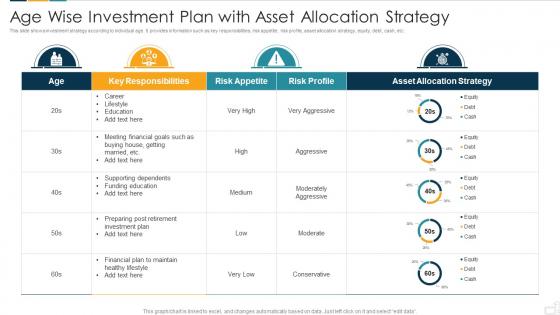
This slide shows investment strategy according to individual age. It provides information such as key responsibilities, risk appetite, risk profile, asset allocation strategy, equity, debt, cash, etc.
People who downloaded this PowerPoint presentation also viewed the following :
Age Wise Investment Plan With Asset Allocation Strategy with all 6 slides:
Use our Age Wise Investment Plan With Asset Allocation Strategy to effectively help you save your valuable time. They are readymade to fit into any presentation structure.






FAQs for Age Wise Investment Plan With
So basically you're hunting for solid companies that are trading way below what they're actually worth - classic Buffett stuff. Look for businesses with strong financials and steady earnings, but the market's freaking out over some temporary drama. Honestly, all this market craziness lately? Perfect for value investing since prices get disconnected from reality more often. You want companies with real competitive advantages that won't crumble when things get rough. Just heads up - these plays take forever to work out, sometimes years. Start screening for low P/E ratios and decent balance sheets.
So basically you just invest the same amount every month no matter what the market's doing. When stocks are expensive, you get fewer shares. When they're cheap, you snag more. I actually think it's way better than trying to time everything perfectly - who has time for that stress? Over months and years, it smooths out all the crazy ups and downs and lowers your average cost. You can start with like $100 a month or whatever works. The whole point is being consistent about it.
So asset allocation is how you divide up your money between stocks, bonds, cash - all that stuff. It's honestly the most important part of building a portfolio that won't make you lose sleep. Different investments move in opposite directions sometimes, which is perfect because when your stocks are tanking, bonds might be doing fine. That smooths out the crazy ups and downs. You gotta figure out how much risk you can handle first - like, are you gonna panic if things drop 20%? Then just tweak the mix as you get closer to whatever you're saving for.
Honestly, behavioral finance shows how much our emotions screw us over when investing. We panic-sell when markets tank, then chase stocks that already peaked - classic moves, right? Loss aversion hits hard too. You'll hold onto losers way too long hoping they bounce back. Overconfidence makes you think you can time everything perfectly. Herd mentality? That's when you just follow whatever everyone else does instead of your own plan. My advice: write down your buy/sell rules ahead of time so you can't second-guess yourself later. Auto-investing helps remove the emotional drama entirely.
Look, passive investing is way cheaper and you don't have to think about it much - just throw money at index funds with low fees. Active stuff gives you more control but costs more and honestly? Most fund managers can't even beat the market anyway lol. With passive you're accepting whatever returns the market gives you. Active means you're trying to do better than that. I'd probably start with mostly index funds as your foundation, then maybe put like 10-20% into some active picks once you get the hang of things. That's what I did anyway.
Honestly, figure out three things first: when you'll need the money, how you'd handle big losses, and whether your finances are solid otherwise. Like, if your portfolio tanked 20% tomorrow, would you freak out and sell everything? Most people think they're braver than they actually are when the market's doing well. Do one of those risk tolerance quizzes online, but honestly I'd go one level more conservative than whatever it tells you. Way easier to get more aggressive later than to recover from panic selling. Oh, and make sure you've got that emergency fund sorted first - that's not negotiable.
Think of economic indicators like a weather forecast for your investments. When inflation's climbing, I usually pivot toward stuff like commodities or real estate - they tend to hold up better. GDP growth and unemployment rates? They're telling you whether to play it safe or get more aggressive with growth stocks. Honestly, loading up on risky plays right before everything tanks is just asking for trouble. Interest rates matter too - they affect pretty much everything. The trick is looking at all these signals together, not just fixating on one number. Then you can shuffle your portfolio around before the big shifts actually hit.
Dude, options and futures can seriously boost your returns if you know what you're doing. Puts help protect your stocks when markets tank. Covered calls? Easy money from shares you already own. Futures are wild though - you can get exposure to commodities or currencies without dropping tons of cash, but man the learning curve is steep. I probably spent way too much time on YouTube tutorials when I started. The whole point is better risk management and getting more bang for your buck since you're controlling bigger positions with less money. Definitely paper trade first before you blow up your account.
Honestly, emerging markets are crazy volatile so you'll want to spread your bets around different regions and sectors. I'd stick with ETFs over individual stocks - way less risky that way. Dollar-cost averaging helps too since these markets swing around like nobody's business. Don't go overboard though. Maybe 10-15% of your whole portfolio tops. VWO is a solid broad emerging markets ETF to start with. Dip your toes in first and see if you can handle the roller coaster before adding more.
So ESG is basically looking at companies beyond just their numbers - like how they treat the environment, employees, and whether they're actually ethical. Honestly, it's getting pretty big because these things actually impact returns long-term. Bad ESG companies? They get hit with more regulations, customers hate them, can't keep good people. Millennials and Gen Z especially want their investments matching their values. Quick tip - just check ESG ratings on whatever stocks you already own. See if they align with what you're comfortable with risk-wise and personally.
Honestly, just stick to dollar-cost averaging - same amount every month no matter what the market's doing. When everything tanks, you're buying more shares for your money. Keep some cash around for when things get really ugly (that's when the good deals pop up). Yeah, diversification helps but you already know that one. I rebalance every few months which basically forces me to sell high and buy low without thinking about it. The hardest part? Don't freak out and sell everything when CNN starts talking about crashes. That's literally how people blow up their accounts.
Look, diversification works because not everything crashes at once. Stocks tank? Bonds might actually go up. Real estate could just chill there doing its own thing. It's that old eggs-in-one-basket thing but with actual numbers backing it up. Spread your cash across different stuff - stocks, bonds, maybe some REITs if you're feeling fancy. You won't make crazy money when one thing explodes, but you also won't lose your shirt when it implodes. Honestly, just start with a basic three-fund setup if this is all new to you.
Don't put everything in one basket - diversify that shit. Trying to time the market is basically gambling, and emotions will mess you up every time. Those fees add up way more than you think, trust me on this one. Also skip whatever hot stock your coworker won't shut up about. Expecting 20% gains yearly? Yeah, that's not realistic. Write down what you actually want and when you need it, then match your strategy to how much risk you can stomach. Start boring, get rich slowly - works better than chasing the next big thing.
So reinvestment is like turning your money into this crazy snowball machine. Instead of cashing out dividends, you buy more shares with them. Your returns start making their own returns - honestly it's pretty nuts when you see the numbers over like 20+ years. That $1000 doesn't just grow steadily, it actually speeds up because you're earning on a bigger pile each year. Oh and definitely set up those automatic dividend reinvestment things (DRIPs I think they're called?). Makes it super hands-off.
Honestly, robo-advisors are crushing it right now - they use AI to rebalance your portfolio automatically and catch trading patterns we'd totally miss. Fractional investing is pretty sweet too, you can buy pieces of Tesla or whatever with like $5. The whole ESG thing is getting way more sophisticated since algorithms can crunch sustainability data better than humans. Crypto DeFi is interesting but still feels sketchy to me, not gonna lie. Start with checking out a robo-advisor first though - I was surprised how smart they actually are when I tried one last year.
-
I faced no difficulty while searching for the slide I wanted. Honestly, the website’s interface is easy to use and can be navigated easily!
-
Wide collection of templates available. SlideTeam has made it easier to create presentations in just a few minutes.