


Agile delivery approach powerpoint presentation slides




Try Before you Buy Download Free Sample Product
 Impress Your
 Audience
 100%
100% Editable
 Save Hours
 of Time


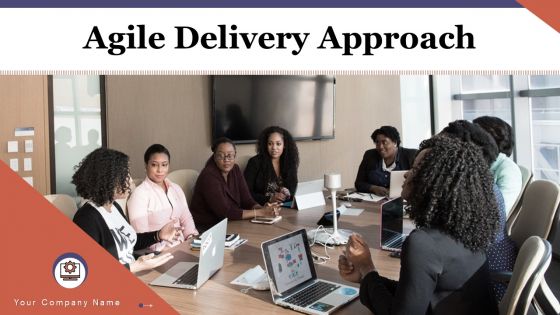
Agile Product Delivery is a customer-centric strategy to creating, building, and delivering a steady stream of useful goods and services to customers and users. It is one of the Lean Enterprise's seven key competences, all of which are required to achieve Business Agility. Each core competency is accompanied by an unique evaluation, allowing the company to evaluate their performance. These fundamental competence tests, as well as suggested improvement possibilities, may be found in the Measure and Grow article. Enterprises must rapidly expand their capacity to produce new goods and services in order to attain Business Agility. To ensure that the company is developing the appropriate solutions for the right customers at the right time, it must combine execution with customer attention. These strengths complement one another and generate chances for long-term market and service leadership. If you're looking for a way to streamline your agile delivery approach, SlideTeam's agile PowerPoint templates can help. Our templates are designed to help you communicate with your team and stakeholders in a more efficient way. They're also easy to use, so you can get up and running quickly. So download our agile ppt templates now and see how they can help your team work smarter, not harder.
People who downloaded this PowerPoint presentation also viewed the following :
Agile delivery approach powerpoint presentation slides with all 49 slides:
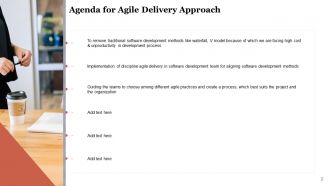
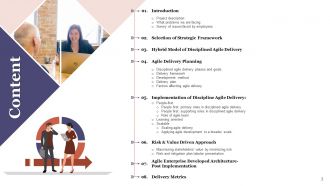
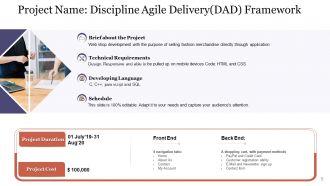
Use our Agile Delivery Approach Powerpoint Presentation Slides to effectively help you save your valuable time. They are readymade to fit into any presentation structure.








FAQs for Agile delivery approach
Agile delivery principles include iterative development, customer collaboration, responding to change, working software over documentation, and cross-functional team empowerment. Unlike traditional waterfall methods that follow rigid sequential phases, Agile enables continuous feedback, faster adaptations, and incremental value delivery, with many organizations finding that this approach significantly reduces project risks while enhancing customer satisfaction and competitive responsiveness.
Organizations can effectively implement Agile delivery by starting with pilot projects, training cross-functional teams in Scrum or Kanban methodologies, establishing clear communication channels, and gradually scaling successful practices across departments. This strategic approach enables companies to maintain operational continuity while transitioning workflows, with many finding that iterative implementation reduces resistance and delivers measurable improvements in project delivery speed and team collaboration.
Common challenges include resistance to cultural change, inadequate training, unclear role definitions, insufficient stakeholder engagement, and difficulty measuring progress effectively. These obstacles can be overcome by implementing comprehensive training programs, establishing clear communication channels, fostering collaborative environments, and utilizing robust project management tools, with many organizations finding that gradual implementation and continuous feedback loops ultimately deliver improved team productivity and enhanced project outcomes.
Agile delivery enhances team collaboration and communication through daily stand-ups, cross-functional team structures, iterative feedback loops, and transparent progress tracking. These practices streamline information sharing, eliminate silos, and enable real-time problem-solving, with many organizations finding that regular retrospectives and sprint planning sessions ultimately deliver faster project completion and stronger team alignment.
The Agile delivery approach facilitates continuous improvement through iterative sprints, regular retrospectives, stakeholder feedback loops, and adaptive planning cycles. These methodologies enable teams to identify bottlenecks, refine processes, and adjust deliverables in real-time, with many organizations finding that this creates faster time-to-market, enhanced product quality, and significantly improved customer satisfaction rates.
Agile ceremonies create structured communication touchpoints that maintain team alignment, track progress, and drive continuous improvement throughout delivery cycles. Stand-ups enable daily coordination and obstacle identification, sprint reviews demonstrate value to stakeholders while gathering feedback, and retrospectives facilitate process optimization, with many organizations finding that these regular touchpoints significantly enhance delivery predictability, team collaboration, and product quality.
Teams measure Agile delivery success through sprint velocity, burn-down charts, customer satisfaction scores, defect rates, and time-to-market metrics. These measurements enable continuous improvement by tracking delivery speed, quality outcomes, and stakeholder value, with many organizations finding that regular retrospectives and data-driven insights ultimately enhance team performance and competitive advantage.
User stories are fundamental Agile components that capture requirements from the user's perspective, defining what needs to be built and why through simple, conversational language that connects development work to actual business value. When crafted effectively using the "As a [user], I want [goal] so that [benefit]" format, these stories enable development teams to prioritize features based on user impact, facilitate clearer communication between stakeholders and developers, and ultimately deliver software solutions that truly address customer needs.
Agile delivery addresses changing requirements through iterative sprints, continuous stakeholder feedback, flexible scope management, and regular retrospectives that enable rapid pivoting. This approach allows development teams to incorporate new requirements seamlessly while maintaining project momentum, with many software companies and financial services firms finding that agile methodologies reduce time-to-market and enhance customer satisfaction.
Common Agile delivery tools include Jira, Azure DevOps, Trello, Confluence, and Slack for project management, while Git, Jenkins, and Docker streamline development workflows. These platforms enhance productivity by enabling real-time collaboration, automating repetitive tasks, and providing transparent progress tracking, with many development teams finding that integrated toolchains ultimately deliver faster releases and improved quality.
Organizations foster Agile culture by implementing cross-functional collaboration, establishing psychological safety for experimentation, providing continuous learning opportunities, and embedding iterative feedback loops throughout all processes. Through dedicated coaching, transparent communication channels, and leadership modeling, companies like financial services and healthcare institutions streamline decision-making, enhance team autonomy, and ultimately deliver faster adaptability and improved customer responsiveness.
Best practices for maintaining stakeholder engagement throughout Agile delivery include regular sprint reviews, transparent communication channels, stakeholder representation in planning sessions, continuous feedback loops, and visual progress dashboards. These approaches enhance collaboration by providing consistent visibility, enabling real-time adjustments, and fostering shared ownership, with many organizations finding that sustained engagement ultimately delivers higher project success rates and stronger business outcomes.
Agile delivery significantly accelerates time-to-market by enabling iterative development cycles, continuous feedback integration, and rapid prototyping, allowing organizations to launch products incrementally rather than waiting for complete development. Through shorter sprint cycles and parallel workflows, companies in sectors like fintech and e-commerce deliver functional features faster, respond quickly to market demands, and ultimately gain competitive advantage while reducing development risks.
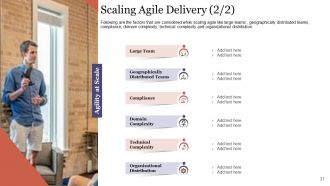
Scaling Agile practices benefits larger organizations by enhancing coordination across multiple teams, accelerating product delivery cycles, and improving resource allocation through frameworks like SAFe or LeSS. These approaches streamline communication between departments, reduce time-to-market for complex initiatives, and enable better risk management, with many enterprises finding that scaled Agile ultimately delivers greater operational efficiency and competitive responsiveness.
Notable Agile delivery case studies include Spotify's squad model revolutionizing team autonomy, ING Bank's transformation reducing time-to-market by 20%, Amazon's two-pizza teams enabling rapid feature deployment, and Netflix's DevOps integration streamlining content delivery. These implementations demonstrate that successful Agile adoption requires cultural transformation alongside process changes, with organizations finding that empowered cross-functional teams, continuous feedback loops, and leadership commitment ultimately deliver faster innovation cycles and enhanced customer responsiveness.
-
Excellent Agile delivery designs and satisfactory service. Worth every cent.
-
Excellent template with unique design.
-
Great product with highly impressive and engaging designs.
-
Attractive design and informative presentation.
-
Awesome use of colors and designs in product templates.
-
Really like the color and design of the presentation.
-
Excellent products for quick understanding.
-
Informative design.