

AI Waste Management Solutions For A Greener Future PPT PowerPoint ST AI





Try Before you Buy Download Free Sample Product
 Impress Your
 Audience
 100%
100% Editable
 Save Hours
 of Time


Discover innovative AI-driven waste management solutions designed for a sustainable future. This professional PowerPoint presentation explores cutting-edge technologies, strategies, and case studies that enhance efficiency, reduce environmental impact, and promote recycling. Perfect for industry professionals seeking to implement smarter waste management practices. Transform your approach today.
People who downloaded this PowerPoint presentation also viewed the following :
AI Waste Management Solutions For A Greener Future PPT PowerPoint ST AI with all 42 slides:
Use our AI Waste Management Solutions For A Greener Future PPT PowerPoint ST AI to effectively help you save your valuable time. They are readymade to fit into any presentation structure.
-

AI Waste Management Solutions for a Greener Future
-

AI Waste Management Solutions Introduction
-

Importance of Waste Management in Sustainability
-

Current Challenges in Waste Management
-

AI Technologies Transforming Waste Management
-

Data Collection Techniques for Waste Analysis
-

AI driven Waste Sorting Systems
-

Waste Reduction and Recycling Optimization
-

Predictive Analytics in Waste Management
-

Smart Waste Collection Systems Overview
-

Case Studies Successful AI Waste Solutions
-

Public Engagement and Awareness Strategies
-

Collaborations Between Tech and Waste Sectors
-

Regulatory Frameworks Supporting AI Solutions
-

Global Perspectives on AI in Waste Management
-
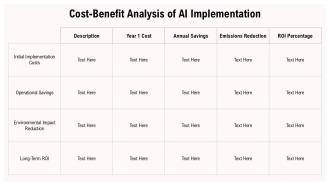
Cost Benefit Analysis of AI Implementation
-

Future Trends in AI Waste Management
-

Ethical Considerations in AI Usage
-

Role of Community in Waste Management
-

Interactive Elements Workshops and Discussions
-

Feedback Mechanisms for Continuous Improvement
-

AI Tools and Software for Waste Managers
-

Strategies for Engaging Stakeholders
-

Measuring Success KPIs in Waste Management
-

Challenges and Mitigation Strategies
-

Roadmap for Implementing AI Solutions
-

Sustainability Goals and AI Alignment
-

Long term Impact and Sustainability Considerations
-

Risk Analysis in Waste Management Strategies
-

Innovation Initiatives in Waste Management
-

Future Scenarios for Waste Management Technologies
-

Conclusion Towards a Greener Future
-

Thank You
-

Instructions to Change Color of Shapes
-

-

-

-

-

-

-

-

FAQs for AI Waste Management Solutions For A Greener Future PPT
Dude, the efficiency gains alone are worth it. Your routes get optimized in real-time, and it can predict when bins actually need pickup instead of guessing. The sorting tech is insane - way more accurate than manual sorting. Resource allocation gets smarter since it learns your patterns over time. Oh, and compliance reporting becomes automatic, plus contamination drops big time. Honestly? Start with route optimization - that's your quickest win. You'll see ROI almost immediately, then you can add the other stuff later.
Dude, the speed difference is insane - these AI systems can sort thousands of items per minute using cameras that recognize different plastics and metals way better than people. Contamination drops by like 90% too. Your workers don't have to handle as much nasty stuff since robots do the actual sorting, which is honestly a huge win. The computer vision has gotten crazy accurate lately. I'd definitely run an audit on your current contamination rates first though, so you can actually measure how much better things get after you upgrade.
So basically, you feed historical waste data into machine learning algorithms and they start spotting patterns - like how much more trash you get during busy seasons or when production ramps up. Weather even plays a role sometimes, which honestly surprised me at first. The system learns your facility's quirks and predicts daily or weekly volumes pretty accurately. You can then schedule pickups better and figure out if you need bigger containers. Just grab 3-6 months of data to start training the model. Way better than guessing and dealing with overflowing dumpsters!
Honestly, AI makes recycling way less of a headache for everyone. Smart bins can tell you if you're tossing stuff in the right spot - no more guessing games. Apps turn it into this whole points system thing, which sounds cheesy but actually works. The sorting gets crazy accurate too since computer vision beats humans at spotting contamination every time. Plus trucks only hit your street when bins are actually full instead of just... whenever. Cities get all this data about waste patterns in different neighborhoods, which is pretty cool when you think about it. I'd say start with smart bins downtown first - that's where you'll see the biggest impact.
Honestly, the biggest pain is gonna be the upfront costs - installation and training your crew gets pricey fast, especially if you're not a huge operation. Your team will probably push back too since they're comfortable with the manual way of doing things. Data quality is crucial here - garbage in, garbage out, you know? And waste streams are all over the place, which makes it tricky. Oh, and don't forget you'll need someone to maintain all this stuff long-term. My advice? Test it in just one section first. Work out all the bugs before you go crazy and roll it everywhere.
Honestly, the tracking tech is pretty cool - IoT sensors and GPS can follow your waste from pickup to wherever it ends up. You'll see truck routes in real time, plus how full facilities are getting. Instead of guessing when bins need emptying, you get actual fill levels. The predictive stuff is wild too - it'll spot demand spikes coming and automatically reroute trucks when places hit capacity. Machine learning figures out the cheapest disposal methods for different waste types. I'd start simple though, just throw some basic sensors in your bins and trucks first to get that data flowing.
Honestly, start with whatever data you can get your hands on right now - even basic stuff works. Waste composition breakdowns are huge, plus GPS tracking for your collection routes. Bin sensors showing fill levels and pickup frequency give you solid insights too. Historical patterns are probably the most underrated - they'll show you seasonal trends you never noticed. Weight measurements from trucks help optimize routes like crazy. Oh, and camera data for sorting systems is becoming a big deal if you're thinking automation down the road. Don't overthink it initially. You can always add fancier sensors once you've proven this stuff actually works.
Honestly, AI analytics is a game changer for waste policy stuff. Real-time tracking shows you exactly what's happening with waste streams instead of guessing. You can run those "what if" scenarios too - like see what banning plastic bags would actually do before implementing it. The predictive models are pretty solid for forecasting future waste patterns. Plus it automatically catches compliance violations, which saves tons of time. My favorite part? The cost-benefit breakdowns make your proposals bulletproof when you're pitching to city council or whoever. Way better than the old approach of crossing your fingers and hoping outdated studies still apply.
Yeah, it's pretty wild how AI is tackling waste problems. Smart bins can automatically spot what's recyclable vs trash, boosting sorting accuracy by like 30-40%. Garbage trucks use AI routing to hit stops way more efficiently too. But honestly, the coolest part is how companies track materials through their whole lifecycle now - so your old iPhone parts actually get reused instead of rotting in some landfill. Oh, and if you're curious about your own waste situation, try an AI-powered audit. The results will probably shock you.
Smart bins have sensors that track how full they are and what type of trash is inside. The AI crunches this data to figure out the best pickup routes and predict when bins will overflow. No more random truck drives to half-empty containers. It's honestly pretty neat how it spots patterns too - like certain areas getting slammed on game days or whatever. Instead of just reacting to problems, you're actually staying ahead of them. I'd start small though, maybe test it on your busiest bins first to see if it's worth the investment.
AMP Robotics has some killer case studies - they've got detailed metrics you can actually use. Their AI picks recyclables way faster than humans. Waste Management's robot sorters boosted recycling accuracy by 50%, which is nuts. China rolled out smart bins with computer vision in their big cities and contamination dropped big time. Amsterdam cut collection costs by 20% just by optimizing routes with AI. Oh, and honestly? Start with AMP's data first since it's the most useful for making your business case. Their North American installations have tons of real performance numbers you can dig into.
GPS tracking is your starting point - get that set up first. Then you can add IoT sensors that monitor bin levels and truck performance. The software crunches all this data to optimize routes automatically, which honestly saves tons of fuel costs. Traffic jams? Road construction? The system reroutes drivers instantly through their mobile apps. I've seen companies cut collection times by like 30% once everything's running smoothly. You don't need to go all-in immediately though. Start basic with GPS, then add more sensors when budget allows. The predictive stuff gets really accurate after a few months of data.
Honestly, privacy's the big one - these systems can track what you're throwing away, which gets weirdly personal fast. Medical stuff, receipts, you name it. Job displacement hits hard too since waste workers are usually from communities that can't afford to lose income. Oh, and algorithmic bias is real - some neighborhoods might end up with crappy service while others get the VIP treatment. I'd say build privacy protections first, then actually talk to the workers who'll be affected. Don't just decide for them, you know?
Honestly, mobile apps work great for this - they track your household waste and give you points or local discounts. Smart bins are pretty cool too. They show neighborhoods their recycling rates in real-time, so streets can compete with each other (which sounds kinda fun actually). Those AI chatbots are clutch for answering weird questions like "can I recycle this random plastic container?" We've all been there, right? The whole point is making it feel like a game instead of another boring task. I'd say test one feature first in your community. See how people react before going all-in.
So basically these AI systems can get super specific to your area. Training them on local waste data makes a huge difference - like rural places have way more food scraps, cities are drowning in packaging. Weather matters too, plus whatever weird local rules you're dealing with. They'll work around your pickup schedules and infrastructure limits. Honestly the coolest part is how detailed you can get with it. Start by collecting solid local data first, then just keep tweaking based on what's actually working. Don't fall for those generic solutions that supposedly work everywhere.
-
Awesome presentation, really professional and easy to edit.
-
The slides come with appealing color schemes and relevant content that helped me deliver a stunning presentation without any hassle!