


Industrial waste management powerpoint presentation slides




Try Before you Buy Download Free Sample Product
 Impress Your
 Audience
 100%
100% Editable
 Save Hours
 of Time


Finding ways to reuse or recycle industrial waste is that you are putting less strain on the Earths resources. Scientific disposal of waste minimizes the adverse impact on human health and the environment. Here is a professionally designed template on Industrial Waste Management to converse the natural resources of the planet. The purpose of this is to use all the wastelands received and leave nothing discarded. Firms can learn the techniques to develop new ways to convert waste into high-value goods. The proposal showcases the target and the companys current situation using pie charts, tables, and future objectives. You can even study hazardous industrial waste management parameters, gaps, and required efforts to cover the holes, waste classification, and more. A solid waste monitoring system explains waste management, plans to reuse waste, automated segregation technology, e-waste measures using various levels, etc. The template exhibits energy transformation from waste, decomposition of organic material, biodegradation process, disposal of garbage, solid waste status, impact on the environment, waste management, budget, types of bin, waste dashboards, sustainability indicators, etc. Talk to the expert team for all your queries and access our 100 percent editable template on Industrial Waste management. Book a free demo with industry analysts and download it now.
People who downloaded this PowerPoint presentation also viewed the following :
Content of this Powerpoint Presentation
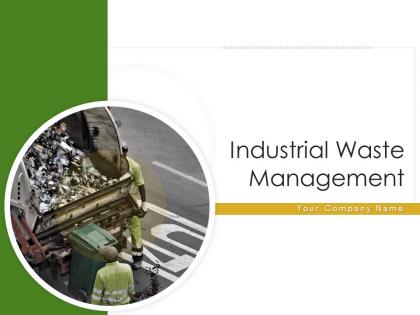
Slide 1: This slide introduces Industrial Waste Management. State Your Company Name and begin.
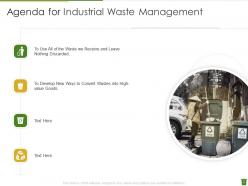
Slide 2: This is an Agenda slide. State your agendas here.
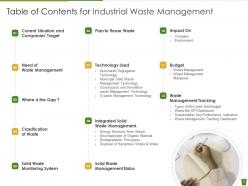
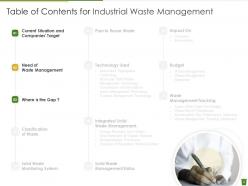
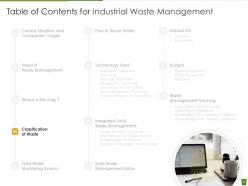
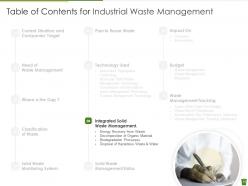
Slide 3: This slide shows Table of Content for the presentation.
Slide 4: This is another slide continuing Table of Content for the presentation.
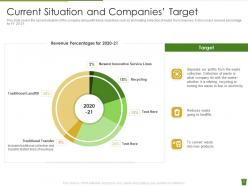
Slide 5: This slide presents the current situation of the company along with future objectives such as eliminating collection of waste from revenues.
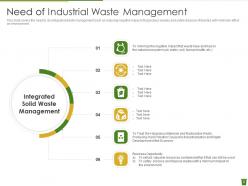
Slide 6: This slide displays the need to do integrated waste management such as reducing negative impact of hazardous wastes and safely dispose off wastes with minimum effect on environment.
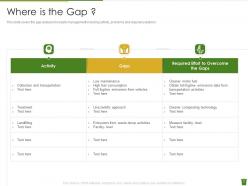
Slide 7: This slide represents the gap analysis for waste management including activity, problems and required solutions.
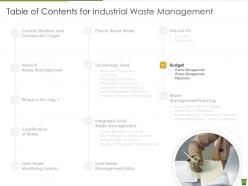
Slide 8: This slide showcases Table of Content for the presentation.
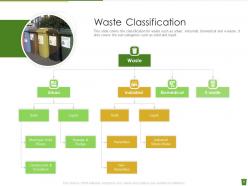
Slide 9: This slide covers the classification for waste such as urban, industrial, biomedical and e-waste.
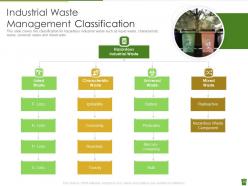
Slide 10: This slide presents the classification for hazardous industrial waste such as liquid waste, characteristic waste, universal waste, etc.
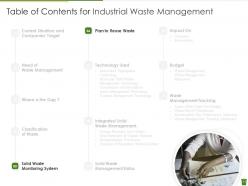
Slide 11: This slide displays Table of Content for the presentation.
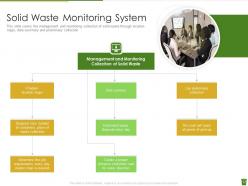
Slide 12: This slide covers the management and monitoring collection of solid waste through location maps, data summary and preliminary collection.
Slide 13: This slide represents the strategies to reuse of the waste and convert waste into new usable products such as mapping the resource flow and recycling scrubbing water etc.
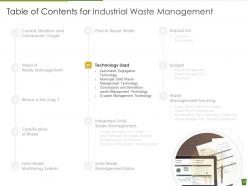
Slide 14: This slide shows Table of Content for the presentation.
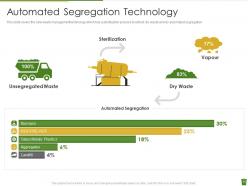
Slide 15: This slide presents the new waste management technology which has a sterilization process to extract dry waste and do automated segregation.
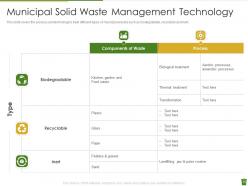
Slide 16: This slide displays the process and technology to treat different types of municipal wastes such as biodegradable, recyclable and inert.
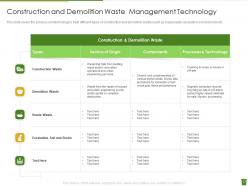
Slide 17: This slide shows Construction and Demolition Waste Management Technology.
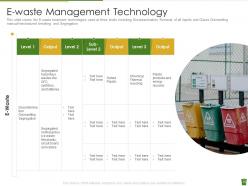
Slide 18: This slide represents the E-waste treatment technologies used at three levels including Decontamination Removal of all liquids and Gases Dismantling.
Slide 19: This slide shows Table of Content for the presentation.
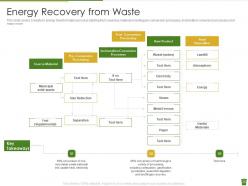
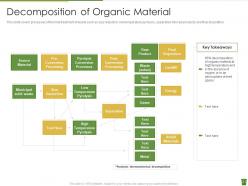
Slide 20: This slide presents a waste to energy transformation process starting from sourcing material including pre-conversion processes.
Slide 21: This slide displays processes of thermal treatment of waste such as size reduction, low temperature pyrolysis, separation into raw products and final disposition.
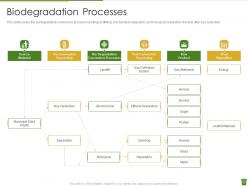
Slide 22: This slide covers the biodegradation conversion process including landfilling, biochemical separation, and biological separation of waste after size reduction.
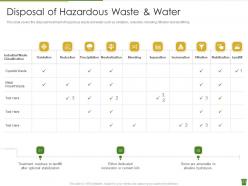
Slide 23: This slide represents the disposal treatment of hazardous waste and water such as oxidation, reduction, blending, filtration and landfilling.
Slide 24: This slide shows Table of Content for the presentation.
Slide 25: This slide presents the status for solid waste management including benchmarks for current quarter.
Slide 26: This slide displays Table of Content for the presentation.
Slide 27: This slide covers impact of integrated waste management on environment such as prevention of intoxicants, clean an safe environment and recycling of hazardous materials.
Slide 28: This slide represents the impact of integrated waste management on business such as Reduction of traditional waste management techniques.
Slide 29: This slide shows Table of Content for the presentation.
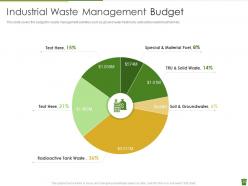
Slide 30: This slide presents the budget for waste management activities such as ground water treatment, radioactive waste treatment etc.
Slide 31: This slide displays the budget for waste management manpower including units and days.
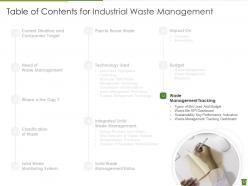
Slide 32: This slide shows Table of Content for the presentation.
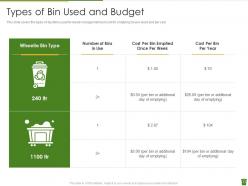
Slide 33: This slide represents the types of dustbins used for waste management .
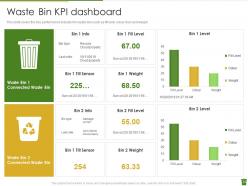
Slide 34: This slide covers the Key performance indicator for waste bins such as fill level, odour level and weight.
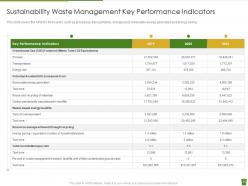
Slide 35: This slide presents the KPIs for three years such as processes, transportation, energy used, renewable energy generated and energy saving.
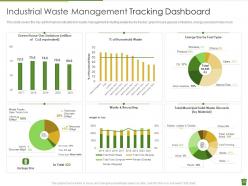
Slide 36: This slide displays the key performance indicators for waste management including waste trucks tracker, green house gasses emissions, energy used, etc.
Slide 37: This slide shows Icons Slide for Industrial Waste Management.
Slide 38: This slide is titled as Additional Slides for moving forward.
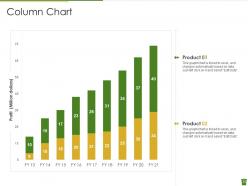
Slide 39: This slide shows Column Chart with two products comparison.
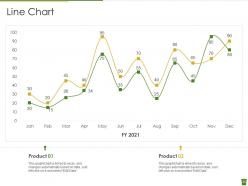
Slide 40: This slide presents Line Chart with two products comparison.
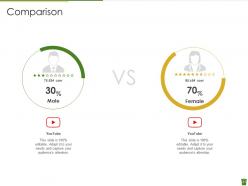
Slide 41: This is a Comparison slide to state comparison between commodities, entities etc.
Slide 42: This slide shows Post It Notes. Post your important notes here.
Slide 43: This is an Idea Generation slide to state a new idea or highlight information, specifications etc.
Slide 44: This is Our Mission slide with related imagery and text.
Slide 45: This slide shows Puzzle with related icons and text.
Slide 46: This is a Timeline slide. Show data related to time intervals here.
Slide 47: This slide shows Venn diagram with text boxes.
Slide 48: This slide showcases 30 60 90 Days Plan with text boxes.
Slide 49: This is a Thank You slide with address, contact numbers and email address.
Industrial waste management powerpoint presentation slides with all 49 slides:
Use our Industrial Waste Management Powerpoint Presentation Slides to effectively help you save your valuable time. They are readymade to fit into any presentation structure.











FAQs for Industrial waste management
Start with a waste audit - seriously, you'll be shocked at what you find. Better training for your operators is usually the easiest win, plus fixing up equipment maintenance and calibration. That stuff alone can cut waste by 20-30%. Switching materials makes a huge difference too, like going from solvent-based to water-based chemicals when you can. Oh, and redesigning your actual processes is where the big money is. Focus on your biggest waste sources first since there's probably some obvious stuff staring you in the face that nobody's noticed yet.
Honestly, start by looking at your production line and cutting waste where you can. Map out what you're throwing away first - might surprise you what's actually valuable. Find other companies who could use your scraps as their raw materials. It's basically like trading - your trash becomes their gold, which sounds weird but totally works. Technology can help you pull useful stuff from waste streams too. My advice? Pick one type of waste and focus there first. Don't try to revolutionize everything at once or you'll go crazy. Build up slowly from there.
Dude, the tech stuff happening in waste recycling right now is pretty wild. AI sorting systems can pick out materials way faster than people can - like, it's honestly kind of creepy how good they've gotten at recognizing different plastics and metals. Real-time sensors track everything flowing through your facility, so you always know what you're dealing with. Plus there's automated equipment that breaks down complex stuff we couldn't touch before. I was reading about one system that increased efficiency by like 40% or something crazy. If you're not looking into this tech yet, you're definitely missing out on some serious cost savings.
RCRA's your main one in the US - tracks hazardous waste from start to finish. Europe uses the Waste Framework Directive, which is pretty comprehensive honestly. Asia's all over the place though. Japan's super strict, China's getting better but enforcement used to be... questionable. Basic principles are similar everywhere - classification, tracking, disposal permits. But details? Totally different depending where you are. I'd hit up your local environmental agency website first. Then if you're shipping stuff internationally, that's when you need to dig into cross-border standards.
Start with waste audits - track everything coming in and going out so you've got a real baseline. Put scales at your main collection spots and log waste types, volumes, how you're disposing of it. Daily logging is key. Honestly, ditch the spreadsheets and get a digital system - way less headache. Set up weekly weigh-ins for different streams. Oh, and segregate your waste streams so you can actually see which areas are killing you. The whole thing only works if you're consistent though. Pick metrics that matter and stick with them religiously.
Start with a waste audit to see what you're actually dealing with - might surprise you how much you can cut down. Follow the hierarchy: reduce first, then reuse, recycle, and dispose of the rest properly. You'll need to classify everything (ignitable, corrosive, reactive, toxic) and find licensed facilities for disposal. The documentation is honestly brutal but you can't skip it. Keep incompatible stuff separated, use proper containers, and train your people on handling procedures. Oh, and do regular audits - catches problems before they blow up. Annoying process but saves headaches later.
Dude, training your team properly is literally everything when it comes to waste management. When people actually know what they're doing, mistakes drop big time. They'll sort waste correctly, follow safety rules, and not take random shortcuts that mess things up. The cool thing is trained workers often catch problems you'd never notice from your desk - they're the ones actually doing the work, you know? Oh, and skip those terrible training manuals nobody reads. Do hands-on stuff instead. Regular refreshers help too since people forget.
Dude, industrial waste is seriously bad news if companies don't handle it right. Water gets contaminated, soil becomes toxic, air quality goes to hell - and people end up with breathing issues, skin problems, all sorts of nasty health stuff. Wildlife takes a beating too since the toxic runoff kills plants and screws up the whole food chain. Property values crash hard when this happens, plus medical bills pile up fast. Honestly, I've seen some pretty gross examples of this mess. Companies need strict treatment systems and they've gotta monitor everything regularly or problems just snowball.
Honestly, just be super transparent with your waste company about everything - volumes, types, seasonal changes, all of it. They can't help you if they don't know what they're working with. Schedule regular check-ins to optimize routes and timing. Most companies will do on-site assessments too, which is actually pretty helpful for spotting recycling opportunities you missed. Oh, and definitely get a waste audit from your current provider first - that's like the easiest way to find quick wins. Think of them as partners, not just the people who empty your dumpster.
Look into advanced gasification and plasma arc tech - they're crushing it right now for turning industrial waste into actual energy. Pyrolysis is also blowing up, especially if you've got plastic waste. The newer systems can handle mixed waste (which is honestly a game-changer because sorting is such a pain). AI optimization helps too by auto-adjusting for different compositions. Oh, and I'd map your waste streams first before picking anything - sounds boring but it'll save you from buying the wrong system. Trust me on that one.
So basically, life cycle assessments track your waste's environmental impact from start to finish. You'll actually see which areas are causing the most damage instead of just taking wild guesses. Pretty eye-opening stuff, honestly. The data shows you whether recycling or energy recovery or just reducing waste upfront will give you the best results. Short sentences work better here. It's way more strategic than throwing money at random solutions and hoping something sticks. You can build a waste hierarchy that actually fits your specific materials and operations instead of using some generic template.
Honestly, the regulation stuff will drive you crazy - every state has different rules and they change constantly. Costs are brutal too, especially for hazardous waste disposal. You'll need people who actually know compliance inside and out, which isn't cheap. Oh, and the paperwork... ugh, you have to document literally everything or you're screwed during audits. Get a solid tracking system from day one, trust me on this. Also find waste management companies that aren't just trying to upsell you - good ones will actually help you navigate all the red tape instead of leaving you to figure it out.
Honestly, the pattern-spotting stuff is incredible - you'll catch waste issues on specific production lines that would totally fly under the radar otherwise. Real-time tracking means no more panic calls about storage hitting capacity. Plus you can actually see which disposal methods save money over time (spoiler: the cheap option usually isn't). The predictive budgeting alone makes it worth it, and you'll spot compliance red flags before they turn into expensive headaches. My advice though? Pick maybe two metrics to start with. I've seen people try to track everything day one and just burn out completely.
Honestly, the money side is where you'll see the biggest impact. Disposal fees drop, you're buying fewer raw materials, and compliance gets cheaper. Some waste streams can actually make you money through recycling - who knew trash could pay you back? Your operations get smoother when you optimize everything too. The green angle is nice for marketing, though that's more of a side benefit. Oh, and if you do waste-to-energy stuff, those savings pile up fast. I'd start with a waste audit first - figure out where you're bleeding the most cash.
So industrial symbiosis is basically when companies trade waste and resources - your leftover steam heats up the factory next door, their organic scraps power your biogas setup. It's pretty clever actually. Most places need someone coordinating these deals because companies don't naturally think this way. You'd start by looking at what you're tossing versus what you're buying - there's probably overlap you haven't noticed. The whole thing works best in industrial parks where everyone's close together. Honestly, the cost savings can be huge if you find the right matches.
-
Unique research projects to present in meeting.