


Lean Waste Elimination Powerpoint Presentation Slides





Try Before you Buy Download Free Sample Product
 Impress Your
 Audience
 100%
100% Editable
 Save Hours
 of Time


Our Lean Waste Elimination Powerpoint Presentation Slides are topically designed to provide an attractive backdrop to any subject. Use them to look like a presentation pro.
People who downloaded this PowerPoint presentation also viewed the following :
Content of this Powerpoint Presentation
Slide 1: This is an introductory slide to Lean Waste Elimination. State your company name and begin.
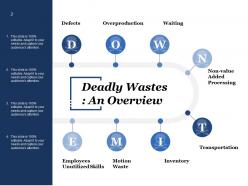
Slide 2: This slide presents Deadly Wastes : An Overview. This includes- Defects, Overproduction, Waiting, Non-value Added Processing, Transportation, Inventory, Motion Waste, Employees Unutilized Skills.
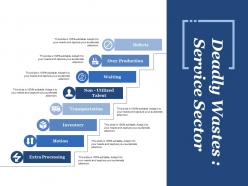
Slide 3: This slide showcases Deadly Wastes : Services Sector with these categories- Defects, Over Production, Waiting, Non - utilized Talent, Transportation, Inventory, Motion, Extra Processing.
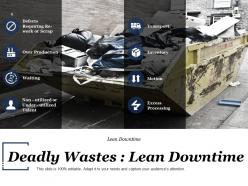
Slide 4: This slide showcases Deadly Wastes : Lean Downtime.
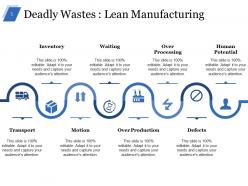
Slide 5: This slide presents Deadly Wastes : Lean Manufacturing in a flow diagram form showing- Transport, Motion, Over Production, Defects, Inventory, Waiting, Over Processing, Human Potential.
Slide 6: This is a Coffee Break slide to halt. Alter/ modify as per requirement.
Slide 7: This slide forwards to Charts & Graphs. Alter/ modify as per requirement.
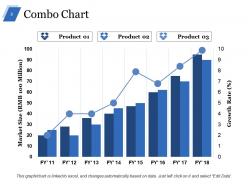
Slide 8: This is a Combo Chart slide to present product/ entity comparison, specifications etc.
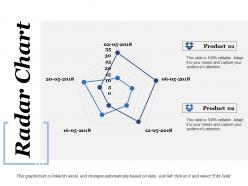
Slide 9: This is a Radar Chart slide to present product/ entity comparison, specifications etc.
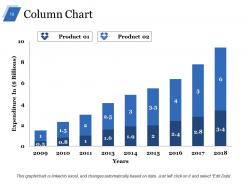
Slide 10: This is a Column Chart slide to present product/ entity comparison, specifications etc.
Slide 11: This slide is titled Additional Slides. You can change the slide content as per your need.
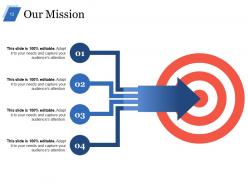
Slide 12: This slide helps depict Our Mission with imagery and text boxes.
Slide 13: This is an Our Team slide with name, image and text boxes to put the required information.
Slide 14: This is an About Us slide showing We Are Professional, We Are Creative, and We Are Talented as examples.
Slide 15: This is Our Goal slide. State your important goals here.
Slide 16: This slide presents Financial scores to display.
Slide 17: This is a Thank You slide with Address# street number, city, state, Email Address, Contact Numbers.
Lean Waste Elimination Powerpoint Presentation Slides with all 17 slides:
Use our Lean Waste Elimination Powerpoint Presentation Slides to effectively help you save your valuable time. They are readymade to fit into any presentation structure.








FAQs for Lean Waste Elimination
So the five Lean principles are pretty straightforward - figure out what customers actually value, map your whole process to catch waste, remove bottlenecks so work flows smoothly, only make what people want when they want it, and keep improving forever. Most people hate doing the process mapping because it's boring as hell, but that's honestly where you'll discover the most problems. There are eight types of waste to watch for: overproduction, waiting around, moving stuff unnecessarily, doing extra work nobody asked for, excess inventory, wasted motion, defects, and not using people's skills. Just pick one process and walk through it completely.
Honestly, value stream mapping is a game changer - it lets you see your whole process laid out visually so waste becomes super obvious. Bottlenecks, pointless handoffs, wait times, redundant steps... stuff you'd totally miss otherwise. The map shows where things actually flow vs where they should flow, and those gaps? Pure waste. What I really like is how it makes you get specific about timing and inventory (though that part can be tedious). Start with mapping what you're doing now, then go after the biggest time-wasters first. Don't try to fix everything at once or you'll go crazy.
So Lean has eight types of waste - they call it "TIMWOODS." Transportation, Inventory, Motion, Waiting, Overproduction, Over-processing, Defects, and Skills (wasted talent). Toyota originally had seven, but everyone adds that eighth one now because honestly? Not using people's brains is the worst waste of all. Think of it this way: any activity that eats up resources without making your customer happier is waste. Some are process issues like waiting around or fixing mistakes. Others are resource problems - like having too much inventory sitting there collecting dust. Here's what I'd do: walk through your whole process and ask "does this step actually improve things for the customer?" If the answer's no, boom - you found your waste.
Your engaged workers are honestly your secret weapon here. They're the ones actually in the trenches seeing all the waste you'll never notice from your office. When people feel heard, they start catching bottlenecks and suggesting fixes instead of just going through the motions. I've watched teams spot huge time-wasters that flew completely under management's radar. Make sure people feel safe speaking up about problems without getting thrown under the bus. Just ask your frontline folks what bugs them most about their daily routine - seriously, you'll be shocked what comes out.
So kaizen is like having your whole team become waste-hunting ninjas on a daily basis. Rather than one massive cleanup project, you're constantly tweaking little things. People get weirdly competitive about finding inefficiencies once they start! Everyone owns it, not just the bosses. Those tiny improvements stack up fast - way faster than you'd think. Train your people to question everything with "why do we do this?" I swear, some of the best ideas come from the person actually doing the work, not from some consultant. Start small and watch it snowball.
Track your cycle time, defect rates, inventory levels, and OEE before/after changes. Value stream mapping shows exactly where you're bleeding time - honestly one of the best tools out there. Keep dashboards simple so people actually use them. Employee engagement scores matter too since your frontline folks spot waste better than anyone. Calculate the cost savings because executives eat that stuff up. Oh, and do those gemba walks regularly to see what's really happening on the floor. Sometimes the data lies but your eyes don't.
Start by tracking your current numbers - defect rates, rework costs, inventory costs, time waste, all that stuff. Seriously, document everything now because you'll hate yourself later if you don't have solid baseline data. Once you roll out Lean practices, measure the exact same things using identical methods. The math is pretty straightforward - if rework drops from 15% to 5%, multiply that 10% reduction by your baseline costs to get real dollar savings. I'd set up monthly check-ins to monitor progress. Catches any slip-ups before they become bigger problems.
Honestly, the hardest part is just getting people on board. Everyone's used to doing things their way, even when it's clearly broken. Management says they want change but then freaks out when results don't happen overnight - super frustrating. You'll also burn out trying to fix everything at once. My take? Pick one obvious problem area and nail it first. Those early wins matter way more than you think. Oh, and make sure your boss is actually committed for the long haul, not just pretending to care. Otherwise you're wasting your time.
So the trick is figuring out what waste looks like in your specific industry. Manufacturing? You're dealing with overproduction, too much inventory sitting around, machines breaking down. Healthcare's completely different - patients waiting forever, running the same tests twice, doctors and nurses not talking to each other properly. The eight waste types are still there, just disguised differently. Like a "defect" in manufacturing is a broken part, but in healthcare it's giving someone the wrong meds or misdiagnosing them. Honestly, I'd start by just watching how things actually flow in your workplace and spotting where stuff gets stuck or wasted.
Your boss makes or breaks this whole thing, honestly. If leadership doesn't actually walk the floor and get involved in finding waste, your team will see right through it. I've watched so many lean programs crash because executives just talked about it in meetings but never showed up. Make sure they're celebrating people who spot problems instead of shooting the messenger - that's huge. Also get your manager to do a gemba walk with you. Sounds cheesy but that's where you'll see if they're serious or just going through the motions.
Dude, sensors and IoT stuff are actually pretty sick for tracking where you're wasting materials. Real-time data beats waiting around for monthly reports any day. Automated systems cut down on human screwups too - I swear some of the manual tracking we did before was such a nightmare. Your team can spot bottlenecks and overproduction right when it's happening instead of after the damage is done. Digital dashboards make the waste patterns super obvious. Oh, and start with whatever processes you do most often - that's where you'll see results fastest. Then just build from there once you get the hang of it.
Your customers are basically free consultants telling you exactly where you're screwing up. They'll spot waste you'd never catch internally - like when you're making features nobody actually wants or adding unnecessary stuff that just drives up costs. Honestly, sometimes their complaints surface problems way faster than your internal quality checks do. Set up regular check-ins with them and look for patterns in what they're griping about. Use that feedback to figure out what actually matters to them versus what you think matters. Then take all that intel straight to your improvement meetings. It's wild how much money you can save just by listening.
Yeah, Lean totally works for office stuff too! Same 8 wastes, just different context. Information getting stuck somewhere instead of physical inventory. All those stupid approval delays. Email chains that go nowhere - seriously, that alone could save you hours. Look for unnecessary handoffs between departments. Too much paperwork that doesn't actually help customers. People wandering around hunting for info or supplies (classic motion waste). Start by mapping out how things actually work now, not how they're supposed to work. Spot the time-wasters, then cut the BS steps. Pretty straightforward once you see it.
Track the stuff that actually matters - cycle time, defect rates, and how fast inventory moves. Those show real results quickly. Cost savings and customer satisfaction scores are obvious ones too. Lead time's my favorite metric honestly, it usually exposes like 3 different waste problems at once. But here's the thing - don't go crazy measuring everything or you'll create more work than you save! Pick maybe 4 metrics max that hit your biggest problems. Check them monthly. The magic happens when you can point to waste reduction and say "look, this saved us X dollars and made customers happier."
Training basically opens people's eyes to waste they never noticed before. Once your team learns lean principles, they'll start spotting inefficiencies everywhere - overproduction, waiting times, unnecessary motion, all that stuff. It's actually pretty cool how much gets overlooked until you know what to look for. Having everyone trained also means you're all speaking the same language about waste elimination, which honestly makes everything smoother. I'd start with basic lean fundamentals first, then move into value stream mapping and root cause analysis. Your team will surprise you with what they catch.
-
Good research work and creative work done on every template.
-
Appreciate the research and its presentable format.
-
Good research work and creative work done on every template.
-
Great product with highly impressive and engaging designs.