


Municipal solid waste management powerpoint presentation slides




Try Before you Buy Download Free Sample Product
 Impress Your
 Audience
 100%
100% Editable
 Save Hours
 of Time


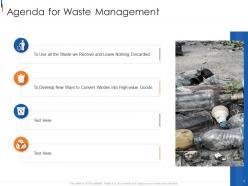
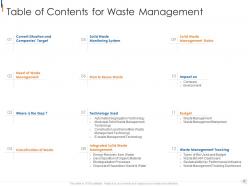
Having proper waste management saves space in landfills, results in valuable materials to reuse, decreases the amount of waste for disposal, etc. Scientific disposal of municipal waste minimizes the adverse impact on human health and the environment. Here is an effectively designed municipal solid waste management template to converse the natural resources of the planet. The purpose of this is to use all the wastelands received and leave nothing discarded. Firms can learn the techniques to develop new ways to convert waste into high value goods. The proposal showcases the target and the companys current situation using pie charts, tables, and future objectives. You can even study the parameters for hazardous waste management, the gaps, and required efforts to cover the holes, waste classification, and more. A solid waste monitoring system explains waste management, plans to reuse waste, automated segregation technology, e waste measures using various levels, etc. The template exhibits energy transformation from municipal waste, decomposition of organic material, biodegradation process, disposal of garbage, solid waste status, impact on the environment, waste management, budget, types of bin, waste dashboards, sustainability indicators, etc. Talk to the expert for queries and get access to our template on municipal solid waste management. Download it now.
People who downloaded this PowerPoint presentation also viewed the following :
Content of this Powerpoint Presentation
"We may never reach the ZERO in Zero Waste, but that's no reason to take ZERO action," this refrain, an activist’s slogan of sorts, defines how each business and individual needs to think about waste generation and management.
The Global Waste Management Outlook report also suggests that if countries around the world take sufficient action in curbing waste and committing to the circular economy model, we may have a good chance at reducing the annual waste turnover and the net cost of waste management. This waste, originally a byproduct of human activities and aimed at advancement and ease, needs to be disposed of properly and timely. This is why public and private municipality corporations exist to take care of waste collected on a large scale.
Municipal solid waste management is one aspect of garbage disposal that clears heaps and piles of junk discarded by households, the public, and other commercial places. Such cleanliness drives always require volunteers and sponsors as help and participants.
To do this well and solicit the best participation they can, proposals and playbooks summarizing the cause and effect of the waste disposal initiative should be used.
SlideTeam has reserved one such Municipal Solid Waste Management PowerPoint Presentation to spread awareness and information among your audience. As a municipal solid waste management unit, you will require information booklets about your dedicated cleanliness projects. You may even concern yourself with taking care of a particular client company’s waste for which a thorough evaluation of their existing waste management systems and your role in transitioning it to a modern-day efficient mechanism must be highlighted. Within these informative manuals, plan of action, timeline, and subsequently, the budget needs to be specified. Only an expert-designed PPT Presentation, with 100% editable and customizable templates, can highlight these points, as you pitch your expertise in this field. We have highlighted the top slides of this presentation design in the section below. Scroll down to know why our complete deck must be your ideal choice.
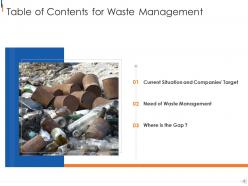
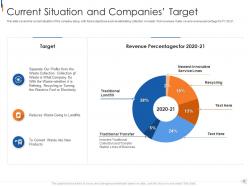
Template 1: Current Situation and Companies’ Target
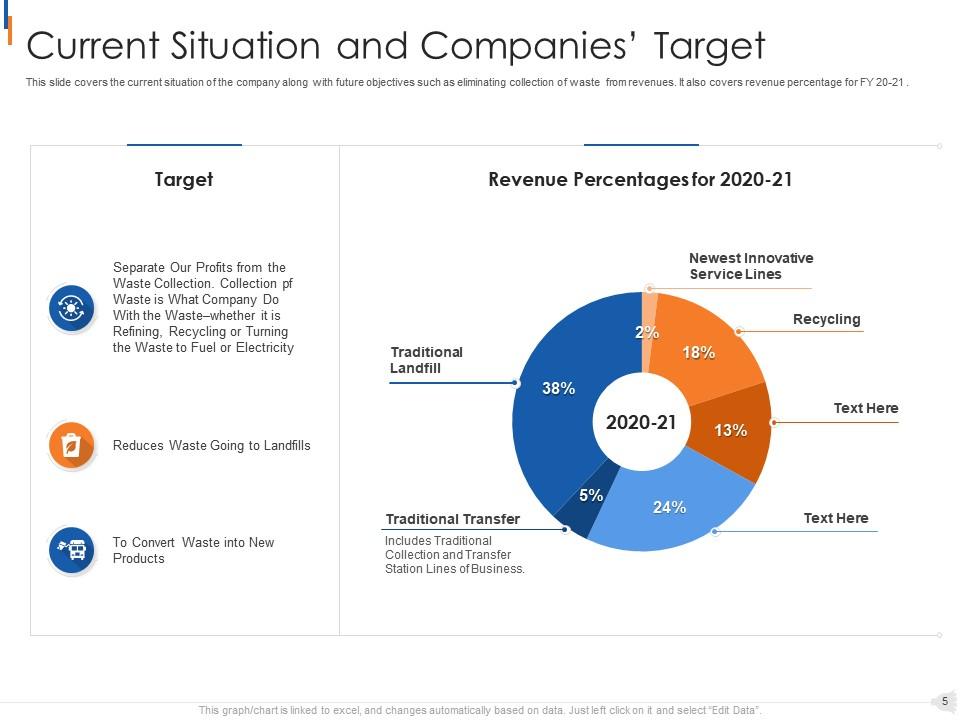
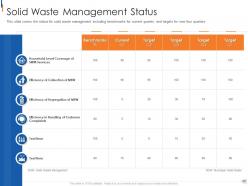
When pitching your solid waste management services, it’s smart to evaluate your client company’s current state with respect to garbage disposal. With this PPT Slide, you can present company data and bridge it with the target state. Use the Excel-linked pie chart of this presentation design to show the share of waste disposal techniques in use and list the goals of waste clearance that the client aims for.
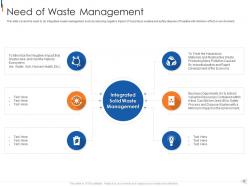
Template 2: Need of Waste Management
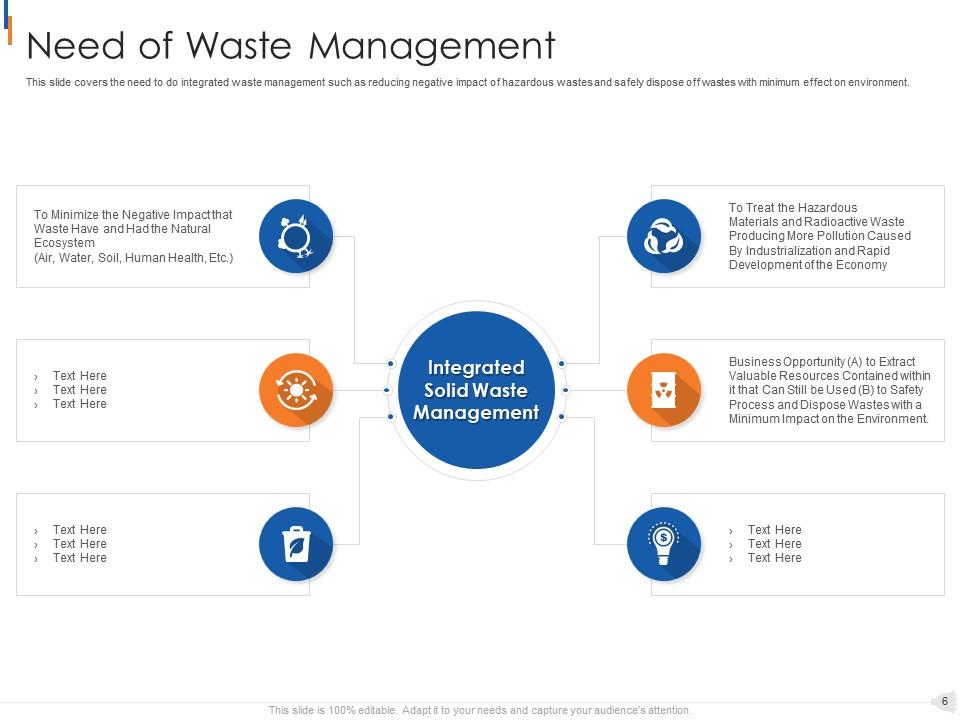
Sometimes, clients may not be that vigilant about the need for integrated solid waste management. With this PPT Template, you can draw attention to its importance. List the reasons why any company should invest their wealth and resources in an effective waste disposal. The reasons should link with influencing your audience and also earning an environmental-friendly title.
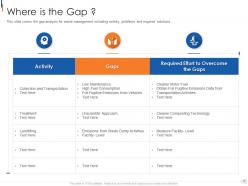
Template 3: Where is The Gap
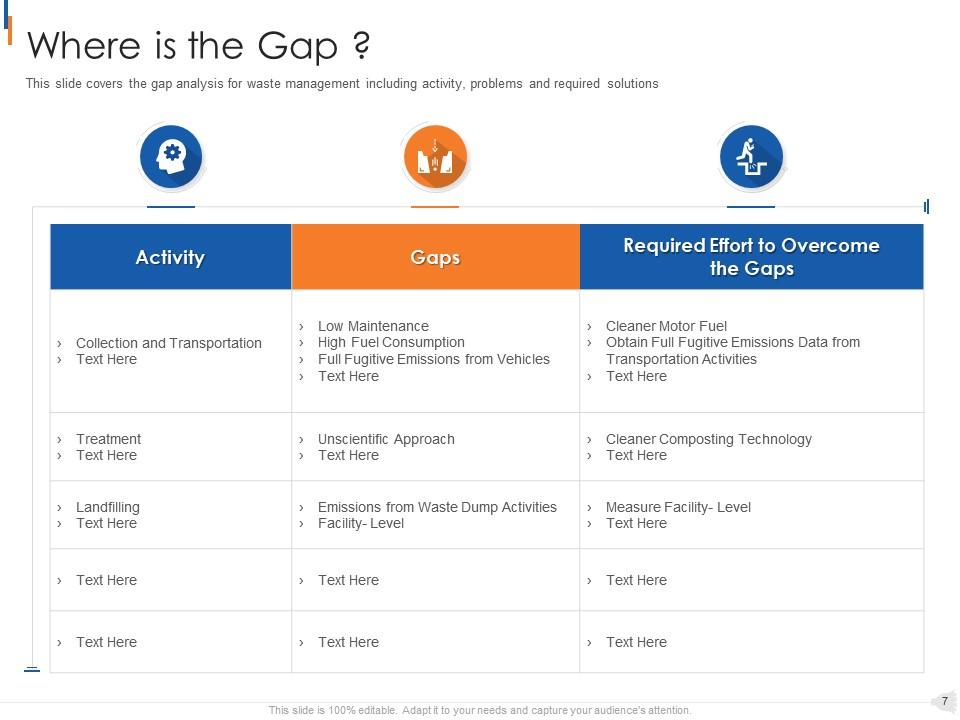
While analyzing the client’s waste generation and disposal system, you can draw a comparison between their current state and the intended state. This PPT Layout allows you to illustrate the gap between the two as you introduce your client to the efficient ways of discarding waste. List all technologies and ideas that clients can embrace to be more ecologically helpful.
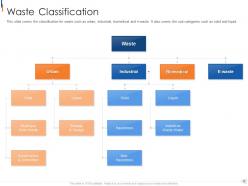
Template 4: Waste Classification
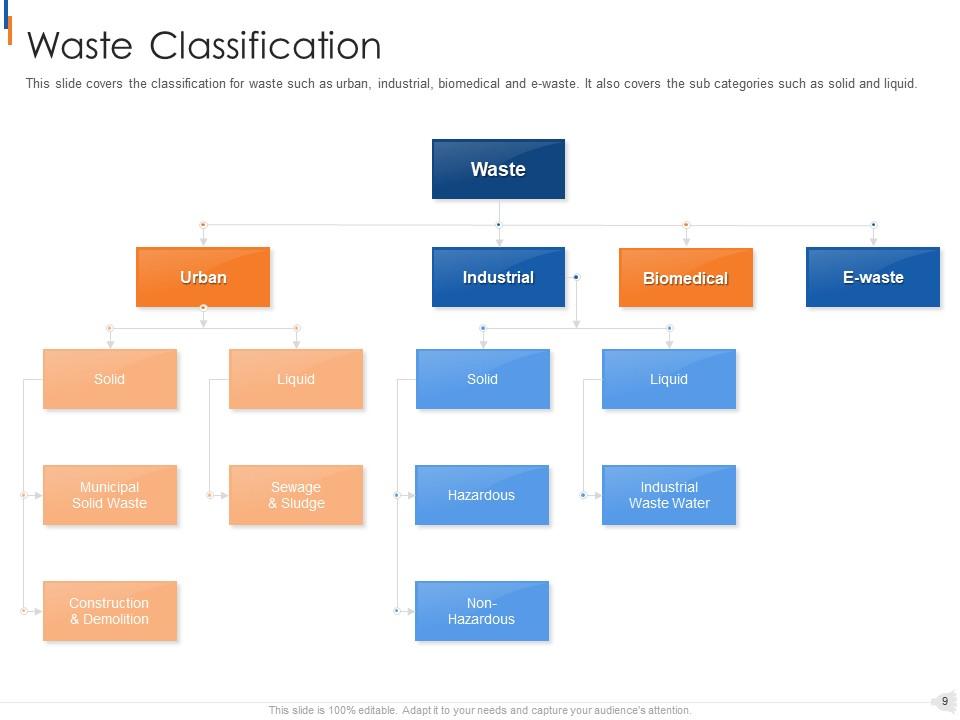
To conduct effective solid waste management, it’s wise to know about the categories of waste generated. This flowchart diagram will help you list waste classifications to devise complementary solutions to minimizing, eliminating waste, or tackling waste that falls under them. This PPT Flowchart will also make your presentation come across as more informative as it will pitch your genuine concern and aim to be a Go-green expert, and a fount of knowledge.
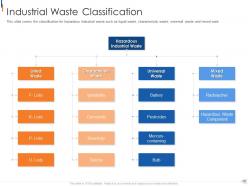
Template 5: Industrial Waste Classification
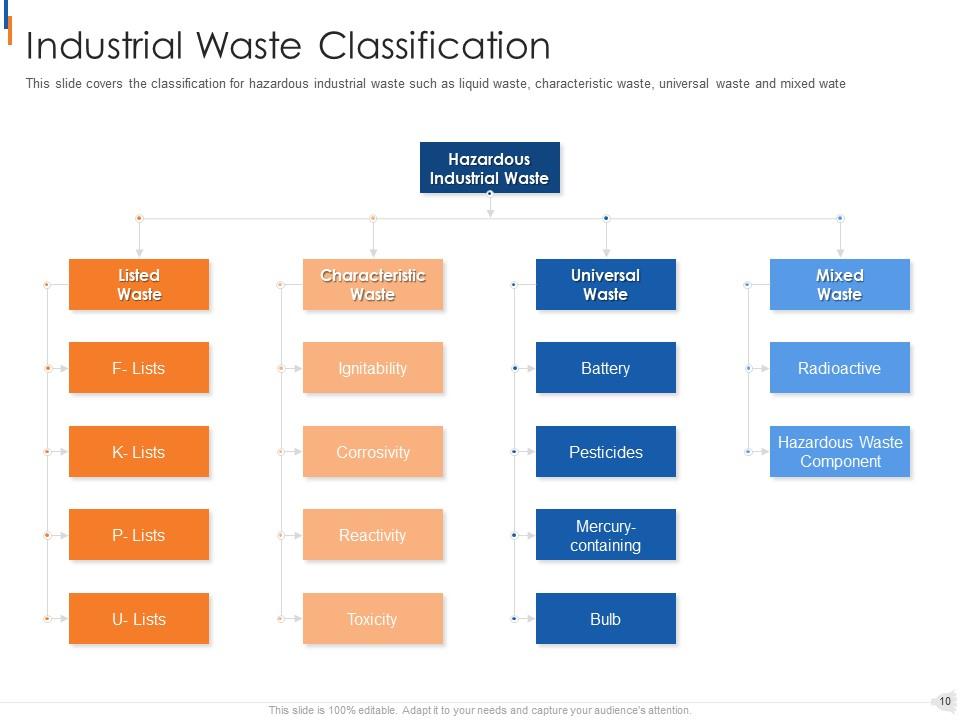
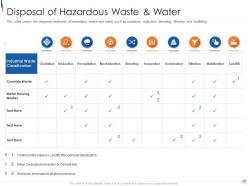
Address hazardous industrial wastes that the client’s business produces and categorize those under listed, characteristic, universal, and mixed waste as shown in this PPT Flowchart. Help your clients understand the critical nature of the waste their industry generates, so that they can clearly see how responsive waste management is the perfect solution for them. Color coding will impress the ease of waste disposal for these four categories.
With this PPT Guide on types of solid wastes, share in detail the diversity of garbage and redundant items and ways to dispose of them better.
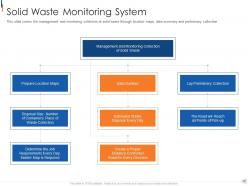
Template 6: Solid Waste Monitoring System
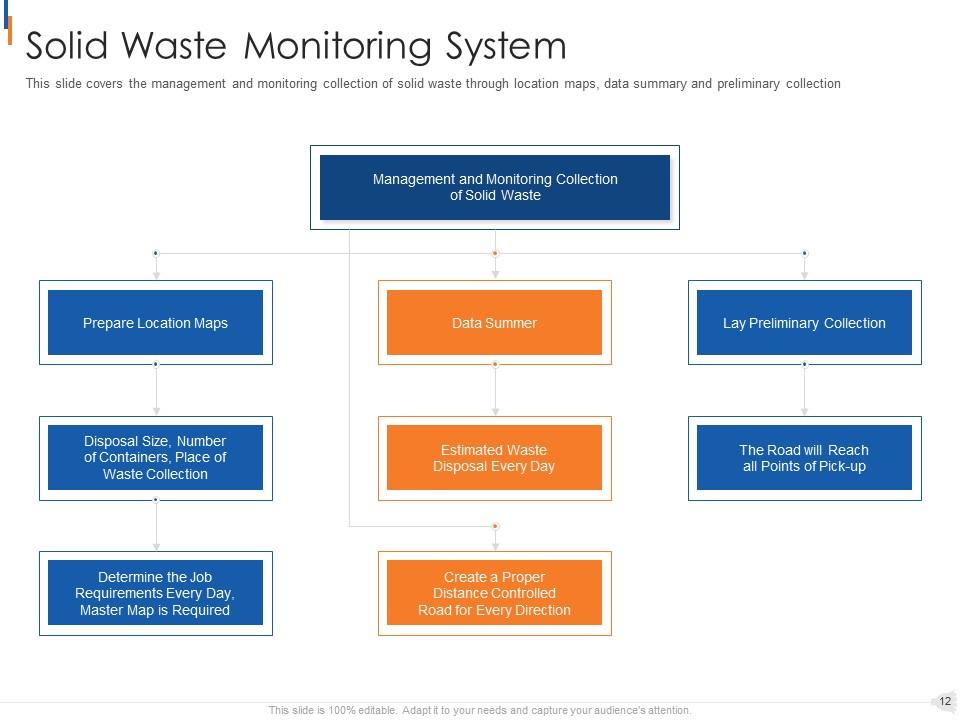
Lay down the plan for solid waste monitoring with this presentation design so that an effective management system can be deployed. Design the mechanism with this flowchart diagram to include steps like preparing location maps, evaluating disposal size, and number of containers, determining day-to-day job requirements, creating data summary, and defining the roadmap among other processes as part of your solid waste management proposal.
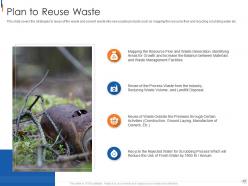
Template 7: Plan to Reuse Waste
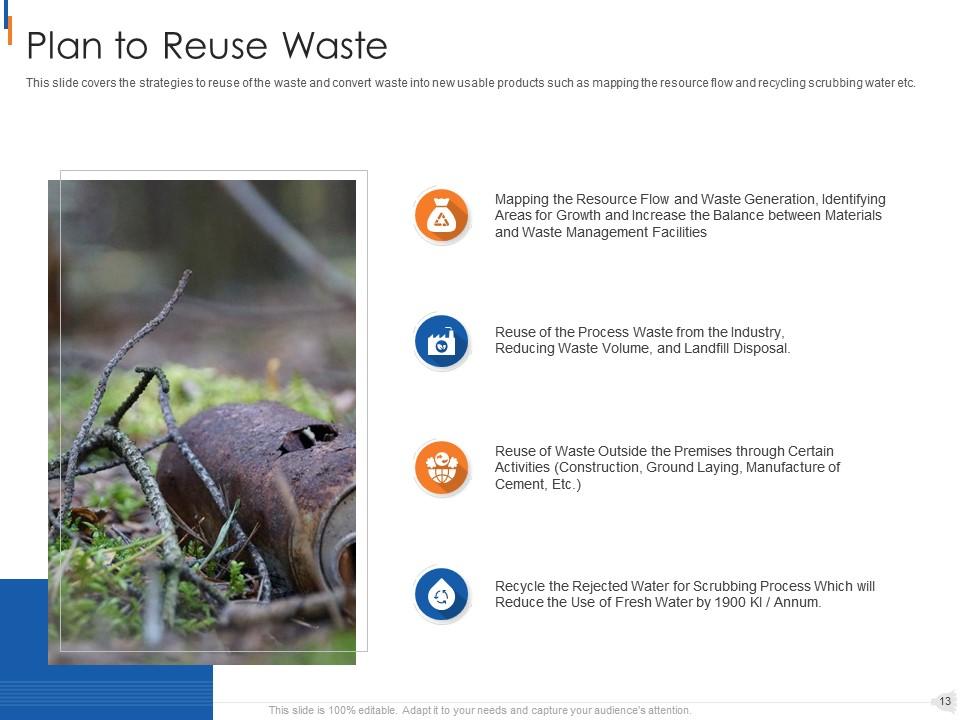
Guide your clients on the best ways to recycle waste with this PPT Layout. Start from the basics and help your audience know which types of wastes are reusable and the extent to which these can be put to use again using this PPT Presentation. Mention clear, short and relevant information on the reuse and the conditions that qualify a waste product as one. This presentation design can very easily help you expand on that.
Template 8: Automated Segregation Technology
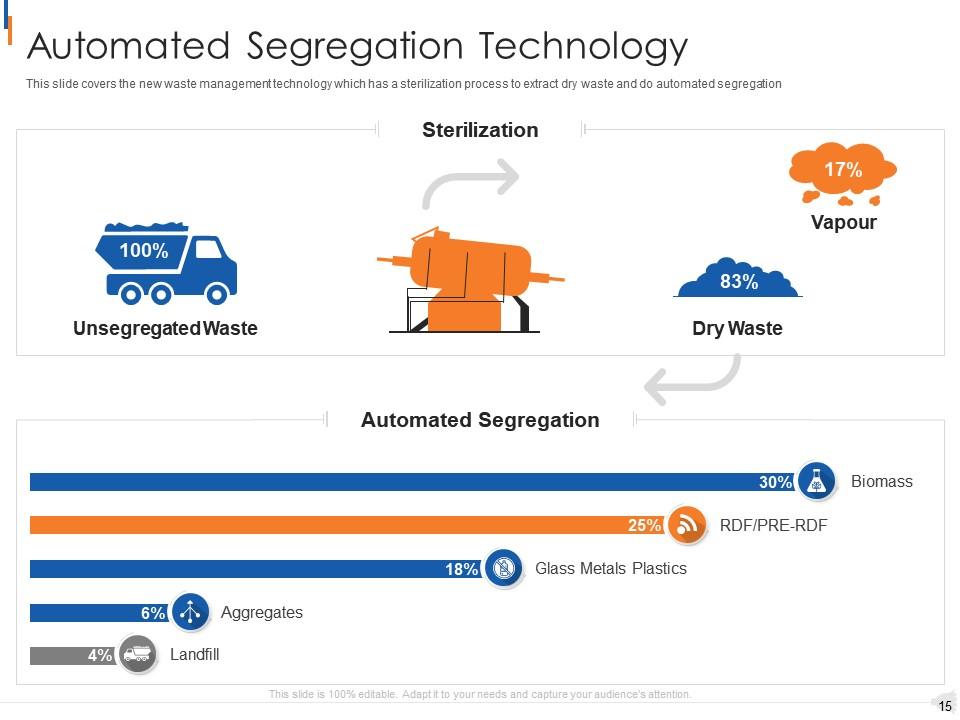
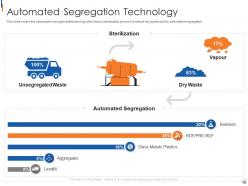
In solid waste management, discuss the process of automated segregation technology to help clients get rid of waste using automated technology. Introduce the concept of Segregation to filter dry and vapor waste out of the unsegregated waste obtained from landfills, aggregates, biomass, etc. This PPT Slide, together with the graphical interface, will help you make this process more understandable.
Template 9: Municipal Solid Waste Management Technology
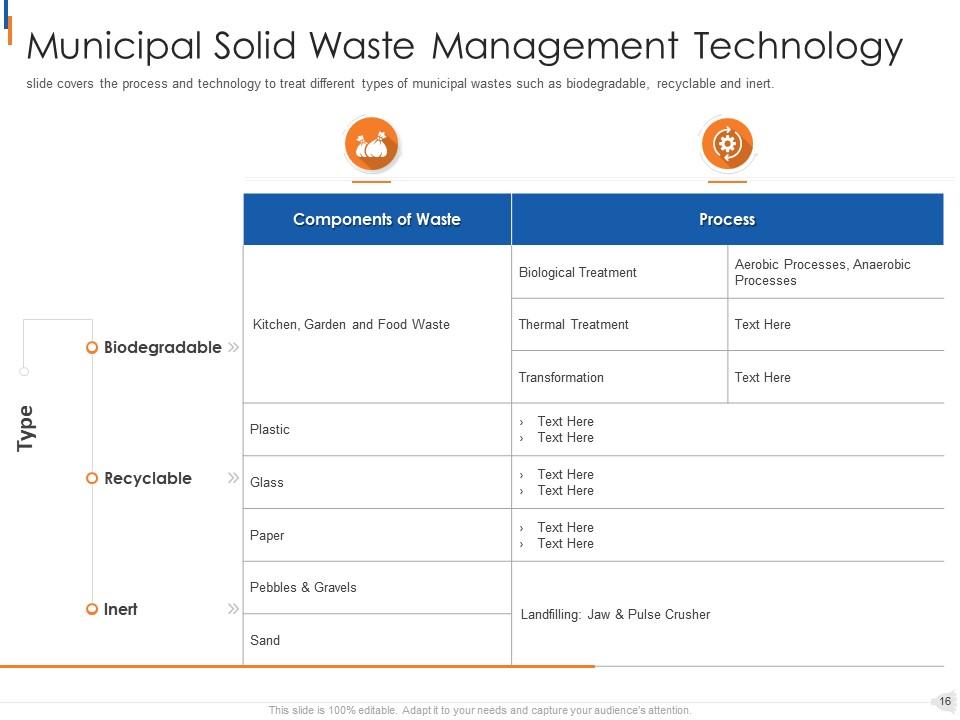
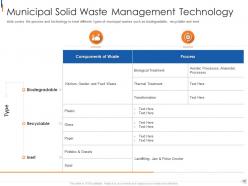
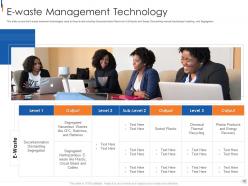
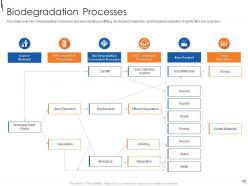
This PPT Slide is great at categorizing solid wastes under biodegradable, recyclable, and inert. Based on this excellent categorization, devise effective waste management procedures to eliminate it better. In this way, keep the client informed on the best ways to tackle their solid wastes.
Template 10: Construction and Demolition Waste Management Technology
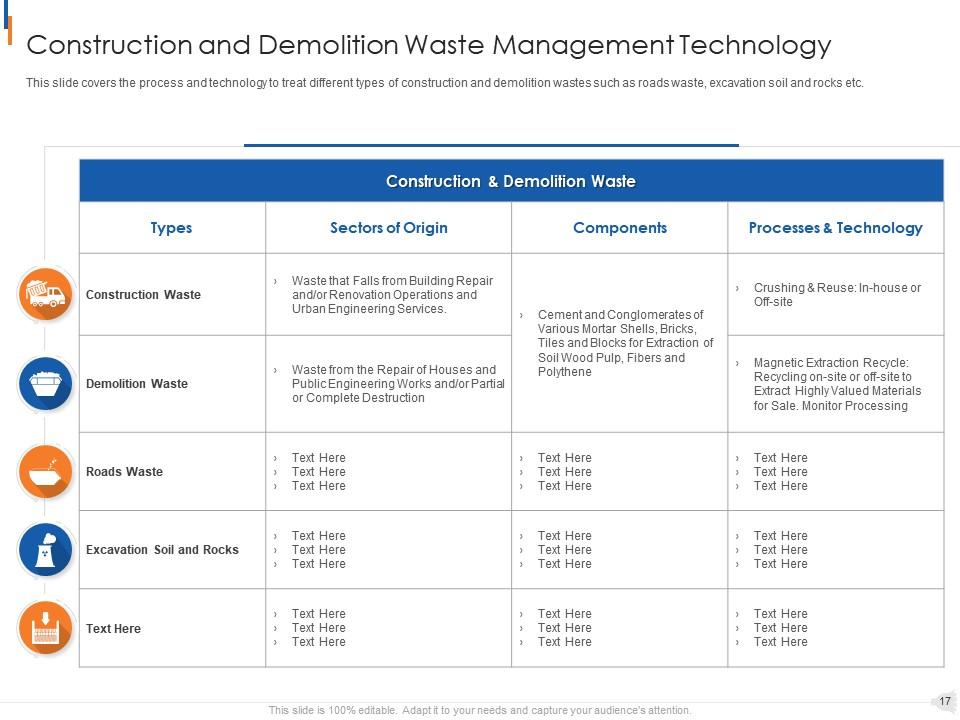
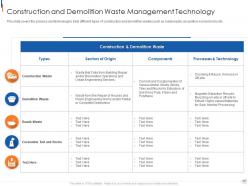
In this PPT Design, you can evaluate all sectors of a client's business to summarize the type, range and quality of of wastes produced. The waste types can include construction waste, demolition waste, road waste, excavation waste, etc. Corresponding to each, you can specify the primary component of these waste items and the remedial waste management procedure.
Why Choose this PPT?
Grab the entire PowerPoint presentation to create a guided approach to pitching your solid waste management idea to your clients as you fill in all the critical details of your waste disposal methodologies and strategies.
PS: Discuss waste management in IOT products and services that need to be equally disposed of efficiently using this complete deck as a guide.
Municipal solid waste management powerpoint presentation slides with all 49 slides:
Use our Municipal Solid Waste Management Powerpoint Presentation Slides to effectively help you save your valuable time. They are readymade to fit into any presentation structure.
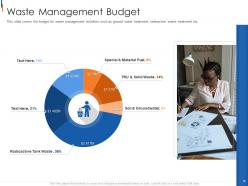
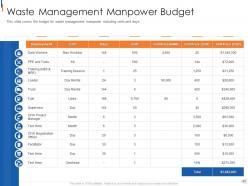
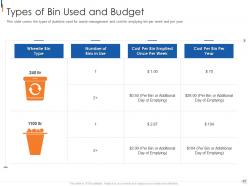
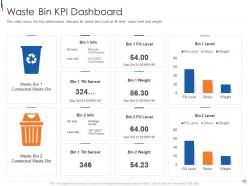
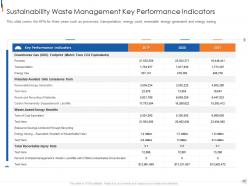
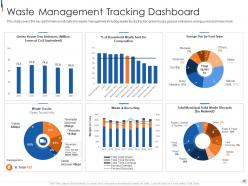


FAQs for Municipal solid waste management
Honestly, the best waste reduction happens before stuff even gets made. Manufacturers need to design products that actually last and can be fixed instead of tossed. Cut out pointless packaging too. Reusable alternatives work way better than constantly buying disposable crap. Cities can ban plastic bags and push businesses toward better design - though good luck getting them all on board lol. Really though, prevention beats cleanup every time. Buy less stuff, choose things that won't break in six months, and support companies doing packaging right.
Smart bins with sensors will literally save you so much hassle - they ping trucks only when actually full. Route optimization software cuts fuel costs by like 20-30% too. GPS tracking stops those annoying runs to half-empty bins. AI sorting systems crush manual sorting speed-wise, and IoT sensors catch equipment issues before expensive breakdowns happen. Honestly, I'd start small though - pilot smart bins in your busiest areas first. See what actually works for your city layout before going all-in. The tech is solid but every place is different, you know?
Dude, awareness campaigns actually work - they can bump up recycling rates by like 30-50%. Most people genuinely want to recycle but honestly have no clue what goes where because the rules are so random. Pizza boxes still confuse me sometimes. What really works is hyperlocal stuff - forget the generic "save the planet" messaging. Show people their exact bins, collection schedules, and those weird items everyone argues about. Build it into a habit through repetition. Once you make it feel easier to just toss things in the right bin than figure it out later, you've won.
Start small - maybe 10-15% of residents who actually want to participate. Food scraps and yard waste are your best bet initially. Match the pickup routes with regular garbage collection or you'll burn through money fast. Processing is where things get tricky though - either partner with a local farm or build your own facility. People are terrible at separating organics at first, but they get it eventually. Clear bin labels help a ton. Education upfront saves you headaches later. Track your diversion rates as you go, then expand based on what's actually working in your area.
Ugh, overflowing landfills are seriously bad news. That gross leachate stuff seeps into groundwater and ruins drinking water - not exactly what you want in a city. The smell alone is awful, plus you get methane gas making the air quality terrible. Rats and other nasty pests show up too, which honestly grosses me out more than anything. Disease spreads faster when there's rotting garbage everywhere. You really need to get your city council to focus on recycling programs and maybe look into regional solutions before things get completely out of hand. Nobody wants to live next to that mess.
Honestly, the carrot approach works pretty well - give businesses tax breaks or grants when they hit zero-waste goals. You can also reduce their waste pickup fees as a reward. The stick part? Charge more for companies that generate tons of waste. What's funny is that businesses actually eat up those "green certification" programs because they love the marketing angle. Some cities set up networks where zero-waste businesses mentor others, which is smart. Oh, and definitely survey local businesses first about their waste headaches - then you'll know what incentives actually matter to them.
Honestly, it's a mess of problems all hitting at once. Cities are exploding in size but their waste systems can't keep up - like, not even close. Money's always tight for basic stuff like trucks and landfills. Then you've got all these informal waste pickers who actually do important work, but they operate outside the system which makes regulation weird. Most places just don't have people with the right technical know-how either. Oh, and good luck getting anyone to actually enforce the rules consistently. If you're diving into this stuff, I'd say start small - build up local expertise first, then chip away at infrastructure problems one at a time.
So basically you can put sensors in bins to track when they're actually full instead of guessing. Then use that data to plan routes - only hit the full ones. Way smarter than driving around on a set schedule, you know? Historical patterns are helpful too, like how some areas get crazy busy after holidays. GPS and route optimization cut down fuel costs big time. I've heard you can skip like 30% of unnecessary pickups this way. Honestly I'd start with just your busiest containers first - the payback happens pretty quick and you don't have to go all-in right away.
So incineration burns trash at crazy high temps - cuts volume by 90% and makes electricity too. Pretty cool tech honestly. You get major waste reduction plus it kills all the nasty pathogens. But there's some real downsides. Setup costs are brutal, and even with all the fancy filters you still get air pollution. Plus you're literally burning stuff that could've been recycled instead, which seems kinda wasteful? Communities hate having them nearby too. If your city's thinking about it, I'd check how good your recycling program is first. Works way better when you've already squeezed out everything you can from reducing and recycling.
Look, plastic policies work because they hit the worst offenders in your waste stream. Extended producer responsibility and bag bans force companies to actually redesign stuff with less material. Single-use plastics are huge - like 30-40% of waste by volume, so banning those has immediate impact. The best part? You can literally see tonnage reports drop after a solid policy kicks in. Track your waste composition before and after new rules though, that data's gold when you're pushing for stronger measures later. Oh and packaging mandates help too but take longer to see results.
PPPs are actually pretty solid for waste stuff. Private companies jump in with the tech know-how and money that most cities just don't have right now. Your city still calls the shots on service quality though, which is key. The private side handles all the messy operational stuff - trucks, tech upgrades, daily operations. Honestly beats the alternative of cities trying to fund major infrastructure overhauls themselves. It's like getting a service upgrade without the massive debt hit. Worth looking into if your area's waste system needs work, especially since most municipal budgets are... well, you know how that goes.
Honestly, the biggest game-changer is flipping from that old "take-make-toss" mindset to actually preventing waste upfront. Get solid sorting programs going so stuff stays clean and worth something. I love seeing local partnerships where food scraps become compost for community gardens, or plastic gets turned into benches - that transformation is pretty satisfying tbh. Design waste out from the start instead of dealing with mountains of it later. Oh, and push for policies that make companies own their products' whole lifespan. It's wild how much changes when manufacturers can't just dump responsibility on consumers.
Honestly, I'd focus on waste diversion rates first - that's your big winner for showing impact. Track recycling rates and cost per ton too, but don't go crazy trying to monitor everything right away. Customer satisfaction scores are clutch because angry customers = lost contracts. Route efficiency and missed pickups will save you money long-term. Contamination rates in recycling streams? Yeah, that one's boring but it'll kill your margins if you ignore it. Carbon footprint reduction looks great for marketing, plus any revenue from recyclables. Pick maybe 3-4 metrics that match your main goals and actually stick with tracking them consistently.
Try setting up composting programs and those repair cafes - people actually love fixing stuff together. Community swap events are huge hits too, everyone's obsessed with free "new" things lol. You could do household waste audits with families, plus teach them about buying bulk and avoiding crazy packaging. I'd definitely organize neighborhood cleanup days. Partner with local businesses for take-back programs. Oh and make everything feel social! When it's a community thing instead of just another chore, way more people show up. Convenience matters too - don't make it complicated.
So there's actually some cool stuff happening with waste tech right now. Smart bins with sensors are helping cities figure out better pickup routes - no more random overflowing trash cans everywhere. AI sorting systems are getting crazy good at recycling accuracy too. The biodegradable packaging made from seaweed and mushroom roots is honestly kind of fascinating, even if it sounds weird. Some dense cities are installing these pneumatic tube systems that basically suck trash underground. Oh, and food waste can get turned into actual energy now through anaerobic digestion. You should check if there are any pilot programs running near you first.
-
It saves your time and decrease your efforts in half.
-
Colors used are bright and distinctive.
-
Excellent Designs.
-
Very unique, user-friendly presentation interface.