

Industrial Analysis Dashboard For Solid Waste Management




Try Before you Buy Download Free Sample Product
 Impress Your
 Audience
 100%
100% Editable
 Save Hours
 of Time


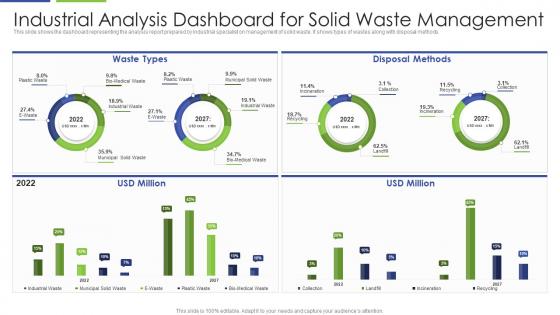
This slide shows the dashboard representing the analysis report prepared by industrial specialist on management of solid waste. It shows types of wastes along with disposal methods.
People who downloaded this PowerPoint presentation also viewed the following :
Industrial Analysis Dashboard For Solid Waste Management with all 7 slides:
Use our Industrial Analysis Dashboard For Solid Waste Management to effectively help you save your valuable time. They are readymade to fit into any presentation structure.





FAQs for Industrial Analysis Dashboard For
Start by tracking waste generation rates - break it down by facility and waste type. Also monitor your diversion rates from landfills (recycling, recovery programs, that kind of stuff). Disposal costs per ton are huge for budget meetings - trust me, having solid numbers makes those conversations so much smoother. Don't forget compliance metrics like permit violations and inspection results. If you deal with hazardous waste, track those volumes too. Set up alerts for any weird spikes in generation or costs so you can jump on issues fast. Begin with these basics, then get more detailed as you go.
Dude, real-time analytics is where it's at for waste management. You can catch problems while they're happening instead of finding out weeks later through some boring report. Which production lines are your biggest waste culprits? When do disposal costs randomly spike? The dashboard will ping you before things get messy - like avoiding those crazy expensive emergency pickups (been there, not fun). You'll spot recycling opportunities you're totally missing too. Honestly, those monthly reports are pretty useless compared to live data. Pick your worst 3 waste headaches and set alerts for those first.
So basically, data visualization takes all that messy waste data and turns it into something people can actually understand. Charts and heat maps are way better than drowning in spreadsheets - nobody wants to decode rows of numbers all day. Your executives can see where waste reduction is working, plant managers spot problems fast, and compliance teams get their visual proof without digging around. I mean, it's just about making the data tell a clear story so people actually do something about it instead of just filing reports away.
Dude, these dashboards are game-changers for compliance stuff. Real-time waste tracking instead of those messy spreadsheets we all hate. It'll ping you before you hit permit limits and auto-generates reports (which honestly saves so much time). The audit trails are solid too - regulators eat that up. Best part? You can actually see patterns developing early. Like if your waste numbers start climbing, you can tweak things before getting slammed with violations. Way better than playing catch-up after the fact. It's basically like having someone watching your back 24/7.
Honestly, data compatibility is going to be your biggest pain point. All your current systems speak different languages - different formats, APIs, the whole mess. Legacy software wasn't designed to talk to other platforms, which is super annoying. Plus you'll probably run into situations where you need real-time data but half your systems are still stuck in the stone age exporting weekly CSV files. Don't forget your team actually needs to know how to use this thing once it's built. I'd honestly start small - pick one waste stream, get that working smoothly, then expand from there.
So you'd basically set up automated feeds from your waste haulers and production systems first. Then the predictive stuff analyzes your historical patterns - like seasonal changes, production schedules, all that. It correlates everything with your past generation rates, material inputs, even weather (which honestly surprised me how much that matters). Look for trends over 12-24 months for decent accuracy. The algorithms get scary good once you dump enough data into them. Production cycles are huge predictors too. Just let it run and you'll start seeing future waste volumes mapped out pretty reliably.
Honestly, cloud platforms are a game changer for this stuff. Auto-scaling and real-time syncing mean your whole team can jump in from wherever without those annoying version conflicts. No more server headaches either - that alone saves you tons of money and stress. Security updates happen automatically, which is nice because setting that up yourself gets expensive fast. The integration piece is pretty smooth too, especially if you're already using other cloud tools for ERP or compliance. I'd probably start with AWS or Azure depending on what you're already running, though Google Cloud's gotten better lately.
Honestly, just talk to the people who'll actually use it daily. Surveys are fine but nothing beats sitting down with waste managers and asking what drives them crazy about their current setup. Watch them during user testing - you'll learn way more than any survey will tell you. Figure out what they're checking first thing Monday morning, what compliance data they scramble for. The most-used stuff should be front and center and totally customizable since every facility is different. Oh, and build in a way to actually act on their feedback quickly - there's nothing worse than asking for input then ignoring it.
Get everyone trained on the same measurement methods first - that's huge. Document stuff as it happens instead of trying to piece it together later (learned that the hard way). Cross-check your weights and waste types against actual receipts regularly. Having someone else review entries before they hit the dashboard catches so many mistakes. Build this into daily routines so it becomes second nature. Oh, and don't skip the validation checks even when you're swamped - I know it's tempting but you'll regret it.
So basically it breaks down exactly what waste you're making and where it's all coming from. Pretty useful for finding spots to cut back. You can track stuff over time too - like if you're always tossing huge amounts of cardboard every Tuesday (weirdly specific but whatever). Comparing different departments is clutch since you'll see who's crushing it and who's... not. But honestly? The trend tracking is where it gets good. You can actually tell if your changes are doing anything or if you need to switch things up.
Start with your waste management vendors - they've got tonnage data, pickup schedules, costs, all that good stuff. Your ERP system probably has procurement data too which helps you see patterns. If you're dealing with hazardous materials, EPA compliance reports are actually more useful than you'd think for benchmarking. Third-party sustainability platforms work for industry comparisons. Honestly, vendor data is your best bet since it's usually the most complete. Then just add the other sources as you get more sophisticated with your tracking. Oh, and don't sleep on those regulatory databases if they apply to you.
Progress bars for waste reduction goals work really well - people love seeing that visual progress. Add some achievement badges when facilities hit recycling targets, maybe throw in leaderboards ranking different sites. Competition always gets people more invested, even with something as dry as waste data. The trick is making users feel rewarded for actually digging into the numbers instead of just glancing at them. Oh, and daily challenges work too - like "explore this dashboard section today." Start simple with just one gamification element. You'd be amazed how much longer people spend analyzing metrics when there's a small reward involved.
Role-based access is where I'd start - biggest weak spot usually. Encrypt everything in transit and at rest, no question about it. Multi-factor auth for everyone too. Audit logs are clutch so you know who's poking around your compliance data. Oh, and don't sleep on regular security checks and backups. This waste data is sensitive as hell, especially the compliance stuff. Honestly feels like overkill sometimes but better safe than dealing with a breach later. Get your access controls locked down first, then work through the rest.
Dude, mobile dashboard access is honestly a lifesaver for field teams. Your drivers can update pickup statuses right from their phones instead of calling everything in. Managers don't have to wait around - they can check waste levels and reroute trucks from wherever they are. Real-time updates mean no more waiting hours to hear back about capacity issues. Push notifications are clutch for critical alerts too. When storage hits those threshold levels, everyone knows immediately and can actually do something about it. The whole "playing phone tag" thing becomes ancient history, which... thank god because that gets old fast.
Manufacturing and chemical companies get the most out of these dashboards - they're drowning in waste and regulations. Construction's right up there too. Food processing is messy (literally), and automotive has those weird complex waste streams that cost a fortune if you screw up. Honestly, if your waste disposal bills are killing your budget or compliance paperwork is taking over your life, you'll probably see good results. Just make sure you're spending at least 50K a year on waste management first. Otherwise the setup isn't worth it.
-
SlideTeam is the best in the business. Their templates are engaging and customizable. You can rely on them.
-
Satisfied with the way SlideTeam resolved my query regarding the right business PPTs that I was having difficulty finding. I found the perfect match with their assistance.