


Industry analysis powerpoint presentation slides




Try Before you Buy Download Free Sample Product
 Impress Your
 Audience
 100%
100% Editable
 Save Hours
 of Time


Review industry potential based on various growth drivers and trends with the help of Industry Analysis PowerPoint Presentation Slides. The presentation helps to analyze and ensure total addressability and target market. Showcase key industry statistics and industry trends with the help of this compelling PPT slideshow. Represent the information about key players in the industry with these PPT visuals. Assess the market profitability by analyzing the forces acting upon it. Showcase value chain analysis with the market analysis PPT templates. Take advantage of the strategic management PowerPoint slideshow to showcase information about key players of the industry. Also, showcase PESTLE analysis, competitive force model, and value chain analysis using this business environment PowerPoint template. Give an overview of the domestic and global market share of different companies. Identify various factors and highlight mitigation strategies to overcome them. Highlight various entry barriers faced by the industry using this market segmentation PPT infographics. Thus, download this ready-to-use marketing strategy PPT slide deck and create a stunning presentation.
People who downloaded this PowerPoint presentation also viewed the following :
Content of this Powerpoint Presentation
Slide 1: This slide introduces Industry Analysis. StateYour Company Name and begin.
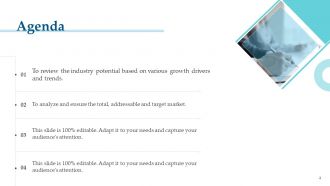
Slide 2: This is an Agenda slide. State your agendas here.
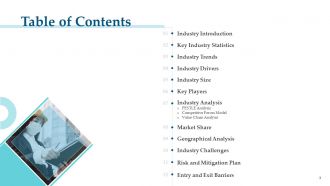
Slide 3: This slide shows Table of Contents for the presentation describing- Industry introduction, key industry statistics, Industry Trends, etc.
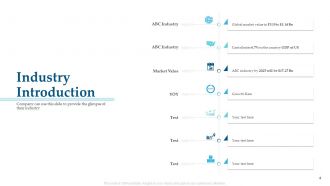
Slide 4: This slide shows Industry Introduction. Use this slide to provide the glimpse of industry.
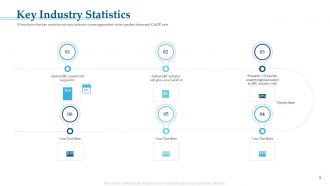
Slide 5: This slide presents Key Industry Statistics with related icons.
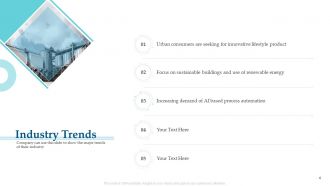
Slide 6: This slide displays Industry Trends with related imagery and text boxes. Use this slide to show the major trends of their industry
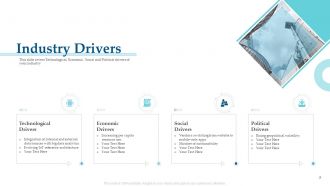
Slide 7: This slide represents Industry Drivers describing- Technological Drivers, Economic Drivers, Social Drivers, etc.
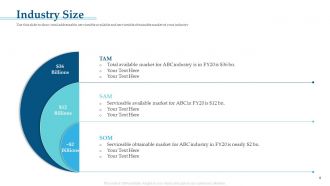
Slide 8: This slide showcases Industry Size describing- TAM, SAM, SOM, etc.
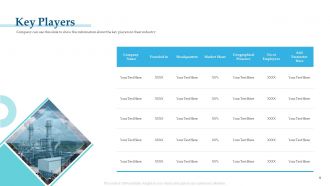
Slide 9: This slide shows Key Players. Use this slide to show the information about the key players in their industry.
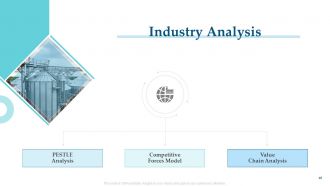
Slide 10: This slide presents Industry Analysis describing- Pestle Analysis, Competitive Forces Model and Value Chain Analysis.
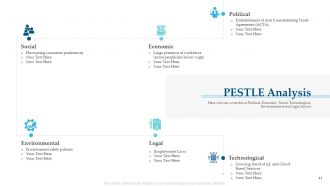
Slide 11: This slide displays PESTLE Analysis describing- Political, Economic, Social factors, etc.
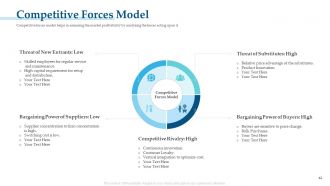
Slide 12: This slide represents Competitive Forces Model describing- Competitive Rivalry, Bargaining Power of Buyers, Threat of New Entrants, etc.
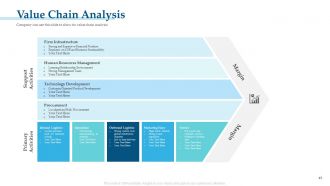
Slide 13: This slide showcases Value Chain Analysis describing- Firm Infrastructure, ,human resource management, ,technology development, etc.
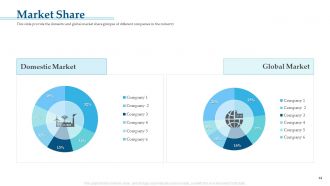
Slide 14: This slide shows Market Share describing- Global Market, and Domestic Market.
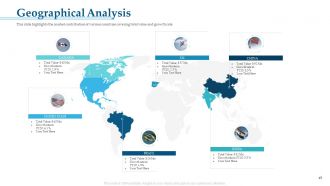
Slide 15: This slide displays Geographical Analysis highlighting the market contribution of various countries.
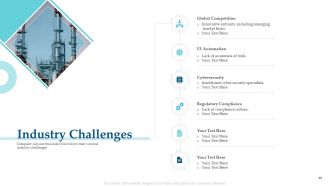
Slide 16: This slide represents Industry Challenges describing- Global Competition, UI Automation, Cybersecurity, etc.
Slide 17: This slide showcases Risk and Mitigation Plan describing- client management, quality, etc.
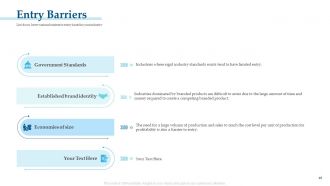
Slide 18: This slide shows Entry Barriers describing Government Standards, Economies of size, Established brand identity, etc.
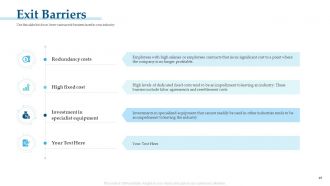
Slide 19: This slide presents Exit Barriers with related icons and text.
Slide 20: This slide displays Industry Analysis Icons.
Slide 21: This slide is titled as additional slides for moving forward.
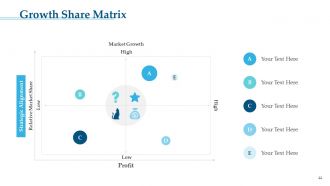
Slide 22: This slide represents growth share metrics with additional textboxes.
Slide 23: This is our mission slide with related imagery and text.
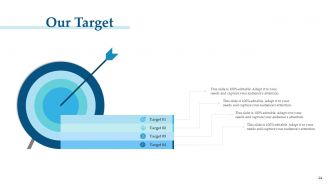
Slide 24: This is our target slide. Show your firm's target here.
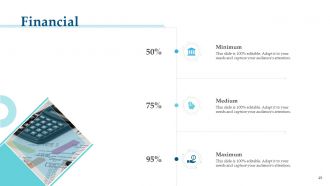
Slide 25: This is a financial slide. Show your finance related stuff here.
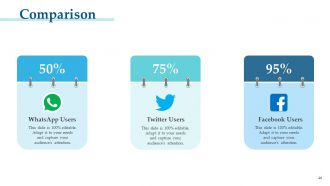
Slide 26: This is a comparison slide to state comparison between products, commodities, etc.
Slide 27: This is meet our team slide with names and designations.
Slide 28: This is about a slide to show company specifications etc
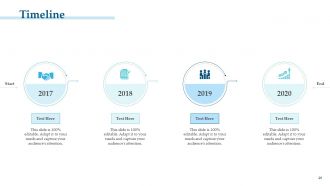
Slide 29: This is a timeline slide with icons and text boxes.
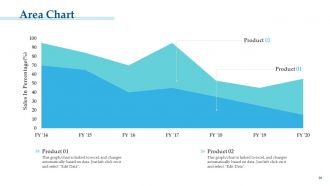
Slide 30: This slide shows Area Chart with two products comparison.
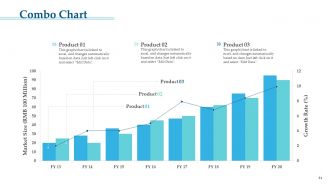
Slide 31: This slide shows Combo Chart with three products comparison.
Slide 32: This is a thank you slide with address, contact numbers, and email address.
Industry analysis powerpoint presentation slides with all 32 slides:
Use our Industry Analysis Powerpoint Presentation Slides to effectively help you save your valuable time. They are readymade to fit into any presentation structure.

FAQs for Industry analysis
Honestly, the big stuff right now is digital transformation hitting every industry hard, plus companies finally diversifying their supply chains after getting burned by COVID. Sustainability isn't just marketing BS anymore - it's actually driving real business decisions. AI and automation are moving so fast most companies can't keep up (kind of wild to watch). Remote work stuck around permanently too, which changed everything operationally. Oh, and consumers actually care about company values now when they're buying stuff. You'll want to pick maybe 2-3 trends that actually matter for your space and figure out how they'll mess with your competitive position in the next year and a half.
Tech stuff is wild - it builds up whole industries while crushing others. New tech cuts costs or creates markets nobody saw coming. Look at smartphones spawning a million app companies while BlackBerry basically vanished overnight. Companies that jump on trends early get huge advantages. The ones dragging their feet? They're toast. Honestly, it's kind of brutal how fast things shift now. For whatever you're analyzing, figure out which tech is hot in that space and see who's actually investing in it versus just talking about it.
Honestly, consumer behavior is like the puppet master pulling all the strings. Companies basically have to dance to whatever tune their customers are humming. Take sustainability - once people started caring about the environment, businesses went scrambling to rebrand as eco-friendly (some more genuinely than others, but that's another rant). Same thing happened with online shopping. Physical stores had to completely rethink their game or risk becoming dinosaurs. The spending patterns shift, and suddenly entire industries are doing backflips to keep up. My advice? Watch what consumers do, not just what they say they want.
So basically, competitive analysis shows you all the stuff your competitors suck at or just ignore completely. Those gaps? That's where you jump in. Check out their customer reviews - people literally tell you what's broken or missing. You'll spot underserved markets and figure out better pricing too. Sometimes you'll even discover trends they're chasing that you totally missed. Honestly, most companies are blind to their own weak spots. Pick like 3-5 direct competitors this week and dig into their offerings, prices, and what customers are griping about. The patterns will jump out at you pretty quick.
Regulations totally flip industries upside down - they change who wins and loses. GDPR made data privacy a huge deal overnight. Banking got way more consolidated after 2008 because of new rules. Companies with old, clunky systems usually get screwed while nimble ones thrive. It's like Darwin but for business, honestly. Keep an eye on what's coming down the pipeline in your industry. The smart money moves early - while everyone else is panicking about compliance, you're already three steps ahead grabbing market share.
So basically globalization makes everyone play by the same rules if they want to compete internationally. Manufacturing standards, accounting practices, environmental stuff - it's all getting standardized. Kind of a pain honestly, but it opens up massive markets. Look at GDPR - started in Europe but now every tech company follows it because they want those customers. Even my company had to completely redo our privacy policies last year. For your analysis, I'd focus on which international standards are winning out and how local companies are scrambling to keep up.
Okay so supply chain disruptions are basically like stress tests for whole industries. Some bounce back fast because they've got backup suppliers or flexible operations. Others completely fall apart - the auto industry got wrecked during that chip shortage because they relied too heavily on just-in-time delivery. Here's the thing though: these disruptions usually speed up changes that were already happening anyway, like companies moving production closer to home. When you're looking at which industries can handle this stuff, check out how they actually responded to recent problems. Did they restructure or just cross their fingers and wait?
Honestly, speed is your best friend here but don't get too rigid about your plan. Get those early partnerships locked down and spend big on educating customers - they probably don't even realize they need what you're offering yet. Build your brand before everyone else jumps in. Timing's brutal though. Too early? You're just bleeding money teaching the market. Too late and you're fighting over leftovers. Make sure you're actually solving something that current solutions suck at. Oh, and be ready to change direction when things shift - because they will. I'd test 2-3 different approaches quickly without going broke.
Dude, start by pulling data from everywhere - your CRM, social media, industry reports, whatever you can get. The tool selection is honestly overwhelming at first, but don't let that stop you. Once you're set up, you'll spot trends and customer patterns way faster than old-school methods. Set up some automated dashboards so you're not manually checking metrics every damn week. That's where the real magic happens - you can actually predict demand shifts and see exactly where competitors are screwing up or crushing it. Worth the initial headache, trust me.
Honestly, carbon emissions are the big one everyone's freaking out about right now. Companies are trying to hit these net-zero goals but sustainable materials cost way more. Waste management's a nightmare too - and don't even get me started on supply chains, nobody knows where half their stuff actually comes from. Water usage in manufacturing is insane, like genuinely shocking amounts. Regulators are cracking down everywhere and customers won't shut up about wanting transparency. My advice? Start small with stuff you can actually measure, then figure out what's screwing up the environment most in your specific industry and work backwards from there.
Honestly, keep tabs on your competitors but focus more on what they're *not* doing. That's where the real opportunities are. I'd also peek at totally different industries - like, how do hotels handle customer service? Maybe there's something there for your business. Your customers will literally hand you innovation ideas if you just ask what bugs them about existing solutions. Oh, and definitely get people from different departments brainstorming together. Accounting might have insights that marketing never considered. Test everything small first though - pilot programs save you from expensive mistakes.
Look, digital transformation can be a game-changer - you'll get better efficiency, happier customers, and actually useful data insights. But honestly? The downsides are real. Cybersecurity becomes this constant headache, costs can spiral out of control fast, and yeah, people lose jobs. My brother's company spent a fortune on some fancy system that barely works. Here's what I'd do: test stuff small first. Run a pilot project, see what actually helps your business. Don't let some consultant talk you into overhauling everything at once. Get your team excited about changes before diving in headfirst.
Dude, the job market is wild right now and it's making everything harder. You're basically fighting other companies for the same people when unemployment's low. Better pay and remote work aren't optional anymore - they're table stakes. If your industry has crazy turnover (looking at you, retail), retention programs are a must or you'll burn out your HR team. The skills shortage thing is real too. Sometimes it's easier to train people internally than wait for that perfect candidate who doesn't exist. I'd say check your local job market every few months and pivot fast. The old annual planning cycle? Yeah, that's dead.
Dude, social media totally flipped branding on its head. Companies can't just blast out ads anymore - now it's all about actual conversations with customers. And those customers? They'll roast you online if you mess up, which honestly keeps brands on their toes. Your reputation changes by the minute across like 10 different platforms. It's wild but also kinda cool how interactive everything got. You gotta stay consistent but also be ready to jump in when people are talking about you. My cousin learned this the hard way with her bakery - she ignored Instagram comments for weeks and paid for it. Bottom line: engage, don't just post and ghost.
Honestly, you've gotta watch your customer data like a hawk and move fast when things start shifting. Set up feedback loops - surveys, social listening, tracking sales patterns - so you're not scrambling later. I can't tell you how many businesses I've watched ignore the warning signs until they're in real trouble. Build flexibility into everything you do. Diversify your products, tweak your messaging, maybe completely rethink what you're offering people. The tricky part? Figuring out what's just a fad versus an actual lasting change. Focus your money and energy on the shifts that'll stick around.
-
Best Representation of topics, really appreciable.
-
Awesome presentation, really professional and easy to edit.
-
Illustrative design with editable content. Exceptional value for money. Highly pleased with the product.
-
The Designed Graphic are very professional and classic.
-
Editable templates with innovative design and color combination.
-
Top Quality presentations that are easily editable.
-
Appreciate the research and its presentable format.
-
Excellent Designs.