


Amazon Strategic Plan To Emerge As Market Leader Cash Conversion Cycle Process Utilized By Amazon




Try Before you Buy Download Free Sample Product
 Impress Your
 Audience
 100%
100% Editable
 Save Hours
 of Time


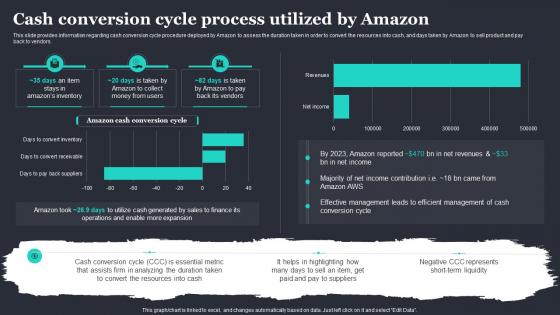
This slide provides information regarding cash conversion cycle procedure deployed by Amazon to assess the duration taken in order to convert the resources into cash, and days taken by Amazon to sell product and pay back to vendors.
People who downloaded this PowerPoint presentation also viewed the following :
Amazon Strategic Plan To Emerge As Market Leader Cash Conversion Cycle Process Utilized By Amazon with all 7 slides:
Use our Amazon Strategic Plan To Emerge As Market Leader Cash Conversion Cycle Process Utilized By Amazon to effectively help you save your valuable time. They are readymade to fit into any presentation structure.






FAQs for Amazon Strategic Plan To Emerge As Market Leader Cash Conversion Cycle Process
So Amazon actually has a negative cash conversion cycle - like -30 to -40 days, which is nuts. They get paid by customers right away but don't pay suppliers for another 30-90 days. Free money basically. Compare that to most retailers who are stuck at 30-60+ days positive, meaning they're funding all that inventory upfront. It's probably their biggest advantage that nobody really talks about - way more important than people realize. When you're looking at retail stocks, definitely check their cash cycle vs Amazon's. Shows you who's actually managing their cash flow well and who isn't.
Amazon basically figured out the holy grail of cash flow - they flip inventory crazy fast while most retailers are stuck with stuff sitting around for months. Their forecasting tech is honestly pretty wild, so they're not drowning in dead stock. Because they're massive, suppliers give them sweet payment terms, but customers pay right away. The math works out where they're making money off sales before they even cut checks to suppliers. Kind of genius when you think about it. For your business though, I'd focus on inventory speed first - that's where you'll actually move the needle on cash flow.
So Amazon's basically crushing it with their cash flow because they use AI to predict what people want before they even know they want it. Smart inventory systems keep their storage costs low. Those "people who bought this also bought" suggestions? They're not just for sales - they actually help Amazon move inventory faster, which is honestly pretty genius. Payment systems let them squeeze better deals from suppliers and time their cash outflows perfectly. The whole thing shows how you can flip working capital from this constant stress into something that actually gives you an edge over competitors.
Dude, Amazon's payment timing is genius. Customers pay instantly when they buy stuff, but Amazon doesn't pay suppliers for like 30-90 days. So they're basically sitting on all this free money in between - it's like a massive interest-free loan. That's honestly how they fund so much expansion without constantly begging investors for cash. The bigger that gap gets, the more money they have to throw at new projects. Super smart business model. You should definitely look at this timing thing if you're studying any retail company.
Amazon basically gets paid before paying suppliers - creates this negative cash conversion cycle that's honestly genius. Their predictive analytics keep inventory moving fast instead of sitting around eating up cash. Scale helps too - they negotiate 60+ day payment terms while customers pay instantly. The fulfillment network is crazy efficient with demand forecasting doing most of the heavy lifting. For your situation, I'd focus on inventory velocity first since that's where you'll see the biggest cash flow improvement. Cross-docking helps but velocity is really the game changer here.
Track DSO, DIO, and DPO - those are your main three. Amazon actually runs a negative cash conversion cycle, which is honestly pretty brilliant. They get paid by customers before they pay suppliers. DIO's the one to watch during big shopping events like Prime Day since their inventory spending goes crazy. DPO matters a ton because Amazon basically uses suppliers as their bank. Pull these numbers quarterly and keep an eye out for weird jumps. Usually means something's shifting in their supplier deals or cash strategy.
So basically Amazon's whole cash thing comes down to bullying suppliers on payment terms. They've got the size to demand 60-90+ day payment windows while still getting fast delivery - honestly kind of genius but also pretty ruthless if you're a small supplier. Here's the cool part: customers pay Amazon way before Amazon pays their suppliers. Creates this negative cash cycle that's like free money to operate with. For your business? Push those payment terms out as far as you can without pissing people off. Even getting an extra 15 days makes a real difference in your cash position.
So Amazon's main headache is juggling millions of products without running out of stuff people actually want to buy. Pretty brutal when you think about it. They've stretched supplier payment terms as far as possible, but push too hard and you'll piss off vendors - trust me on that one. Expanding into new markets constantly throws another wrench in things since each region works differently. Oh, and their inventory turnover by segment is where you'll find the real story if you're digging into this stuff.
So here's the thing - promotions actually speed up Amazon's cash flow even though they're making less per item. Think about it: discounts move inventory way faster, which means money comes in quicker. Prime Day is genius for this reason! Yeah, they lose some profit on each sale, but cash velocity matters more than fat margins when you're that big. The faster stuff flies off shelves, the less money sits around doing nothing in warehouses. Honestly, most companies should track their inventory turnover during sales to see if the trade-off works.
Dude, Prime is straight up genius for Amazon's cash flow. You pay that annual fee upfront, but they spread out the benefits over a whole year - so they get your money immediately while owing you services later. That's like getting an interest-free loan from customers. Plus Prime members are total addicts - they shop way more and drop more cash each time. Your inventory moves faster when people are buying constantly. And honestly? Once you're hooked on free two-day shipping, you stop comparing prices on other sites. It's lazy but true. The whole thing pre-funds their operations while making everything move quicker. Pretty brilliant business model.
Q4 totally messes with Amazon's cash conversion cycle - they stock up like crazy for the holidays, which can stretch their cycle 20-30 days longer than normal. Inventory starts building in Q3, then holiday shoppers slow down collections since everyone's buying gifts on credit. Honestly, it's kind of predictable at this point. Q1 usually bounces back fast once they clear all that holiday stock. Oh, and don't look at quarterly numbers - they're all over the place. Stick with twelve-month averages or you'll get a misleading picture of their working capital situation.
So Amazon basically figured out how to make money work backwards. Most retailers buy stuff, it sits around costing them money, then maybe customers buy it. Amazon? They get customer cash in like 2-3 days but don't pay suppliers for 90+ days. It's honestly kind of genius - suppliers are basically giving them free loans. This creates tons of cash they can dump into warehouses, new tech, whatever crazy project Bezos wanted that week. Compare any retailer's cash cycle to Amazon's and you'll see who's actually crushing it financially.
Amazon's weirdly smart about returns - they don't let stuff pile up like other retailers. Their processing centers are crazy automated, so they'll quickly sort returns into "sell as new," liquidation, or just write it off. Instead of inventory sitting there for months draining cash, they move it fast. The generous return policy actually makes customers buy more, which boosts their cash flow. It's wild how they flipped what should hurt their finances into an advantage. Oh and if you're looking at their working capital, definitely check how return speed affects inventory turnover - makes a big difference.
Honestly, Amazon's already crushing this but they could squeeze suppliers even harder - like 90+ day payment terms instead of 60. Private label stuff is where the real money is since margins are way better and inventory moves faster. They're probably already doing this, but better predictive analytics would help cut down on overstock situations. Prime memberships are genius because customers literally pay them upfront. Same with gift cards - free money to play with. The whole game is about negative working capital. Get paid before you have to pay anyone else.
Amazon's got this figured out - they use customer satisfaction to actually speed up their cash flow instead of seeing it as expensive. Think about it: happy customers buy more predictably, so Amazon doesn't get stuck with tons of inventory sitting around. Fast shipping and easy returns make people more loyal, which means better demand forecasting. Honestly, it's pretty smart. Plus satisfied customers pay their bills faster and complain less about charges. So for your business, improving customer experience might actually help your cash situation rather than drain it. Worth considering anyway.
-
Huge collection of high-quality templates. Worth each penny.
-
Amazing product with appealing content and design.