


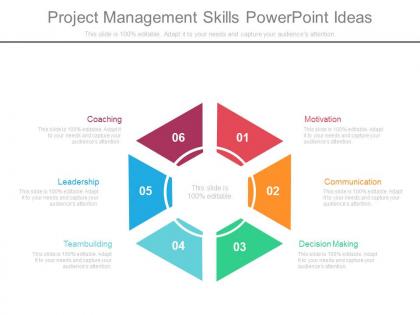
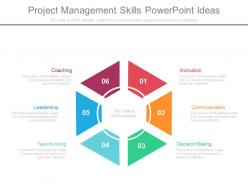
Apt project management skills powerpoint ideas




Try Before you Buy Download Free Sample Product
 Impress Your
 Audience
 100%
100% Editable
 Save Hours
 of Time


Our Apt Project Management Skills Powerpoint Ideas never play hard to get. They are always eager to come to your aid.
People who downloaded this PowerPoint presentation also viewed the following :
Apt project management skills powerpoint ideas with all 7 slides:
Win hands down with our Apt Project Management Skills Powerpoint Ideas. The audience will be forced to grant it to you.




FAQs for Apt project management
Key project management skills include leadership, communication, time management, risk assessment, budget control, stakeholder management, and problem-solving abilities. These competencies enable project managers to coordinate cross-functional teams, deliver projects on schedule and within budget, while maintaining quality standards, with many organizations finding that skilled project managers significantly reduce project failure rates and enhance overall operational efficiency.
Effective communication streamlines project delivery by ensuring clear expectations, reducing misunderstandings, and facilitating faster decision-making across all stakeholders. Through regular updates, structured reporting, and collaborative platforms, project teams achieve higher completion rates, minimize costly revisions, and enhance client satisfaction, with many organizations finding that communication-focused projects deliver 25% better outcomes.
Risk management enables successful project execution by identifying potential threats early, developing mitigation strategies, and maintaining contingency plans throughout the project lifecycle. Through proactive risk assessment, project managers in construction, IT development, and healthcare implementations minimize budget overruns, prevent timeline delays, and ensure quality deliverables, ultimately delivering projects on schedule while protecting organizational resources and stakeholder confidence.
Project managers can better handle team conflicts by establishing clear communication protocols, implementing structured mediation processes, addressing issues early before escalation, and creating collaborative problem-solving frameworks. Through active listening and neutral facilitation, managers in industries like construction, software development, and consulting find that transparent conflict resolution ultimately strengthens team dynamics, improves project outcomes, and enhances overall productivity.
Best practices for time management in project planning include creating detailed work breakdown structures, establishing realistic buffer periods, implementing milestone-based tracking, utilizing critical path analysis, and conducting regular progress reviews. These methodologies streamline project delivery by minimizing delays, optimizing resource allocation, and enhancing team coordination, with many organizations finding that structured time management ultimately delivers faster project completion and improved stakeholder satisfaction.
Cultural differences affect project team dynamics through varying communication styles, decision-making approaches, conflict resolution methods, and work-life balance expectations. These differences present both challenges and opportunities, with many multinational organizations finding that diverse teams deliver enhanced creativity, broader market insights, and innovative problem-solving capabilities when managed strategically.
Stakeholder engagement strategies include regular communication updates, collaborative planning sessions, feedback mechanisms, transparent reporting, and personalized involvement approaches. These methods enhance project success by building trust, aligning expectations, and securing buy-in, with many organizations finding that proactive stakeholder management reduces resistance, accelerates approvals, and ultimately delivers smoother project execution.
Adaptability is crucial in project management methodologies because it enables teams to respond effectively to changing requirements, unexpected challenges, and evolving stakeholder needs throughout the project lifecycle. This flexibility allows organizations to pivot between methodologies like Agile, Waterfall, or hybrid approaches based on project complexity, ultimately delivering better outcomes and maintaining competitive advantage in dynamic business environments.
Effective project tracking tools include Gantt charts, Kanban boards, milestone trackers, time logging systems, and real-time dashboards that monitor budgets, resources, and deliverables. These technologies streamline oversight by centralizing data, automating status updates, and providing visual progress indicators, with many organizations finding that integrated platforms like Microsoft Project or Asana ultimately enhance team collaboration and project delivery timelines.
Project managers measure project success through key performance indicators like budget adherence, timeline completion, scope delivery, quality metrics, and stakeholder satisfaction scores. These evaluation methods enable comprehensive assessment by tracking cost variance, schedule performance, deliverable acceptance rates, and team productivity, with many organizations finding that combining quantitative metrics with qualitative feedback ultimately delivers more accurate project outcomes and continuous improvement opportunities.
Ethical considerations in project management include stakeholder transparency, resource allocation fairness, conflict of interest management, environmental responsibility, and team welfare protection. These principles enhance project outcomes by building trust with clients, ensuring equitable decision-making, and maintaining team morale, with many organizations finding that ethical practices ultimately deliver stronger stakeholder relationships and sustainable competitive advantage.
Leaders influence project team motivation and performance by setting clear expectations, providing regular feedback, recognizing achievements, and removing operational barriers that hinder progress. Through transparent communication and strategic resource allocation, effective project leaders create environments where team members feel empowered and valued, ultimately delivering higher productivity, improved collaboration, and better project outcomes across organizations.
Agile offers flexibility, faster iterations, continuous feedback, and adaptive planning, while Waterfall provides structured phases, clear documentation, predictable timelines, and defined deliverables. Agile works well for software development and dynamic projects requiring frequent adjustments, whereas Waterfall suits construction, manufacturing, and regulatory environments, with many organizations finding that hybrid approaches ultimately deliver optimal project outcomes.
Project managers effectively manage remote teams by establishing clear communication protocols, utilizing collaborative project management tools, setting defined expectations and deadlines, and scheduling regular check-ins to maintain team cohesion. Through platforms like Slack, Asana, and video conferencing, managers can streamline workflows, enhance transparency, and deliver consistent project outcomes, with many organizations finding that structured remote management ultimately improves productivity and employee satisfaction.
Leading cross-functional project teams requires communication skills, stakeholder management, conflict resolution, strategic planning, and adaptability to diverse working styles. These competencies enable project leaders to align different departments, navigate competing priorities, and facilitate collaboration across functions like marketing, engineering, and operations, ultimately delivering integrated solutions and faster project completion in increasingly complex organizational environments.
-
Best way of representation of the topic.
-
Awesomely designed templates, Easy to understand.