


Artificial Intelligence And Healthcare Powerpoint Ppt Template Bundles




Try Before you Buy Download Free Sample Product
 Impress Your
 Audience
 100%
100% Editable
 Save Hours
 of Time


Our Artificial Intelligence And Healthcare Powerpoint Ppt Template Bundles are topically designed to provide an attractive backdrop to any subject. Use them to look like a presentation pro.
People who downloaded this PowerPoint presentation also viewed the following :
Artificial Intelligence And Healthcare Powerpoint Ppt Template Bundles with all 22 slides:
Use our Artificial Intelligence And Healthcare Powerpoint Ppt Template Bundles to effectively help you save your valuable time. They are readymade to fit into any presentation structure.
-
Artificial Intelligence and Healthcare
-
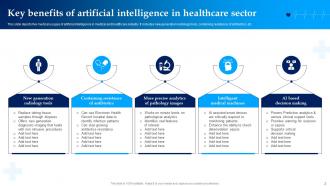
Key benefits of artificial intelligence in healthcare sector
-
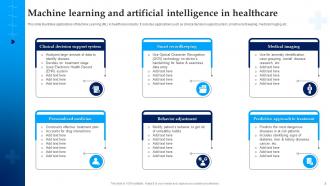
Machine learning and artificial intelligence in healthcare
-
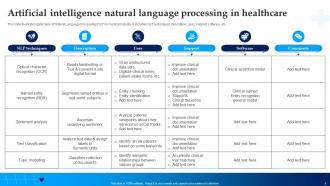
Artificial intelligence natural language processing in healthcare
-
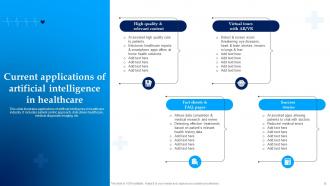
Current applications of artificial intelligence in healthcare
-
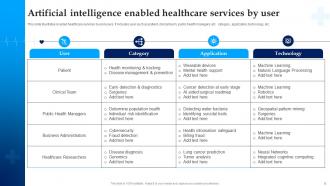
Artificial intelligence enabled healthcare services by user
-
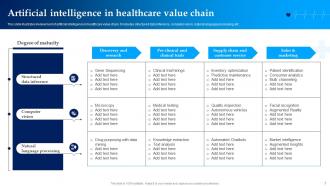
Artificial intelligence in healthcare value chain
-
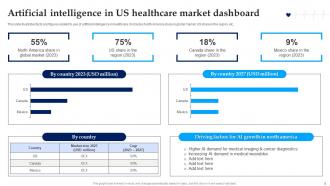
Artificial intelligence in US healthcare market dashboard
-
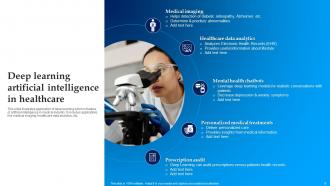
Deep learning artificial intelligence in healthcare
-
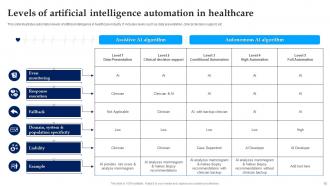
Levels of artificial intelligence automation in healthcare
-
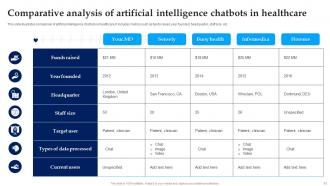
Comparative analysis of artificial intelligence chatbots in healthcare
-
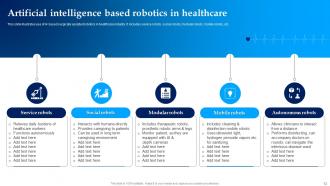
Artificial intelligence based robotics in healthcare
-
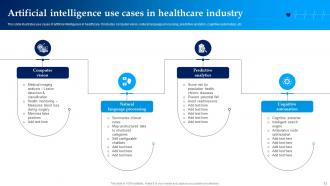
Artificial intelligence use cases in healthcare industry
-
Artificial intelligence automation in healthcare icon
-
Applications of artificial intelligence in healthcare icon
-
Machine learning and artificial intelligence in healthcare icon
-
Thanks for watching
-

-

-

-

-

FAQs for Artificial Intelligence And Healthcare Powerpoint
Dude, AI in medical imaging is honestly insane right now. These systems are catching early cancers in mammograms and CT scans as well as actual radiologists - sometimes better. IBM Watson and Google's DeepMind are doing the heavy lifting here. What's wild is they've trained on millions of images, so they pick up on tiny details humans totally miss. Actually reminds me of how my radiologist friend was telling me about this last month. If you're working in healthcare tech, definitely check out how this stuff could speed up your diagnostic process and cut down on missed cases.
So basically, doctors can now look at your specific genes, medical history, and how you've reacted to stuff before to customize your treatment. Pretty cool, right? These algorithms crunch through tons of data to figure out which meds will actually work for you and at what dose. Way better than just throwing the same treatment at everyone. The crazy part is the tech spots patterns doctors sometimes miss - fewer side effects, better results. Oh, and next time you get prescribed something, definitely ask if they used any of that predictive stuff. You'd be shocked how common it's getting!
So AI handles all the annoying data stuff automatically - pulls patient info from different systems, catches record errors, spots missing data way faster than people can. Docs used to waste hours digging through charts, which was honestly ridiculous. Now you'll see it suggesting diagnosis codes, organizing clinical notes, even predicting which patients need follow-up based on their history. The best part? Your clinical staff can actually focus on patients instead of drowning in paperwork. Oh, and when you're looking at EHR systems, definitely grill the vendors about their AI features.
So NLP basically handles all the boring stuff for you - transcribing conversations, translating languages on the spot, flagging urgent patient messages. Pretty neat, right? I watched this demo recently that was insane. Your messy notes get turned into clean summaries automatically. Plus chatbots can break down complicated medical jargon for patients who don't speak doctor. Honestly, the best part is getting your time back from endless documentation. You'll actually get to focus on patients instead of typing all day. I'd start with voice-to-text tools first - easiest way to dip your toes in.
Patient privacy is huge - that's the obvious one. But algorithmic bias? That's where things get messy. AI trained on biased data just makes healthcare disparities worse, and it happens constantly. Patients should know when AI's involved in their care too. Liability gets tricky when the AI screws up recommendations. I'd probably focus on auditing your tools regularly for bias issues. Human oversight is non-negotiable though - don't let the AI run solo on patient decisions. Oh, and transparency isn't just nice to have, it's ethical.
So basically, AI can crunch through tons of medical data super fast and catch patterns we'd totally miss. Like with cancer - it'll spot tiny weird spots on mammograms that even radiologists overlook. Pretty crazy, but some AI can detect diabetic eye problems from photos with like 90%+ accuracy now. For diabetes specifically, it looks at your glucose patterns, lifestyle stuff, genetics - all that - to predict risk way before you'd even notice symptoms. Honestly the whole thing still feels a bit sci-fi to me. But yeah, maybe check if your current diagnostic tools could add some AI features?
Dude, telemedicine is getting insane with AI integration. Your smartwatch can literally alert your doctor if something's off with your vitals - it's wild. Remote diagnostic tools are now reading ECGs and analyzing skin conditions from photos with scary accuracy. They're even predicting health episodes before they happen through pattern recognition. Honestly, the diabetes monitoring stuff is probably the most impressive part. If you're working in healthcare tech, you should probably get familiar with these platforms soon. They're becoming standard way faster than I expected - like, my mom's cardiologist already uses half this stuff.
So AI is basically supercharging drug discovery right now. Machine learning can predict promising compounds before companies blow millions testing duds in labs. We're talking about cutting timelines from 10+ years down to maybe 5-6 years, which is honestly insane. Clinical trials are getting smarter too - AI spots the right patient groups faster and flags who might bail early. The coolest part? These targeted therapies are actually working because AI catches patterns in patient data that doctors totally miss. If you're in pharma, definitely start exploring AI partnerships. My cousin works at Moderna and says it's a complete game-changer.
So predictive analytics is honestly pretty incredible for health crises. You can catch outbreaks super early and figure out where to send resources before things get crazy. The algorithms look at hospital data, even social media posts - basically anything that shows patterns we'd totally miss. COVID hotspot mapping but like, way smarter. Communities that are about to get hit hard? You'll know beforehand and can actually do something about it. Only catch is your data has to be solid - garbage in, garbage out, you know? But when it works, it's like having a crystal ball for disease spread.
Honestly, these AI wearables are pretty game-changing for chronic stuff. Instead of just seeing your doc every few months, your smartwatch or glucose monitor tracks everything 24/7. The crazy part? They actually learn your patterns and can spot problems before you even feel them. My cousin has diabetes and her device caught a sugar spike way before it got dangerous. Heart conditions, blood pressure issues - whatever you're dealing with, faster alerts mean way better outcomes. Oh, and definitely find one that syncs with your doctor's system so they can actually see the data.
Honestly, data integration is your biggest headache - all these systems that just refuse to play nice together. Staff pushback is real too since nobody wants their workflow disrupted. Training everyone while they're still seeing patients? Good luck with that. Oh, and don't get me started on compliance nightmares with patient data regulations. The costs hit hard upfront too. Here's what worked for me though - pick one tiny thing first. Get people used to it, then slowly add more. Way less painful than trying to revolutionize everything at once.
So AI's actually getting pretty wild with mental health stuff. There are chatbots now that'll talk you through a crisis at 3am, which honestly beats staring at the ceiling. Some apps can even pick up on mood changes just from how you sound - kinda creepy but also useful? Therapists are using algorithms to catch depression early too. The best part is you don't have to wait forever for appointments anymore. It personalizes treatment based on your specific quirks and responses. Obviously it won't replace real therapists, but it's like having backup support when your actual therapist isn't around.
So there's basically three things you gotta nail down: encryption, access controls, and compliance stuff. Encrypt everything - data moving around AND stored data. No shortcuts there. Set up role-based access so people only see what they need to see. HIPAA's obviously the big one, but NIST frameworks are worth looking into too. Here's the thing though - AI can accidentally spit out sensitive info, so you need regular security audits. Oh, and build this privacy stuff in from the start. Trust me, trying to add it later is a nightmare.
Honestly? People are pretty split on healthcare AI right now. Patients seem cool with it when they actually understand what's happening and their doctor's still making the final decision. Doctors and nurses are more skeptical - they're worried about getting sued or the AI missing something obvious they would've caught. What really works is being upfront about what the AI does instead of just throwing recommendations at people. Oh, and starting with boring stuff first helps build trust. Like, nobody's gonna freak out if AI helps with scheduling, you know? The places doing it right use AI to help doctors think through decisions, not replace them entirely.
AI's about to get crazy personalized - like treatments built around your actual DNA and real-time health stats. Your smartwatch will probably detect illness before you even feel crappy, which is honestly kind of wild. Predictive stuff will spot diseases way earlier, and AI will handle basic diagnostics so doctors can tackle the complicated cases. Remote monitoring is exploding too. The big change? AI won't just run in the background anymore - it'll be more like having a health buddy. You should start figuring out how these patient-facing tools will fit into your current setup.
-
Thank you for showering me with discounts every time I was reluctant to make the purchase.
-
My team has been relying on SlideTeam’s professional PPT designs for a while now. It has greatly sped up quality work at my organization. So thanks!