


Artificial Intelligence Automation Powerpoint Presentation Slides






Try Before you Buy Download Free Sample Product
 Impress Your
 Audience
 100%
100% Editable
 Save Hours
 of Time


Our Artificial Intelligence Automation Powerpoint Presentation Slides are topically designed to provide an attractive backdrop to any subject. Use them to look like a presentation pro.
People who downloaded this PowerPoint presentation also viewed the following :
Content of this Powerpoint Presentation
Slide 1: This slide introduces Artificial Intelligence Automation. State Your Company Name and begin.
Slide 2: This is Our Agenda slide. State your agendas here.
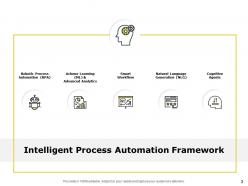
Slide 3: This slide shows Intelligent Process Automation Framework.
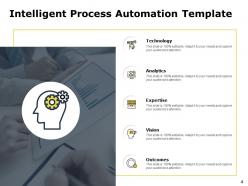
Slide 4: This slide presents Intelligent Process Automation Template describing- Technology, Analytics, Expertise, Outcomes, Vision.
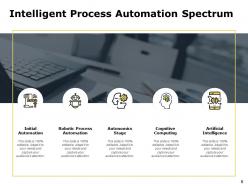
Slide 5: This slide displays Intelligent Process Automation Spectrum describing- Initial Automation, Robotic Process Automation, Autonomics Stage, Cognitive Computing, Artificial Intelligence.
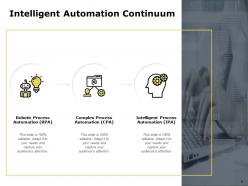
Slide 6: This slide represents Intelligent Automation Continuum describing- Robotic Process Automation (RPA), Intelligent Process Automation (IPA), and Complex Process Automation (CPA).
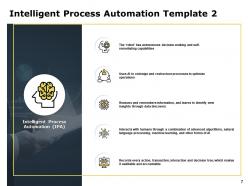
Slide 7: This slide showcases Intelligent Process Automation Template 2 with related imagery.
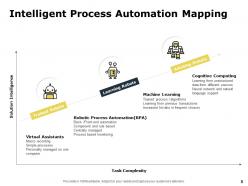
Slide 8: This slide shows Intelligent Process Automation Mapping.
Slide 9: This slide displays icons for Artificial Intelligence Automation.
Slide 10: This slide is titled as Additional Slides for moving forward.
Slide 11: This is About Us slide to show company specifications etc.
Slide 12: This is Our Mission slide with related imagery and text.
Slide 13: This is Meet Our Team slide with names and designation.
Slide 14: This is Our Target slide. State your targets here.
Slide 15: his is a Quotes slide to convey message, beliefs etc.
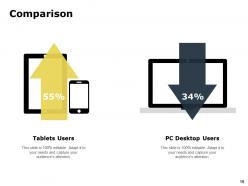
Slide 16: This is a Comparison slide to state comparison between commodities, entities etc.
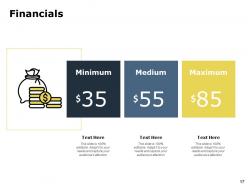
Slide 17: This is a Financial slide. Show your finance related stuff here.
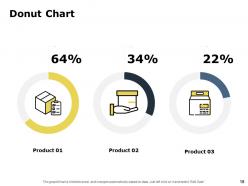
Slide 18: This slide displays Donut Chart with data in percentage.
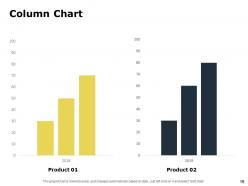
Slide 19: This slide shows Column Chart with two products comparison.
Slide 20: This is a Thank You slide with address, contact numbers and email address.
Artificial Intelligence Automation Powerpoint Presentation Slides with all 20 slides:
Use our Artificial Intelligence Automation Powerpoint Presentation Slides to effectively help you save your valuable time. They are readymade to fit into any presentation structure.




FAQs for Artificial Intelligence Automation
Honestly, the biggest wins are gonna be cost savings and just getting stuff done faster. AI knocks out all the repetitive tasks, so your team can actually work on interesting projects instead of boring data entry. Error rates drop like crazy too - machines don't have Monday mornings, you know? Processing gets way quicker, and here's the cool part: you can handle more work without constantly hiring people. I'd definitely start with just one process though, see how much money you save, then roll it out from there. The ROI usually speaks for itself pretty fast.
Honestly, AI automation is a game changer for customer stuff. Your customers get instant answers 24/7 through chatbots, which is clutch. The AI learns what they like and suggests products that actually make sense - it's kinda scary how good it gets at remembering preferences. You can automate follow-ups and send targeted messages based on what people do on your site. This frees up your real agents to deal with the messy problems that need human brains. Oh, and start with whatever you're doing repeatedly - like the same questions over and over. Automate those first and you'll see results fast.
Tech and healthcare are way ahead of everyone else right now. Customer service bots are everywhere, hospitals use AI for diagnostics, and factories do predictive maintenance stuff. Banks have been sneaky about this - they're automating fraud detection and trading way more than people think. Retail's finally catching up with inventory systems and delivery routes. Oh, and manufacturing is crushing it too. If you want to see what's coming to your industry, just look at what these guys are doing. They're usually like 2-3 years ahead of the curve.
Look, start with your employees - tell them what's actually happening and get them retrained before they panic. AI bias is a nightmare if you don't catch it early, especially in hiring decisions. Your data privacy concerns just exploded too since you're handling way more personal info now. The regulations are honestly all over the place right now, which is frustrating. But here's the thing - audit everything regularly and figure out who's responsible for what before you launch. Don't wait until something breaks.
Look, AI's already changing how teams operate - way faster than anyone thought it would. Most routine stuff like data entry gets automated first. But here's the thing: new jobs pop up around managing and interpreting all that AI output. Your team's gonna need different skills though - more analytical thinking, creative problem-solving, that kind of stuff. I'd honestly start figuring out what processes you could automate now and get people retrained before you flip the switch. Some displacement's inevitable, but smart companies are seeing it coming and adapting.
Honestly, data's probably gonna be your biggest headache - it's usually scattered everywhere and kind of a mess. People get weird about AI too, worried it'll replace them (which, fair enough). Then you've got all the tech nightmare stuff trying to make new AI tools play nice with whatever ancient systems you're already running. Oh, and good luck getting a clear budget when nobody really knows what ROI to expect. Start with something small first - like a pilot project or whatever. Get your team involved early so they don't freak out, and definitely clean up your data situation before diving in. Trust me on that last part.
So AI is like the big category that covers all smart automation stuff. Machine learning is just one piece of that - but it's the cool part that actually learns from data instead of just following whatever rules someone coded. Like, you could have a basic AI chatbot that just spits out pre-written responses. But ML? That's what gets better over time by figuring out your patterns. Honestly way more useful if you ask me. If you're setting up automation for work, go with ML when you want something that'll actually improve itself rather than just doing the same thing forever.
Your data quality is make-or-break for AI stuff. Seriously. Feed it garbage data and you'll get garbage results - except now it's automated garbage that breaks things faster! Clean, consistent data means your AI actually works right. Messy or biased data? Your automation will fail, make bad decisions, and everyone gets pissed off. I learned this the hard way on a project last year. Before you build anything, audit what data you have and set up some basic validation rules. Trust me, fixing it upfront beats debugging weird AI behavior later.
Dude, start with whatever's eating most of your time - probably scheduling or invoicing, right? Small businesses can totally compete now by automating the boring stuff that big companies throw whole teams at. Customer service bots, email marketing that runs itself, AI bookkeeping tools. They're actually cheap these days too. I swear, some tiny shops I know started automating their follow-ups and lead stuff, and suddenly they're competing with way bigger players. Pick one thing that's driving you crazy and find a tool for it this week. You'll be shocked how much time you get back.
Honestly, job displacement is probably the biggest worry - AI's getting scary good at replacing people. Then you've got the reliability issue where these systems just break down when you need them most. Bias is huge too since AI basically amplifies whatever prejudices are already baked into your data, which sucks for important decisions. Oh and the "black box" thing drives me crazy - half the time nobody can explain why the AI did what it did. Security's another headache since hackers love targeting these systems. My take? Don't go full autopilot on anything critical and always have a backup plan ready.
Honestly, I'd start small with just one department - pick something where you can actually show it's working and worth the money. Once you've got that win, you can spread it around to other teams. Set up a little group of people who become your go-to AI folks (sounds fancy but it's really just having experts who aren't constantly learning from scratch). Go after the boring, repetitive stuff first - that's where you'll see results fastest. Train people so they don't panic about being replaced. Document what works because you'll forget otherwise, trust me. Having those playbooks saves so much headache later.
You know Netflix's recommendation thing? That actually drives 80% of what people watch - pretty wild when you think about it. Amazon's warehouse bots have totally transformed their shipping speeds, plus their forecasting stops them from running out of stuff or ordering way too much. JPMorgan has this system called COIN that rips through legal docs in seconds instead of hours (lawyers were pissed at first, but honestly it freed them up for better work). Even smaller companies are crushing it with chatbots handling like 60-70% of customer questions automatically. They all started tiny with just one process though, then built from there.
Look, regulations are basically guardrails for AI stuff - they control how fast you can move and what direction you go. Data privacy laws, transparency rules, safety standards... it's honestly a mess because every industry and region does things differently. The EU's AI Act slows things down but builds more trust, I guess. Since rules keep changing (which is super annoying), you'll want to stay updated on your sector's requirements. Build your systems flexible so you can pivot when new rules hit. It's like trying to hit a moving target right now.
Hyper-automation is worth watching - basically AI running entire workflows instead of just single tasks. Conversational AI is getting ridiculously good now, so we'll see chatbots that actually get what you're saying. Edge AI processes everything locally rather than in the cloud, which gives you faster speeds and better privacy. The low-code/no-code platforms are pretty cool because non-tech people can finally build this stuff themselves. Honestly, that's probably the biggest game-changer. Start testing small pilot programs now so you're not playing catch-up later when everyone else has figured it out.
Okay so you need to track two things - the obvious money you're saving plus the productivity stuff. Direct savings are easy: less manual work, fewer screw-ups, lower costs. But honestly? The productivity gains usually end up being way more valuable even though they're harder to pin down exactly. Track how much faster things get done, better accuracy rates, that kind of thing. Your team will have more time for actual important work instead of tedious BS. Set up metrics before you start, then compare after like 6 months minimum. Build a simple dashboard showing both the cost cuts and efficiency improvements - makes it way easier to sell the whole ROI story to whoever's asking.
-
Easy to edit slides with easy to understand instructions.
-
The content is very helpful from business point of view.
-
It saves your time and decrease your efforts in half.
-
Topic best represented with attractive design.